

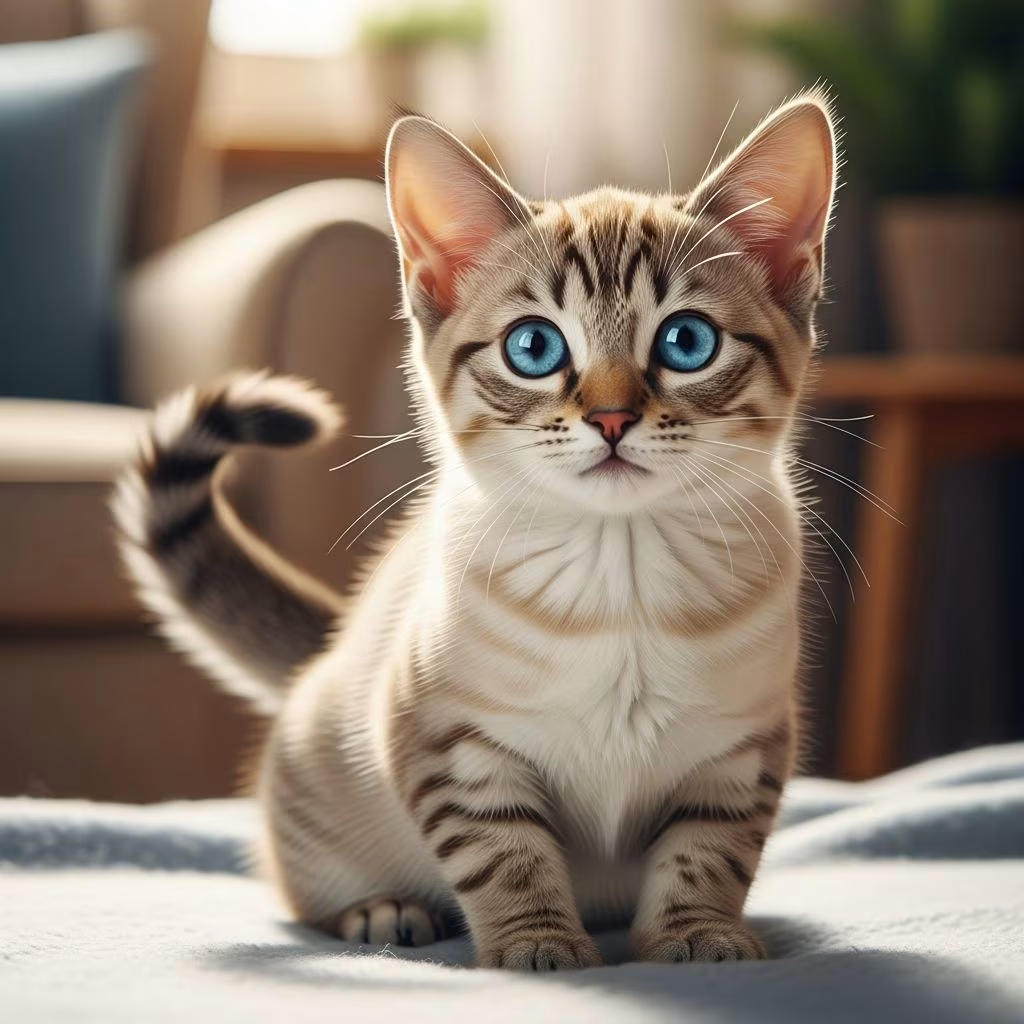
The Toybob represents one of the most fascinating developments in modern cat breeding—a naturally occurring miniature feline originating from Russia that has captured the hearts of cat enthusiasts worldwide. These diminutive creatures, with their signature kinked bobbed tails and compact muscular frames, represent a distinct departure from conventional feline breeding practices. Unlike downsized versions of larger breeds, the Toybob is a naturally occurring phenomenon that has been selectively refined to preserve its unique characteristics. This remarkable breed continues to gain recognition from major cat associations and has established itself as a beloved companion for those seeking an extraordinarily small yet spirited feline.
The Remarkable Origins and Development Timeline
The journey of the Toybob began in the Rostov Region of Russia during 1983 when Elena Krasnichenko discovered a stray seal-point cat that bore a striking resemblance to traditional Siamese cats, with one critical difference—a noticeably shortened, kinked tail. This chance encounter would prove to be the catalyst for an entirely new breed development. Intrigued by the cat’s unusual appearance, Krasnichenko decided to document this feline and explore its genetic potential.
Two years later, in 1985, Krasnichenko’s mother adopted another seal-point domestic shorthair female exhibiting similar characteristics, particularly a distinctly curled and kinked bobtail. The decision to breed these two cats proved momentous. In 1988, this pairing produced an unusually small kitten with a bobbed tail, which Krasnichenko named “Kutciy.” This remarkable feline became one of the foundational specimens for the breed, establishing a genetic lineage that continues to the present day. Notably, all contemporary Toybobs can trace their ancestry directly back to Kutciy, demonstrating the breed’s concentrated genetic foundation.
The breed development process took an unexpected turn as other local Russian breeders became interested in this novel feline type. A breeder named Fedyaeva observed similar phenotypes among feral cats living around local barns and streets throughout the region. These native cats, though displaying kinked or bobbed tails in various colors and patterns beyond the original seal-point coloring, shared the distinctive small size characteristic. Fedyaeva and her colleagues began systematically incorporating these naturally occurring variants into their breeding programs to expand the limited genetic pool and introduce new color variations and patterns.
Physical Characteristics and Distinctive Features
The Toybob’s most recognizable feature remains its distinctive kinked bobbed tail, which can range from one inch in length to extending down to the hock joint of the rear legs. Unlike genetic mutations that compromise feline agility or health, the kinked bobbed tail does not negatively impact the Toybob’s physical abilities or wellbeing. The tail consists of multiple kinked vertebrae that create its characteristic appearance while maintaining full mobility and flexibility.
Despite their diminutive size, Toybobs possess surprisingly robust and muscular construction. Their bodies are compact and well-proportioned, with front and rear legs displaying substantial musculature relative to overall body size. The Toybob reaches full maturity at approximately 1.5 years of age, at which point they typically resemble a six-month-old conventional domestic cat in terms of physical dimensions. Remarkably, there is minimal size differentiation between male and female Toybobs, a distinction that sets them apart from many other feline breeds.
The head structure features a modified wedge shape with pronounced round contours and a square-shaped muzzle. The ears are medium to tall in proportion, while the most striking facial feature consists of large, round, convex eyes that frequently display brilliant blue coloration or rich green hues. The overall expression conveys alertness and intelligence combined with an almost perpetual kitten-like appearance that persists throughout the cat’s lifetime.
Coat Characteristics and Color Variations
Toybobs exhibit flexibility in coat length, available in both short and long varieties. The shorthair coat features a soft, slightly plush texture with developed undercoat that creates a full appearance without lying flat against the body. The longhair variety presents a softer presentation with minimal ruff and furnishings around the ears and feet. Both coat types come in all recognized colors and patterns, including solid colors, colorpoint patterns, and various tabby markings. Modern breeding has expanded the color palette significantly from the original seal-point specimens, incorporating diverse genetic contributions from expanded breeding programs.
Temperament and Behavioral Characteristics
The Toybob personality combines remarkable affection with unexpected independence, creating an engaging companion dynamic. These cats demonstrate genuine curiosity about their human family members and possess an inclination to follow their owners throughout daily activities. Their engagement with family life reflects what breed developers describe as distinctly “dog-like” qualities—a deep bonding capacity and remarkable trainability that distinguishes them from more aloof feline breeds.
Despite their small stature, Toybobs display surprising energy and agility, frequently scaling tall furniture, bookshelves, and cabinets with impressive acrobatic ability. This active nature combines with a generally calm demeanor that prevents the hyperactivity exhibited by some other small breeds. The breed is notably less vocal than many feline breeds, communicating primarily through body language and quiet vocalizations rather than constant meowing.
Toybobs demonstrate exceptional compatibility with multiple household environments, displaying friendly engagement with people of all ages and harmonious relationships with other household pets. Their social disposition makes them suitable for families, single households, and multi-pet environments. The breed’s engaging personality ensures entertainment value while maintaining reasonable behavioral boundaries that appeal to cat enthusiasts seeking an interactive yet controllable companion.
Recognition and Registration Status
The path to official recognition reflects the Toybob’s gradual acceptance within the international cat fancy. In 2009, The International Cat Association (TICA) initially placed the Toybob into an “Experimental” category, acknowledging the breed’s novelty while requiring additional development standardization. This classification represented a critical milestone, providing official recognition while establishing parameters for breed development. In January 2017, TICA advanced the Toybob to “Registration” status, allowing formal registration facilities though without guarantees of further advancement toward championship status.
The Cat Fanciers’ Association (CFA) recognized the Toybob in 2019, accepting the breed into the Miscellaneous class as the association’s forty-fifth recognized breed. This recognition from one of North America’s most prestigious cat registries represented a significant validation of the breed’s stability and distinctive characteristics. The World Cat Federation (WCF) had previously exhibited Toybobs in its “Unrecognized Breed” category, particularly featuring specimens from Fedyaeva’s breeding program labeled as “Scyth-Toy-Bob.”
Care, Health, and Living Requirements
Toybobs require standard feline care components adapted to their specific characteristics and small size. Their short or moderately long coats necessitate regular grooming to maintain coat condition and prevent matting, though their grooming requirements remain less demanding than long-haired breeds. The compact frame and natural athleticism benefit from environmental enrichment including vertical spaces, climbing structures, and interactive play opportunities that allow expression of their active nature.
Nutritional requirements should be carefully monitored to prevent obesity, as their small stature means that minor weight gains represent proportionally significant additions. High-quality cat food formulated for indoor cats provides appropriate nutrition without excessive calories. Fresh water availability remains essential for maintaining proper hydration and supporting kidney function.
The unique kinked bobbed tail, while not affecting health or mobility, requires gentle handling awareness. Owners should avoid forceful manipulation of the tail and monitor for any signs of discomfort or mobility issues, though the natural mutation has proven remarkably benign in its health implications. At the time the breed achieved TICA registration, minimal genetic research had been conducted on the specific genes responsible for the Toybob’s distinctive small size and bobbed tail appearance, though subsequent breeding has demonstrated genetic stability.
Distinguishing Toybobs from Other Miniature Breeds
A critical distinction separates Toybobs from other small feline breeds marketed as miniatures. Unlike “teacup” cats or downsized versions of established breeds created through selective breeding of undersized individuals, the Toybob represents a naturally occurring mutation that produces consistently small adults. This natural genetic foundation provides greater genetic stability and reduced health complications associated with extreme miniaturization in conventional breeds.
The breed’s development focused on preserving and refining naturally occurring characteristics rather than artificially engineering size reduction through potentially problematic genetic manipulation. This approach has resulted in a breed possessing robust muscular development, athletic capability, and apparent genetic longevity that distinguishes Toybobs from breeds where extreme miniaturization has occasionally compromised health and longevity.
Suitability as Companion Animals
The Toybob’s combination of small size, affectionate personality, trainability, and active engagement makes them well-suited for diverse living situations. Their compact dimensions work well in apartment environments where space limitations concern potential owners. Their social disposition and compatibility with multi-pet households expand their appeal beyond single-pet households.
For individuals seeking a cat that combines miniature proportions with personality and interactivity typically associated with larger feline breeds, the Toybob offers a compelling option. The breed’s relatively recent development and limited availability mean that prospective owners must identify responsible breeders committed to breed standards and genetic health maintenance rather than pursuing shortcuts through extreme miniaturization.
Future Prospects and Ongoing Development
As the Toybob gains increased recognition internationally, breeding programs continue to expand color varieties and refine breed standards. The concentration of genetic material within the relatively small founding population necessitates careful breeding practices to maintain genetic diversity while preserving distinctive breed characteristics. Continued cooperation among international breeders, particularly those maintaining connections to Russia’s original breeding programs, remains essential for long-term breed health and stability.
Increased genetic research focusing on the specific mutations responsible for the Toybob’s distinctive size and tail characteristics will likely provide greater understanding of these unique feline genetics. Such research may ultimately contribute to broader understanding of feline genetic expression and mutation mechanisms.
Frequently Asked Questions
- How small are Toybob cats?
- Toybobs are exceptionally small, with fully grown adults comparable in size to a six-month-old conventional domestic cat. They represent the smallest naturally occurring cat breed.
- Does the bobbed tail affect their mobility?
- No. The kinked bobbed tail does not negatively impact the Toybob’s agility, mobility, or health. These cats are remarkably athletic despite their diminutive size.
- Are Toybobs rare?
- Yes, Toybobs remain relatively rare outside Russia and among dedicated breeders. Their recent recognition by major cat associations has gradually increased availability, but they remain less common than established breeds.
- Can Toybobs be trained?
- Toybobs demonstrate exceptional trainability and are often described as having “dog-like” qualities, making them responsive to training and capable of learning commands.
- What is their temperament like?
- Toybobs are affectionate, social, playful, and energetic while remaining less vocal than many cat breeds. They form strong bonds with their owners and are compatible with families and multi-pet households.
References
- Toybob Breed Overview — Craymond Therapy. Retrieved January 29, 2026. https://craymondtherapy.wixsite.com/mysite-1/toybob
- All About Toybob Breed — Animalia. Retrieved January 29, 2026. https://animalia.bio/pets/toybob
- Toybob — Wikipedia. Retrieved January 29, 2026. https://en.wikipedia.org/wiki/Toybob
- Toybob: Small Cats With Big Loving Hearts — Cats.com. Retrieved January 29, 2026. https://cats.com/toybob
- Toybob Facts – Cat Breeds — Wisdom Panel. Retrieved January 29, 2026. https://www.wisdompanel.com/en-us/cat-breeds/toybob
- Toybob — The International Cat Association (TICA). Retrieved January 29, 2026. https://tica.org/breed/toybob/
- Toybob — GoofyTails. Retrieved January 29, 2026. https://goofytails.com/pages/toybob
- International Toybob Cat Club — Toybob.org. Retrieved January 29, 2026. https://toybob.org



