

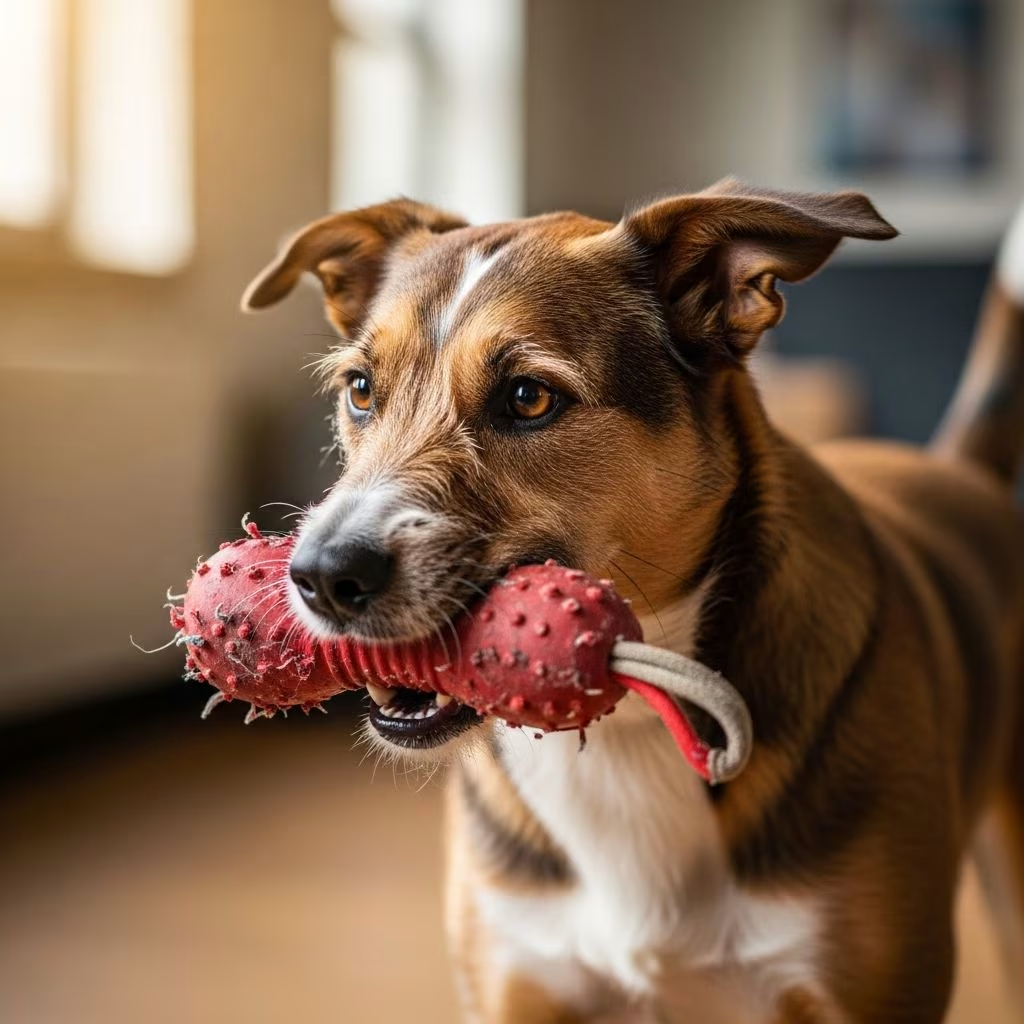
Understanding Toy Aggression in Dogs
Toy aggression refers to aggressive behavior displayed when a dog becomes possessive and defensive around toys or other valued items. This behavior often manifests when people or other pets approach the dog while it is in possession of something it values highly. While toy aggression can seem to develop suddenly, it is typically a learned behavior that develops gradually over time through repeated interactions and play patterns.
Many dog owners are surprised when their gentle, friendly companion suddenly growls, snaps, or displays aggressive behaviors around toys. This shift can seem unexpected, but in reality, toy aggression is a behavior that dogs have been inadvertently trained to perform through everyday play routines and interactions. Understanding how this behavior develops is the first step toward managing and correcting it.
How Toy Aggression Develops
Toy aggression typically develops through play patterns rather than appearing spontaneously. The primary way dogs learn toy aggression is through unstructured and poorly managed play sessions. While games like fetch and tug-of-war are enjoyable for both dogs and owners, a critical mistake occurs when owners fail to properly wind down their dogs after playtime.
When you engage your dog in exciting, stimulating play that riles them up, it is essential to transition them slowly back to a calm state. Simply ending the game and walking away does not reset your dog’s arousal level. Instead, your dog remains in a heightened state of excitement and defensiveness. This teaches your dog that:
- Toys trigger an excited, semi-aggressive state
- Defending toys is an appropriate response
- Any approach to their toy means the play is continuing
- Possessive behavior is rewarded with continued interaction
Over time, what begins as playful, semi-aggressive behavior can escalate into genuine aggression directed at all toys. This is why establishing proper play-and-wind-down routines is critical for preventing toy aggression from developing in the first place.
Common Causes of Toy Aggression
Several factors contribute to the development and persistence of toy aggression in dogs:
Improper Play Management
The most common cause is failing to properly manage play sessions by omitting the wind-down phase. Dogs in a heightened state of arousal from play naturally assume defensive postures around their toys.
Resource Guarding Instincts
Some dogs have stronger natural resource guarding instincts than others. These dogs may be predisposed to protecting valued items due to their breed history or individual temperament.
Training and Past Experiences
Dogs that have been inadvertently trained to protect resources—such as through repeated toy removal or dominance-based training methods—are more likely to display toy aggression. When owners remove toys just as a puppy settles in to enjoy them, the puppy learns that human approach means the item will disappear, triggering defensive behavior.
Fear and Anxiety
Dogs experiencing fear or anxiety about losing possessions may develop possessive aggression around toys as a defensive mechanism to manage their emotional distress.
Lack of Proper Socialization
Dogs that have not been properly socialized to handling around their valued items may be more likely to display aggressive responses when approached.
Recognizing the Signs of Toy Aggression
Understanding the warning signs of toy aggression allows for early intervention before behavior escalates to more serious aggression. Signs of toy aggression can be subtle at first and gradually become more pronounced:
- Freezing: The dog pauses and becomes very tense when someone approaches
- Stiff body posture: Muscles tense, body rigid or braced over the toy
- Side-eye staring: The dog watches someone approaching while continuing to hold the toy
- Raising lips and baring teeth: Early warning sign showing readiness to escalate
- Growling: Audible warning directed at those approaching the item
- Snapping: Snapping at hands or faces near the toy
- Fast eating: Rapidly consuming food or swallowing toys when someone approaches
- Taking items away: Moving away from people while holding a toy
- Body blocking: Positioning body between the toy and the person approaching
- Snarling or biting: More serious aggression directed at humans or other pets
Early signs like freezing, stiff posture, and side-eye staring should be taken seriously, as they indicate the dog is uncomfortable with approach and may escalate to more aggressive behavior if the situation is not addressed.
The Importance of Proper Play Structure
Preventing toy aggression begins with understanding and implementing proper play structure. A complete play session includes three essential phases:
1. Engagement Phase
This is when you actively play with your dog using toys, balls, or interactive games. The dog becomes excited and aroused as they chase, tug, or engage with the toy.
2. Gradual Wind-Down Phase
This critical phase is where many owners fail their dogs. Rather than suddenly stopping play, gradually reduce the intensity of the game. Slow down the throws during fetch, reduce the vigor of tug games, and allow the excitement level to decline gradually. This transition period should last several minutes, not just seconds.
3. Calm Conclusion Phase
End the play session with calm interaction and praise. By completing this phase, you teach your dog that playful aggression is associated with the specific game, not with the toy itself. This distinction is crucial for preventing toy aggression from developing.
Without the wind-down phase, your dog remains in an aroused, defensive state even after play ends. This teaches them that toys are objects worth protecting aggressively, setting the foundation for possessive behavior to develop.
Training Techniques to Manage Toy Aggression
If toy aggression has already developed, positive reinforcement is the most effective approach to managing and correcting the behavior.
The Replacement Method
The most effective training technique involves replacing rather than removing toys:
- Start by identifying a toy your dog is moderately protective of (not their most valued item)
- Approach your dog while they have the toy
- Offer an alternative toy or high-value treat in exchange
- Allow your dog to take the replacement while releasing the original toy
- Provide verbal praise and positive reinforcement
- Return the original toy after a brief pause
This technique teaches your dog that losing a toy is not a negative event—it results in gaining something equally or more valuable. The dog learns that human approach signals positive outcomes rather than loss.
Positive Reinforcement Strategy
Consistency is essential when using positive reinforcement to address toy aggression. Every interaction around toys should be positive and rewarding:
- Use verbal praise generously when your dog relinquishes toys without aggression
- Reward with high-value treats to reinforce calm behavior around toys
- Create positive associations between your approach and good things happening
- Never show frustration or anger during training sessions
- Maintain a calm, patient demeanor at all times
Gradual Exposure and Desensitization
Training to overcome toy aggression is not accomplished in a single day. This is a gradual process that may take weeks or months, depending on the severity of the aggression:
- Start with low-value toys your dog is less protective of
- Gradually progress to higher-value items as success increases
- Practice replacement exercises daily
- Increase the duration between toy exchange attempts
- Add family members gradually as your dog improves
- Extend training to other contexts (different rooms, outdoors)
What NOT to Do When Managing Toy Aggression
Just as important as knowing what to do is understanding what to avoid when addressing toy aggression:
- Do not forcibly remove toys: This confirms the dog’s fear that human approach means loss and increases defensive behavior
- Do not use punishment: Punishment increases fear and anxiety, exacerbating the aggression
- Do not show anger or frustration: Dogs respond to your emotional state and will associate your emotions with their toy behavior
- Do not engage in dominance-based training: Methods based on establishing dominance have been shown to increase aggression
- Do not corner or trap your dog: This creates a threatening situation and may trigger more serious aggression
- Do not punish warning signs: Growling and other signals are communication; punishing them prevents your dog from warning before escalating to bites
Creating a Safe Environment
Beyond training, managing the physical environment is important for preventing toy aggression incidents:
- Provide separate play areas where your dog feels secure with toys
- Use crates or confined spaces as safe zones where toys are given and the dog is left undisturbed
- Supervise play sessions with multiple dogs to prevent conflict over toys
- Remove highly valued items like rawhide bones during the initial training period
- Establish household rules that all family members follow consistently
- Teach children not to approach the dog during play or when they have toys
- Consider separate feeding and toy areas for multi-dog households
Special Considerations for Multi-Dog Households
Managing toy aggression becomes more complex when multiple dogs live together. Dogs may display possessive aggression toward toys only when other pets are present. In multi-dog households:
- Practice toy exchanges one dog at a time initially
- Supervise all toy-sharing interactions carefully
- Provide multiple toys to reduce competition
- Feed and give toys in separate locations to prevent resource guarding conflicts
- Watch for ritualized aggression signals that indicate underlying stress
- Consider separating dogs during high-value toy times until behavior improves
Frequently Asked Questions
Q: Why does my dog act aggressive around toys when they are normally friendly?
A: Toy aggression is a learned behavior typically caused by improper play management. When dogs do not have adequate wind-down periods after exciting play, they remain in an aroused state that makes them defensive about their toys. This is not a reflection of your dog’s true temperament but rather a response pattern that has been reinforced through play routines.
Q: Can toy aggression be completely cured?
A: With consistent positive reinforcement training, most dogs can show significant improvement or complete resolution of toy aggression. The timeline depends on the severity of the behavior and consistency of training. Some dogs improve in weeks, while others may take several months of dedicated practice.
Q: Is toy aggression dangerous?
A: Yes, toy aggression can be dangerous as it may escalate to biting humans or causing injuries to other pets. Early intervention when you notice the first warning signs is critical to preventing serious incidents.
Q: Should I punish my dog for toy aggression?
A: No, punishment is ineffective and counterproductive. It increases fear and anxiety, which actually worsens aggression. Positive reinforcement training that rewards calm behavior around toys is the only evidence-based approach that works effectively.
Q: How long does training take to resolve toy aggression?
A: The duration varies significantly depending on the severity of the behavior and consistency of training. Most dogs show noticeable improvement within 2-4 weeks of daily practice, but complete resolution may take 2-3 months or longer. Consistency is more important than speed.
Q: Can I prevent toy aggression in puppies?
A: Yes, prevention is much easier than correction. Always incorporate proper wind-down periods after play, avoid forcibly removing toys from puppies, and practice positive toy exchanges from an early age. These habits established early prevent toy aggression from developing.
Q: What should I do if my dog growls when I approach their toy?
A: Growling is a warning sign that should not be punished. Instead, stop approaching and practice the replacement method from a distance. Reward your dog for calm behavior around toys without attempting to take them. Gradually decrease the distance as your dog becomes more comfortable.
References
- Training Tip – Toy Aggression — Becky’s Pet Care. https://beckyspetcare.com/blog/training-tip-toy-aggression
- Possessive Aggression in Dogs — VCA Animal Hospitals. https://vcahospitals.com/know-your-pet/possessive-aggression-in-dogs
- Resource Guarding in Dogs: What to Do and NOT Do — Preventive Vet. https://www.preventivevet.com/dogs/resource-guarding-in-dogs
- Dog Aggression: Signs, Causes, and How to Manage — Best Friends Animal Society. https://bestfriends.org/pet-care-resources/dog-aggression-signs-causes-and-how-manage
- 6 Causes of Aggression in Dogs — Veterinary Emergency Group. https://www.veg.com/post/aggression-in-dogs
- Resource Guarding in Dogs and How to Stop — Woodgreen Pets Charity. https://woodgreen.org.uk/pet-advice/dog/dogs-toy-possession/



