
How Toxic Substances Move Through Animal Bodies
Understanding the journey of poisons through absorption, distribution, metabolism, and elimination in animals.
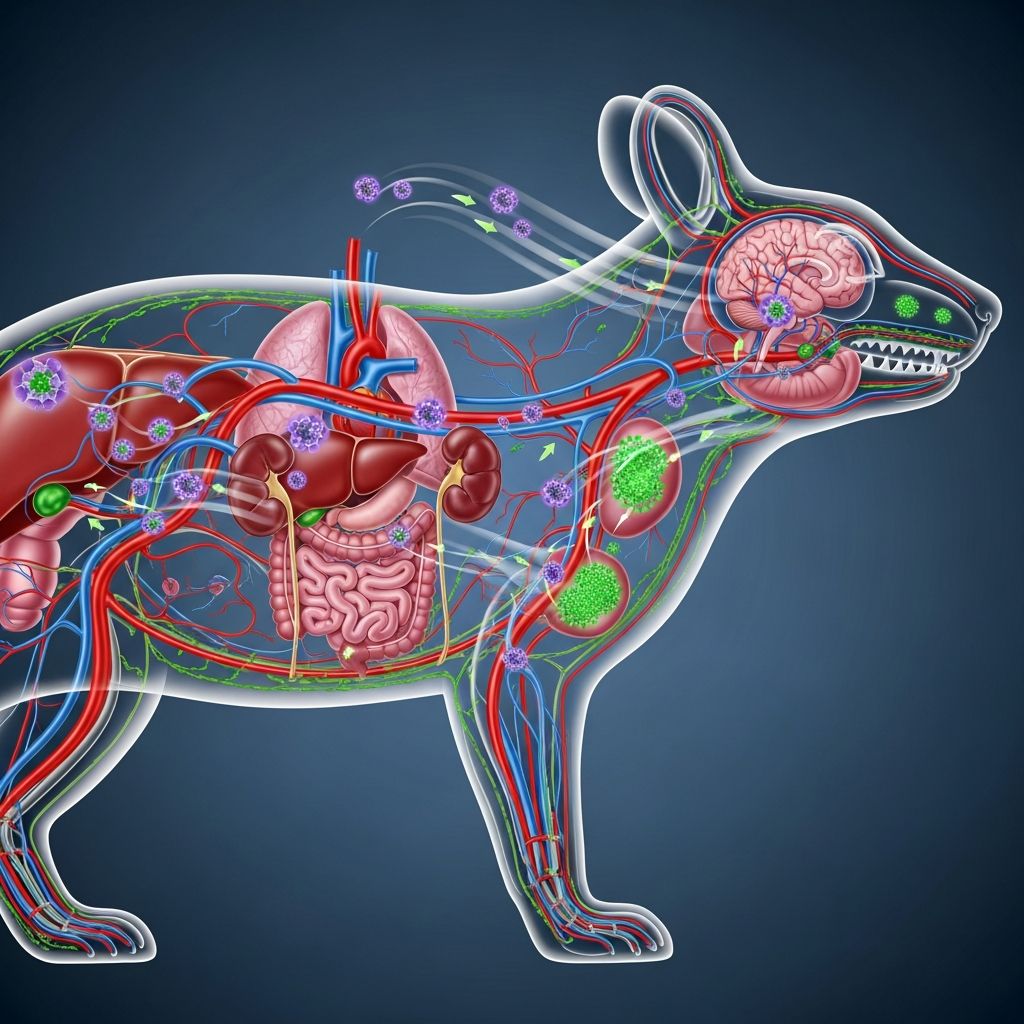
Understanding how poisonous substances travel through an animal’s body is fundamental to veterinary toxicology and clinical practice. This process, known as toxicokinetics, describes the complete journey of a toxic agent from the moment of exposure until its complete elimination. The pathway toxicants follow determines their effects, duration of toxicity, and the appropriate treatment strategies veterinarians should employ. This knowledge becomes essential when managing accidental poisonings, evaluating drug safety, and predicting how different species respond to the same toxic exposure.
The Four Stages of Toxicant Movement in Animals
Toxic substances undergo four interconnected processes once they enter an animal’s body. These stages work together to determine how long a toxicant remains active and how severe its effects become. By understanding each stage, veterinarians can better predict outcomes and design effective treatment approaches.
Entry Into the Body: The Absorption Phase
Absorption represents the first critical step where toxicants cross biological barriers to enter the bloodstream or tissue compartments. The rate and amount of absorption directly influence how quickly toxic effects appear and how severe they become. The route of exposure significantly affects absorption patterns—oral exposure typically results in slower, more diffuse absorption compared to intravenous administration, which provides immediate full bioavailability.
In veterinary settings, oral and dermal exposures represent the most common routes encountered in clinical cases. When animals consume toxicants mixed with food over an extended period, absorption occurs gradually across the gastrointestinal tract. This diffuse exposure pattern often produces less severe effects than a single bolus dose of identical quantity administered at one time. However, certain factors can prolong absorption and extend exposure duration. Retention within the gastrointestinal system, including enterohepatic cycling where substances are reabsorbed from the liver into the intestines, can significantly extend the exposure period. Similarly, toxicants deposited on skin and hair can create prolonged dermal exposure as animals groom themselves.
The gastrointestinal epithelium presents a selective barrier, and the absorptive capacity varies depending on the chemical properties of the toxicant and the physiological state of the animal. Some substances are absorbed efficiently across this barrier, while others remain relatively impermeable. Factors such as pH, intestinal motility, and the presence of food can all influence how readily a toxicant crosses into circulation.
Movement Throughout the Body: The Distribution Phase
Once absorbed, toxicants must distribute from the bloodstream to their target tissues. This phase determines which organs and tissues become exposed to the toxic substance and in what concentrations. The distribution pattern depends on multiple factors including the chemical properties of the toxicant, blood flow to various tissues, and the ability of the substance to cross tissue barriers such as the blood-brain barrier.
Lipophilic (fat-soluble) toxicants tend to accumulate in fatty tissues and may persist in the body for extended periods, while hydrophilic (water-soluble) substances distribute more readily throughout aqueous compartments. Some toxicants preferentially accumulate in specific organs known as target tissues. For instance, certain heavy metals concentrate in the liver or kidneys, while some pesticides accumulate in neural tissue. Understanding this distribution pattern helps identify which organs require monitoring during treatment and recovery phases.
The protein-binding capacity of a toxicant also influences its distribution and activity. Substances that bind extensively to blood proteins may have limited tissue penetration, while those with minimal protein binding distribute more readily to peripheral tissues. Additionally, blood flow patterns direct more toxicant to highly perfused organs like the liver and kidneys, which often bear the burden of metabolizing and eliminating these substances.
Chemical Transformation: The Metabolism Phase
Metabolism, or biotransformation, represents a critical defensive mechanism where the body chemically alters toxicants to facilitate their elimination. This process typically occurs through enzymatic pathways located primarily in the liver, though other tissues including kidneys, intestinal epithelium, and lungs also participate in metabolic biotransformation. The liver houses the microsomal mixed-function oxidase (MFO) enzyme system, which catalyzes the majority of drug and toxicant metabolism in most species.
The metabolic process generally occurs in phases designed to progressively increase water solubility, making substances easier to excrete. Phase I metabolism involves oxidation, reduction, or hydrolysis reactions that modify the molecular structure. Phase II processes attach water-soluble molecules such as glutathione, sulfate, or glucuronic acid to the modified compound, further increasing its hydrophilicity. Phase III transport mechanisms then actively move these modified substances out of cells for elimination.
However, metabolism does not always result in detoxification. Some metabolic pathways actually activate toxicants, converting them into more toxic forms than the parent compound. This metabolic activation becomes particularly important when evaluating toxicity of certain pesticides and industrial chemicals. Prior exposure to the same or similar chemicals can induce increased metabolic enzyme activity, leading to enhanced biotransformation capacity. This adaptation, called enzyme induction, explains why repeated exposures may produce different toxic responses than initial exposure to the same dose.
Species differences in metabolic enzyme composition and activity represent one of the most significant factors determining differential toxicant responses across animal species. What constitutes a lethal dose in one species may be relatively benign in another, largely due to variations in metabolic capacity. Additionally, animal age, liver disease, specific breed genetics, and nutritional status can all alter the efficiency and direction of metabolic processes.
Removal From the Body: The Excretion Phase
Excretion represents the final stage where transformed or unchanged toxicants leave the body. The primary excretory routes include the kidneys (urine), gastrointestinal tract (feces), lungs (exhalation), and minor routes such as skin and milk. The relative contribution of each route depends on the chemical properties of the toxicant and its metabolites, as well as species-specific physiological differences.
The kidneys typically handle water-soluble substances through active tubular secretion and passive glomerular filtration. Fecal excretion predominates for larger molecules and lipophilic compounds that resist absorption. Volatile substances may be eliminated through pulmonary exhalation. In some cases, toxicants may be excreted unchanged, while in others, only metabolites appear in excretory products, with the parent compound remaining undetectable.
Critical Species Differences in Toxicant Fate
One of the most essential concepts in veterinary toxicology is that species respond differently to identical toxic exposures. These differences arise from variations in physiological and biochemical characteristics that affect every stage of toxicant fate. Metabolic enzyme composition varies significantly among species—some animals possess enzyme systems that efficiently metabolize certain compounds, while other species lack these enzymatic capacities entirely. This explains why foods, drugs, and environmental toxicants considered safe for one species may prove highly toxic to another.
Body surface area and metabolic rate also differ among species in ways that affect toxicant handling. While body weight relationships often guide dosage calculations, the relationship between body surface area and metabolism becomes particularly important when comparing animals of vastly different sizes. Small animals typically have higher metabolic rates per unit body weight than larger animals, affecting both the rate of metabolism and excretion of toxicants. These physiological differences mean that extrapolating toxicity data from one species to another requires careful consideration rather than simple mathematical conversion.
Additional species-specific factors include differences in gastrointestinal pH, intestinal microbiota composition, liver enzyme profiles, and renal handling of various substances. Companion animals, livestock, and wildlife species may all respond differently to environmental toxicants based on their unique evolutionary adaptations and physiological characteristics.
Factors That Modify Toxicant Fate During Movement
Dose Level and Exposure Duration
The intensity and duration of exposure profoundly influence how toxicants move through the body and their ultimate effects. A single high-dose exposure creates different toxicokinetic patterns than chronic, low-dose exposures. At high doses, metabolic systems may become saturated, leading to non-linear kinetics where doubling the dose produces more than twice the effect. Chronic exposures allow for potential adaptation through enzyme induction or physiological compensation. Long-term low-level exposures often produce cumulative organ damage rather than acute toxicity, requiring different diagnostic and treatment approaches than acute poisoning cases.
Individual Animal Variation
Even within a single species, individual animals show remarkable variation in their response to identical toxic doses. Genetic polymorphisms affecting enzyme expression, age-related changes in organ function, sex differences in hormone-dependent enzyme activity, and concurrent health conditions all create biological variation in toxicant handling. This biological variation explains why not all animals exposed to the same dose of a toxicant experience identical outcomes—some may remain relatively unaffected while others develop severe toxicity. Veterinary clinicians must exercise clinical judgment when predicting individual animal responses rather than relying solely on population-based data.
Environmental and Physiological Factors
Environmental conditions and physiological state significantly influence toxicant absorption and fate. Temperature affects metabolic rate and absorption kinetics. Dehydration can concentrate toxicants in remaining body fluids, intensifying effects. Nutritional status influences liver enzyme function and metabolic capacity. Concurrent illness or organ dysfunction alters normal toxicokinetic processes—liver disease dramatically reduces metabolic capacity, while kidney disease impairs excretion. These modifying factors become critically important when evaluating toxicant effects in animals with pre-existing health conditions.
Practical Applications in Veterinary Medicine
Predicting Toxicity Outcomes
Understanding the complete toxicokinetic profile allows veterinarians to predict the timeline of toxic effects and estimate how long symptoms may persist. A toxicant with rapid absorption and slow excretion may produce prolonged toxicity requiring extended monitoring and treatment. Conversely, rapidly excreted substances may cause acute effects that resolve quickly once absorption ceases. This knowledge guides decisions about hospitalization duration, monitoring frequency, and when specific antidotes or supportive treatments should be administered.
Evaluating Treatment Options
Different treatment strategies become appropriate depending on where a toxicant stands in its toxicokinetic journey. Early intervention focusing on reducing absorption (such as activated charcoal in early oral exposures) differs fundamentally from later interventions aimed at enhancing elimination. Understanding whether a toxicant undergoes enterohepatic cycling determines whether interrupting this cycle becomes therapeutic. Knowledge of metabolic pathways and whether metabolites are more or less toxic than parent compounds guides decisions about whether blocking metabolism is beneficial or harmful.
Developing Residue Monitoring Programs
For food-producing animals receiving medications or exposed to environmental contaminants, understanding toxicokinetics becomes essential for establishing safe withdrawal periods and residue monitoring programs. The form and distribution of residues varies by species and route of administration, requiring species-specific data to ensure food safety. Total residue and metabolism studies provide information necessary to identify appropriate marker residues and target tissues for monitoring.
Frequently Asked Questions About Toxicant Movement
Why do different species respond so differently to the same toxicant?
Species differences in metabolism, excretion rates, and physiological characteristics create vastly different responses. Cats, for example, lack certain Phase II metabolic enzymes that dogs and humans possess, making them particularly susceptible to compounds metabolized through those pathways. Additionally, differences in gastrointestinal pH, intestinal transit time, and organ function create unique toxicokinetic profiles for each species.
Can toxicants accumulate in an animal’s body over time?
Yes, some toxicants accumulate through repeated exposure. Lipophilic compounds that resist metabolism and excretion may accumulate in fatty tissues over weeks, months, or years. Others undergo slow excretion relative to absorption, creating cumulative effects. This bioaccumulation becomes particularly concerning with heavy metals and persistent organic pollutants that remain in the body long after exposure ceases.
How long does it take for a toxicant to leave an animal’s body?
Elimination time varies dramatically based on the toxicant’s properties and the animal’s metabolism and excretion capacity. Some substances clear within hours, while others persist for months or years. Half-life, the time required for body levels to decrease by half, provides a useful measurement but represents only one aspect of elimination kinetics.
Key Takeaways on Toxicant Movement
- Toxicokinetics describes how toxicants are absorbed, distributed, metabolized, and excreted from animal bodies
- Absorption routes (oral, dermal, inhalation, intravenous) significantly affect the rate and pattern of toxicant entry into circulation
- Distribution patterns determine which tissues become exposed and accumulate toxicants, influencing target organ toxicity
- Metabolism may detoxify compounds or create more toxic metabolites, with significant species variation in metabolic capacity
- Excretion through multiple routes removes toxicants and metabolites from the body at varying rates
- Species differences in physiology and biochemistry create dramatic differences in toxicant responses
- Dose level, exposure duration, individual variation, and environmental factors all modify toxicant fate
- Understanding these processes guides treatment decisions and safety predictions in veterinary practice
Conclusion
The journey toxicants take through animal bodies represents a complex interplay of absorption, distribution, metabolism, and excretion processes. Each stage presents opportunities for the body’s defense mechanisms to limit toxicity, but also points where toxicants can cause damage. The dramatic species differences in handling toxicants underscore why veterinary professionals must consider species-specific physiological characteristics when evaluating toxicity risks and predicting outcomes. By understanding these fundamental toxicokinetic principles, veterinarians can make more informed decisions about diagnosis, treatment, prevention, and safety assessment in their clinical practice.
References
- Perspectives in Veterinary Pharmacology and Toxicology — Frontiers in Veterinary Science. 2016. https://www.frontiersin.org/journals/veterinary-science/articles/10.3389/fvets.2016.00082/full
- General Toxicological Principles — Veterinary Key. Accessed 2026. https://veteriankey.com/general-toxicological-principles/
Similar Articles








Read full bio of medha deb


