

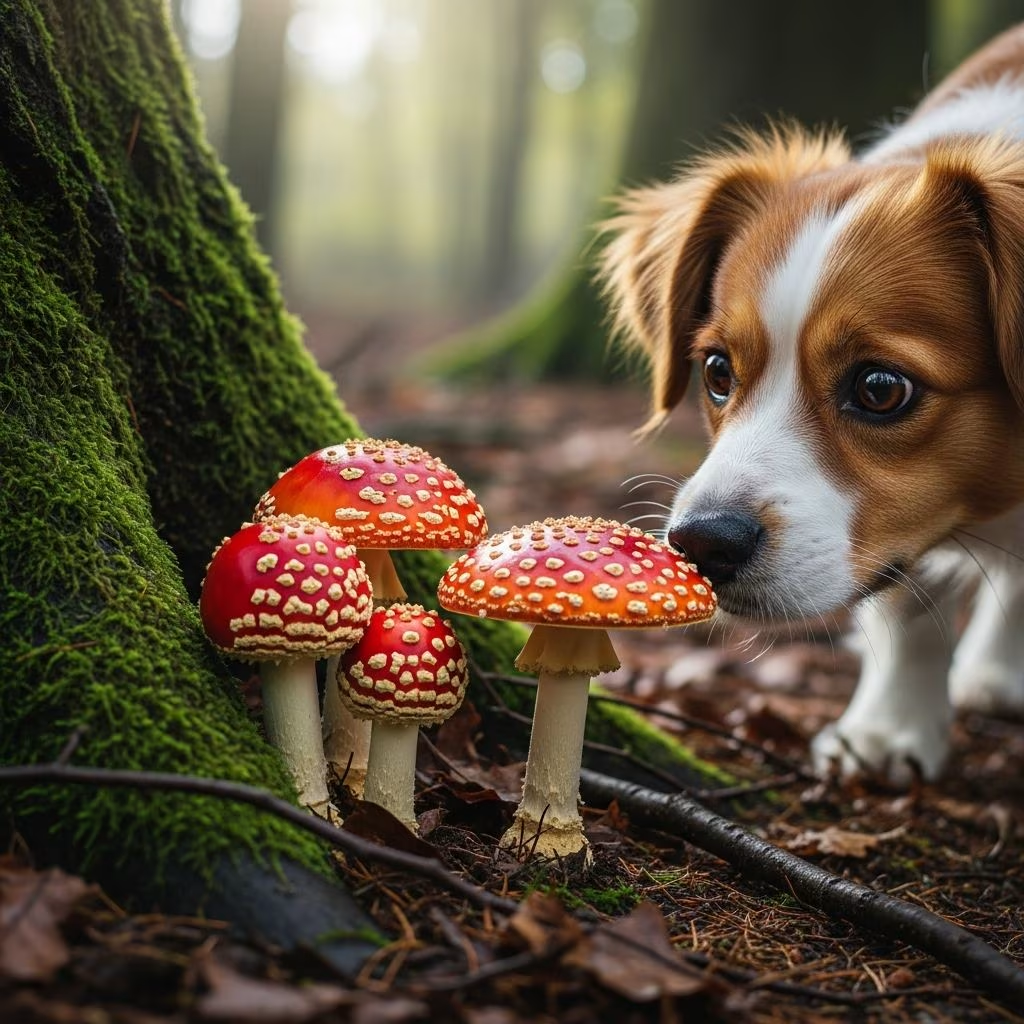
Poisonous mushrooms represent a hidden hazard in yards, forests, and parks, posing severe risks to curious pets like dogs and cats. While many fungi are harmless, certain species harbor potent toxins that can trigger rapid illness or death. Understanding these threats enables pet owners to act swiftly, potentially averting tragedy.
Why Pets Are Vulnerable to Mushroom Toxins
Dogs top the list of susceptible animals due to their exploratory eating habits and love for roaming. Cats, though less prone, may nibble mushrooms out of curiosity. Even small ingestions can prove lethal, especially in tiny breeds or with highly toxic varieties like the death cap (Amanita phalloides).
Toxins vary widely, targeting organs from liver and kidneys to the nervous system. Onset times offer clues: rapid signs (under 3 hours) often signal milder gastrointestinal issues, while delays beyond 6 hours flag life-threatening liver or kidney damage.
Primary Toxin Categories and Their Effects
Mushrooms fall into distinct groups based on toxins, each producing unique symptoms. Here’s an overview:
- Hepatotoxic Mushrooms: These assault the liver primarily, with kidneys as secondary targets. Amanitins cause delayed vomiting, progressing to organ failure.
- Nephrotoxic Mushrooms: Kidney-focused, rare in North America but devastating when encountered. Delayed symptoms like thirst and lethargy precede failure.
- Neurotoxic Mushrooms: Impact the brain, inducing hallucinations, tremors, and seizures. Psilocybin types mimic hallucinogens.
- Gastrointestinal Irritants: Cause vomiting and diarrhea, usually self-resolving but dehydrating.
- Muscarinic Mushrooms: Mimic nerve agent effects with salivation, pinpoint pupils, and bradycardia.
Toxin Comparison Table
| Toxin Type | Key Mushrooms | Onset | Main Effects | Prognosis |
|---|---|---|---|---|
| Cyclopeptides (Amanitins) | Amanita phalloides, A. virosa | 6-24 hours | Liver/kidney failure | Grave, often fatal |
| Orellanine | Cortinarius spp. | 3-14 days | Kidney damage | Guarded |
| Monomethylhydrazine | Gyromitra spp. | 6-24 hours | CNS seizures | Variable |
| Isoxazoles (Ibotenic acid, Muscimol) | Amanita muscaria | 30 min-2 hours | Hallucinations, ataxia | Good, self-limiting |
| Muscarine | Inocybe, Clitocybe | 15 min-2 hours | SLUDGE syndrome | Good with treatment |
| Psilocybin | Psilocybe spp. | 30-60 min | Psychoactive effects | Usually resolves |
Recognizing Symptoms by Phase
Mushroom poisoning unfolds in stages, varying by toxin. Hepatotoxic cases, like death cap ingestion, follow a classic pattern:
- Phase 1 (6-24 hours): Violent vomiting, watery diarrhea, abdominal pain. Pets seem to recover briefly.
- Phase 2 (24-48 hours): Apparent improvement, masking brewing liver damage.
- Phase 3 (48+ hours): Jaundice, weakness, bleeding, coma, death within 3-7 days.
Neurotoxic signs erupt faster: disorientation, vocalizing, dilated pupils, frantic grooming in cats, tremors. Muscarinic effects include drooling, urination, slow heart rate, collapse.
High-Risk Mushroom Species
Death Cap and Death Angel (Amanita phalloides, A. virosa)
These green or white-capped killers thrive worldwide, especially fall. Even half a cap can kill a dog via alpha-amanitin, absorbed efficiently in canine guts.
False Morels (Gyromitra spp.)
Brain-wrinkled caps release hydrazine, causing seizures and liver strain. Cooking reduces but doesn’t eliminate risk.
Fly Agaric (Amanita muscaria)
Red with white warts; induces delirium but rarely kills.
Inky Caps and Others
Coprinus trigger GI upset; little brown mushrooms (LBMs) hide unknowns.
Diagnosis Challenges in Veterinary Practice
No quick test exists for most toxins; vets rely on history, symptoms, and onset. Bloodwork reveals elevated liver enzymes (ALT, AST), bilirubin in hepatotoxicity; BUN/creatinine for kidneys. Liver biopsies confirm amanitin damage.
Mushroom ID is tricky—photos help mycologists, but mixed ingestions complicate matters. Latent periods guide suspicion: long delays scream hepatotoxins.
Emergency Treatment Protocols
Act fast: Induce vomiting if within 2 hours (never in ataxia cases). Activated charcoal binds toxins; multiple doses for amatoxins.
Hospitalization features IV fluids, antiemetics, hepatoprotectants like SAMe, silymarin. Silibinin counters amanitin; plasma transfusions aid clotting. Liver transplants are experimental.
For muscarinic: Atropine reverses effects. Neurotoxics need benzodiazepines for seizures.
Prognosis hinges on toxin and timing—early decontamination boosts survival, but hepatotoxins kill 50-90% despite care.
Seasonal and Environmental Risks
Fall rains spur growth, especially Amanita in yards post-July-November. Urban pets face risks from landscaped fungi; wild areas amplify exposure.
Prevention Strategies for Pet Owners
- Supervise outdoor time; leash in mushroom-prone areas.
- Fence yards; remove fungi promptly (wear gloves).
- Educate on lookalikes—avoid assuming edibility.
- Contact poison control (e.g., ASPCA hotline) at suspicion.
Avoid home remedies; professional care is vital.
FAQs on Mushroom Poisoning in Pets
What should I do if my dog ate a mushroom?
Don’t wait for symptoms—call your vet or poison hotline immediately. Note mushroom details and onset.
Are all wild mushrooms dangerous?
No, but many are unidentified and risky. Err on caution.
Can cats get mushroom poisoning?
Yes, though less common than dogs; symptoms mirror canines.
Is mushroom toxicity fatal?
Often with hepatotoxins, but early intervention saves lives.
How to identify toxic mushrooms?
Leave to experts—visual ID is unreliable without lab confirmation.
Recent Insights from Veterinary Toxicology
Studies affirm dogs’ high amanitin absorption; Purdue experts warn of seasonal death caps. PubMed reviews highlight multi-organ syndromes.
References
- Mushroom Toxicity – Northshore Veterinary Hospital — Northshore Veterinary Hospital. 2023. https://northshore-vet.com/mushroom-toxicity/
- Overview of Mushrooms Toxic to Animals — MSD Veterinary Manual. 2024. https://www.msdvetmanual.com/toxicology/poisonous-mushrooms/overview-of-mushrooms-toxic-to-animals
- PVM Toxicologist’s Warning about Poisonous Mushrooms — Purdue Veterinary Medicine. 2023. https://vet.purdue.edu/news/pvm-toxicologists-warning-about-poisonous-mushrooms-aids-pet-owners-locally-and-nationally.php
- Mushroom Toxicity in Pets — Longwood Veterinary Center. 2023. https://longwoodvetcenter.com/mushroom-toxicity-in-pets/
- Mushroom Toxicity — VCA Animal Hospitals. 2024. https://vcahospitals.com/know-your-pet/mushroom-toxicity
- Mushroom Toxicity — MSPCA-Angell. 2023. https://www.mspca.org/angell_services/mushroom-toxicity/
- Toxic mushrooms — PubMed/NCBI. 2002-05-01. https://pubmed.ncbi.nlm.nih.gov/12012743/



