

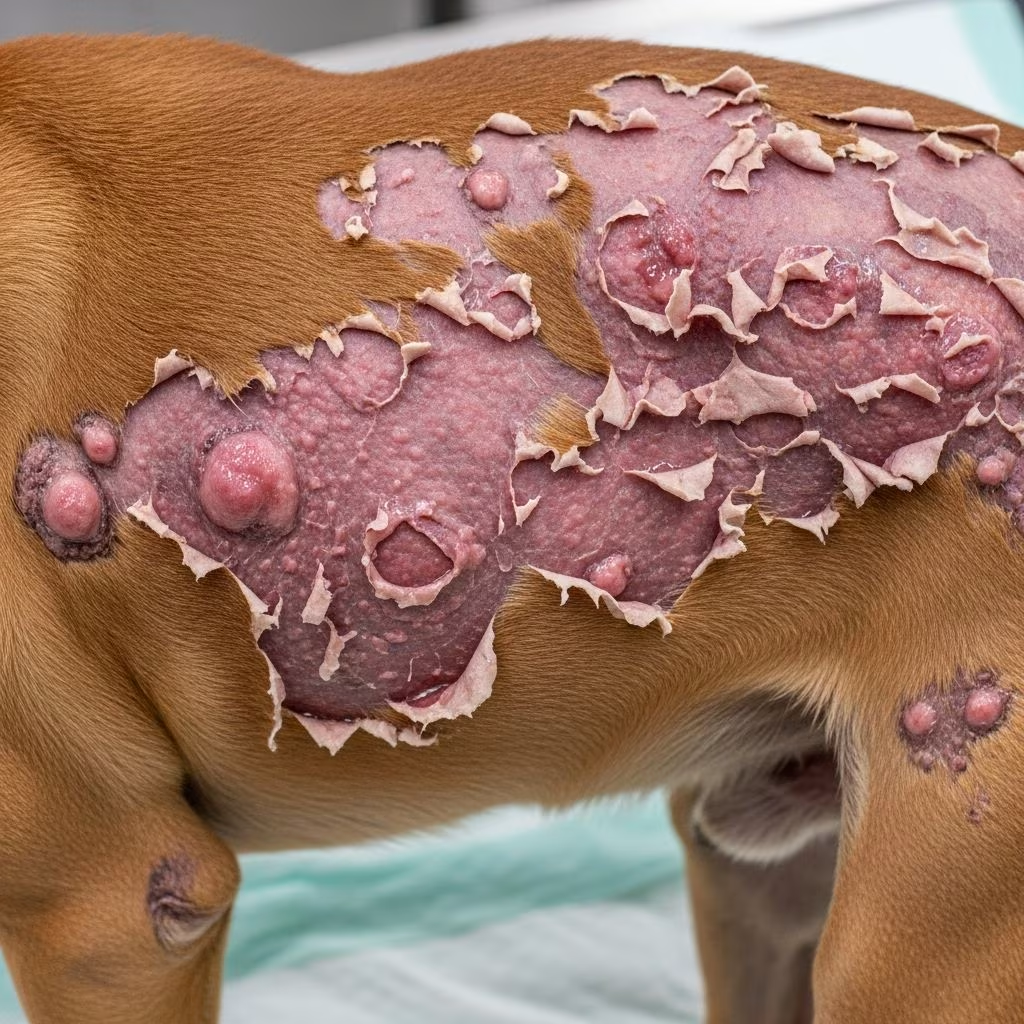
Toxic epidermal necrolysis (TEN) represents one of the most severe dermatological emergencies in canine medicine, characterized by rapid and extensive epidermal detachment that can cover more than 30% of the body surface. This immune-mediated reaction primarily stems from adverse drug responses, leading to keratinocyte apoptosis and full-thickness skin necrosis.
Defining the Condition and Its Severity
TEN in dogs manifests as a spectrum of keratinocyte death, distinguishing it from milder conditions like erythema multiforme. Unlike superficial reactions, TEN involves profound epidermal devitalization, often affecting mucous membranes and progressing to life-threatening complications such as sepsis and fluid loss. Veterinary pathologists note that while traditionally viewed as having minimal dermal involvement, recent cases reveal lymphocytic infiltration and varied necrosis patterns.
The condition’s gravity is underscored by its high mortality rate, with many cases culminating in euthanasia due to unrelenting pain and progression despite intervention. Early recognition is pivotal, as delays exacerbate fluid imbalances, hypothermia, and secondary infections.
Common Triggers and Risk Factors
Drugs remain the predominant inciting agents for canine TEN. Antibiotics, particularly fluoroquinolones like enrofloxacin, are frequently implicated due to their potential to induce cell toxicity and immune dysregulation. Non-steroidal anti-inflammatories (NSAIDs) such as carprofen and meloxicam also feature prominently, though causality assessments like the ALDEN score help differentiate probable culprits.
- Antibiotics: Enrofloxacin linked to widespread necrosis post-injection or oral use.
- NSAIDs: Carprofen shows probable causality in biopsy-confirmed cases.
- Other agents: Sulfonamides, penicillins, and even novel therapies like cannabidiol oils.
Beyond pharmaceuticals, infections and underlying neoplasia can precipitate TEN, though idiopathic instances occur. Genetic predispositions may heighten susceptibility in certain breeds, emphasizing the need for thorough historical review.
Recognizing Clinical Manifestations
Initial signs often mimic less severe allergies: fever, malaise, and irregular erythematous or purpuric macules that rapidly evolve into painful erosions. Mucocutaneous junctions—periocular, perilabial, and oral—are commonly first affected, with bilateral pinnal erosion and moist concave ears signaling advanced disease.
As detachment spreads, dogs exhibit extreme pain, pruritus, and hemorrhagic interdigital erosions. Paw pad sloughing is rare, but extensive body involvement leads to visible epidermal sheets peeling away, exposing raw dermis. Affected animals become systemically compromised, with risks of hypovolemia and septicemia.
| Stage | Key Signs | Common Sites |
|---|---|---|
| Early | Erythema, purpura, fever | Mucocutaneous junctions |
| Progressive | Painful erosions, epidermal detachment | Pinnae, trunk, limbs |
| Severe | Full-thickness necrosis (>30% BSA), sepsis | Widespread, including mucosa |
Diagnostic Approaches and Confirmation
Diagnosis hinges on clinical presentation corroborated by histopathology. Skin biopsies reveal apoptosis at multiple epidermal levels (92% of cases), progressing to full-thickness coagulation necrosis in over half. Lymphocytic interface dermatitis with satellitosis around apoptotic keratinocytes is hallmark, overlapping with erythema multiforme but differentiated by extent.
Tools like the ALDEN algorithm assess drug causality, scoring factors such as latency and dechallenge. Exclusion of infections via cytology and culture is essential, as secondary bacterial overgrowth complicates the picture. Advanced imaging or panniculitis evaluation may uncover dermal extensions.
- Biopsy essentials: Minimal dermal inflammation, intraepidermal lymphocytes.
- Supportive tests: Bloodwork for systemic involvement, microbiology for differentials.
Therapeutic Strategies: From Supportive Care to Innovations
Treatment demands intensive care referral for fluid resuscitation, electrolyte correction, and barrier nursing to combat hypothermia and infection. Pain management with opioids like butorphanol is crucial, alongside broad-spectrum antibiotics and nutritional support.
Immunosuppressants such as glucocorticoids are trialed early, though evidence is anecdotal. Antihistamines and NSAIDs like meloxicam address inflammation, but their use requires caution given potential triggers. Emerging therapies show promise: topical xenogeneic exosomes from bovine cord blood accelerated healing in enrofloxacin-induced TEN, achieving full epithelization in 58 days via intradermal and spray application (1 million/kg BID).
Conventional wound care—chlorhexidine antisepsis and debridement—lays groundwork, but exosomes promote regeneration by modulating inflammation and proliferation. Surgical intervention is reserved for refractory cases.
Prognosis and Long-Term Management
Mortality exceeds 50% in extensive cases, with euthanasia common due to suffering. Survivors like the exosome-treated Cavalier King Charles Spaniel highlight recovery potential when >30% body surface is involved, provided aggressive intervention.
Post-recovery, lifelong drug avoidance is mandated based on ALDEN-identified triggers. Monitoring for recurrence or scarring informs follow-up, with dermatology specialists guiding desensitization if needed. Owner education on early signs prevents delays.
Preventive Measures for Pet Owners and Veterinarians
Vigilance post-medication initiation—especially antibiotics and NSAIDs—is key. Baseline dermatological exams before long-term therapies aid risk stratification. Prompt discontinuation of suspects upon rash onset, coupled with biopsy, optimizes outcomes.
Breed-specific alerts and pharmacovigilance reporting enhance collective knowledge, reducing incidence through safer prescribing.
Frequently Asked Questions (FAQs)
What drugs most commonly cause TEN in dogs?
Fluoroquinolones like enrofloxacin and NSAIDs such as carprofen are primary culprits, confirmed via causality scoring.
How quickly does TEN progress in dogs?
From initial macules to widespread detachment within days, necessitating immediate veterinary attention.
Can TEN be cured completely?
With intensive care and novel therapies like exosomes, full recovery is possible, though scarring may persist.
Is biopsy always required for diagnosis?
Yes, to confirm histopathology and rule out mimics like erythema multiforme.
What is the role of exosomes in treatment?
These nano-vesicles enhance wound healing topically, showing dramatic results in drug-induced cases.
References
- Clinical and microscopic characteristics of canine toxic epidermal necrosis. — Vet Pathol. 2014-11-01. https://pubmed.ncbi.nlm.nih.gov/24907312/
- Topical Xenogeneic Exosome Therapy in a Dog with Toxic Epidermal Necrolysis. — Kafkas Univ Vet Fak Derg. 2024. https://vetdergikafkas.org/uploads/pdf/pdf_KVFD_3151.pdf
- Clinical and Microscopic Characteristics of Canine Toxic Epidermal Necrolysis. — Vet Pathol. 2014-07-17. https://journals.sagepub.com/doi/10.1177/0300985814537530
- Case Report: Positive Outcome of a Suspected Drug-Associated Toxic Epidermal Necrolysis in a Dog. — Front Vet Sci. 2021-09-29. https://www.frontiersin.org/journals/veterinary-science/articles/10.3389/fvets.2021.728901/full
- Steven Johnson Syndrome and Toxic Epidermal Necrolysis. — University of Minnesota Libraries Open Textbook. Accessed 2026. https://open.lib.umn.edu/animaldermatology3/chapter/1h-steven-johnson-syndrome-and-toxic-epidermal-necrolysis/



