
Optimal Dietary Management for Toucans and Hornbills
Essential nutritional guidelines for captive toucan and hornbill care
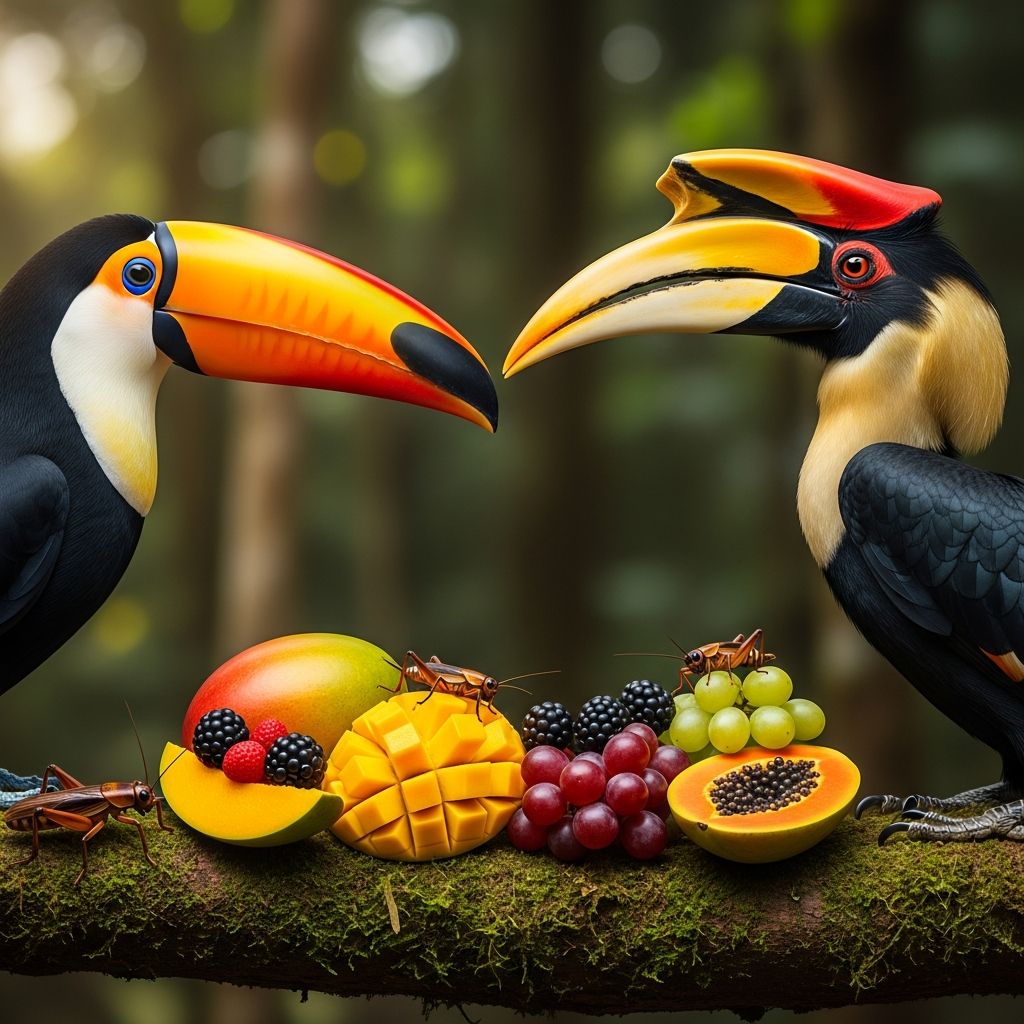
Understanding the Natural Diet and Captive Adaptations
In their native habitats, toucans consume a predominantly frugivorous diet, supplementing their fruit intake with insects, small rodents, and various invertebrates that provide essential proteins and micronutrients. Hornbills display similar feeding patterns, though the ratio of fruits to animal matter varies considerably among species depending on their ecological niche and geographic location. When establishing a nutritional program for these birds in captive environments, replicating the fundamental components of their wild diet becomes essential for maintaining optimal health, supporting reproduction, and extending longevity.
The transition from wild-caught or parent-reared birds to properly managed captive diets represents one of the most critical phases in their care. Unlike many other avian species, toucans and hornbills have evolved specialized digestive systems adapted to process high volumes of water-rich fruits while selectively absorbing essential nutrients. This evolutionary adaptation, however, creates unique challenges when birds consume nutrient-dense formulated diets that differ significantly from their natural food sources.
Formulated Pellets as the Foundation
A well-constructed captive diet should incorporate low-iron pellets as the nutritional cornerstone, complemented by fresh fruits that enhance palatability and encourage consistent consumption. The pellet component typically comprises 25 to 35 percent of the total daily food intake, while fresh fruits constitute the remaining portion. This balance ensures adequate micronutrient and mineral availability while maintaining the birds’ natural feeding preferences.
When selecting appropriate pellet formulations, several critical specifications must be evaluated:
- Iron content should remain below 50 to 100 parts per million (ppm), with emerging research supporting targets below 50 ppm whenever feasible
- Pellet size should accommodate the bird’s bill structure, with larger species requiring appropriately sized formulations to facilitate consumption and reduce food selectivity
- Tannin content should be substantial, as these compounds bind dietary iron and reduce its bioavailability, thereby minimizing absorption rates
- Vitamin C concentrations should remain below 500 mg/kg daily, as ascorbic acid enhances iron absorption in sensitive species
Many birds display a strong preference for fruits over formulated pellets, leading to inconsistent nutrient intake and nutritional deficiencies. To address this behavioral tendency, practitioners can employ several strategies: crushing pellets into smaller fragments, mixing finely ground formulations with fruit to create an adhesive coating, or utilizing very small pellet varieties that integrate seamlessly with fruit components.
Fruit Selection and Preparation Protocols
The fruit component of the diet serves multiple purposes beyond providing water and simple carbohydrates—it supplies fiber, various phytonutrients, and encourages natural foraging behaviors. However, not all fruits offer equal nutritional value, and some present potential health risks.
Appropriate fruit selections include:
- Watery fruits: banana, papaya, melons, mango, kiwi, pineapple
- Fibrous fruits: rambutan, jackfruit, durian, longan, sapodilla, persimmon, guava
- Additional options: apples, grapes, blueberries, berries, tomatoes
Proper preparation significantly impacts nutritional value and safety. All fruits must be thoroughly rinsed to remove pesticide residues and environmental contaminants. Larger fruits should be cut into manageable cubes that the bird can manipulate and ingest without aspiration risk. Daily fruit rotation promotes dietary variety and ensures exposure to diverse micronutrient profiles, reducing the likelihood of single-nutrient deficiencies.
Creating mixed fruit salads enhances variety and encourages consumption of less-preferred nutritious items. These preparations can be supplemented with commercial pellet dust or alternative concentrate sources that adhere to the fruit surface, ensuring pellet consumption even among birds with pronounced fruit preferences.
Iron Storage Disease: Prevention Through Dietary Management
Iron storage disease (hemosiderosis) represents the most serious nutritional concern affecting captive toucans and hornbills, with significant prevalence in poorly managed populations. Unlike many other bird species, toucans and related taxa have evolved particularly efficient mechanisms for iron absorption, an adaptation advantageous in their natural environment where iron-poor fruits dominate their diet but potentially catastrophic in captive settings where dietary iron concentration exceeds natural levels.
The pathophysiology of iron storage disease involves iron accumulation within hepatic and cardiac tissues, leading to oxidative damage, fibrosis, and progressive organ dysfunction. Species that consume predominantly iron-poor fruits in the wild have developed digestive systems optimized for maximum iron absorption—a characteristic that predisposes them to iron overload when consuming standard pellet formulations or iron-rich foods.
Prevention strategies encompass multiple dietary and environmental interventions:
- Maintain pellet iron concentrations below 50 ppm, with some practitioners targeting less than 100 ppm when 50 ppm formulations are unavailable
- Eliminate or minimize high-iron food items, particularly raisins and meat-based products
- Ensure dietary tannin concentrations remain elevated, as these compounds competitively bind iron and reduce intestinal absorption
- Monitor drinking water iron content and eliminate rust-contaminated water sources within enclosures
- Avoid excessive vitamin A supplementation, which can compromise intestinal barrier function and increase iron absorption
- Limit vitamin C to less than 500 mg/kg daily, as this nutrient enhances iron bioavailability
Even when dietary management is impeccable, periodic hematologic and biochemical assessment should be performed to monitor iron status. Therapeutic intervention with iron chelating agents frequently proves unrewarding, emphasizing the critical importance of preventive dietary measures.
Protein and Lipid Requirements
While fruits form the bulk of the toucan and hornbill diet, supplemental protein and lipids derived from animal sources provide essential amino acids and fatty acids necessary for feather development, immune function, and reproductive success. The optimal protein-to-fruit ratio varies among species and life stages, necessitating individualized dietary adjustment.
High-quality protein sources suitable for captive populations include:
- Insects: crickets, mealworms, and other commercially available arthropods
- Eggs: hard-boiled eggs with shell intact provide excellent bioavailable protein and calcium
- Whole prey: mice, lizards, frogs, chicken chicks
- Minced meat: chicken or other poultry, with extreme caution regarding spoilage in warm climates
- Alternative concentrates: sprouted soybeans, tofu, tempeh, sunflower seeds, boiled or sprouted beans
When incorporating animal-based proteins, calcium supplementation becomes mandatory to prevent nutritional secondary hyperparathyroidism, as meat and insects contain elevated phosphorus but insufficient calcium for optimal skeletal health. During breeding season, increasing protein and lipid content may stimulate reproductive behaviors and support egg production, though these increases should be temporary and precisely calibrated to reproductive status.
Calcium, Phosphorus, and Mineral Balance
The calcium-to-phosphorus ratio fundamentally influences skeletal integrity, eggshell quality, and neural function. Most fruits contain inadequate calcium relative to phosphorus, creating potential for mineral imbalances when fruits constitute more than 60 percent of dietary intake. Formulated pellets should provide substantial calcium, but supplemental calcium becomes particularly important during breeding season when metabolic demands increase substantially.
When selecting calcium supplements, consideration must be given to iron content, as many complete calcium-phosphorus-vitamin D3 formulations contain added iron that conflicts with iron minimization strategies. Laboratory-grade calcium compounds without extraneous minerals often prove superior for iron-sensitive species.
Hydration and Water Management
These long-beaked birds frequently experience difficulty accessing water from conventional containers, predisposing them to dehydration despite adequate dietary water content from fruits. Large, shallow drinking pans or specialized watering systems must be provided, with careful attention to ensuring birds can manipulate their bills appropriately.
Water quality warrants particular attention, as iron contamination through rust or mineral deposits can contribute to systemic iron overload. When possible, bottled or deionized water should be utilized, particularly for iron-sensitive species. Daily water changes maintain hygiene and reduce bacterial colonization that could promote gastroenteritis in these birds.
Practical Daily Feeding Protocols
Most adult toucans in maintenance are fed once daily, typically in morning hours when birds are most active and alert. Young birds, nursing females, and birds during breeding season require multiple daily feedings with adjusted portion sizes to support their heightened metabolic demands.
For a large Ramphastos (larger toucan species) in maintenance:
- Diced fruits: approximately 315 grams daily
- Low-iron large pellets: approximately 35 grams daily
- Low-iron small pellets: variable quantity mixed with fruits
These quantities should be adjusted based on body weight maintenance, activity level, and ambient temperature. Birds exhibiting weight loss exceeding 6 percent over consecutive days should have food intake increased, while those gaining more than 18 percent require modest reductions to prevent obesity-related complications.
Species-Specific Dietary Variations
While toucans and hornbills share fundamental dietary requirements, different species exhibit varying preferences for fruit-to-animal protein ratios. Some hornbill species demonstrate omnivorous tendencies with considerable animal protein consumption, while others remain predominantly frugivorous.
Three general dietary categories have been established for hornbill management:
| Diet Type | Primary Composition | Fruits (%) | Protein Sources (%) | Best For |
|---|---|---|---|---|
| Fruit-Biased Omnivore | Predominantly frugivorous with modest protein | 70 | 30 | Anorhinus, Oocyceros, Anthracoceros, Buceros species |
| Balanced Omnivore | Equal fruit and protein components | 30-40 | 60-70 | Intermediate species |
| Protein-Emphasis | Primarily animal-derived nutrition | Low | 100 | Highly carnivorous species |
Individual bird preferences and response to dietary modifications should guide adjustments, with periodic weight and health assessments informing long-term dietary strategy.
Pellet Batch Analysis and Quality Control
Iron content of commercially formulated pellets can vary considerably between manufacturing batches and even within the same product line. Responsible facilities implementing rigorous nutritional management should conduct periodic analysis of pellet iron content before introducing new batches into the feeding program. This precautionary measure prevents inadvertent exposure to elevated iron levels that could precipitate hemosiderosis in sensitive populations.
Frequently Asked Questions About Toucan and Hornbill Nutrition
What should I do if my toucan refuses pellets and only eats fruit?
Crush pellets into fine powder and coat fresh fruit with the particles so they adhere during feeding. Alternatively, use very small pellet varieties specifically formulated for birds with strong fruit preferences. Gradually increase pellet proportion while maintaining fruit palatability.
How often should these birds be fed?
Adult birds in maintenance typically receive one daily feeding in morning hours. Young birds, breeding females, and birds during reproductive season require 5-9 daily feedings depending on age and condition.
Can I supplement with vitamins and minerals?
When a complete pellet-based diet is consumed in appropriate proportions, additional vitamin and mineral supplementation is unnecessary and potentially harmful. Excessive supplementation can introduce excess iron, vitamin A toxicity, or mineral imbalances.
What is the ideal pellet iron concentration?
Current recommendations suggest maintaining pellet iron below 50 to 100 ppm, with emerging evidence supporting targets below 50 ppm whenever feasible.
Are there any fruits I should avoid?
Raisins and meat-based products should be minimized or avoided due to their iron content. Additionally, ensure all fruits are thoroughly rinsed to eliminate pesticide contamination.
Conclusion: Integrating Evidence-Based Nutrition Into Daily Care
Successful long-term management of captive toucans and hornbills depends fundamentally upon precise dietary formulation that respects their evolutionary adaptations while preventing nutritional diseases inherent to captive environments. By emphasizing low-iron pellet formulations, carefully selected fresh fruits, strategic protein supplementation, and meticulous attention to water quality and mineral balance, facilities can support these remarkable birds through their entire lifespan while maintaining robust health and supporting successful reproduction when appropriate.
References
- Nutrition in Toucans and Hornbills — MSD Veterinary Manual (formerly Merck Veterinary Manual). 2024. https://www.msdvetmanual.com/management-and-nutrition/nutrition-exotic-and-zoo-animals/nutrition-in-toucans-and-hornbills
- Hornbill Basic Care Guidelines — IUCN Hornbill Specialist Group. April 2024. https://iucnhornbills.org/
- Toucan Husbandry Manual for the AZA Piciformes — Association of Zoos and Aquariums (AZA). 2020. https://www.aza.org/
- EAZA Hornbill Management and Husbandry Guidelines — European Association of Zoos and Aquaria (EAZA). 2019. https://www.eaza.org/
- Ramphastidae Nutrition Guidelines — Harrison’s Bird Foods. 2024. https://www.harrisonsbirdfoods.com/
- Toucan Care Sheet — Emerald Forest Bird Gardens. 2020. https://emeraldforestbirdgardens.com/
- Toco Toucan Managed Care Fact Sheet — San Diego Zoo Global. 2024. https://ielc.libguides.com/sdzg/
Similar Articles








Read full bio of medha deb


