

Total Hip Replacement in Dogs: A Complete Guide
If your veterinarian has recommended total hip replacement (THR) surgery for your dog, you may have questions about what this procedure involves, how it works, and what to expect during recovery. Total hip replacement is one of the most advanced surgical procedures available in veterinary medicine today, offering significant pain relief and restoration of normal function for dogs suffering from severe hip problems. This comprehensive guide will walk you through everything you need to know about canine total hip replacement.
What Is Total Hip Replacement Surgery?
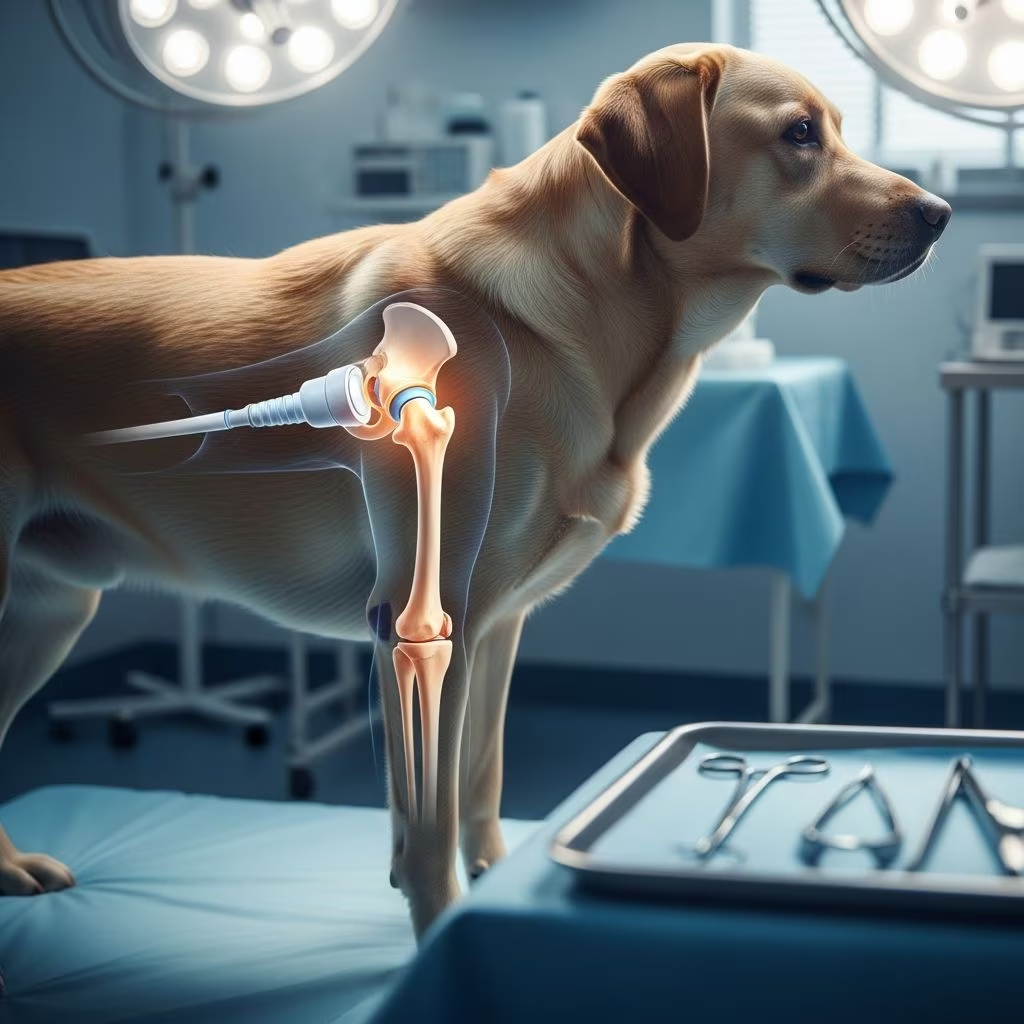
Total hip replacement is a surgical procedure that removes and replaces both the ball and socket components of the hip joint with artificial prostheses. The hip joint is a ball-and-socket joint where the ball is located at the top of the thigh bone (femur), and the socket (acetabulum) sits in the pelvis. When a dog suffers from hip dysplasia, arthritis, or other degenerative hip conditions, these structures become damaged or misaligned, causing pain and reduced mobility.
During THR surgery, the diseased femoral head (ball) is replaced with a metal implant, typically made from cobalt-chromium metal alloy, which is attached to a stem that fits inside the femur. The damaged socket is replaced with a dense plastic cup made from high molecular weight polyethylene plastic, which is positioned in the pelvis. These prosthetic components are specifically designed to mimic the anatomy and function of a healthy hip joint.
Why Is Total Hip Replacement Recommended?
Total hip replacement is considered the gold standard treatment for large-breed dogs with severe hip dysplasia, particularly when conservative treatment options have become ineffective. Hip dysplasia is the leading cause of hind-leg lameness in dogs and can significantly impact quality of life. THR is the only treatment that fully restores lifelong mobility and prevents recurrence of hip dysplasia.
Dogs of virtually any size can benefit from this procedure. Hip replacements can be performed on dogs weighing anywhere from five to 170 pounds, and the procedure can even be performed on cats. Your veterinarian will determine if your dog is a suitable candidate for THR based on their overall health, the severity of hip disease, and other individual factors.
The Surgical Procedure Explained
Pre-Surgical Preparation
Before undergoing total hip replacement, your dog will go through a comprehensive preparation process. Most commonly, dogs will have a thorough examination and blood screening profile to ensure they are cleared for general anesthesia. Your veterinarian will conduct a complete history and full physical examination, including orthopedic, neurologic, and dermatologic evaluations. A complete gait analysis will be performed, and sedated X-rays will be taken to assess your dog’s candidacy for THR.
The typical schedule for total hip replacement includes an initial consultation where the THR surgeon performs a physical examination and discusses the procedure in detail. If THR is recommended, a second appointment will be scheduled approximately eight to ten weeks later. During this pre-operative appointment, your dog will be sedated for surgical radiographs, urine collection, and preparation of the limb for surgery. In the week prior to surgery, you will be asked to have a urinalysis performed to ensure your pet does not have a urinary tract infection.
The Surgical Process
Total hip replacement surgery is performed in the morning under general anesthesia and typically takes between two and three hours, depending on the severity of hip disease present in your dog. During the procedure, the surgeon removes the cartilage and bone that make up the diseased hip joint. The diseased femoral head is then replaced with a metal implant on a stem that fits inside the femur, and the damaged socket is replaced with a plastic or combination metal and plastic cup.
Several types of hip replacements are available for use in dogs, including cemented implants, cementless implants, and a hybrid combination of the two. With cemented implants, bone cement is used to hold the prosthetic components in place. Cementless implants are pressed into the bone and rely on bone ingrowth for stability. A recent technological advancement to THR surgeries is the BFX Lateral Bolt system, which has allowed surgeons to transition to mostly cementless THR procedures. Both cemented and cementless methods typically provide excellent results with no clear advantage to one method over the other.
All total hip replacement procedures are performed by veterinary orthopedic surgeons who are board certified by the American College of Veterinary Surgeons (ACVS). Anesthesia is overseen by a board-certified veterinary anesthesiologist, ensuring the highest level of safety and expertise throughout the procedure.
Post-Operative Recovery and Care
Hospital Stay
After undergoing total hip replacement surgery, most dogs will spend one to three days in the hospital to get their healing off to a good start. Dogs that are healthy enough to undergo the procedure may stay between three to five days in the hospital during the initial recovery period. During this time, your dog will receive professional medical care, pain management, and monitoring to ensure proper healing and early identification of any potential complications.
At-Home Recovery
Once your dog is discharged from the hospital, careful at-home care is essential for successful recovery. Your veterinarian will provide specific post-operative instructions tailored to your dog’s needs. Recovery typically involves:
- Restricted activity and exercise during the initial healing phase
- Pain management medications as prescribed by your veterinarian
- Regular monitoring of the surgical incision site
- Follow-up appointments to assess healing progress
- Gradual increase in activity as approved by your surgeon
- Physical rehabilitation exercises to restore strength and mobility
Success Rates and Long-Term Outcomes
Total hip replacement has an excellent track record of success. Approximately ninety to ninety-five percent of dogs who have a total hip replacement do very well and end up with excellent function. In fact, more than ninety-five percent of patients who receive a THR should be able to use the new hip for the rest of their lives. Since the introduction of modern THR implants in 1990, over 60,000 procedures have been performed using BioMedtrix implants alone, demonstrating the widespread success and acceptance of this procedure in veterinary medicine.
Most dogs experience dramatic improvements in pain levels, mobility, and overall quality of life following successful total hip replacement. Your dog should be able to return to a pain-free and active lifestyle, enjoying normal activities and exercise as they did before hip problems developed.
Risks and Complications
General Surgical Risks
As with any surgical procedure, total hip replacement carries some element of risk, though complications are relatively uncommon. Surgery itself carries some risk of unsuccessful outcomes and complications. While the success rate is high, it is important to understand the potential risks involved. Your dog’s surgeon will do everything possible to prevent problems and will discuss specific risks during your pre-operative consultation.
Specific THR Complications
The reported complication rate following total hip replacement in dogs is between seven and twelve percent. Complications can range from minor to major. Minor complications may include swelling at the incision site (seroma) or low-grade infection of the skin surrounding the incision. These minor issues are typically easily managed and resolve with appropriate treatment.
Known and unforeseen complications that may occur include:
- Hip dislocation (ball and socket separation)
- Loosening of implants over time
- Fracture of the femur or pelvis
- Surgical site infections
- Nerve damage
- Anesthetic complications
- Neurological damage (very rare)
The three major complications that can lead to failure of the hip replacement and potentially require additional surgery are hip dislocation, implant loosening, and infection. With total hip replacement, it is critical that complications are identified and treated early. Most complications can usually be successfully treated with appropriate intervention. Your veterinarian will provide you with clear instructions on what signs to watch for during recovery and when to seek immediate veterinary care.
Cost Considerations
Total hip replacement is one of the most advanced orthopedic procedures performed in veterinary surgery and typically costs around $8,000 to $10,000 per hip. This cost typically includes the pre-operative evaluation, surgical procedure, implants, anesthesia, hospitalization, and initial post-operative care. The exact cost may vary depending on your location, the veterinary facility, the surgeon’s experience, and any additional treatments or complications that may arise during the procedure.
Frequently Asked Questions
Q: At what age can dogs receive total hip replacement?
A: Dogs can be candidates for total hip replacement at various ages. While younger, active dogs often benefit most from the procedure, older dogs in good health can also be suitable candidates. Your veterinarian will assess your individual dog’s age, health status, and overall fitness for surgery.
Q: Can both hips be replaced during one surgery?
A: Total hip replacement procedures are typically performed on one hip at a time. If your dog requires bilateral hip replacement, the second hip will usually be addressed in a separate surgical session, typically several weeks after the first procedure has healed.
Q: How long does it take for my dog to fully recover?
A: While dogs typically spend one to three days in the hospital immediately after surgery, full recovery and return to normal activity usually takes several weeks to a few months. Your veterinarian will provide specific timeline expectations based on your dog’s individual recovery progress.
Q: What can I do to prevent hip problems in my dog?
A: While you cannot completely prevent hip dysplasia, which is often hereditary, you can minimize risk by maintaining a healthy weight, providing appropriate exercise, avoiding excessive jumping or rough play during growth, and selecting breeds from reputable breeders who screen for hip dysplasia.
Q: Will my dog return to normal activities after THR?
A: Yes, most dogs return to normal activities and enjoy improved quality of life after successful total hip replacement. With proper recovery and rehabilitation, your dog should be able to walk, run, and play without the pain and limitations they experienced before surgery.
Q: How long do THR implants last?
A: High-quality THR implants are designed to last for your dog’s entire lifetime. More than ninety-five percent of dogs who receive a total hip replacement should be able to use the new hip for the rest of their lives.
References
- Canine Total Hip Replacement — Dallas Veterinary Surgical Center. 2024. https://www.dvsc.com/canine-total-hip-replacement
- Canine Total Hip Replacement — MU Veterinary Health Center, University of Missouri College of Veterinary Medicine. 2024. https://vhc.missouri.edu/small-animal-hospital/surgery/canine-total-hip-replacement/
- The Total Hip Replacement — BioMedtrix. 2024. https://biomedtrix.com/total-hip-replacement/
- Total Hip Replacement in Dogs — VCA Animal Hospitals. 2024. https://vcahospitals.com/know-your-pet/total-hip-replacement-in-dogs
- Hip Replacement — Texas A&M Veterinary Medical Teaching Hospital. 2024. https://vethospital.tamu.edu/small-animal/orthopedics/hip-replacement/
- Total Hip Replacement – A Complete Information Guide — Austin Animal Hospital. 2024. https://www.austinvets.com/case-studies/total-hip-replacement
- Cost of Total Hip Replacement in Dogs & What to Expect from Surgery — Huntersville Carolinavet. 2024. https://www.huntersville.carolinavet.com/site/huntersville-veterinary-blog/2024/03/30/hip-replacement-dog



