

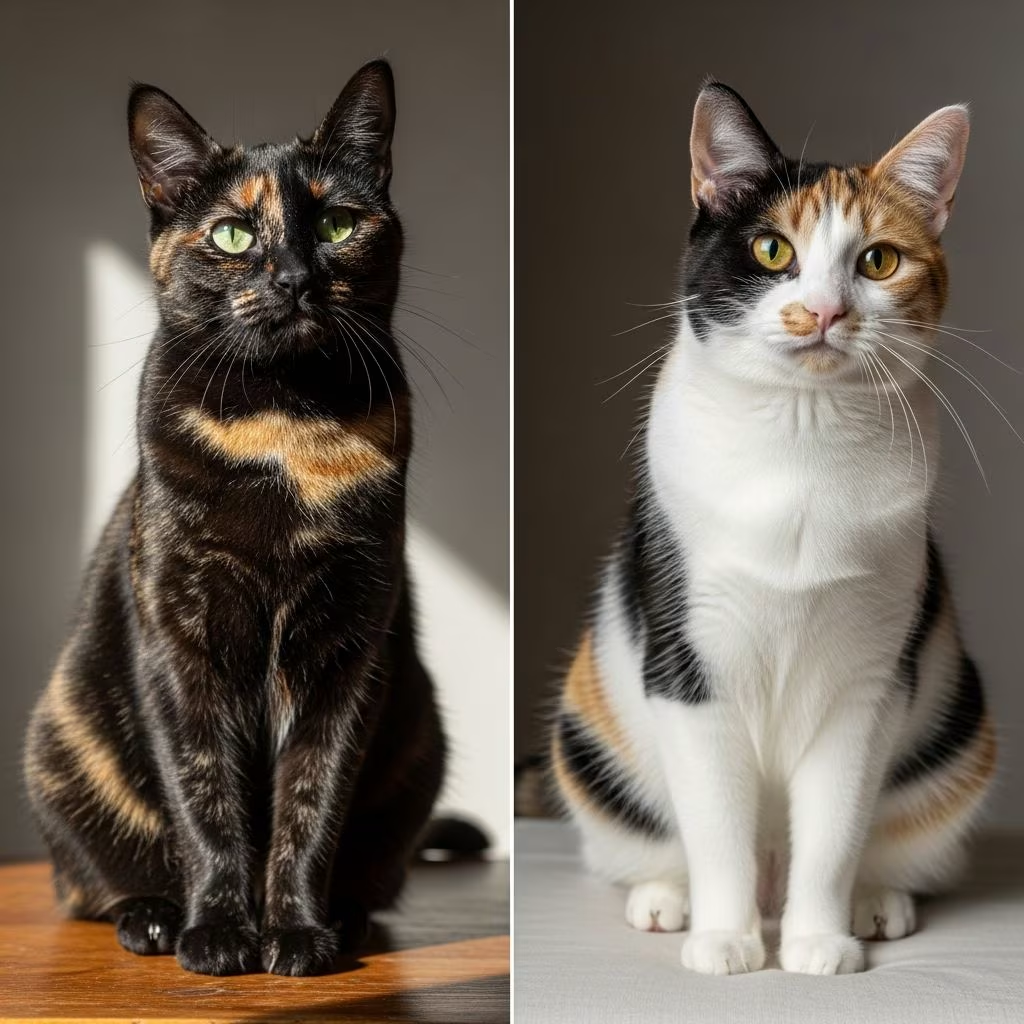
Tortoiseshell and calico cats are beloved for their striking multicolored coats, but they differ primarily in the presence of white fur. Tortoiseshell cats feature a brindled mix of black and orange without white, while calico cats display distinct patches of white, black, and orange.
What Is a Tortoiseshell Cat?
Tortoiseshell, or “tortie,” cats exhibit a beautiful mottled or marbled pattern resembling a tortoise shell, blending shades of black (or chocolate), orange (or red/ginger), and sometimes cream or gray in dilute versions. These colors interweave without distinct separation or white patches, creating a unique, artistic swirled effect.
The pattern arises from X-chromosome linked genetics, where random inactivation (Lyonization) causes patches of different colors. Torties can appear in various breeds like American Shorthair, British Shorthair, Persian, or Maine Coon, but the term refers solely to coat color, not breed.
- Classic Tortoiseshell: Bold black and vibrant orange blended together.
- Dilute Tortoiseshell: Softer gray (blue) and cream colors instead of black and orange.
- Chocolate Tortoiseshell: Brownish tones mixed with orange.
- Chimera Tortoiseshell: Rare fusion of two embryos, resulting in one color on one side of the body and another on the opposite, often dramatic on the face.
What Is a Calico Cat?
Calico cats are tri-colored beauties with large, distinct patches of white, black, and orange fur. The white areas, known as piebald spotting, cover 25-75% of the coat, serving as a canvas for bold black and orange sections that do not blend.
Like torties, calicos appear across breeds but are defined by their pattern. The piebald gene suppresses pigmentation in white areas, creating sharp contrasts. Calicos are also called “tortie-and-white” or tricolor cats.
- Classic Calico: Balanced white base with sizable black and orange patches.
- Dilute Calico: Gray, cream, and white for a pastel look.
- High White Calico: Mostly white with small colored spots.
- Caliby (Calico-Tabby): Tabby stripes within the colored patches.
- Torbie Calico: Tortoiseshell-like marbling combined with white.
Tortoiseshell vs Calico: Key Differences
The primary distinction is white fur: torties have none or minimal, while calicos require significant white from the piebald gene. Tortie patterns are blended and brindle-like; calico patches are separate and defined.
| Feature | Tortoiseshell | Calico |
|---|---|---|
| Colors | Black/orange (or dilute gray/cream) | White + black/orange (or dilute) |
| Pattern | Marbled, blended, mottled | Distinct large patches |
| White Fur | Absent or trace | Prominent (25-75%) |
| Genetic Cause | X-inactivation only | X-inactivation + piebald spotting |
| Nicknames | Tortie | Tortie-and-white, tricolor |
Even tortie-like mottling with notable white classifies as calico due to genetics. Eye colors vary widely in both: green, blue, copper, hazel, or odd-eyed.
Similarities Between Tortoiseshell and Calico Cats
Despite differences, torties and calicos share genetic roots, personalities, and appeal. Both patterns stem from X-chromosome pigmentation genes (orange on one X, black on the other), requiring two X chromosomes—hence nearly always female.
- Predominantly female (99.9% of cases).
- Common tabby markings (tortie-tabby or calico-tabby).
- Independent, spirited temperaments; torties famed for “tortitude” (feisty, sassy), calicos slightly more sociable.
- Not breeds—occur in many purebreds and mixes.
- Good luck symbols in folklore (e.g., Japanese “mi-ke” calicos).
Genetics: Why Are They Almost Always Female?
Cat coat color genes for black (B) and orange (O) reside on the X chromosome. Females (XX) inherit one from each parent: one X may express black, the other orange, with random X-inactivation creating patches.
Males (XY) get one X, typically yielding uniform color. Rare male torties/calicos are XXY (Klinefelter syndrome), often sterile. About 1 in 3,000 calico births is male. This sex-linked trait fascinates geneticists and cat enthusiasts alike.
Tortoiseshell and Calico Cat Personality
Owners report distinct traits, though not scientifically proven breed-specific. Torties embody “tortitude”: bold, vocal, strong-willed, playful yet aloof—demanding attention on their terms. Calicos tend friendlier, more laid-back, affectionate, and adaptable.
Both crave stimulation: interactive toys, puzzle feeders, perches. Early socialization enhances their loving sides. Individual variation exists, influenced by environment and genetics.
Health and Care for Tortoiseshell and Calico Cats
As patterns, not breeds, health mirrors parentage. Common in robust mixed breeds, but watch for breed-linked issues (e.g., Persians: respiratory; Maine Coons: HCM).
- Vet Care: Annual checkups, vaccinations, spay/neuter (vital for rare males).
- Diet: High-quality, age-appropriate food; monitor weight.
- Grooming: Brush weekly (more for longhairs) to reduce hairballs.
- Exercise: Daily play; scratching posts, vertical space.
- Litter: Clean daily; clumping preferred.
Male calicos/torties need fertility checks due to XXY risks. Both thrive indoors with enrichment.
Fun Facts About Tortoiseshell and Calico Cats
- Japanese beckon calicos for prosperity; sailors tattooed them for luck.
- Queen Victoria owned torties; Venus the Chimera Tortie went viral.
- No two coats identical—fingerprints of the feline world.
- Tabbies within patterns create “torbies” or caliby.
- Appear in art/history worldwide, symbolizing diversity.
Frequently Asked Questions (FAQs)
Are tortoiseshell and calico the same?
No. Tortoiseshells lack white with blended black/orange; calicos have white plus distinct patches.
Can male tortoiseshell or calico cats exist?
Rarely, via XXY chromosomes; usually sterile and need vet monitoring.
Do tortoiseshell cats have a unique personality?
Tortitude suggests feisty, independent traits, but varies by individual.
What breeds have tortoiseshell or calico coats?
Any: Japanese Bobtail, Persian, Manx, Maine Coon, domestic shorthairs.
How do you care for a calico or tortie cat?
Standard cat care: nutrition, grooming, play, vet visits; enrich environment.
References
- Tortoiseshell Versus Calico Cats: What’s the Difference — Cats.com. 2023-05-15. https://cats.com/tortoiseshell-vs-calico
- Calico vs. Tortoiseshell Cats: Key Differences & Fun Facts — YouTube (Pet Educational Channel). 2023-08-20. https://www.youtube.com/watch?v=sBi5Di2JNXk
- How To Spot The Difference Between Calico and Tortie Cats — Meowingtons. 2024-02-10. https://www.meowingtons.com/blogs/lolcats/how-to-tell-the-difference-between-calico-and-tortie-cats
- Tortoiseshell vs Calico Cats: How to Tell the Difference — TrustedHousesitters. 2024-01-12. https://www.trustedhousesitters.com/blog/pets/tortoiseshell-vs-calico-cats/
- Tri-color Cats: Tortoiseshell, Calico, and Everything In Between! — Cat Care Society. 2023-11-05. https://www.catcaresociety.org/tri-color-cats-tortoiseshell-calico-and-everything-in-between/



