

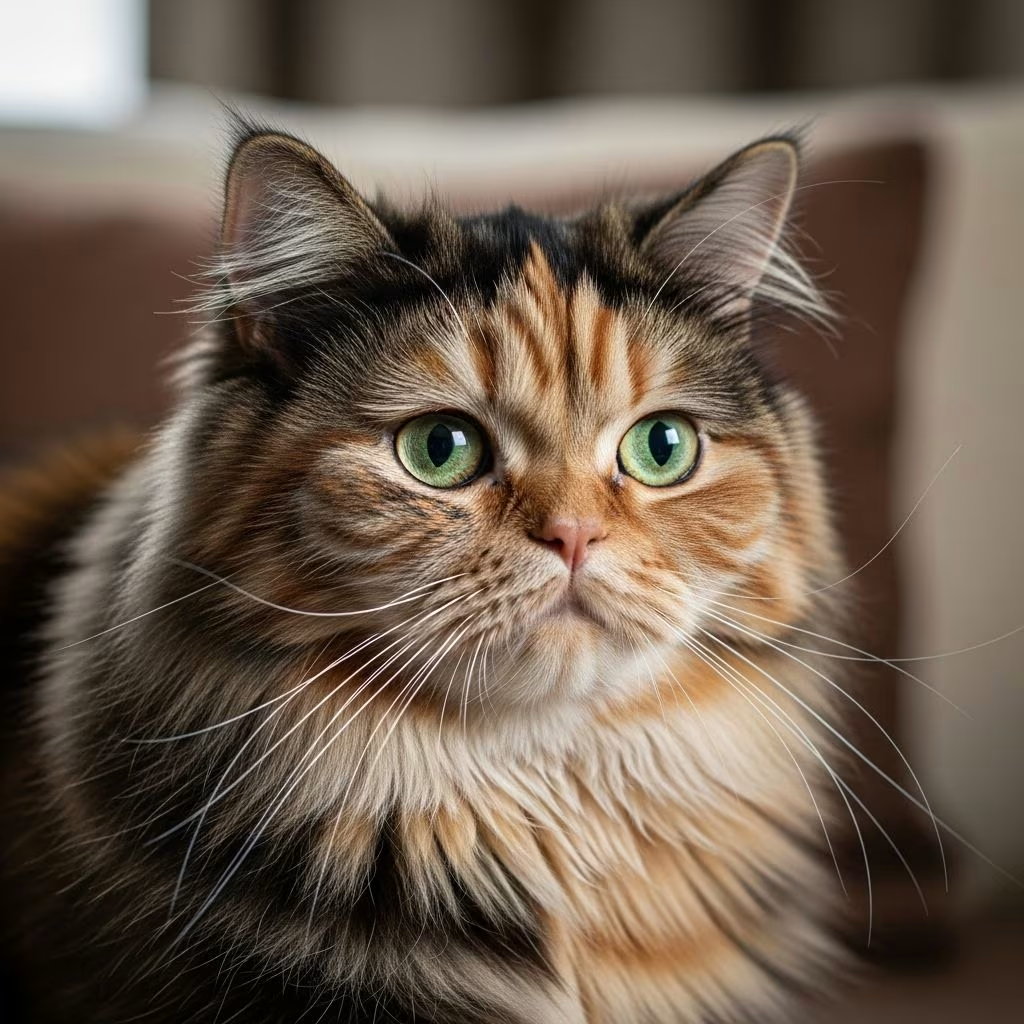
The Tortoiseshell Persian cat captivates with its lavish long fur displaying a mesmerizing mosaic of black, red, and cream hues, paired with the breed’s signature round face and serene demeanor. This hybrid of Persian luxury and tortoiseshell patterning creates a feline that’s both a visual masterpiece and a bundle of personality.
Genetic Foundations of the Tortoiseshell Pattern
The distinctive tortoiseshell coat arises from X-chromosome linked genetics, where black and red pigments are controlled by alleles on the X chromosome. Females, possessing two X chromosomes, can express both colors simultaneously, resulting in the characteristic patchwork. Males, with one X and one Y, rarely show this pattern unless they have rare genetic anomalies like XXY syndrome.
In Persians, this pattern integrates with the breed’s dense, flowing coat. The Cat Fanciers’ Association (CFA) recognizes variations such as Tortoiseshell, Blue-Cream, Shell Tortoiseshell, and Smoke Tortoiseshell, each with specific undercoat shades and tipping. For instance, a classic Tortoiseshell features black bases with red patches on the body and extremities, while Shaded Tortoiseshell shows a white undercoat with black and red mantling that fades along the sides.
Physical Characteristics and Breed Standards
Persians embody a “cobby” build: compact, muscular bodies with short, heavy-boned legs, massive rounded heads, and large, wide-set eyes that convey a gentle expression. The tail remains short and low-carried, proportional to the body. The coat is long, thick, and glossy, standing away from the body with an immense ruff and frill.
Tortoiseshell Persians adhere to these traits while showcasing parti-color divisions. Eye color is typically brilliant copper, with nose leather and paw pads varying by subtype—rose pink for reds, black or brick red for torties. Here’s a breakdown of key color divisions:
| Color Division | Key Features | Nose/Paw Pads | Eye Color |
|---|---|---|---|
| Tortoiseshell | Black with red patches on body/extremities | Black/brick red | Brilliant copper |
| Blue-Cream | Blue with cream patches | Flesh/coral pink | Brilliant copper |
| Shell Tortoiseshell | White undercoat, lightly tipped black/red | Rose pink | Brilliant copper |
| Tortoiseshell Smoke | White undercoat, deeply tipped black/red | Rose pink/black, patched | Brilliant copper |
These standards ensure show-quality cats maintain the Persian silhouette while highlighting tortie vibrancy.
The Enigmatic Personality: Unpacking ‘Tortitude’
Tortoiseshell cats, including Persians, often exhibit “tortitude”—a spirited mix of independence, sass, and loyalty. Owners describe them as vocal, strong-willed, and playfully demanding, yet deeply affectionate once bonded. Studies suggest this boldness correlates with the tortoiseshell genotype, beyond just gender influences.
In the Persian context, this translates to a quieter baseline temperament—sweet and lap-loving—interrupted by tortie bursts of feistiness. They thrive on interaction but assert boundaries, making them ideal for owners who appreciate a cat with opinions. Compared to solid-color Persians, torties show heightened sensitivity to stimuli, per feline behaviorists.
- Sassy and Vocal: Frequent chirps and meows to communicate needs.
- Independent Explorer: Enjoys solo adventures but returns for cuddles.
- Loyal Companion: Forms strong, selective bonds with family.
- Playful Energy: Bursts of activity amid relaxed lounging.
Grooming Demands for That Luxurious Coat
Maintaining the Tortoiseshell Persian’s coat requires commitment. Daily brushing prevents mats in the dense undercoat, especially around the ruff and britches. Use a wide-tooth comb for detangling and a slicker brush for smoothing.
Bathing every 4-6 weeks with cat-specific shampoo keeps the glossy texture intact. Focus on face folds to avoid tear staining, a common Persian issue. Nail trims bi-weekly and ear cleaning monthly round out the routine. Professional grooming quarterly helps during shedding seasons.
Health Considerations and Lifespan
Persians average 12-15 years, but brachycephalic (flat-faced) structure predisposes them to respiratory issues, dental problems, and polycystic kidney disease (PKD). Tortoiseshell patterns don’t alter these risks; regular vet check-ups, including PKD screening via ultrasound, are essential.
Obesity looms large due to sedentary lifestyles—measure portions and encourage play. Eye care prevents infections from shallow sockets. With proactive management, these cats enjoy long, pampered lives.
Historical Evolution and Popularity
Persians trace to 19th-century Persia (modern Iran), refined in Europe for their plush coats. Tortoiseshell variants emerged through selective breeding, prized in shows for color complexity. Today, they blend rarity—due to female dominance—with Persian prestige, appealing to enthusiasts seeking uniqueness.
Historical texts note preferences for balanced red-black ratios and facial blazes, influencing modern standards.
Care Essentials for Optimal Well-Being
Provide a high-protein diet supporting coat health, with omega-3s for shine. Litter training favors low-dust, clumping varieties to spare paws. Enrichment via scratching posts, puzzle feeders, and window perches curbs boredom-fueled sass.
Environmentally, dust-free homes mitigate respiratory woes. Spay/neuter prevents cancers, though rare male torties may need genetic counseling.
Bringing Home a Tortoiseshell Persian
Adopt from CFA-registered breeders verifying health clearances. Kittens display patterns by 6-8 weeks; adults offer known temperaments. Budget $1,500-$3,000, plus ongoing grooming costs. Prepare for a regal, opinionated roommate.
FAQs About Tortoiseshell Persian Cats
Are all tortoiseshell cats female?
Over 99% are, due to X-linked genetics; males are exceptionally rare.
What causes ‘tortitude’?
A blend of genetics and gender, yielding bold, vocal traits.
How often should I groom a Tortoiseshell Persian?
Daily brushing, weekly baths, and monthly trims.
Do they make good family pets?
Yes, with gentle children; their sass suits interactive homes.
What’s the lifespan?
12-15 years with diligent care.
References
- Persian Breed Standard — Cat Fanciers’ Association. Accessed 2026. https://cfa.org/breed/persian/
- Tortoiseshell Persian Cat: Facts, History & Origin — Hepper. Accessed 2026. https://articles.hepper.com/tortoiseshell-persian-cat/
- Understanding Tortoiseshell Cats — Lovet. Accessed 2026. https://www.lovet.com/blog/understanding-tortoiseshell-cats/
- Tortitude: Unique Personality of Tortoiseshell Cats — Ingrid King. 2014-09-30. https://ingridking.com/2014/09/30/tortitude-unique-personality-tortoiseshell-cats-fact-fiction/
- Tortoiseshell Persians — Vom Taubertal. Accessed 2026. https://www.vom-taubertal.de/blog/tortoiseshell-persians/
- Tortie Cat Facts — Litter-Robot. Accessed 2026. https://www.litter-robot.com/blog/tortie-cat-6-facts/
- Tortoiseshell Cats Facts — Purina UK. Accessed 2026. https://www.purina.co.uk/find-a-pet/articles/cat-types/fur-type/tortoiseshell-cat-facts



