

What Is Topical Flea Treatment for Dogs?
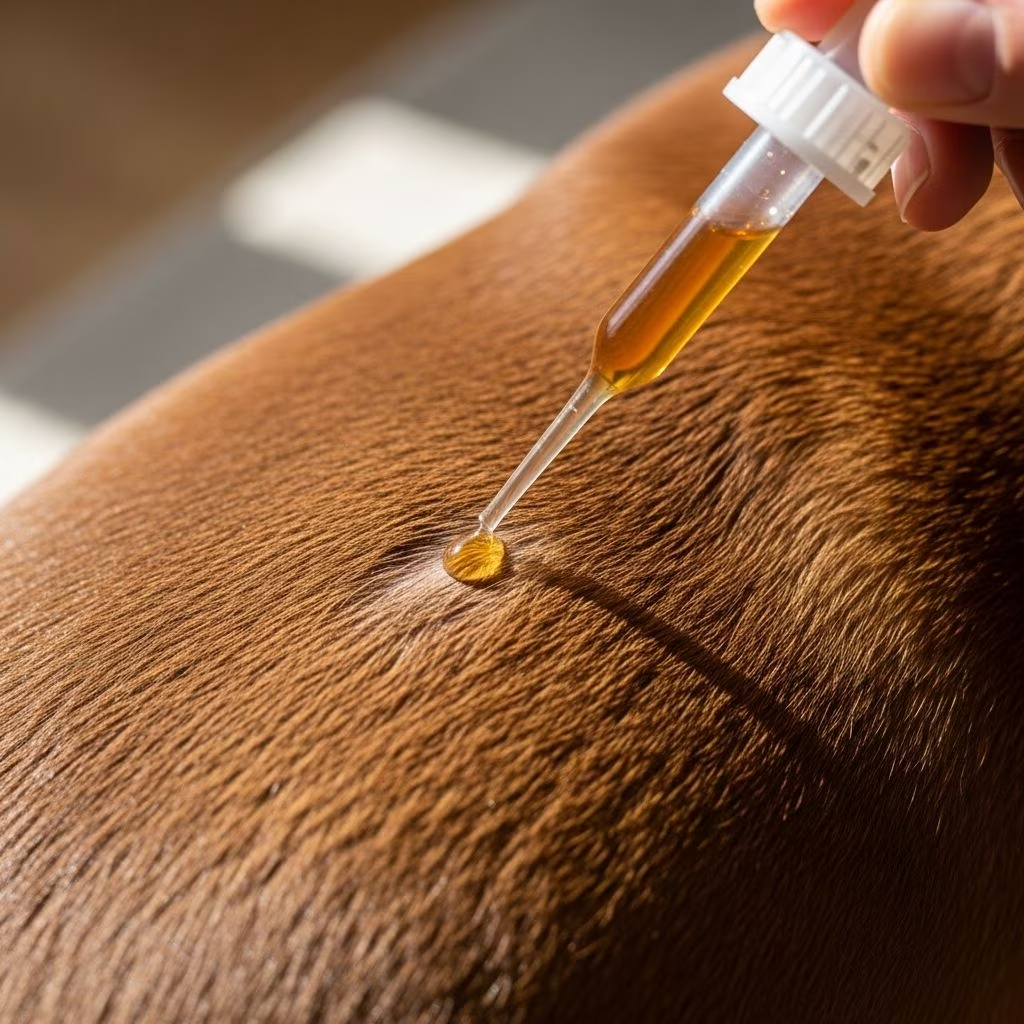
Topical flea treatment for dogs, commonly referred to as “spot-on treatments,” represents one of three primary methods for flea prevention and control, alongside oral medications and flea collars. These treatments come in the form of liquid medication packaged in individual doses that pet owners apply directly to their dog’s skin by squeezing the liquid through an applicator onto the animal’s coat.
The application process typically involves placing the treatment between the shoulder blades, making it an easily accessible location for most dog owners. For larger breed dogs, the medication may need to be applied along the length of the back to ensure adequate coverage across the entire body. This straightforward application method has made topical treatments a popular choice among dog owners seeking effective parasite prevention without the complications of oral medications.
How Do Topical Flea Treatments Work?
Understanding the mechanism behind topical flea treatments helps pet owners appreciate why these products are so effective at controlling parasites. The active ingredients in these treatments work by depositing parasite-killing chemicals into your dog’s sebaceous glands, which are located throughout the skin and secrete sebum—an oily substance that naturally moisturizes and protects your dog’s coat.
Once applied to your dog’s skin, the active ingredients are quickly absorbed by these sebaceous glands and then distributed across the body as the sebum secretes outward. This process creates what experts describe as a protective shield that surrounds your dog’s entire fur coat. When fleas come into contact with these ingredients, the chemicals attack the parasites’ nervous systems, causing paralysis and ultimately leading to their death.
Many modern topical flea treatments also contain an insect growth regulator (IGR), which provides dual protection. Not only do these products kill adult fleas and ticks, but the IGR component prevents flea eggs from hatching and developing into adult parasites. This two-pronged approach significantly reduces the likelihood of new infestations and provides more comprehensive long-term protection for your pet.
How Long Do Topical Flea Treatments Last on Dogs?
Most topical flea treatments remain effective for approximately one month after application. However, some premium formulations can provide protection for extended periods, lasting up to 12 weeks. The duration depends on the specific product you choose, which is why it’s essential to carefully review the product label and specifications when selecting a treatment for your dog.
To maintain consistent protection against fleas and ticks, you’ll need to reapply the treatment once its effectiveness wears off. In most cases, this means administering a new dose every 30 days. Creating a treatment schedule and marking it on your calendar can help ensure you don’t miss a reapplication window, leaving your dog vulnerable to infestation.
When choosing a topical flea treatment, double-check the length of protection promised by the manufacturer so you can be prepared with your next dose when the time comes. This planning helps maintain a protective barrier around your dog throughout the year, preventing flea and tick problems before they start.
Which Dogs Benefit Most From Topical Flea Treatments?
While all dogs can benefit from topical flea treatments, certain dogs find these products particularly advantageous compared to other prevention methods. Dogs with sensitive stomachs or known allergies often do better with topical treatments since they bypass the digestive system entirely, reducing the risk of gastrointestinal upset.
Dogs that tend to have negative reactions to oral medications represent another ideal candidate for topical treatments. Some dogs simply cannot tolerate ingesting chemical medications, and topical alternatives provide an excellent substitute. Similarly, picky eaters who refuse to consume chewable tablets or other oral medications benefit greatly from the ease and reliability of topical applications.
Adventurous dogs who spend significant time outdoors represent another group that gains substantial benefit from topical flea treatments. These outdoor-loving dogs face increased exposure to fleas, ticks, and other parasites. Many topical treatments provide an additional layer of protection by actively repelling fleas, ticks, and mosquitoes even before these parasites can bite, offering protection that goes beyond simply killing parasites upon contact.
The Best Topical Flea Prevention for Dogs
Selecting the best topical flea prevention for your dog ultimately depends on professional veterinary opinion and your specific pet’s needs. Different veterinarians and pet health experts recommend various products based on their clinical experience and the characteristics of their patient populations.
Frontline® Plus and K9 Advantix™ II stand out as top recommendations from many veterinarians. These products appeal to professionals because they effectively kill both fleas and ticks while also repelling mosquitoes, providing multi-parasite protection in a single application. These options work particularly well for dogs who spend substantial time outdoors and face exposure to multiple pest threats.
Revolution® and Bravecto® represent excellent choices when flea prevention is the primary goal. These topical treatments feature single active ingredients specifically designed to target fleas with precision. Bravecto deserves special mention as one of the longest-lasting topical options currently available, maintaining effectiveness for up to 12 weeks between applications, which appeals to pet owners seeking extended protection and fewer reapplications.
How to Apply Topical Flea Treatment to Your Dog
Preparation and Timing
Before applying topical flea treatment, ensure your dog hasn’t been bathed for at least 48 hours prior to application. Similarly, you should avoid bathing your dog for 48 hours after application to allow the medication to fully absorb into the skin and distribute through the sebaceous glands. This timing requirement is crucial for optimal effectiveness.
Step-by-Step Application Process
Step 1: Gather all necessary materials before beginning the application process. Have the topical treatment ready, and prepare a comfortable area where your dog can sit or lie down calmly. Some owners find it helpful to have treats available for positive reinforcement after the application is complete.
Step 2: Position your dog comfortably and locate the area between the shoulder blades. This location is ideal because dogs cannot easily reach it with their mouths to lick off the medication before it dries and absorbs into the skin.
Step 3: Part the fur in the application area to expose the bare skin beneath. Squeeze the tube to release the medication, applying it directly to the skin rather than onto the fur. Direct skin contact is essential for proper absorption and effectiveness.
Step 4: If your product instructions direct you to apply treatment down your dog’s back, carefully part the fur along the spine and down the back, exposing the skin as you go. Continue applying the medication along this path until you’ve used the entire contents of one vial or dose.
Step 5: Monitor your dog for a couple of hours following application to ensure they don’t rub, lick, or scratch the treatment off before it has time to dry and absorb completely.
Step 6: Allow the medication to dry completely on your dog’s skin. During this drying period, avoid petting or handling the treated area to prevent disrupting the application.
Application Considerations for Different Dog Sizes
Smaller dogs typically require only a single application between the shoulder blades, as the sebum distribution naturally covers their smaller body surface area. Larger dogs, however, often need more extensive treatment to ensure full-body coverage. Many products designed for large dogs include instructions for applying medication along multiple points down the back or spreading it across a larger area to guarantee comprehensive protection.
Always follow your specific product’s instructions regarding application sites and quantities, as different formulations may have varying requirements based on their active ingredients and concentration levels.
Frequently Asked Questions About Topical Flea Treatments for Dogs
Q: Can you combine oral and topical flea treatments for dogs?
A: No, you should not combine oral and topical flea treatments for dogs. Using multiple treatments simultaneously can lead to medication overload and potential toxicity in your dog’s system. If you suspect that one treatment alone isn’t providing adequate protection, consult with your veterinarian before making any changes to your flea prevention strategy. Your vet can recommend adjustments or alternative approaches based on your dog’s specific situation.
Q: Does it matter where you put flea treatment on a dog?
A: Yes, the placement of topical flea treatment on a dog is absolutely vital for effectiveness. The standard application location between the shoulder blades is recommended because it’s a spot where your dog cannot easily lick off the medication before it dries and absorbs. For larger dogs, spreading the treatment along the back as instructed by the product is important for achieving full-body coverage and ensuring that all areas of your dog’s skin receive adequate protection.
Q: How often should I reapply topical flea treatment?
A: Most topical flea treatments require reapplication every 30 days, though some premium products maintain effectiveness for up to 12 weeks. Check your specific product’s instructions for the recommended reapplication schedule, and mark these dates on your calendar to ensure you don’t miss a treatment window.
Q: What should I do if my dog has a skin reaction to topical flea treatment?
A: If you notice any signs of skin irritation, redness, itching, or other adverse reactions at the application site, discontinue use immediately and contact your veterinarian. Some dogs may have sensitivities to specific ingredients, and your vet can recommend alternative treatments that will be safer for your dog.
Q: Can I bathe my dog after applying topical flea treatment?
A: You should avoid bathing your dog for at least 48 hours after applying topical flea treatment to allow the medication to fully absorb into the skin and distribute through the sebaceous glands. Bathing too soon can wash away the treatment and reduce its effectiveness.
Benefits and Considerations of Topical Flea Treatments
Topical flea treatments offer numerous advantages for dog owners seeking effective parasite prevention. The ease of application appeals to many pet owners who prefer not to struggle with giving their dogs oral medications. The direct application to skin ensures comprehensive protection across the entire body as the treatment distributes through natural skin oils.
One important consideration involves water exposure. Dogs that swim frequently or receive regular baths may experience reduced effectiveness if bathed too soon after application. Pet owners of water-loving dogs should carefully plan their bathing schedules around treatment applications to maintain consistent protection.
While topical treatments are generally safe when used correctly, handlers should wash their hands thoroughly after application to avoid accidental exposure to the chemicals. Some dogs may experience mild skin irritation at the application site, which typically resolves quickly once the medication dries and absorbs.
References
- A Guide to Topical Flea Treatment for Dogs — Chewy. 2024. https://www.chewy.com/education/dog/flea-and-tick/topical-flea-treatment-dogs
- Flea and Tick Prevention and Treatment for Dogs — PetMD. 2024. https://www.petmd.com/dog/general-health/flea-and-tick-prevention-and-treatment-dogs
- Flea and Tick Prevention — Cornell University College of Veterinary Medicine. 2024. https://www.vet.cornell.edu/departments-centers-and-institutes/riney-canine-health-center/canine-health-topics/flea-and-tick-prevention
- What You Should Know About Flea Product Toxicity in Dogs and Cats — MedVet. 2024. https://www.medvet.com/know-flea-product-toxicity-dogs-cats
- Best Flea and Tick Medications for Double-Coated Dogs — Tomahawk Power. 2024. https://tomahawk-power.com/blogs/articles/best-flea-and-tick-medications-for-double-coated-dogs
- Choosing the Right Flea, Tick, and Heartworm Prevention for Your Dog — Fairview Veterinary Clinic. 2024. https://fairviewveterinaryclinic.com/pet-parasite-control-in-albemarle-nc/chews-vs-topicals-choosing-the-right-flea-tick-and-heartworm-prevention-for-your-dog



