

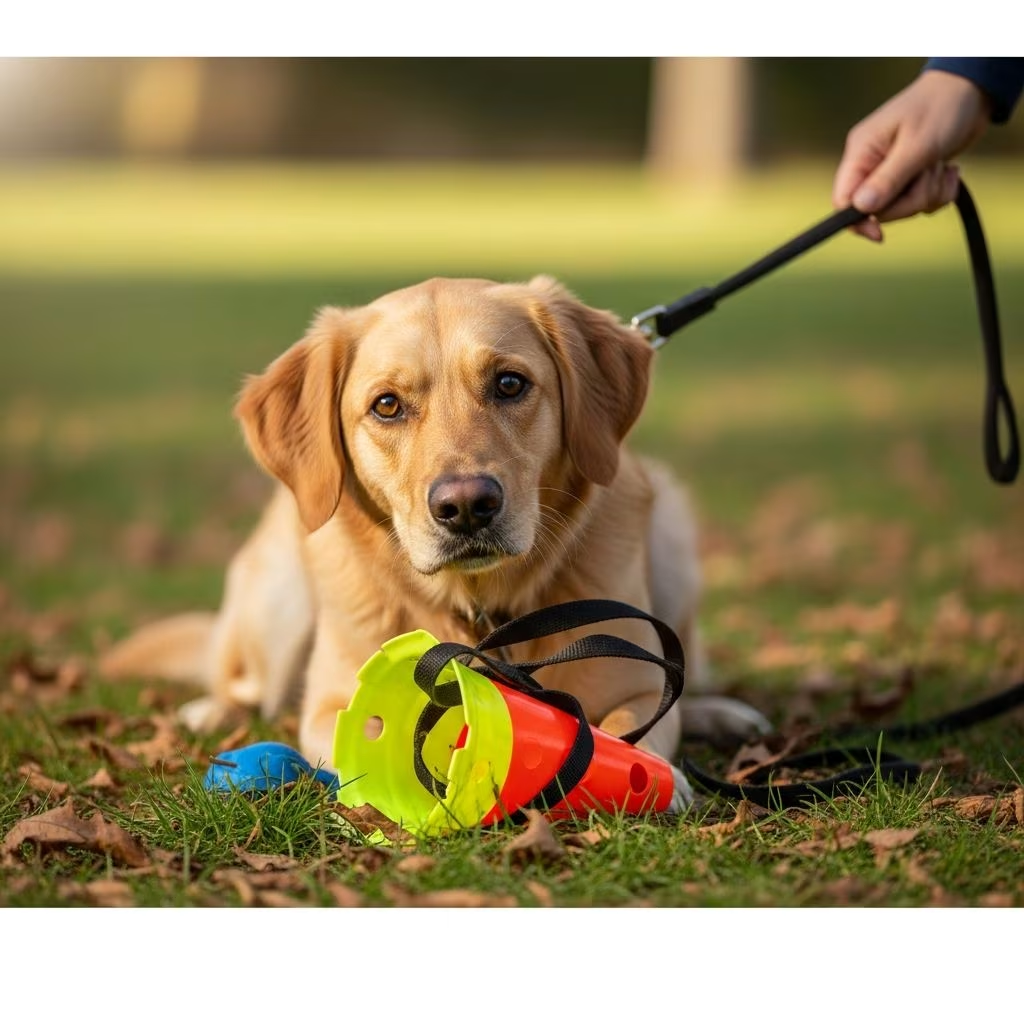
Effective dog training fosters a harmonious relationship between you and your canine friend, yet many owners unknowingly commit errors that stall progress and create confusion. By recognizing these pitfalls, you can refine your approach for quicker results and a happier pet.
Why Training Mistakes Happen and Their Impact
Dogs learn through clear communication, repetition, and positive experiences, but human tendencies like impatience or inconsistency disrupt this process. Such errors lead to behavioral setbacks, reduced trust, and even stress-related issues in dogs. Addressing them early ensures foundational skills like sit, stay, and recall develop reliably across environments.
1. Sending Mixed Signals Through Body Language
Verbal commands alone rarely suffice; dogs keenly observe your posture, gestures, and tone. Incongruent signals, such as saying “stay” while leaning forward invitingly, prompt dogs to follow their instincts over words, eroding command reliability.
To counteract this, align all cues: use a calm, upright stance for “stay” and step back only after commitment. Avoid looming over timid dogs, as it induces anxiety and withdrawal. Distinct commands prevent auditory mix-ups—opt for “kennel” over “crate” if similar to “wait.”
- Maintain consistent tone: upbeat for play, firm for obedience.
- Practice in mirrors to check unintended gestures.
- Record sessions for self-review.
2. Neglecting Behavior Generalization
Dogs struggle with context transfer; a “sit” mastered indoors may fail outdoors due to poor generalization. Without varied practice, cues become location-specific, limiting real-world obedience.
Introduce the “three Ds”—distance, duration, distractions—gradually. Start with short sits nearby in quiet rooms, then extend time, add space, and incorporate mild distractions like toys. Proofing in parks, homes, and streets builds versatility.
| Phase | Focus | Example |
|---|---|---|
| 1: Foundation | Basic cue indoors | Sit for 5 seconds, 1 foot away |
| 2: Duration | Extend hold | Sit for 30 seconds |
| 3: Distance | Increase separation | Sit while 10 feet away |
| 4: Distractions | Add stimuli | Sit amid bouncing ball |
| 5: Environments | Vary locations | Sit in yard, then park |
3. Poisoning Commands by Repetition
Repeating cues like “come, come, come!” teaches dogs to ignore single utterances, as they await the full sequence. This “nagging” poisons the cue, demanding multiple prompts for response.
Say the command once, then use a leash gently to guide compliance without extra words. Reward immediate action lavishly. If ignored, end the session calmly and retry later with higher motivation, like premium treats.
- Phase out lures: say cue, pause 2 seconds, assist if needed.
- Use emergency words sparingly for true recalls.
- Track response rates; aim for 90% first-time obedience.
4. Overloading with Lengthy or Frequent Sessions
Puppies and adults alike fatigue quickly; sessions exceeding 5-15 minutes breed boredom and errors. Multiple daily drills mimic over-schooling, turning training into drudgery.
Limit to 1-2 short bursts daily, ending on successes. Puppies under 6 months thrive on 3-5 minute plays infused with learning. Monitor for signs like yawning or disinterest, then pivot to fun walks.
Breeds vary: high-energy herders may handle more, while hounds tire faster. Tailor to age and temperament for sustained engagement.
5. Relying on Bribes Over True Rewards
Luring with visible treats prompts mugging or incomplete behaviors, as dogs perform for the food rather than the cue. Behavior crumbles sans visible incentive.
Employ rewards post-action: cue “sit,” mark with a clicker or “yes,” then deliver from hiding. Fade treats gradually, mixing praise and play. This builds cue-response links independent of lures.
- Sequence: Cue → Behavior → Marker → Reward.
- Vary reward types: kibble, toys, petting.
- Test cue sans visible food weekly.
6. Embracing Aversive Methods
Tools like shock collars or harsh scolding instill fear, damaging trust and causing shutdowns or aggression. Positive reinforcement outperforms punishment long-term.
Focus on rewarding desired actions; ignore or redirect unwanted ones. For jumping, turn away and praise four-on-floor. Professional studies affirm reward-based efficacy for obedience and welfare.
7. Ignoring Breed and Individual Traits
Overlooking energy levels, instincts, and personalities leads to mismatched methods. Terriers chase, retrievers fetch—tailor accordingly.
Assess via observation: high-drive dogs need outlets like agility, while couch potatoes suit calm drills. Consult breed standards from kennel clubs for baselines.
8. Skipping Foundational Obedience
Rushing to tricks neglects basics like sit, down, heel, leave it, and recall, risking safety lapses.
Prioritize these before complexities. Heel prevents pulling; leave it averts hazards. Daily integration via meals reinforces without extra time.
9. Training Amid High Distractions
Starting in stimulating spots scatters focus; cats or scents derail novices.
Begin distraction-free, layering gradually. Use long lines for safe proofing in yards before streets.
10. Inconsistency Across Household
Family variances confuse dogs; one allows jumping, another punishes.
Hold meetings for unified rules, cues, and rewards. Post charts for reminders.
Building a Lasting Training Routine
Combine short, consistent sessions with positive methods for resilient behaviors. Track via journals, celebrate milestones. Patience yields expert-level obedience.
Frequently Asked Questions
How long should puppy training sessions last?
3-5 minutes for pups under 6 months, up to 15 for adults; end positively.
What’s the best reward for recall?
High-value like chicken or tug games, unpredictable for motivation.
Can older dogs learn new tricks?
Yes, with adapted paces; focus on health and fun.
How to fix ignored commands?
Prevent poisoning: one cue, guide if needed, high rewards.
Is professional help necessary?
For plateaus or aggression, yes—seek certified trainers.
References
- Common Dog Training Mistakes and How to Avoid Them — American Kennel Club. 2023-10-15. https://www.akc.org/expert-advice/training/common-dog-training-mistakes/
- Are You Making These Common Dog Training Mistakes? — Khris Erickson. 2024-02-20. https://www.khriserickson.com/post/common-training-mistakes
- Key Dog Training Mistakes and How to Avoid Them — Animals First Vet Hospital. 2025-05-15. https://animalsfirstvethospital.com/2025/05/15/key-dog-training-mistakes-and-how-to-avoid-them/
- Top 10 Dog Training Mistakes Every Owner Should Avoid — The Regal Beagle. 2024-08-10. https://www.theregalbeagle.net/post/top-10-dog-training-mistakes-every-owner-should-avoid-for-unleashing-success
- Common Dog Training Mistakes and How to Avoid Them — Scott Brand. 2023-11-05. https://www.scottbrand.com/en-us/tips-and-advice/pet-care/common-dog-training-mistakes
- 5 Common Dog Training Mistakes and What to Do Instead — Rover.com. 2024-03-12. https://www.rover.com/blog/5-common-dog-training-mistakes-instead/



