
Top Dog Puzzle Toys
Discover the best puzzle toys to boost your dog's mental sharpness, reduce boredom, and strengthen your bond through engaging play.
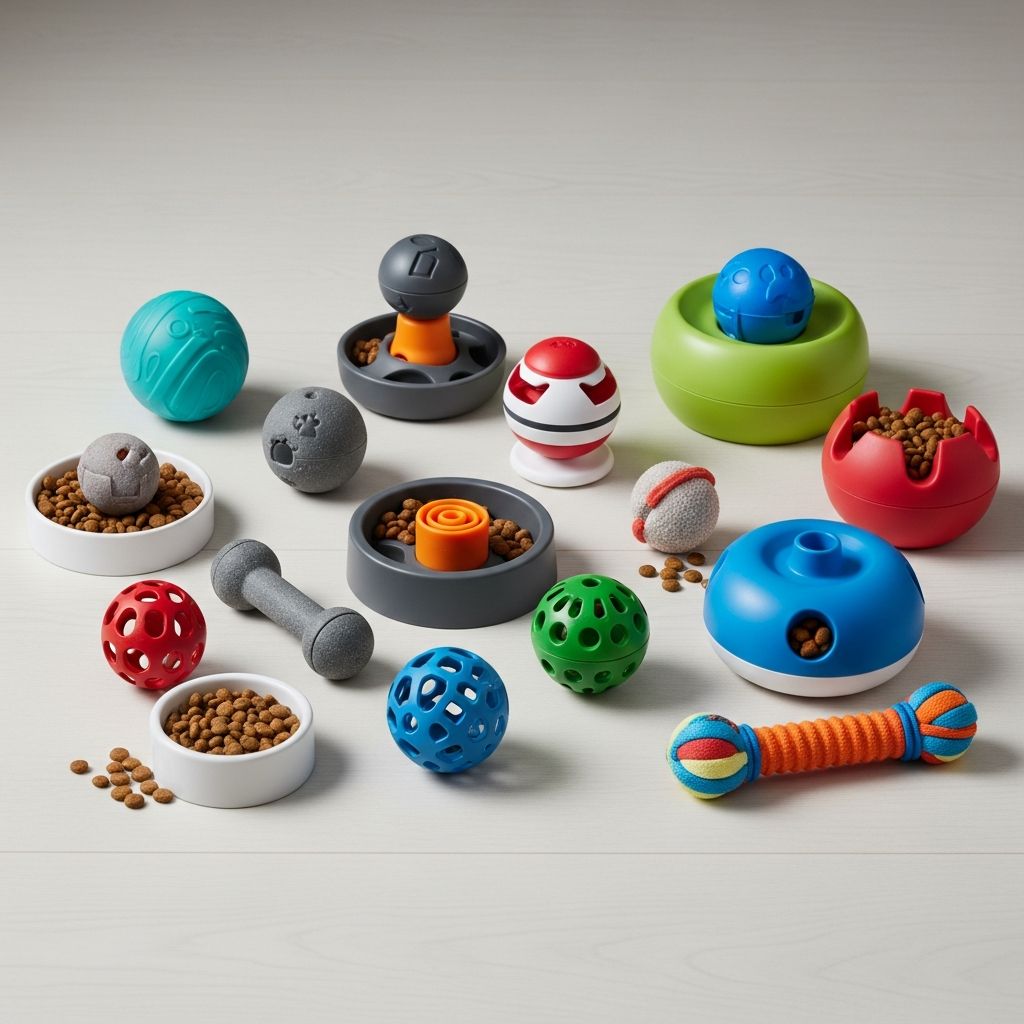
Dog puzzle toys offer essential mental enrichment that combats boredom and promotes cognitive health. These interactive tools engage a dog’s natural instincts, reducing destructive behaviors while building problem-solving skills.
Why Mental Stimulation Matters for Dogs
Physical exercise alone isn’t enough; dogs need mental challenges to thrive. Boredom often leads to chewing furniture or excessive barking, but puzzle toys redirect energy positively. They mimic foraging behaviors from the wild, satisfying innate hunting drives in a safe home environment.
Research shows dogs prefer working for food over free handouts, experiencing a rewarding “Eureka!” moment upon success. This boosts confidence, especially for shy pups, and lowers stress by providing focus during anxious times like separations.
- Mental workouts tire dogs as effectively as walks for high-energy breeds.
- They slow fast eaters, preventing gulping-related health issues.
- Interactive play strengthens owner-pet bonds through shared successes.
Key Benefits of Puzzle Toys
Puzzle toys deliver multifaceted advantages beyond mere entertainment. They enhance physical coordination via pawing and sniffing, integrate seamlessly into training, and offer alternatives during bad weather or recovery periods.
| Benefit | Description | Ideal For |
|---|---|---|
| Boredom Prevention | Redirects energy from destruction to productive play | High-energy or alone-time dogs |
| Anxiety Reduction | Focuses mind, promotes relaxation | Dogs with separation issues |
| Skill Building | Develops nose work, paw dexterity | Puppies and working breeds |
| Confidence Boost | Success reinforces self-assurance | Timid or rescue dogs |
Studies confirm kennel dogs with food puzzles bark less and stay more active, highlighting welfare improvements.
Choosing the Right Puzzle Toy
Select based on your dog’s size, age, and skill level. Start simple to build confidence, then progress to complex designs. Durability matters for power chewers; look for non-toxic, chew-resistant materials.
Consider treat compatibility—kibble-dispensing works for meal times, while soft treats suit hidden compartments. Rotate toys weekly to maintain novelty and prevent habituation.
Beginner-Friendly Options
For novices, basic rollers or balls that dispense treats with nudges are ideal. These encourage sniffing and gentle pawing without frustration.
Intermediate Challenges
Once mastered, introduce sliders or stackables requiring multiple steps. These foster strategic thinking akin to real-world foraging.
Advanced Brain Teasers
Expert-level puzzles with locks, hidden trays, or multi-layer hides demand patience and precision, perfect for intelligent breeds.
Featured Puzzle Toy Recommendations
Roll-and-Dispense Ball
This wobbling sphere releases kibble as dogs push it, combining motion with scent tracking. Great for solo play, it tires pups mentally and physically without supervision needs.
Sliding Tray Puzzle
A board with pull-out drawers conceals treats under covers. Dogs learn to slide pieces, honing fine motor skills. Adjustable difficulty suits growing smarts.
Modular Hide-and-Seek Board
Interchangeable pegs and compartments allow customization. Start with easy lifts, advance to twists. Ideal for family involvement.
Treat-Maze Tunnel
A winding path where treats tumble out at turns. Encourages nose work and persistence, mimicking burrow exploration.
Interactive Plush Puzzle
Soft toy with zippers and flaps hiding rewards. Appeals to gentle chewers, blending comfort with challenge.
Snuffle Mat Simulator
Fabric with crinkly pockets for burying kibble. Promotes deep sniffing, slowing meals and calming nerves.
Lever-Pull Dispenser
Large levers release clusters of treats. Builds strength and problem-solving for bigger breeds.
Incorporating Puzzles into Daily Routines
Consistency is key—schedule 15-30 minutes daily, like post-walk wind-downs. Use meals inside toys to make every feeding enriching.
- Fill with portioned kibble or low-cal treats.
- Demonstrate first solve to guide learning.
- Increase difficulty gradually as proficiency grows.
- Supervise initially to prevent ingestion risks.
DIY versions like muffin tins topped with balls extend affordability. Training integration: Reward commands with puzzle access.
Solving Common Puzzle Play Challenges
Frustration arises if too hard—downsize and add hints like pointing. Over-enthusiasm? Freeze treats for slower dispensing. Cleaning is simple: most disassemble for dishwasher safety.
- Tip: For anxious dogs, pair with calming music.
- Tip: Rotate to sustain interest.
Science-Backed Proof of Effectiveness
Peer-reviewed studies affirm puzzle toys’ value. Dogs exhibit reduced stress markers and increased play duration with them. They outperform free-feeding in satisfaction metrics, echoing natural reward systems.
FAQs
Are puzzle toys safe for all dogs?
Yes, when sized appropriately and supervised. Avoid small parts for chewers; opt for sturdy designs.
How often should I use puzzle toys?
Daily, 20-30 minutes, or during meals for best results.
Can they replace walks?
No, but they complement by providing indoor alternatives.
What if my dog ignores the toy?
Persist with demos and high-value treats; patience builds interest.
Best for puppies?
Simple ones aid teething and early learning.
Long-Term Enrichment Strategies
Beyond toys, combine with scent walks, obedience drills, and novel environments. Professional classes amplify benefits, tailoring to breed traits.
Puzzle toys transform routine into adventure, ensuring happier, healthier dogs. Invest in quality for lasting engagement.
References
- The Importance of Mental Stimulation through Toys and Puzzles — ACDT Academy. 2023. https://www.acdtacademy.com/post/unlocking-canine-intelligence-the-importance-of-mental-stimulation-through-toys-and-puzzles
- Are Puzzle Toys Really Good for Dogs? What the Science Tells Us — Rover. 2023. https://www.rover.com/blog/are-puzzle-toys-good-for-dogs/
- Maximizing Puppy Training Success With Interactive Toys — Happy Pup Manor. 2023. https://happypupmanor.com/maximizing-puppy-training-success-with-interactive-toys/
- 7 Reasons Why Puzzles are a Great Form of Enrichment — Camp Ruff It. 2023. https://www.campruffit.com/post/7-reasons-why-puzzle-are-a-great-form-of-enrichment
- A Guide to Using Food Puzzle Toys with Your Dog — Companion Animal Psychology. 2021-10-19. https://www.companionanimalpsychology.com/2021/10/a-guide-to-using-food-puzzle-toys-with.html
- Brain Games for Dogs: When Can a Puzzle Be the Solution? — American Kennel Club (AKC). 2023. https://www.akc.org/expert-advice/health/brain-games-dogs-can-puzzle-solution/
Similar Articles








Read full bio of medha deb




