

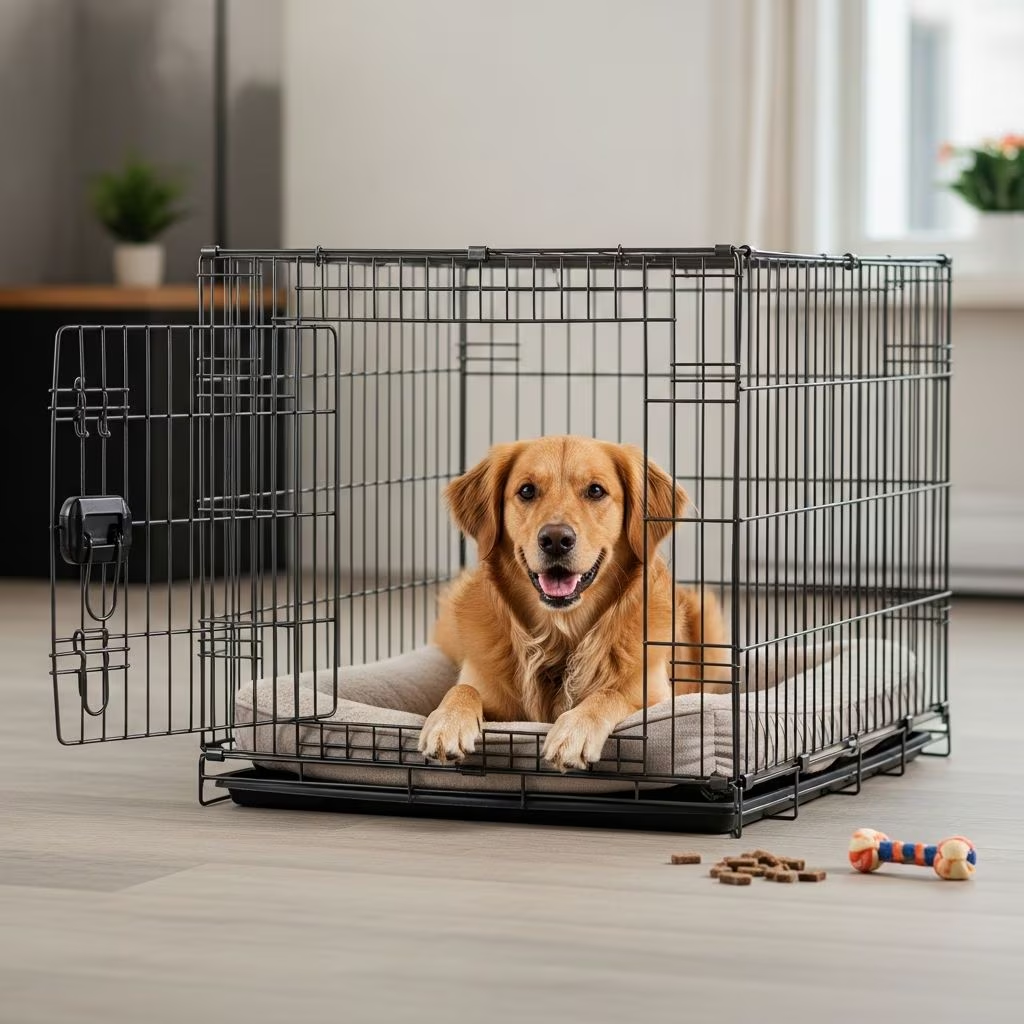
Selecting the right crate is fundamental to successful dog training, offering a secure environment that supports housebreaking, reduces anxiety, and ensures safety during unsupervised periods. Crate training leverages a dog’s natural instinct to keep their resting area clean, making it an indispensable tool recommended by veterinarians and trainers alike.
Why Crate Training Matters for Your Dog
Crate training provides numerous advantages that extend beyond basic obedience. It creates a personal den where dogs feel protected, mimicking their ancestral burrowing behaviors in the wild. This sense of security helps dogs self-soothe during stressful events like thunderstorms or fireworks.
- Housebreaking Efficiency: Dogs instinctively avoid soiling their sleeping space, strengthening bladder control and accelerating potty training.
- Safety Assurance: Crates prevent destructive chewing or escapes when owners are away, safeguarding both the dog and home.
- Anxiety Management: A familiar crate offers comfort during travel, vet visits, or household changes, reducing stress responses.
- Travel Readiness: Prepares dogs for car trips, flights, or emergencies, ensuring compliance in airline-approved setups.
For puppies, crates enforce boundaries by limiting space, teaching that freedom is earned through good behavior. Adult and rescue dogs benefit similarly, gaining a private retreat to decompress amid new environments.
Key Factors in Choosing the Perfect Crate
Not all crates suit every dog; considerations like size, material, and portability determine effectiveness. The crate should allow standing, turning, and lying down comfortably without excess room that encourages accidents.
| Factor | Considerations | Best For |
|---|---|---|
| Size | Measure dog’s length from nose to tail base; add 2-4 inches. Use dividers for growing puppies. | All breeds, especially puppies |
| Material | Wire for ventilation; plastic for security; fabric for portability. | Depends on dog’s temperament |
| Portability | Foldable designs for storage; sturdy for travel. | Frequent movers or travelers |
| Durability | Escape-proof latches; chew-resistant bars. | High-energy or anxious dogs |
Assess your dog’s needs: reactive breeds may require reinforced models to prevent bending bars, while calm dogs thrive in open-view options.
Exploring Popular Crate Types for Training
Diverse crate designs cater to specific training goals and lifestyles. Each type balances visibility, security, and ease of use.
Open Wire Crates: Versatile and Airy
These feature metal bars on all sides for maximum airflow and visibility, ideal for dogs who enjoy observing their surroundings. Collapsible panels fold flat for storage, making them practical for apartments. Covers add privacy for nighttime use. However, strong chewers might challenge thinner wires, so opt for heavy-gauge models.
Plastic Airline Crates: Secure and Travel-Ready
Molded from durable plastic with metal doors and vents, these mimic commercial airline kennels, ensuring compliance for flights. Double-locking mechanisms prevent escapes, suiting escape artists or reactive dogs. Their enclosed design promotes calm but limits visibility, best for short-term confinement.
Soft-Sided Fabric Crates: Portable Comfort
Lightweight and pop-up style, these suit well-behaved dogs needing on-the-go options like camping. Mesh panels provide breathability, but they’re unsuitable for chewers due to easy tearing. Great for positive reinforcement training where dogs enter voluntarily.
Heavy-Duty Steel Crates: Ultimate Escape-Proof
For aggressive chewers or large breeds, reinforced steel with slam-latch doors offers unmatched strength. Though heavier, they provide peace of mind in high-risk scenarios like post-surgery recovery.
Step-by-Step Guide to Crate Training Success
Introduce the crate gradually to foster positive associations, avoiding force that breeds fear.
- Initial Introduction: Place the open crate in a high-traffic area with treats inside. Praise entry without closing the door.
- Build Comfort: Feed meals inside, adding toys or blankets for coziness. Short closures follow voluntary stays.
- Extend Duration: Start with minutes, progressing to hours. Use for naps or bedtime, never as punishment.
- Incorporate Routine: Crate before outings, rewarding calm behavior. Pair with potty breaks for house training synergy.
- Overnight Use: Puppies tolerate 2 hours plus age in months (e.g., 3-month-old: 5 hours max). Adults handle longer.
Monitor for distress signals like whining; extend acclimation if needed. Consistency yields a dog who views the crate as a haven.
Sizing Your Dog’s Crate Precisely
Incorrect sizing undermines training. Too large invites soiling; too small causes discomfort. Standard guidelines:
- Small Dogs (under 25 lbs): 24″ length.
- Medium (25-50 lbs): 30-36″.
- Large (50-90 lbs): 42″.
- Extra Large (90+ lbs): 48″+.
Always measure: nose-to-tail plus 3 inches for adults; adjust for puppies with dividers. Test by ensuring easy movement inside.
Common Mistakes to Avoid in Crate Training
Many owners sabotage progress unwittingly. Key pitfalls include:
- Using crates punitively, eroding trust.
- Oversizing for puppies, leading to accidents.
- Ignoring exercise needs; crates supplement, not replace, playtime.
- Rushing closure times, provoking anxiety.
Balance with ample daily activity—walks, training sessions—to prevent restlessness.
Enhancing Crate Comfort and Appeal
Transform the crate into a desirable space with these additions:
- Cozy bedding or crate mats for joint support.
- Familiar scents via worn t-shirts.
- Long-lasting chews for mental stimulation.
- Blackout covers to simulate night.
For hot climates, prioritize ventilation; frozen treats aid cooling during sessions.
Crate Training for Special Cases
Puppies vs. Adults
Puppies adapt quickly due to small bladders; frequent breaks are essential. Adults, especially rescues, may resist initially—patience and treats bridge the gap.
Rescue and Anxious Dogs
Traumatized dogs cherish crates as safe territories. Start door-open, gradually enclosing as trust builds.
Senior and Post-Surgery Dogs
Low-profile crates ease entry; vet-prescribed rest benefits from confinement to prevent injury.
FAQs on Dog Crate Training
How long can a puppy stay crated? Young puppies: 1 hour per month of age +1; max 6-8 hours for adults.
Is crate training cruel? No, when done positively—it’s a welfare tool endorsed by experts.
What if my dog hates the crate? Revisit basics: more treats, shorter sessions, ensure proper size.
Can I crate multiple dogs? Only with separate crates to avoid fights.
Traveling without a crate? Trained dogs may adapt, but crates ensure safety.
Maintenance and Long-Term Use
Regular cleaning prevents bacteria; wash bedding weekly. Inspect for wear, especially latches. As training advances, reduce reliance, using crates for transport or downtime.
Crate training builds confident, well-adjusted dogs when approached thoughtfully. Invest in quality, train patiently, and watch behaviors transform.
References
- Crate Training Benefits: Why a Crate Is Great For You and Your Dog — American Kennel Club (AKC). 2023-05-15. https://www.akc.org/expert-advice/training/why-crate-training-is-great-for-your-dog/
- The benefits of crate training your dog — Pooches At Play. 2022-08-10. https://poochesatplay.com/training-behaviour/benefits-crate-training-dog/
- Dog Crates: the Good, the Bad, and the Ugly — 3 Lost Dogs. 2021-11-20. https://www.3lostdogs.com/dog-crates-the-good-the-bad-and-the-ugly/
- Dog crates: When to use them and how to pick one — Cornell University College of Veterinary Medicine. 2024-02-12. https://www.vet.cornell.edu/departments-centers-and-institutes/riney-canine-health-center/canine-health-topics/dog-crates-when-use-them-and-how-pick-one
- Life Skills for Pets: Crate Training and Confinement for Puppies — VCA Animal Hospitals. 2023-09-05. https://vcahospitals.com/know-your-pet/crate-training-your-dog—an-overview
- Choosing the Best Crate For A Dog — Gingr. 2023-07-18. https://www.gingrapp.com/blog/choosing-the-best-crate-for-a-dog
- The Benefits of Crate Training — PAWS. 2022-04-22. https://www.paws.org/resources/the-benefits-of-crate-training/



