

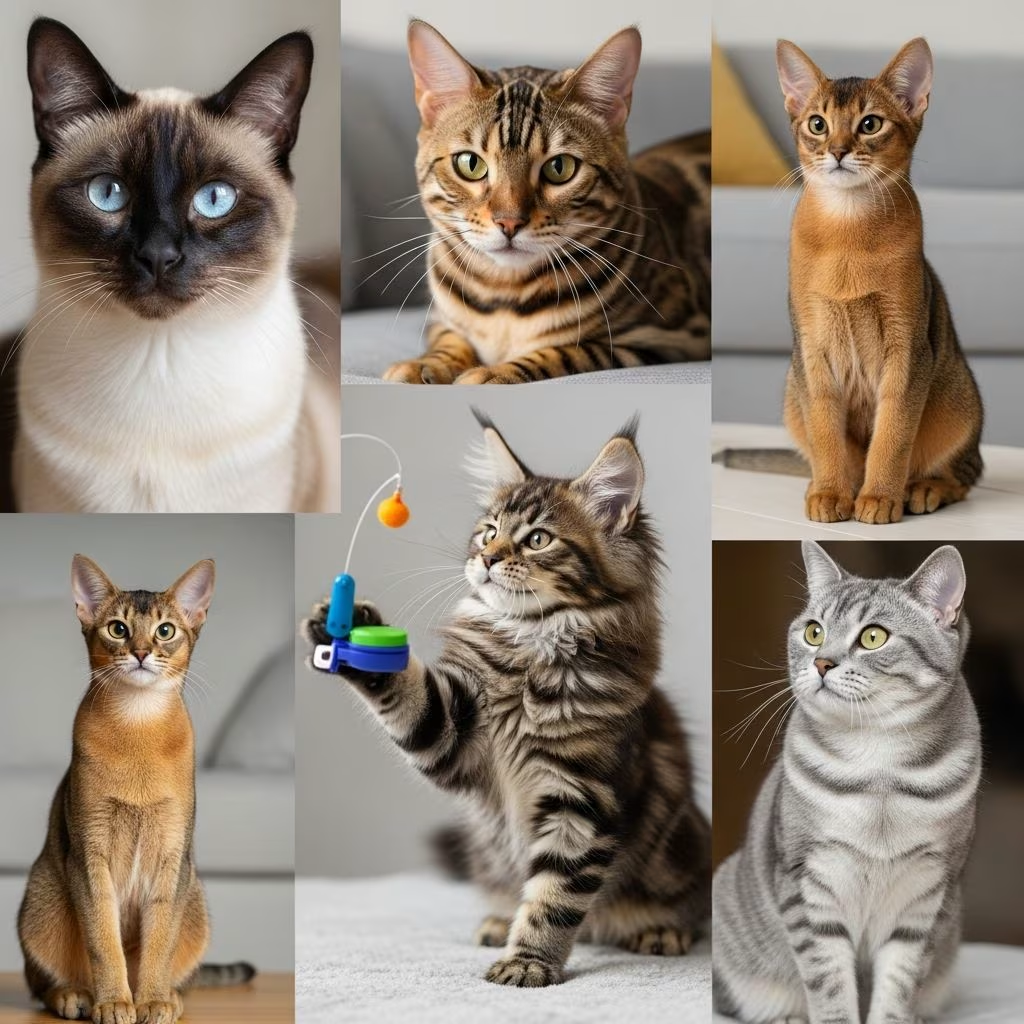
Many people believe cats resist training, but certain breeds prove this myth wrong with their sharp minds and sociable natures. These felines not only pick up commands swiftly but also thrive on interaction, turning training into a joyful routine. This guide highlights breeds renowned for their trainability, backed by insights into their temperaments and learning styles.
Why Some Cats Excel at Learning
Trainability in cats stems from genetics, early socialization, and owner consistency. Breeds with high energy, curiosity, and human-oriented personalities respond best to positive reinforcement methods like clicker training and treats. Short sessions of 5-15 minutes prevent boredom, while clear cues build strong associations. Intelligent breeds master basics like sitting or coming when called in days, advancing to complex tricks with ease.
Key Traits of Highly Trainable Cats
- Intelligence: Quick problem-solvers who grasp cause-and-effect rapidly.
- Sociability: Enjoy human company, viewing training as playtime.
- Energy Levels: Active cats stay engaged during sessions.
- Playfulness: Respond well to toy-based rewards and games.
These traits make training rewarding, fostering deeper bonds and better-behaved pets.
1. Siamese: Vocal and Eager Learners
Siamese cats stand out for their dog-like devotion and sharp intellect. Known for their sleek bodies and striking blue eyes, they crave attention and excel in learning voice commands, high-fives, and even leash walking. Their vocal nature aids training, as they mimic tones and respond to consistent verbal cues. Owners report Siamese mastering ‘sit’ and ‘come’ within a week using treats held just out of reach.
Training Tips for Siamese
- Use their curiosity: Lure with a treat over the head to encourage sitting.
- Incorporate play: Wave a feather toy as a reward for spins or jumps.
- Practice daily: Their energy demands 10-minute sessions twice a day.
2. Abyssinian: The Adventurous Thinker
Abyssinians, with their ticked coats and athletic builds, embody curiosity and agility. These ancient breed descendants love puzzles and tricks, quickly learning to jump through hoops or fetch toys. Their playful demeanor makes shaping behaviors—like lying down or rolling over—straightforward with clickers marking precise actions.
| Trick | Training Method | Time to Master |
|---|---|---|
| Sit Pretty (Rear Up) | Luring with treats above head | 3-5 days |
| Spin | Guiding in circle with toy | 1 week |
| Fetch | Clicker + intermittent rewards | 2 weeks |
3. Bengal: Wild Energy Meets Obedience
Bengals blend domestic charm with leopard-like spots and boundless vitality. Their hybrid heritage fuels a desire for activity, making them ideal for leash training and agility courses. They shine in finger targeting, progressing to crawling under legs or high-fives effortlessly. Positive reinforcement keeps their spirited nature focused.
Advanced Tricks for Bengals
- Weave Through Legs: Use finger targeting to guide under extended leg.
- Stay Command: Reward prolonged sitting amid distractions.
- Jump on Cue: Shape by raising treat height gradually.
4. Oriental Shorthair: Versatile and Attentive
Close relatives of Siamese, Oriental Shorthairs offer diverse colors and equally keen minds. Their elegant frames and large ears enhance expressiveness during training. They adapt to hand signals superbly, performing fist bumps or paw shakes after minimal repetition. Consistency across family members prevents confusion.
5. Burmese: Affectionate and Compliant
Burmese cats, with their silky mahogany coats, are cuddly yet trainable powerhouses. Their people-loving traits make them responsive to praise and chin scratches over food alone. They pick up litter box routines and scratching post use instinctively but thrive on fun commands like rolling over.
6. Balinese: Graceful and Quick-Witted
The long-haired Siamese variant, Balinese cats match their short-haired kin in smarts. Their flowing coats don’t hinder agility as they leap for treats or navigate obstacle courses. Voice and gesture combos work best, building a repertoire of 10+ tricks in months.
7. Devon Rex: Pixie-Like Prodigies
Devon Rexes, with curly coats and elf-like ears, possess boundless curiosity. Their playful mischief channels perfectly into training, where they master ‘come when called’ via name association and rewards. Short, fun bursts keep their attention sharp.
Essential Training Techniques for Any Breed
Regardless of breed, success hinges on proven methods. Positive reinforcement tops the list, rewarding desired actions immediately to link behavior with pleasure.
Clicker Training Basics
A clicker marks exact moments of success, bridging action and treat. Charge it first by clicking then treating repeatedly. For sitting: Hold treat above head, click butt-to-floor contact, reward. Progress to cues like ‘sit.’
Luring and Shaping
Luring guides with treats; for spins, circle a treat near nose. Shaping builds complex behaviors incrementally—reward slight paw lifts before full high-fives.
Common Commands Table
| Command | Steps | Best for Breeds |
|---|---|---|
| Come When Called | Call name, reward approach | Siamese, Burmese |
| High-Five | Lift paw with treat, fade lure | Bengal, Abyssinian |
| Lie Down | Target under leg or lure low | Oriental, Devon Rex |
| Spin | Circle treat around body | All listed |
Overcoming Training Challenges
Cats may resist if sessions drag or cues vary. Stick to quiet spaces, one skill per session, and high-value rewards like tuna bits. If progress stalls, revert to easier steps. Patience yields results—most cats bond stronger through training.
Benefits of Training Your Cat
- Stronger human-feline bonds via shared play.
- Reduced behavioral issues like scratching furniture.
- Mental stimulation prevents boredom-induced mischief.
- Healthier lifestyle with leash walks and agility.
Frequently Asked Questions (FAQs)
Can all cats be trained like dogs?
While not all match dog levels, trainable breeds close the gap with proper techniques. Focus on positives for best outcomes.
How long until my cat learns a trick?
Basics take 3-7 days; advanced ones 2-4 weeks with daily practice.
What if my cat ignores commands?
Check motivation—use hungrier times, better treats, or shorter sessions. Consistency is key.
Is clicker training suitable for kittens?
Yes, start at 8 weeks for lifelong habits.
Do older cats train well?
Absolutely, with gentle, frequent sessions adapting to their pace.
References
- How to Train a Cat: The Beginner’s Guide to Good Kitty Behavior — Pumpkin Care. 2023. https://www.pumpkin.care/post/how-to-train-a-cat
- Cat Training: Tried-and-True Tricks — Whisker. 2024. https://www.whisker.com/blog/cat-training-tried-and-true-tricks
- Ultimate Guide to Cat Training — OutdoorBengal. 2023. https://www.outdoorbengal.com/blogs/clicker-training-cats/cat-training-guide
- How to train a cat — British Psychological Society. 2022-10-01. https://www.bps.org.uk/psychologist/how-train-cat
- Training Cats with Positive Reinforcement — Humane Society of Huron Valley. 2023. https://www.hshv.org/training-cats-with-positive-reinforcement/



