

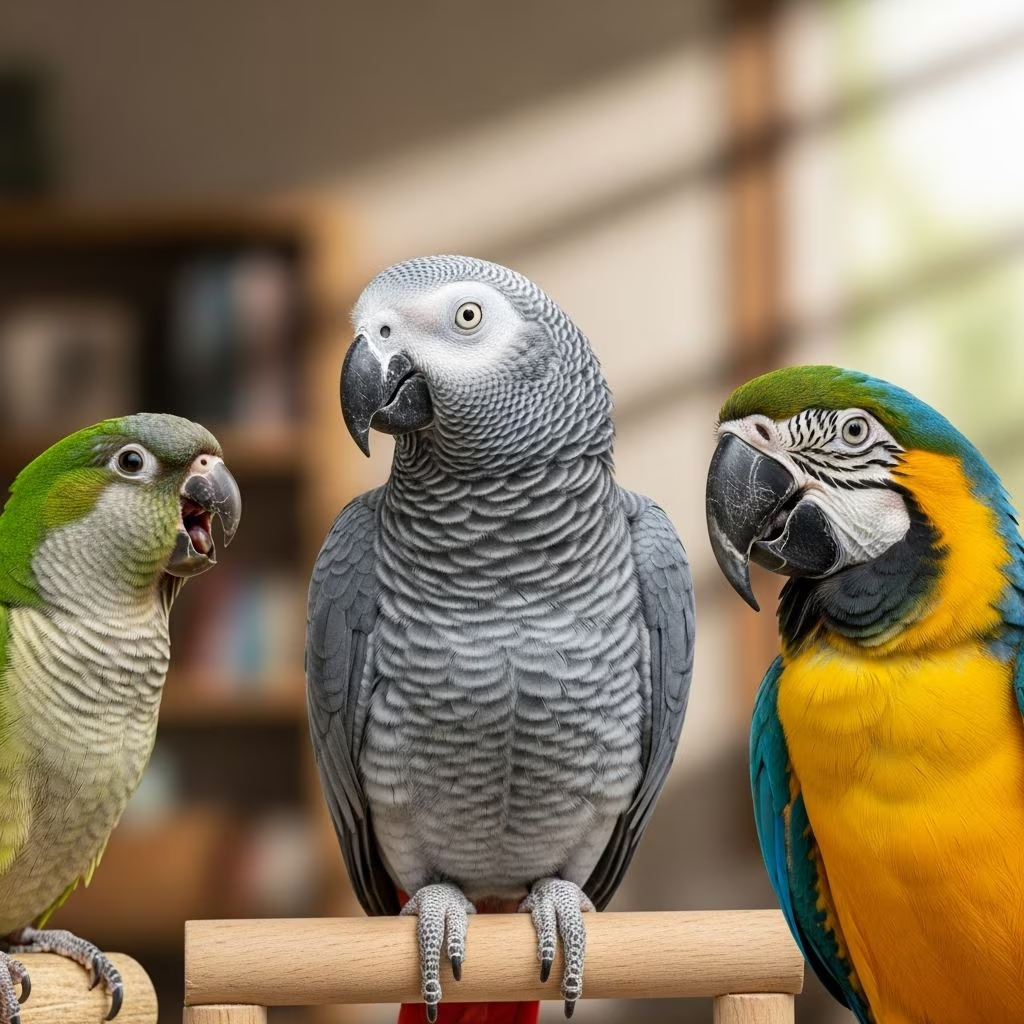
Top 3 Smartest Pet Birds: Intelligence Unleashed
When it comes to selecting a pet bird, intelligence is often a primary consideration for many prospective owners. The cognitive abilities of certain bird species far exceed what most people expect, making them fascinating companions for those willing to invest time and effort into their care. Among the avian world’s most intellectually gifted creatures, three species stand out prominently: African grey parrots, cockatoos, and Amazon parrots. These remarkable birds possess extraordinary problem-solving abilities, exceptional memory, and complex social behaviors that rival those of primates in many respects.
The question of bird intelligence has fascinated researchers and bird enthusiasts for decades. Unlike many other pets, highly intelligent birds require specialized care, mental stimulation, and emotional engagement to thrive. Understanding which birds rank among the smartest is crucial for potential owners to make informed decisions about whether they can adequately meet these birds’ sophisticated needs.
Understanding Bird Intelligence
Bird intelligence manifests in various forms, including problem-solving abilities, memory retention, social cognition, and vocal learning capacity. The most intelligent bird species demonstrate remarkable aptitudes in these areas, often surprising even seasoned bird enthusiasts with their capabilities. These birds can understand cause-and-effect relationships, learn from observation, and adapt their behavior based on experience.
The brain-to-body ratio in highly intelligent birds is substantial, contributing to their advanced cognitive abilities. Additionally, the structure of their brains, particularly the pallium region responsible for learning and memory, closely resembles the neocortex found in mammals. This neurological sophistication enables these birds to process complex information and engage in behaviors that require significant mental effort.
1. African Grey Parrots: Nature’s Genius
African grey parrots are widely recognized as among the most intelligent creatures on Earth, with cognitive abilities comparable to those of a four to six-year-old human child. Their exceptional intelligence manifests through extraordinary language acquisition, problem-solving prowess, and emotional sophistication that sets them apart from other avian species.
Remarkable Communication Abilities
The African grey parrot’s linguistic capabilities are nothing short of remarkable. These birds can develop vocabularies exceeding 1,000 words and use them contextually and meaningfully. Unlike many talking birds that simply mimic sounds, African greys demonstrate genuine comprehension of the words they use. They can answer questions accurately, engage in conversations, and even use language creatively to express their needs and emotions.
Extensive research has documented individual African greys learning color names, number concepts, and even abstract ideas like “same” and “different.” This level of linguistic competence suggests cognitive processes far more complex than simple mimicry. Their ability to comprehend and apply language places them in an elite category among non-human animals.
Problem-Solving and Innovation
Beyond communication, African greys excel at solving complex problems. These birds can manipulate objects, understand spatial relationships, and devise novel solutions to challenges they encounter. In captivity, they demonstrate the ability to use tools, open latches and locks, and navigate increasingly complicated puzzles that require multi-step reasoning.
Their problem-solving abilities suggest a capacity for abstract thinking that extends beyond simple trial-and-error learning. African greys can plan ahead, consider multiple solutions, and choose the most efficient approach to achieve their goals. This forward-thinking capability indicates a level of cognitive sophistication rarely observed in non-primate animals.
Care Requirements for African Greys
The exceptional intelligence of African greys comes with significant care responsibilities. These birds require extensive mental stimulation through interactive play, puzzle toys, and regular engagement with their owners. Without adequate intellectual challenge, African greys can develop behavioral problems including feather plucking, aggression, and depression.
African greys need several hours of social interaction daily and a varied environment that provides opportunities for exploration and learning. Their diet should include a mix of high-quality pellets, fresh fruits, vegetables, and nuts to support their cognitive functions. Additionally, these birds require specialized veterinary care and can live 40 to 60 years or more in captivity, making them a lifelong commitment.
2. Cockatoos: Emotional Intelligence Experts
While cockatoos may not possess the same linguistic prowess as African greys, they demonstrate remarkable emotional intelligence and complex social understanding. These large, white parrots are distinguished by their exceptional ability to recognize and respond to human emotions, making them uniquely empathetic companions among pet birds.
Emotional Connection and Bonding
Cockatoos form extraordinarily strong bonds with their primary caregiver, often becoming monogamous in their devotion. This intense emotional attachment reflects a sophisticated understanding of social relationships and the ability to recognize individual humans and their emotional states. Cockatoos can sense when their owners are upset or stressed and respond with comfort-seeking or comfort-giving behaviors.
Their emotional intelligence extends to recognizing and responding appropriately to various human emotions. A cockatoo may become more affectionate when sensing sadness or provide animated entertainment when detecting a lighthearted mood. This emotional attunement suggests a level of social cognition that goes beyond instinctive responses.
Learning and Adaptation
Cockatoos demonstrate impressive learning abilities and can master a variety of tricks and commands. They understand cause-and-effect relationships and can solve moderately complex problems. Their intelligence, combined with their strong desire for social connection, makes them capable of learning appropriate household behaviors when properly trained and socialized.
These birds are highly adaptable and can adjust their behavior based on household routines and expectations. They observe patterns in their environment and modify their actions accordingly. However, their intelligence also means they can become destructive or manipulative if their emotional and cognitive needs aren’t adequately met.
Behavioral Considerations
The emotional intensity of cockatoos requires owners who can provide consistent attention and affection. These birds suffer from separation anxiety and may engage in self-destructive behaviors if left alone for extended periods. Their need for attention is not optional but rather a fundamental aspect of their well-being.
Cockatoos require large cages, extensive out-of-cage time, and opportunities for physical exercise. They also need access to destructible toys that allow them to engage their natural chewing instincts. Without proper outlets for their energy and intelligence, cockatoos can become aggressive, overly loud, or develop compulsive behaviors.
3. Amazon Parrots: Vocal Masters and Social Learners
Amazon parrots represent another pinnacle of avian intelligence, combining strong problem-solving abilities with exceptional vocal learning capacity and complex social behaviors. These medium to large-sized parrots are known for their playful personalities, impressive vocabulary, and remarkable ability to learn from their social environment.
Linguistic Capabilities
Amazon parrots are renowned for their talking ability and can develop extensive vocabularies, often using words appropriately in context. Different individuals within the species show varying degrees of linguistic talent, with some becoming exceptional conversationalists while others remain quieter. Their vocal abilities include not only human speech but also the ability to mimic environmental sounds with remarkable accuracy.
These birds learn through observation and social interaction, picking up words and phrases from their environment and the people around them. Their ability to reproduce complex sounds with precision suggests sophisticated auditory processing and vocal control capabilities that rival those of some songbird species.
Social Intelligence and Playfulness
Amazon parrots are highly social creatures with complex understanding of flock dynamics and individual relationships. In captivity, they recognize their owners as flock members and adjust their behavior accordingly. They engage in playful interactions, demonstrate preferences for certain individuals, and show the ability to manipulate their human companions to achieve desired outcomes.
Their playfulness extends to problem-solving games and interactive activities. Amazon parrots enjoy challenges that require them to figure out solutions and will persistently work toward accomplishing tasks. This combination of motivation and cognitive ability makes them excellent candidates for training and enrichment activities.
Long-Term Care and Commitment
Amazon parrots can live 40 to 60 years or longer, requiring a lifelong commitment from their owners. They need varied diets including pellets, fresh produce, and nuts to maintain optimal health. These birds require substantial space, numerous toys for enrichment, and several hours of daily interaction and out-of-cage time.
The intelligence of Amazon parrots means they need mental stimulation through training, puzzle toys, and environmental enrichment. Without adequate cognitive engagement, these birds can become bored, destructive, or aggressive. Their need for routine, consistency, and meaningful interaction makes them best suited for experienced bird owners who can dedicate significant time and resources to their care.
Comparative Intelligence Overview
| Species | Primary Intelligence Trait | Vocabulary Potential | Lifespan | Social Needs |
|---|---|---|---|---|
| African Grey | Abstract thinking and problem-solving | 1,000+ words | 40-60+ years | Very high |
| Cockatoo | Emotional intelligence and bonding | 100-500 words | 40-60+ years | Extremely high |
| Amazon Parrot | Social learning and vocal ability | 200-1,000 words | 40-60+ years | Very high |
Common Requirements for Smart Pet Birds
Regardless of which intelligent bird species an owner selects, certain care requirements remain consistent across all three. These requirements stem directly from the birds’ sophisticated cognitive needs and social nature.
Mental Stimulation: All three species require regular cognitive challenges through puzzle toys, training sessions, and environmental enrichment. Without adequate mental stimulation, these birds can develop behavioral problems and depression.
Social Interaction: These birds are fundamentally social creatures that require several hours of daily interaction with their owners. They should not be left alone for extended periods, as isolation causes significant stress and behavioral issues.
Specialized Diet: A varied diet including high-quality pellets, fresh fruits, vegetables, nuts, and seeds supports optimal health and brain function. Nutritional deficiencies can impact cognitive performance and overall well-being.
Physical Exercise: Out-of-cage time, flight opportunities, and access to climbing structures support physical health and provide necessary environmental enrichment.
Veterinary Care: These birds require avian veterinarians experienced with large parrot species. Regular check-ups ensure early detection of health issues that could impact cognitive function and quality of life.
Is a Smart Bird Right for You?
Owning one of the smartest bird species represents a significant long-term commitment that extends far beyond typical pet ownership. These birds are not suitable for casual pet owners or those seeking a passive pet that requires minimal interaction. Instead, they thrive with owners who view them as family members deserving of daily attention, mental challenge, and emotional engagement.
Potential owners must honestly assess their lifestyle, living situation, and available time before acquiring one of these intelligent species. These birds can live several decades, and their quality of life directly depends on the commitment their owners provide. A bored, understimulated intelligent bird becomes an unhappy bird prone to behavioral problems that can frustrate both the bird and the owner.
For those prepared to meet these demands, however, the rewards are substantial. Living with one of the smartest bird species offers unique insights into non-human intelligence, opportunities for genuine companionship, and the satisfaction of providing an enriching environment for a truly remarkable creature.
Frequently Asked Questions (FAQs)
Q: How do I know if a bird species is intelligent?
A: Intelligent bird species typically demonstrate problem-solving abilities, complex vocalization, long-term memory, social understanding, and the capacity to learn from experience. They show curiosity about their environment and adapt their behavior based on outcomes. African greys, cockatoos, and Amazon parrots all display multiple indicators of high intelligence.
Q: Can smart birds be kept in apartments?
A: While intelligent birds can technically be housed in apartments, their noise levels and space requirements make this challenging. Cockatoos and Amazon parrots can be particularly vocal and may disturb neighbors. Additionally, these birds need substantial space for exercise and enrichment. Dedicated bird rooms or larger living spaces are preferable.
Q: How much time should I spend with my intelligent bird daily?
A: Intelligent birds require a minimum of 2-4 hours of daily interaction and out-of-cage time, though more is better. This time should include social interaction, training, play, and mental stimulation activities. The exact amount depends on the individual bird’s needs and personality.
Q: What’s the best way to provide mental stimulation for an intelligent bird?
A: Mental stimulation can be provided through puzzle toys that dispense food, training sessions that teach new behaviors, interactive games, rotating toys to maintain novelty, foraging opportunities, and social interaction with family members. Varying these activities prevents boredom and keeps the bird’s cognitive abilities sharp.
Q: Are intelligent birds aggressive?
A: Intelligent birds are not inherently aggressive, but they can become aggressive if frustrated, bored, fearful, or improperly socialized. Their intelligence means they’re capable of holding grudges and can become territorial. Proper training, socialization, and appropriate outlet for their cognitive needs significantly reduce aggression risk.
Q: How can I tell if my bird is unhappy?
A: Signs of unhappiness in intelligent birds include feather plucking, excessive screaming, aggression, destructive behavior, loss of appetite, and withdrawn behavior. These birds express their emotional state clearly through their actions and vocalizations. If you notice these signs, consult an avian veterinarian and assess whether your bird’s cognitive and social needs are being met.
References
- What Makes Quaker Parrots Such Great Pet Birds? — Chewy. https://www.chewy.com/education/bird/parrot/quaker-parrots-great-pet-birds
- The 13 Best Pet Birds: Parakeets, Cockatiels and More — Chewy. https://www.chewy.com/education/bird/general/the-top-10-best-pet-birds
- Top 5 Small Pet Birds — Chewy. https://www.chewy.com/education/bird/general/top-5-small-pet-birds
- What an Eclectus Parrot Is Like as a Pet — Chewy. https://www.chewy.com/education/bird/parrot/what-eclectus-parrots-are-like-as-pets
- The Best Pet Birds For Kids — Chewy. https://www.chewy.com/education/bird/general/the-best-pet-birds-for-kids
- 5 Reasons Conures Make Great Family Pets — Chewy. https://www.chewy.com/education/bird/general/5-reasons-conures-make-great-family-pets



