

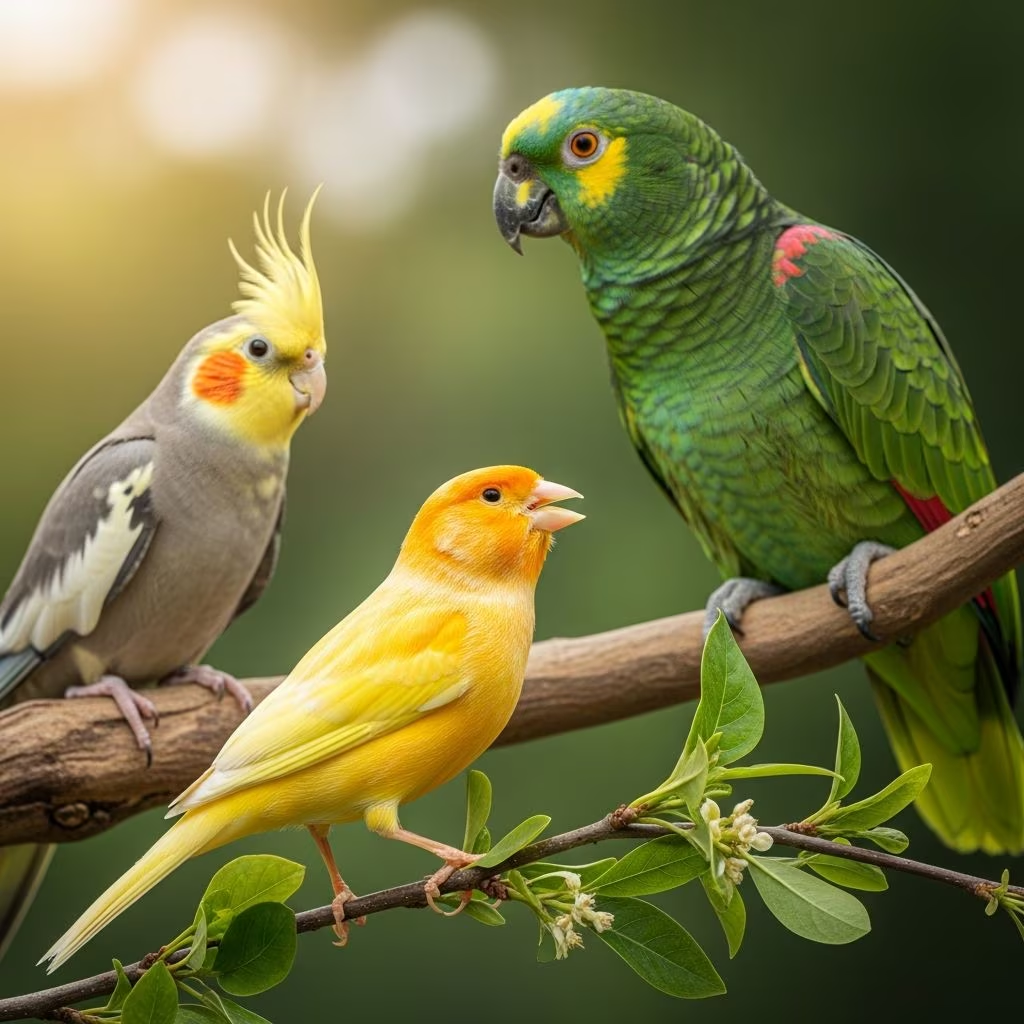
The Top 3 Singing Pet Birds
For bird enthusiasts and potential pet owners, few things are more delightful than the beautiful melodies of singing birds. While many bird species can vocalize, certain breeds have earned reputations as exceptional singers and whistlers. Whether you’re drawn to the smooth whistles of cockatiels, the operatic tones of Amazon parrots, or the intricate songs of canaries, these three bird species stand out as the premier vocalists in the pet bird world. Understanding what makes each of these birds special can help you choose the perfect feathered companion for your household.
The Appeal of the Cockatiel
Cockatiels are renowned throughout the world for their powerful, smooth whistles and remarkable singing abilities. These medium-sized parrots are creative songsters that genuinely love to sing, whistle, and show off their vocal prowess to anyone who will listen. Their combination of beauty, personality, and musical talent makes them one of the most beloved pet birds for families and enthusiasts alike.
Cockatiel Whistling Abilities
The distinctive whistle of a cockatiel is one of the bird’s most recognizable features. Unlike some other parrots that rely primarily on speech, cockatiels excel at whistling complete tunes and melodies. Their ability to produce clear, sustained notes makes them natural musicians. Male cockatiels, in particular, are known for their superior vocal abilities compared to their female counterparts. With consistent training and regular interaction, male cockatiels can learn to whistle entire songs and can even master up to 250 words and phrases, demonstrating their impressive cognitive abilities.
Royce Irwin of Texas, who has been breeding and showing most types of cockatiels since 1983 and serves as a member of the North Texas Cockatiel Club, understands the appeal of these birds firsthand. The club, which began in the mid-1980s, was established specifically to fill the need for cockatiel shows in north Texas and Oklahoma, highlighting just how popular and talented these birds are in the competitive bird community.
Real-World Cockatiel Success Stories
Many cockatiel owners have witnessed their birds’ extraordinary musical talents firsthand. Becky Denney of Ontario, Canada, who owns a whitefaced-pied mutation cockatiel named Sydney, expressed her admiration: “I believe that cockatiels are the best whistlers/singers.” Sydney knows several different whistles that Denney taught him, and she conducts him using her finger to guide his performances. When Denney brings Sydney to work at Super Pet in Belleville, the bird amazes customers with his remarkable ability to perform complex musical pieces. This dedication to training and the bird’s receptiveness to learning demonstrates why cockatiels make such excellent singing companions.
Cockatiel Personality and Performance
Beyond their technical vocal abilities, cockatiels possess engaging, affectionate personalities that make them delightful household companions. They enjoy being the center of attention and take great pride in showcasing their musical talents. Their pleasant, melodic voices are gentle enough not to be excessively loud, making them suitable for apartment living and close-quarters homes. This combination of vocal ability and friendly disposition has made cockatiels a popular choice for those seeking a loving and vocal companion.
The Operatic Voice of Amazon Parrots
While cockatiels excel at whistling, Amazon parrots have earned their reputation as the operatic singers of the parrot world. These large, colorful parrots possess deeper, more resonant voices and demonstrate a genuine passion for singing. Amazon parrots are true performers who love to be vocal, often incorporating theatrical displays of movement and personality into their performances.
Amazon Parrot Singing Styles and Personalities
Amazons are known for their enthusiastic and often loud vocalizations. When performing, these birds puff out their cheek feathers and sway, prance, and head bob while showing off their vocal talents. They are, quite literally, true hams who understand the entertainment value of their performances. Different species within the Amazon family have distinct vocal characteristics, with the double-yellow-headed Amazon being particularly renowned for its operatic abilities.
The yellow-naped Amazon is considered by many experts to be the best talker among all parrots, capable of developing enormous vocabularies and stringing together coherent sentences. However, beyond mere speech, yellow-naped Amazons are exceptional singers who can understand context, tempo, and tone in ways that make their vocalizations seem almost conversational. Additionally, the blue-fronted Amazon represents another excellent singing variety within the Amazon family.
Creative Song Development and Musical Expression
One fascinating aspect of Amazon parrot vocalizations is their ability to create original compositions and modify existing songs. According to Susanne Cochran, who raises Amazons at the Avalon Aviary and specializes in double yellow-headed, yellow-naped, and blue-fronted Amazons, these birds “like to make up new songs that show off their creativity.” Cochran theorizes that this creative expression occurs when birds forget parts of songs or run out of words in their existing repertoire.
A perfect example of this creative expression is Lola, an Amazon parrot owned by an enthusiast who loves to sing Barry Manilow’s “Cabana Song.” Lola doesn’t just perform the song verbatim; instead, she sings the famous opening lyrics “Her name was Lola, she was a showgirl at the Copa, Copa Cabana” at the top of her lungs before making the song her own by interjecting all kinds of other phrases and operatic arias. This creative interpretation demonstrates the sophisticated musical intelligence of these remarkable birds.
Volume Control and Acoustic Variations
Despite their naturally loud voices, Amazon parrots can be taught to modify their volume and tone. According to Cochran, these birds can be trained to “whisper sing,” allowing owners to enjoy their vocal talents without the overwhelming volume typical of these species. Her yellow-naped mother bird, Wolfie, demonstrates this capability beautifully by singing soft “la-la-las” to her babies in the nest, showing that Amazons possess greater vocal range and control than many people realize.
The German roller canary has a soft tone, whereas the Spanish timbrado possesses a metallic sound that can be rather loud. Different Amazon subspecies also demonstrate varying tonal qualities, with some featuring richer, deeper voices than others.
The Beautiful Song of the Canary
While parrots often receive the spotlight when discussing vocal birds, canaries represent an entirely different category of avian vocalists. The songs of canaries have inspired people for centuries, and these small songbirds possess vocal abilities that rival or exceed those of much larger parrots. Canaries are specifically bred for their vocal abilities, with different varieties offering distinct song styles and characteristics.
Canary Varieties and Song Characteristics
Not all canaries sing identically; in fact, the variety of canary species offers different vocal experiences. The most notable singing varieties include:
- German Roller: Known for their soft, mellow tone that is gentle on the ears
- Spanish Timbrado: Features a metallic sound that can be quite loud and bold
- American Singer: Developed by breeding a roller canary to a border canary, combining melodic blend with medium sound levels
- Belgian Waterslager: Famous for singing unique watery notes that create distinctive, flowing melodies
Each variety was developed with specific vocal characteristics in mind, making canaries the most intentionally-bred singing birds in the pet world. Unlike parrots that learn vocalizations through imitation and training, canaries possess innate singing abilities that emerge naturally.
Male Canary Vocalization
All male canaries sing, though the quality and volume of their songs varies by individual and variety. As Vanessa Johnson of the Texas American Singer Canary Club explains, “The only true test for a male is to hear him sing loud and clear. Only male birds engage in full song, but occasionally a female may have a few warbling notes.” This sex-based vocalization pattern is typical in canaries and many other songbird species.
American singer canaries are bred specifically for song alone, with no exact standardized sound for the variety. This flexibility allows for interesting variations within the breed while maintaining the high vocal standards the variety is known for. The red factor canary, which maintains closer genetic proximity to wild canaries, is believed by some breeders to possess the best sound. According to Kathy Guise Schaefer of the Kings County Canary Club in New York, who has been raising and breeding canaries since 1974, “the red factor [canary] has the best sound, because they’re closer to the wild. They still have some kick. They’re loud but with a pretty sound.”
Canary Song Learning and Development
A remarkable aspect of canary vocalization is their ability to incorporate new songs they hear in their environment. All canaries will pick up songs from wherever they hear them, allowing them to develop increasingly complex and varied repertoires. This learning ability means that canary owners can actively shape their bird’s vocal development through exposure to recorded canary songs or live performances.
Cathy Osier of New Jersey, who shares her home with cockatiels, parakeets, a caique, a Senegal parrot, and a canary, offered her perspective on singing birds: “Hands down, the canary is the best singer and whistler.” Her canary, named Whistler, exemplifies the remarkable vocal abilities of the species. Whistler came home singing in his travel box and has continued to delight the household every day since. The bird has expanded his natural repertoire since Osier purchased a CD of canary songs, quickly adding new melodies to his collection.
Whistler demonstrates the full performance aspect of canary singing, puffing up and filling with air like an opera singer before singing his aria and slowly deflating. His performances have made him the favorite entertainer in the household, earning admiration from both human family members and the other birds, particularly the parakeets who love listening to his songs.
Comparing the Top 3 Singing Pet Birds
| Feature | Cockatiel | Amazon Parrot | Canary |
|---|---|---|---|
| Size | Medium (12-13 inches) | Large (20-25 inches) | Small (4-7 inches) |
| Primary Vocal Style | Whistling & Melodic Tunes | Operatic Singing & Speech | Natural Songbirds |
| Volume Level | Moderate | Loud (trainable to soft) | Moderate to Loud |
| Training Ability | Highly Trainable | Highly Trainable | Natural Singers (can learn new songs) |
| Lifespan | 15-20 years | 40-60+ years | 10-15 years |
| Care Difficulty | Moderate | Advanced | Beginner-Friendly |
Choosing Your Singing Bird Companion
Selecting a singing pet bird requires considering multiple factors beyond simply vocal ability. Each of these three categories offers distinct advantages depending on your lifestyle, experience level, and preferences.
Choose Cockatiels If You Want:
- A medium-sized bird that isn’t too demanding
- Beautiful whistling abilities and melodic performances
- A trainable bird that enjoys bonding with owners
- A reasonable lifespan commitment (15-20 years)
- A bird suitable for apartment living
Choose Amazon Parrots If You Want:
- Powerful, operatic vocal performances
- A bird with exceptional intelligence and creativity
- Long-term companionship (40-60+ years)
- A bird that can master both speech and song
- Experience with larger, more demanding birds
Choose Canaries If You Want:
- Pure, natural songbirds without training required
- A smaller bird that requires less space
- Lower maintenance and easier care requirements
- Beautiful, varied song styles to enjoy
- A beginner-friendly singing bird option
Creating the Best Environment for Your Singing Bird
Regardless of which singing bird you choose, creating an optimal environment enhances their vocal abilities and overall well-being. Exposure to music, both recorded songs and live performances, encourages birds to develop richer, more complex vocalizations. Regular interaction and training sessions help parrots maintain and expand their repertoires. Adequate space for movement allows birds to fully express themselves through physical displays that accompany their songs.
Providing mental stimulation and social engagement keeps your bird happy and motivated to sing. Many singing birds perform more enthusiastically when they have an appreciative audience, whether that’s their human family members or other birds in the household.
Frequently Asked Questions
Q: Which bird is the best singer overall?
A: This depends on your preferences. Canaries are natural singers with inherent vocal ability. Amazon parrots offer operatic performances with emotional depth. Cockatiels excel at whistling melodies. Each excels in different vocal styles.
Q: Can female cockatiels sing as well as males?
A: Female cockatiels are not known for exceptional vocal abilities compared to males. Male cockatiels are significantly more talkative and can develop larger vocabularies and more complex whistles with training.
Q: How can I encourage my Amazon parrot to sing more?
A: Expose your Amazon to music, spend quality time interacting with your bird, provide mental stimulation, and create a positive environment. Amazons love having an audience and will perform more when they receive attention and praise.
Q: Do all canaries sing?
A: All male canaries sing, though song quality varies by individual and variety. Females may occasionally produce a few warbling notes, but full, complex songs are primarily a male characteristic in canaries.
Q: Which singing bird requires the least care?
A: Canaries require the least care among the three, making them ideal for beginners. They have relatively simple dietary needs and don’t require as much social interaction as parrots, though they still need proper housing and care.
Q: How long do these singing birds live?
A: Cockatiels live 15-20 years, canaries live 10-15 years, and Amazon parrots can live 40-60+ years. Consider the long-term commitment before choosing an Amazon parrot.
References
- What are the Most Vocal Types of Pet Birds? — myRightBird. 2024. https://myrightbird.com/articles/what-are-the-most-vocal-types-of-pet-birds
- The Top 3 Singing Pet Birds — Chewy Education. 2024. https://www.chewy.com/education/bird/parrot/the-top-3-singing-pet-birds
- Top 10 Talking Birds — PetMD. 2024. https://www.petmd.com/bird/top-talking-birds



