

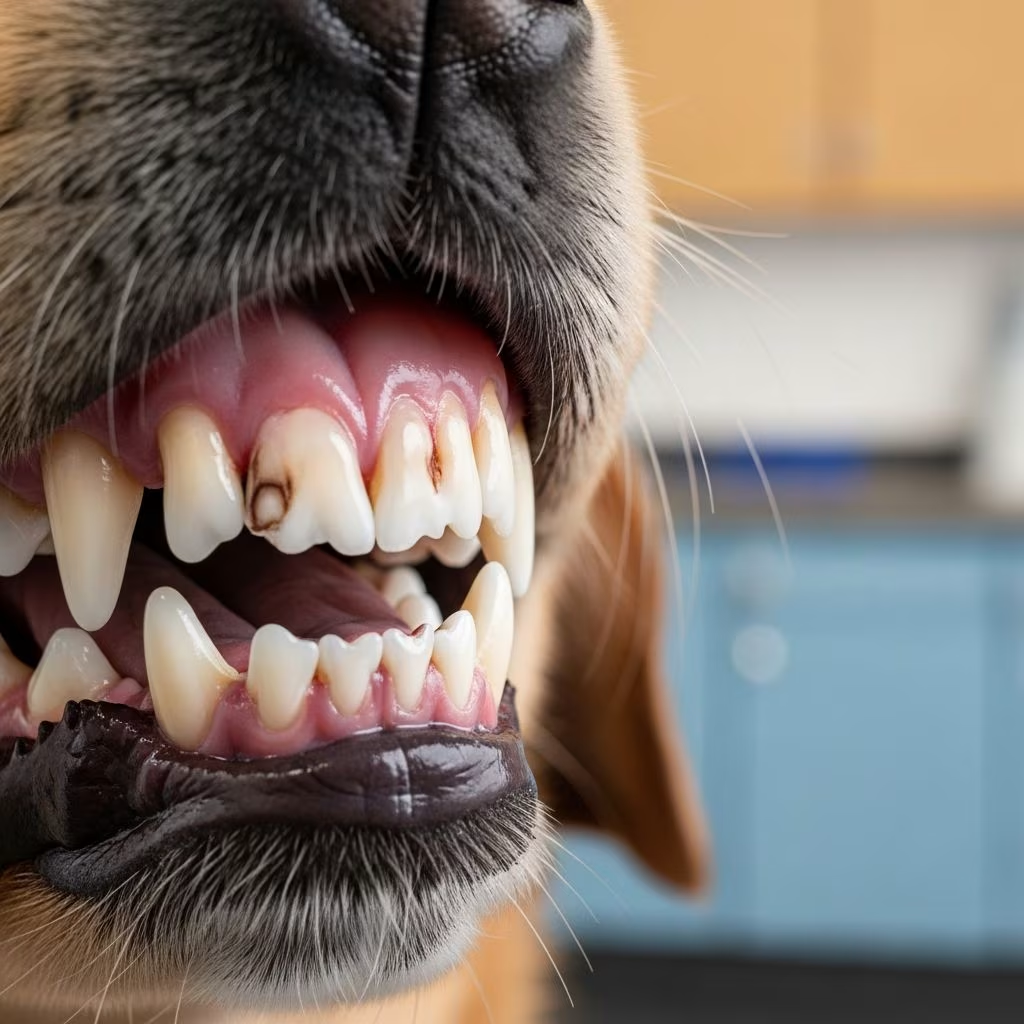
Understanding Tooth Resorption in Dogs
Tooth resorption in dogs is a progressive dental condition that affects a significant portion of the canine population. This condition occurs when the hard tissues of the tooth, including the enamel, dentin, and cementum, gradually break down and deteriorate. Unlike bacterial-induced tooth decay that humans experience, tooth resorption in dogs represents a sterile inflammatory process that can cause considerable pain and discomfort if left unaddressed.
Affecting over 53% of dogs, tooth resorption is one of the most common dental pathologies encountered in veterinary practice, yet it remains significantly underdiagnosed due to its often silent presentation. Understanding this condition is essential for pet owners who wish to maintain their dog’s oral health and quality of life.
What is Tooth Resorption?
Tooth resorption occurs through a process involving specialized cells called odontoclasts, which are normally responsible for the physiological resorption of deciduous (baby) teeth in puppies. In dogs with this condition, these cells inappropriately activate and begin destroying the permanent tooth structures. This process differs fundamentally from dental caries, as it is not caused by bacterial activity but rather represents an abnormal inflammatory response within the tooth and surrounding tissues.
The resorptive process can affect different parts of the tooth, including the crown (the visible portion above the gum line) and the roots beneath the surface. The condition typically progresses slowly but steadily, making early detection through professional veterinary examination crucial for optimal outcomes.
Types of Tooth Resorption in Dogs
Veterinary professionals classify tooth resorption into several distinct types based on radiographic appearance and clinical characteristics. Understanding these classifications helps determine the most appropriate treatment approach for each affected tooth.
External Replacement Resorption
This type accounts for approximately 34.4% of affected dogs. In external replacement resorption, the tooth structure is gradually replaced by bone-like material. While this might seem like a natural healing process, the replacement tissue lacks the functional properties of the original tooth, compromising its ability to function properly.
External Inflammatory Resorption
Representing about 25.9% of affected cases, this type is often triggered by inflammation or infection within the root canal or surrounding tissues. This classification typically results in more painful lesions and often requires prompt intervention to eliminate discomfort.
Internal Resorption
Internal resorption occurs within the tooth structure itself and can sometimes be visually identified by a pink discoloration of the crown as the resorptive area approaches the tooth surface. This type may be associated with endodontic disease or inflammation within the pulp chamber.
How Do You Know If Your Dog Has Tooth Resorption?
One of the most challenging aspects of tooth resorption in dogs is that it frequently presents as a “silent” condition. Many affected dogs show no obvious behavioral changes or clinical signs, even when experiencing painful lesions. This characteristic underscores the critical importance of systematic radiographic screening during regular veterinary dental examinations.
Early Signs to Watch For
While many dogs with early-stage tooth resorption display no symptoms, pet owners should remain vigilant for subtle behavioral changes that may indicate oral discomfort:
- Preference for softer foods or unilateral (one-sided) chewing patterns
- Prolonged eating times or food dropping behavior during meals
- Hesitation before engaging with hard treats or toys
- Localized gingival erythema (redness) or swelling adjacent to specific teeth
- Increased salivation during or after eating
Advanced Symptoms
Once the sensitive dentin layer becomes exposed, tooth resorption becomes painful and often manifests in more obvious ways. Dogs may exhibit muscular spasms or trembling of the jaw whenever the lesion is touched. Additional signs of advanced resorption include:
- Increased drooling, particularly during or after eating
- Oral bleeding or blood-tinged saliva
- Difficulty eating or chewing
- Visible fractured or broken teeth due to loss of crown structure
- Pawing at the face or mouth
- Behavioral changes such as lethargy or depression
Diagnosis of Tooth Resorption
The Importance of Dental Radiographs
Dental radiographs (X-rays) are absolutely imperative for accurately diagnosing and staging tooth resorption. Most cases of tooth resorption cannot be definitively diagnosed through visual examination alone, as the resorptive lesions often develop beneath the gum line or within the tooth structure where they are not visible to the naked eye.
During a dental examination, your veterinarian will take full-mouth radiographs to assess the extent and type of resorptive lesions present. These images allow the veterinarian to classify the lesions according to the American Veterinary Dental College (AVDC) staging system, which directly influences treatment decisions and prognosis.
Advanced Imaging Options
In some cases, cone-beam CT imaging may be utilized to provide a more detailed three-dimensional view of the affected teeth and surrounding bone structures. This advanced imaging can help identify complications such as root dilaceration, hypercementosis, or concurrent endodontic pathology that might affect treatment planning.
Causes and Risk Factors
The exact etiology of tooth resorption in dogs remains not fully understood, though research has identified several potential contributing factors. In some cases, tooth resorption appears to be triggered by inflammation or infection, particularly when disease exists within the root canal or in the tissues surrounding the tooth. These cases are classified as inflammatory types and often present with more pronounced pain.
Other potential contributors that have been suggested include past dental trauma, pressure from chewing, mechanical stress, and periodontal disease. Recent molecular research has identified the RANK-L/RANK/OPG pathway as a critical mediator of odontoclastic activity in tooth resorption, though the clinical implications of this discovery are still being explored.
Treatment Options for Tooth Resorption
Treatment decisions for canine tooth resorption must be individualized based on AVDC staging, radiographic classification, patient age, overall health status, and owner preferences. The primary therapeutic objectives include eliminating pain, preventing secondary complications, and maintaining oral function.
Watchful Waiting
When resorptive lesions are identified in early stages before the tooth crown is affected, your veterinarian may recommend a conservative “watchful waiting” approach. This strategy involves regular follow-up dental examinations and radiographic monitoring to determine if and when intervention becomes necessary. This approach may be suitable for dogs whose owners are willing to return for regular rechecks and dental imaging.
However, if return visits are unlikely or if early lesions show signs of rapid progression, extraction is advisable to prevent the development of painful advanced lesions. The rate of progression of resorptive lesions varies widely among affected dogs and is difficult to predict.
Extraction of Affected Teeth
Extraction represents the definitive and most commonly recommended treatment for tooth resorption in dogs. When resorption has eroded into the tooth crown, causing painful inflammation within the pulp chamber, or when significant root resorption compromises tooth stability, extraction is necessary.
Complete extraction of affected teeth results in immediate pain relief and prevents secondary complications such as tooth fracture or spread of infection. For teeth demonstrating Type 1 resorption characteristics with intact periodontal ligament space and normal root radiodensity, conventional extraction techniques are typically successful.
Crown Amputation
In select cases where replacement resorption is present and tooth structure remains largely intact, crown amputation procedures may be considered. This technique involves removing the affected crown portion while intentionally retaining the root. Crown amputation demonstrates high success rates when properly indicated and executed, though it requires careful assessment to ensure the remaining root will not cause complications.
Root Canal Therapy
While root canal therapy is a viable treatment option in humans for managing endodontic disease and halting resorption progression, it is rarely a practical option in dogs. Canine tooth resorption is often too advanced by the time it is detected, making endodontic therapy unfeasible. Additionally, the anatomical differences between human and canine teeth make root canal treatment challenging and often unsuccessful.
Pain Management and Patient Care
Effective perioperative pain management represents a critical component of successful tooth resorption treatment. Multi-modal analgesia protocols should be implemented to address both inflammatory and neuropathic pain components associated with advanced resorptive lesions. Your veterinarian will develop a comprehensive pain management plan tailored to your individual dog’s needs.
Following extraction, most dogs experience immediate pain relief and return to normal eating patterns within a few days. The extraction of severely compromised teeth actually improves quality of life by eliminating the source of chronic pain and discomfort.
Prognosis and Long-Term Outlook
The prognosis for dogs with tooth resorption is generally excellent when appropriate treatment is provided. Complete extraction of affected teeth results in immediate pain relief and prevents secondary complications such as periapical infections or tooth fracture. Dogs adapt remarkably well to tooth loss and continue to eat and function normally with reduced dentition.
Recent molecular research has identified potential therapeutic avenues for future intervention strategies, though current treatment remains focused on surgical management of established lesions. As veterinary dental medicine continues to advance, additional preventive and therapeutic options may become available.
Prevention and Maintenance
While the underlying causes of tooth resorption are not fully understood, maintaining excellent oral hygiene through regular professional dental cleanings and daily home care may help reduce the risk of resorption development or progression. Regular veterinary dental examinations allow for early detection of resorptive lesions before they become painful or cause significant damage.
Feeding high-quality diets and avoiding excessive chewing on hard objects may also contribute to overall oral health. However, once tooth resorption has developed, prevention of further progression depends primarily on appropriate professional intervention.
Frequently Asked Questions
Q: Is tooth resorption painful for dogs?
A: Tooth resorption is generally considered painless until the resorptive process exposes the sensitive dentin or becomes exposed to the oral cavity. Once the pulp is affected, the condition becomes painful and often results in jaw tremors or muscular spasms when the lesion is touched.
Q: How common is tooth resorption in dogs?
A: Tooth resorption affects over 53% of dogs, making it one of the most common dental conditions in veterinary practice. Despite its prevalence, it remains significantly underdiagnosed because it is often asymptomatic in early stages.
Q: Can tooth resorption be prevented?
A: While prevention strategies are not definitively established, maintaining excellent oral hygiene through professional cleanings and regular dental examinations can support overall oral health. Unfortunately, once resorption develops, prevention of further progression depends on professional intervention.
Q: Will my dog be okay after tooth extraction?
A: Yes, dogs adapt remarkably well to tooth loss. After extraction of resorbed teeth, dogs typically experience immediate pain relief and return to normal eating and function within a few days. Many owners report improved behavior and appetite after problematic teeth are removed.
Q: How often should my dog have dental X-rays?
A: The frequency of dental radiographs depends on your dog’s age, health status, and presence of existing dental disease. Many veterinarians recommend annual dental examinations with radiographs for adult dogs and more frequent monitoring if resorptive lesions have been identified.
Q: Is there a cure for tooth resorption in dogs?
A: Currently, there is no cure for tooth resorption itself. The only effective treatment is extraction of affected teeth. However, extraction successfully eliminates pain and prevents further complications associated with the resorbed tooth.
References
- Dog Tooth Resorption: Diagnosis & Treatment Guide for Vets — Veterinary Dentistry Network. 2024. https://veterinarydentistry.net/tooth-resorption-dogs/
- Tooth Resorption in Dogs – Montana Pet Dentistry & Oral Surgery — Montana Pet Dentistry & Oral Surgery. 2024. https://montanapetdentist.com/tooth-resorption-dogs/
- Tooth Resorption (Dog) — Advanced Animal Dentistry. 2024. https://animaldental.com.au/dog-tooth-resorption/
- Tooth Resorption in Dogs — VCA Animal Hospitals. 2024. https://vcahospitals.com/know-your-pet/tooth-resorption-in-dogs
- Tooth Resorption in Dogs and Cats — VetBloom. 2024. https://vetbloom.com/tooth-resorption-in-dogs-and-cats/
- Tooth Resorption in Dogs – MSPCA-Angell — MSPCA-Angell Animal Medical Center. 2020. https://www.mspca.org/



