

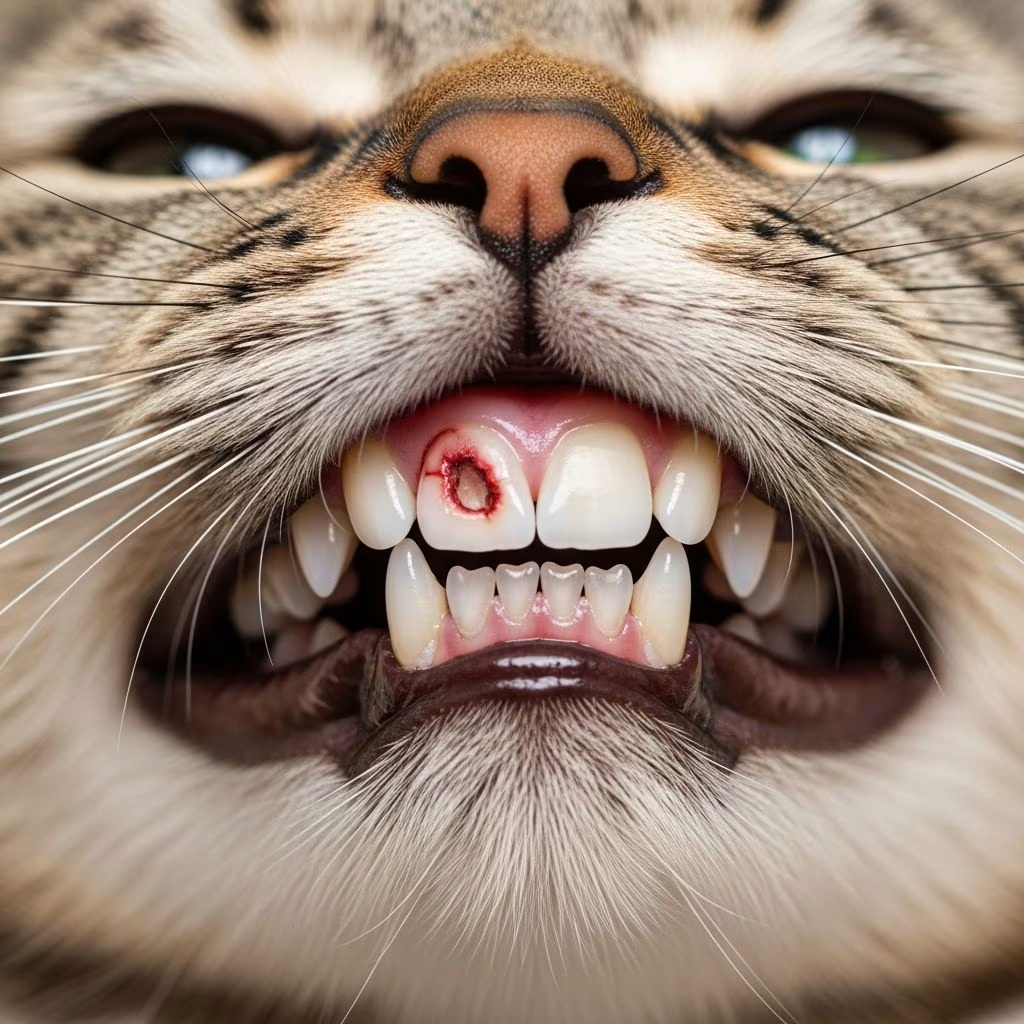
Understanding Tooth Resorption in Cats
Tooth resorption in cats is a common and often painful dental condition that affects the structural integrity of feline teeth. This condition occurs when the body’s own cellular mechanisms inappropriately activate odontoclasts—specialized cells normally responsible for physiological tooth remodeling—causing them to progressively destroy the mineralized dental tissues, including cementum, dentin, and eventually enamel. Unlike bacterial-mediated caries seen in humans, feline tooth resorption represents an immune-mediated process where the cat’s own cellular mechanisms attack tooth structure. The resorptive process typically starts on the root surfaces and gradually extends to involve the crown, with the lesion first becoming clinically evident when it reaches the cemento-enamel junction.
This condition is particularly significant in veterinary dentistry because affected teeth become notoriously difficult to extract, and many cats may not display obvious signs of discomfort despite experiencing considerable pain. The high prevalence of this condition in domestic cats makes it essential for cat owners and veterinarians to understand its causes, recognition, and appropriate management strategies.
Prevalence and Risk Factors
Tooth resorption is remarkably common in the domestic cat population, affecting a substantial percentage of cats during their lifetime. While many lesions appear to be idiopathic with no known prevention method, several factors have been theorized to predispose cats to resorption. These risk factors include frequent vomiting, periodontal disease, and mineral excesses or deficiencies in food or water. Additionally, certain systemic conditions and immune-mediated disorders may increase susceptibility to this dental pathology.
The condition shows no clear gender predisposition, though age-related factors may play a role in disease progression. Cats over six years of age appear to be at higher risk, making regular dental evaluation increasingly important as cats mature.
Pathophysiology: How Tooth Resorption Develops
Understanding the biological mechanisms underlying tooth resorption provides valuable insight into why this condition is so challenging to treat. The resorptive process initiates in the cementum—the specialized connective tissue covering the root surface—and progressively advances to involve the dentin. Once the lesion penetrates the dentin layer, the destructive process spreads along the dentine tubules, gradually extending throughout the tooth structure.
The progression continues with the involvement of the dentine of both the crown and root. Interestingly, the peripulpal dentine (the dentin immediately surrounding the pulp chamber) demonstrates relative resistance to resorption, meaning the pulp tissue only becomes involved late in the disease process. Eventually, the process extends through the crown dentine, reaching the enamel layer. The enamel either undergoes resorption itself or fractures away, creating a clinically visible defect that prompts owners to seek veterinary care.
Types of Tooth Resorption
Veterinary dentistry recognizes two distinct types of feline tooth resorption, each with different radiographic appearances and treatment implications:
Type 1 Tooth Resorption
Type 1 resorption occurs when both the crown and root structures are affected by the resorptive process. This type presents with significant radiographic changes throughout the entire tooth structure. Affected teeth must be completely extracted, including the roots, to eliminate the pain source and prevent further complications.
Type 2 Tooth Resorption
Type 2 resorption, the more common form, primarily affects the root structure while the crown remains relatively intact radiographically. This type can be managed through crown amputation, a technique that removes the diseased portion of the tooth while intentionally retaining the already resorbing roots. However, some tooth roots affected by type 2 lesions may require partial or complete extraction depending on specific clinical circumstances.
Clinical Signs and Symptoms
Despite the significant structural damage occurring within affected teeth, many cats effectively hide oral pain, making clinical recognition challenging for owners. When symptoms do become apparent, they may include:
– Difficulty eating or dropping food while chewing
– Preference for soft foods over hard kibble
– Excessive drooling or blood-tinged saliva
– Facial swelling or sensitivity around the jaw
– Behavioral changes including irritability or decreased social interaction
– Pawing at the mouth
– Avoidance of touch around the head and face
– Visible defects or dark discoloration at the gum line
It is crucial for cat owners to understand that the absence of obvious symptoms does not indicate the absence of dental disease. Many resorptive lesions remain subclinical until they become extensive, making professional veterinary evaluation essential for early detection and appropriate intervention.
Diagnosis: The Role of Radiography
Diagnosis and appropriate treatment selection relies critically on radiographic evaluation. Full-mouth dental radiographs are considered the diagnostic gold standard and are essential for comprehensive diagnosis and treatment planning. The American Veterinary Dental College recommends full-mouth radiographs for all cats one year of age or older, with particular emphasis on cats over six years of age.
For veterinary practices with financial constraints, a rapid screening technique utilizing radiographs of both mandibular premolar and molar regions can identify approximately 90% of cats with tooth resorption. If these screening radiographs reveal resorptive lesions, complete full-mouth evaluation becomes mandatory to assess the full extent of disease and plan appropriate treatment.
During the diagnostic process, veterinarians will also evaluate other oral conditions including gum disease, periodontal disease, and oral cancer that may be present concurrently. The radiographic images allow veterinarians to determine whether lesions are confined to the root (only visible radiographically) or extend into the crown (clinically evident), which directly influences treatment decisions.
Treatment Options for Tooth Resorption
Conservative Management
Conservative management consists of monitoring the lesions clinically and radiographically over time. This approach is recommended exclusively for lesions confined to the root that are not evident on clinical examination—that is, lesions only seen radiographically without any evidence of discomfort or pain. Since most lesions are only diagnosed when pathology is extensive, conservative management is rarely indicated in general practice situations. In most cases, extraction or coronal amputation of the affected tooth is ultimately indicated.
Tooth Extraction
Extraction remains the gold standard treatment for affected teeth, with the entire tooth removed to eliminate the pain source. With type 1 tooth resorption, both the crown and root must be completely extracted. Every effort should be made to entirely extract roots affected by resorption. However, teeth with tooth resorption are notoriously difficult to extract due to the structural changes caused by the resorptive process.
In moderate to severe cases of feline tooth resorption, the teeth become quite fragile and tend to crack during extraction. Consequently, your veterinarian may refer you to a veterinary dental specialist for the extractions. In addition to preoperative radiographs to detect the lesions and determine appropriate treatment, postoperative radiographs are required to ensure that the whole tooth has been removed.
Coronal Amputation
When the root has been extensively resorbed, it is often not possible to extract all tooth substance. Coronal amputation then becomes the treatment of choice. This technique removes the diseased crown portion of the tooth while leaving the already resorbing roots in place. A flap is first created to access the tooth, and the crown is amputated below the mucogingival line. The bone is then smoothed and the gingival tissue is sutured over the remaining roots.
However, certain conditions preclude the use of crown amputation as a treatment option. Feline leukemia virus (FeLV) or feline immunodeficiency virus (FIV) positive cats and cats with concurrent periodontal, endodontic, and periapical disease should not be treated with crown amputation. Radiographic monitoring is required at regular intervals postoperatively to ensure that the root is resorbing and that healing is uneventful.
Tooth Surface Restoration
Restoration of the tooth surface has been recommended by some for treatment of accessible lesions that extend into the dentine and do not involve pulp tissue. However, several studies have demonstrated that tooth resorption continues despite restoration, and the restorations are eventually lost. Consequently, the use of restoration cannot be recommended as a major treatment technique for feline tooth resorption.
Post-Operative Care and Recovery
Successful treatment outcomes depend significantly on appropriate post-operative care. Cats should be placed on a soft food diet for 2-3 weeks to allow proper healing following extraction or coronal amputation. Appropriate analgesic protocols should be implemented based on the extent of treatment performed. Antibiotic therapy is indicated when surgical complexity or concurrent infection warrants their use. Sutures should be removed at 10-14 days post-operatively.
The prognosis following appropriate treatment is excellent. Many cat owners report marked improvement in behavior, appetite, and social interaction following resolution of oral pain. Complete healing typically occurs within 2-4 weeks, with cats adapting well to altered dentition. Most cats continue to eat normally even with multiple teeth removed, as they adapt their chewing patterns effectively.
Long-Term Monitoring and Prevention
Cats with a history of tooth resorption require ongoing surveillance, as the condition frequently affects multiple teeth over time. Recommended monitoring includes annual dental examinations with full-mouth radiographs, immediate evaluation of any new oral discomfort signs, and regular assessment of remaining dentition for new lesions. Early detection through routine radiographic screening significantly improves outcomes and prevents the development of extensive disease.
Unfortunately, there is no known way to prevent tooth resorption, but regular dental exams and X-rays help with early detection and treatment. Maintaining good oral hygiene through regular brushing (when feasible), providing appropriate nutrition, and minimizing factors such as frequent vomiting may help reduce risk in susceptible cats. However, since many cases appear idiopathic, prevention focuses primarily on early detection and appropriate management.
Frequently Asked Questions About Feline Tooth Resorption
Q: What should I do if I suspect my cat has tooth resorption?
A: Schedule an appointment with your veterinarian immediately. Your vet can perform a thorough oral examination and recommend dental X-rays under anesthesia to evaluate the extent of any resorptive lesions and determine the appropriate treatment plan.
Q: Can my cat eat normally after tooth extraction?
A: Yes, most cats adapt well to eating normally following extraction or coronal amputation. During the initial 2-3 week recovery period, soft food is recommended, but cats typically return to regular eating habits once healed.
Q: Is tooth resorption painful for cats?
A: Yes, tooth resorption causes significant pain, though many cats hide their discomfort effectively. This is why professional evaluation is essential even when owners don’t notice obvious symptoms.
Q: How often should my cat have dental radiographs?
A: The American Veterinary Dental College recommends full-mouth radiographs for all cats one year of age or older, with particular emphasis on cats over six years of age. At minimum, annual dental examinations with radiographs are recommended for cats with a history of tooth resorption.
Q: Will my cat develop resorption in other teeth if one tooth is affected?
A: The condition frequently affects multiple teeth over time, making ongoing surveillance important. Regular dental examinations and radiographs allow early detection of new lesions before they become extensive.
Q: Is there a cure for tooth resorption?
A: There is no known cure that prevents the development and progression of idiopathic tooth resorption. Treatment focuses on removal of affected teeth or coronal amputation to eliminate pain and restore quality of life.
References
- Tooth resorption in cats: Pathophysiology and treatment options — National Center for Biotechnology Information (NCBI/PMC). 2024. https://pmc.ncbi.nlm.nih.gov/articles/PMC11383098/
- A Cat Owner’s Guide to Feline Odontoclastic Resorptive Lesions — Star of Texas Veterinary Hospital. https://staroftexasvet.com/a-cat-owners-guide-to-feline-odontoclastic-resorptive-lesions/
- Tooth Resorption in Cats — VCA Animal Hospitals. https://vcahospitals.com/know-your-pet/tooth-resorption-in-cats
- Feline Tooth Resorption: Diagnosis & Treatment for Veterinary Professionals — Veterinary Dentistry Professional Resource. https://veterinarydentistry.net/feline-tooth-resorption/
- Feline Tooth Resorption: A Guide for Cat Owners — 1st Pet Veterinary. https://1stpetvet.com/feline-tooth-resorption-a-guide-for-cat-owners/
- Feline Tooth Resorption: Treatment Options — College of Veterinary Medicine, University of Illinois. 2023-02-15. https://vetmed.illinois.edu/2023/02/15/feline-tooth-resorption-treatment-options/
- Feline Tooth Resorption: Stages and Treatment — PetMD. https://www.petmd.com/cat/conditions/mouth/c_ct_Feline_Tooth_Resorption



