Tooth Resorption in Cats: Causes, Diagnosis & Treatment
Understanding feline tooth resorption: causes, symptoms, diagnosis methods, and effective treatment options for your cat's dental health.
Understanding Tooth Resorption in Cats
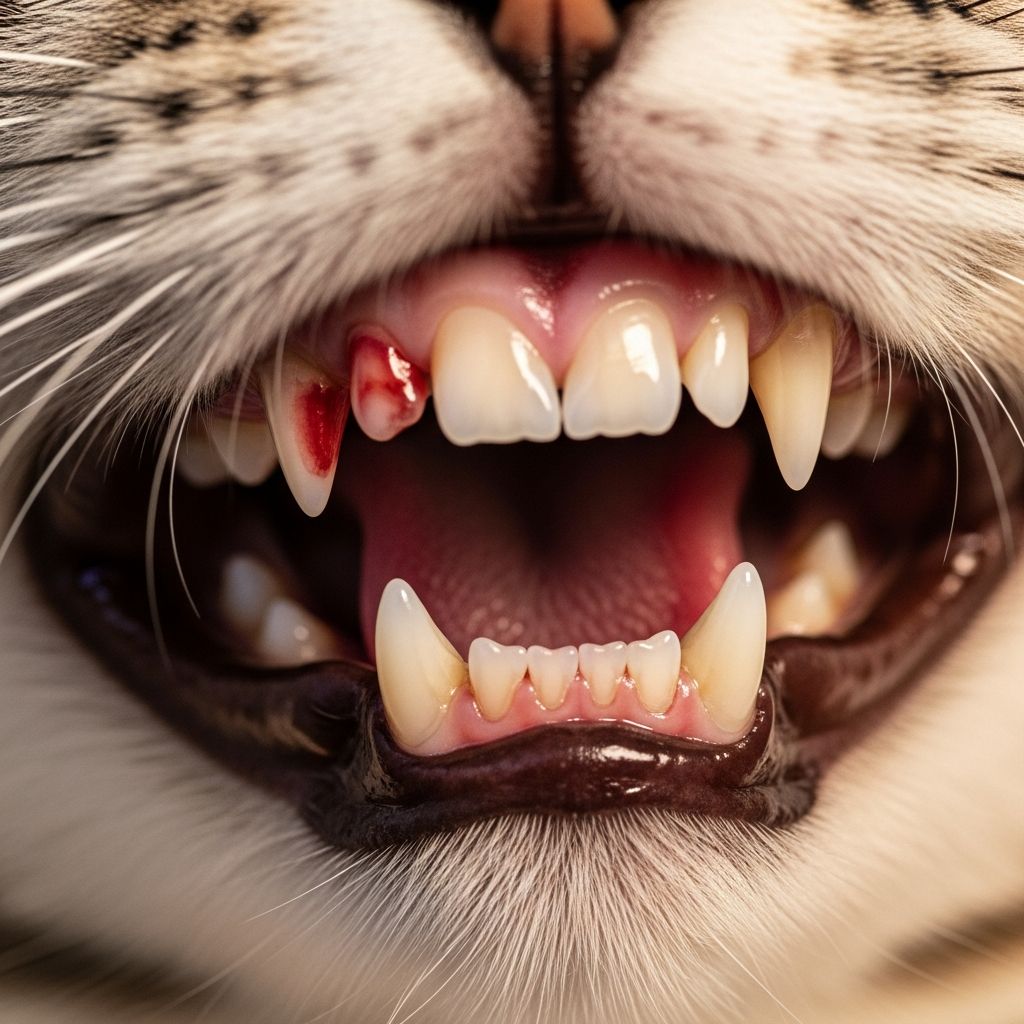
Tooth resorption is a common and often painful dental condition affecting cats, characterized by the progressive breakdown and loss of tooth structure. Unlike bacterial-mediated tooth decay seen in humans, feline tooth resorption represents an immune-mediated process where the cat’s own cellular mechanisms attack tooth structure through the inappropriate activation of specialized cells called odontoclasts.
This condition has historically been referred to as feline odontoclastic resorptive lesions (FORL), though the term tooth resorption is now preferred in veterinary medicine. The disease is particularly significant because cats are remarkably skilled at hiding oral pain, meaning many cases go undetected until the condition becomes advanced.
What Causes Tooth Resorption in Cats?
The exact etiology of feline tooth resorption remains incompletely understood, contributing to its prevalence across the feline population. However, veterinary researchers have identified several factors that appear to predispose cats to developing this condition.
Potential contributing factors include:
– Frequent vomiting or regurgitation- Periodontal disease and poor oral hygiene- Mineral excesses or deficiencies in food or water- Immune-mediated inflammatory responses- Genetic predisposition- High-carbohydrate diets- Stress and systemic inflammation
The odontoclasts responsible for this process are specialized cells normally involved in physiological tooth remodeling. In pathological resorption, these cells become dysregulated and progressively destroy the mineralized dental tissues, including cementum, dentin, and eventually enamel. The condition typically begins on the root surface, destroying the cementum first before advancing into the dentin layer.
Types and Stages of Tooth Resorption
Understanding the classification system for tooth resorption is crucial for determining appropriate treatment. Veterinarians recognize two main types of tooth resorption, each with distinct radiographic characteristics and treatment implications.
Type 1 Tooth Resorption
Type 1 resorption involves lesions where both the crown and root are affected, with the periodontal ligament remaining intact. These lesions commonly associate with inflammatory conditions and require complete extraction of both the crown and root structure due to the maintenance of intact periodontal ligaments and endodontic systems. The presence of an intact endodontic system makes complete removal essential to eliminate sources of pain and infection.
Type 2 Tooth Resorption
Type 2 resorption is more common than Type 1 and involves replacement of the root with bone. This type is generally less painful and allows for a more conservative treatment approach. The resorbed root structure is often replaced by alveolar bone, which is why Type 2 lesions can sometimes be managed differently than Type 1 lesions.
Beyond the two main types, tooth resorption progresses through five distinct stages:
– Stage 1: Small lesions on the outside of the tooth affecting the enamel or cementum- Stage 2: Progressive tissue loss extending slightly into the tooth- Stage 3: Moderate tissue loss affecting deeper layers- Stage 4: Extensive tissue loss affecting the majority of the tooth- Stage 5: Severe tissue loss with only remnants of dental tissue remaining
Symptoms and Clinical Signs
Recognizing the signs of tooth resorption is challenging because cats naturally hide signs of pain and discomfort. However, pet owners should remain vigilant for behavioral changes that may indicate oral disease.
Common symptoms of tooth resorption include:
– Difficulty eating or chewing- Dropping food from the mouth- Excessive drooling- Bad breath or foul odor from the mouth- Pawing at the mouth or face- Bleeding from the mouth- Behavioral changes such as increased irritability- Reduced appetite or preference for soft foods- Reluctance to groom- Facial swelling
Many cats with early-stage tooth resorption show no obvious clinical signs, which is why professional dental evaluation and radiographic screening are essential for early detection.
Diagnosis of Tooth Resorption
Accurate diagnosis of tooth resorption requires a comprehensive approach combining visual examination and advanced imaging. Dental radiographs are the diagnostic gold standard, as they reveal changes below the gum line that are impossible to detect through external examination alone.
The Diagnostic Process
Your veterinarian will begin with a thorough oral examination, often performing visual inspection while your cat is under anesthesia. During this examination, your veterinarian will probe the gum line and assess overall oral health, looking for signs of resorptive lesions, periodontal disease, and other dental pathology.
Dental radiographs are imperative for determining the type and stage of tooth resorption, which ultimately affects which treatment can be performed. The American Veterinary Dental College recommends full-mouth radiographs for all cats one year of age or older, with particular emphasis on cats over six years of age. For practices with financial constraints, a rapid screening technique utilizing radiographs of both mandibular premolar and molar regions can identify approximately 90 percent of cats with tooth resorption.
Why Anesthesia is Necessary
Dental X-rays must always be performed under anesthesia for several important reasons. The sensor used to capture radiographic images cannot withstand the force of a cat’s bite, and these sensors are extremely expensive to replace. Additionally, it is difficult to visualize all areas of a cat’s mouth when they are awake, and resorptive lesions may not be discovered until your cat is under anesthesia for comprehensive dental evaluation. During this process, your cat may need more teeth extracted than initially expected due to resorptive lesions being found while probing the gum line.
Treatment Options for Tooth Resorption
Treatment of tooth resorption is guided by the radiographic appearance of the lesion, the type of resorption, and the overall health status of the affected cat. The primary goal of treatment is to remove the affected tooth or lesion to eliminate the source of pain and discomfort.
Type 1 Resorption Treatment
With Type 1 tooth resorption, both the crown and root must be completely extracted. This approach is necessary because Type 1 lesions maintain intact periodontal ligaments and endodontic systems, making complete removal essential to prevent ongoing pain and infection. Full-mouth extractions often require a surgical approach due to weakened tooth structure. Gingival flap elevation and buccal cortical bone removal are frequently necessary procedures.
There is significant risk of crown fracture during extraction of Type 1 teeth, so your veterinarian must be prepared for root removal. Complete radiographic confirmation of root removal is essential to ensure successful treatment.
Type 2 Resorption Treatment
For Type 2 tooth resorption, a more conservative technique known as crown amputation with intentional root retention is appropriate. This procedure involves creating a conservative envelope flap for exposure, amputating the crown below the mucogingival line using a cross-cut fissure bur, and removing sharp alveolar projections with a round bur.
However, crown amputation is not suitable for all cats. Cats that are FELV or FIV positive and cats with periodontal disease, endodontic disease, or concurrent stomatitis should not be treated with crown amputation. In these cases, complete extraction may be more appropriate.
Surgical Considerations
The surgical approach to tooth extraction in cats with resorption requires careful technique and planning:
– Create a conservative envelope flap for adequate exposure- Amputate the crown below the mucogingival line using appropriate burs- Remove sharp alveolar projections to prevent mucosal trauma- Contour bone surfaces smoothly- Achieve tension-free gingival closure with absorbable sutures- Carefully assess the extent of root resorption before deciding on complete extraction versus crown amputation
Post-Operative Care and Recovery
Proper post-operative care is essential for optimal healing and pain management following tooth extraction or crown amputation procedures.
Immediate Post-Operative Care
After your cat’s dental procedure, follow these care guidelines:
– Provide a soft food diet for two to three weeks to allow proper healing- Administer appropriate analgesic protocols based on the extent of treatment- Use antibiotic therapy when indicated by surgical complexity or concurrent infection- Plan for suture removal at ten to fourteen days post-operatively- Monitor the extraction sites regularly for complications
Long-Term Recovery
Most cats experience excellent outcomes following appropriate treatment of tooth resorption. Complete healing typically occurs within two to four weeks, and cats adapt remarkably well to altered dentition. Many cat owners report marked improvement in behavior, appetite, and social interaction following resolution of oral pain.
Prognosis and Quality of Life
The prognosis following appropriate treatment is excellent. Cats are highly adaptable animals that function well with fewer teeth or even complete dental extractions. The presence of missing teeth does not significantly impair a cat’s quality of life, especially considering the pain relief achieved through removal of affected teeth.
Long-term monitoring is important because cats with a history of tooth resorption frequently develop lesions affecting multiple teeth over time. Recommended monitoring includes annual dental examinations with full-mouth radiographs, immediate evaluation of any new signs of oral discomfort, and regular assessment of remaining dentition for new lesions.
Prevention and Management
While there is no known way to completely prevent tooth resorption, certain measures may help slow progression or reduce risk:
– Maintain regular dental examinations and professional cleanings- Implement appropriate oral hygiene measures- Feed high-quality, species-appropriate diets- Monitor for signs of systemic inflammation or immune compromise- Ensure adequate mineral balance in your cat’s diet- Address periodontal disease promptly- Minimize stress whenever possible
Frequently Asked Questions About Feline Tooth Resorption
Q: How common is tooth resorption in cats?
A: Tooth resorption is the second most common dental disease process seen in cats, affecting a significant portion of the feline population. It is found in both indoor and outdoor cats, and across all age groups, though it is more common in older cats.
Q: Can tooth resorption be prevented?
A: There is currently no known way to completely prevent tooth resorption. However, regular dental exams and X-rays help with early detection and treatment, and maintaining good oral hygiene may slow progression in some cases.
Q: Will my cat be able to eat normally after tooth extraction?
A: Yes, most cats adapt very well to missing teeth. Cats do not chew their food extensively like humans do; they primarily tear and swallow. After a short recovery period, cats typically resume normal eating patterns and can consume both wet and dry food.
Q: How often should my cat have dental X-rays?
A: The American Veterinary Dental College recommends full-mouth radiographs for all cats one year of age or older. For cats over six years of age or those with a history of dental disease, annual dental examinations with radiographs are recommended.
Q: Is tooth resorption painful?
A: Yes, tooth resorption is often a painful condition. However, cats are exceptionally good at hiding signs of pain, so the absence of obvious symptoms does not mean your cat is not experiencing discomfort. Professional dental evaluation is essential for early detection.
Q: What is the difference between Type 1 and Type 2 tooth resorption?
A: Type 1 resorption affects both crown and root with intact periodontal ligaments, requiring complete extraction. Type 2 resorption involves root replacement with bone and may be treated conservatively with crown amputation while retaining the resorbed root.
Q: How much does tooth resorption treatment cost?
A: The cost varies depending on the number of affected teeth, the type of resorption, and the extent of the surgical procedure required. Consultation with your veterinarian will provide specific cost estimates for your cat’s individual case.
References
- Tooth Resorption in Cats — VCA Animal Hospitals. https://vcahospitals.com/know-your-pet/tooth-resorption-in-cats
- Feline Tooth Resorption: Diagnosis & Treatment for Vets — Veterinary Dentistry. https://veterinarydentistry.net/feline-tooth-resorption/
- Feline Tooth Resorption: Stages and Treatment — PetMD. https://www.petmd.com/cat/conditions/mouth/c_ct_Feline_Tooth_Resorption
- Tooth Resorption in Small Animals — MSD Veterinary Manual. https://www.msdvetmanual.com/digestive-system/dentistry-in-small-animals/tooth-resorption-in-small-animals
- Feline Tooth Resorption: Treatment Options — University of Illinois College of Veterinary Medicine. 2023-02-15. https://vetmed.illinois.edu/2023/02/15/feline-tooth-resorption-treatment-options/
Similar Articles








Read full bio of Sneha Tete