

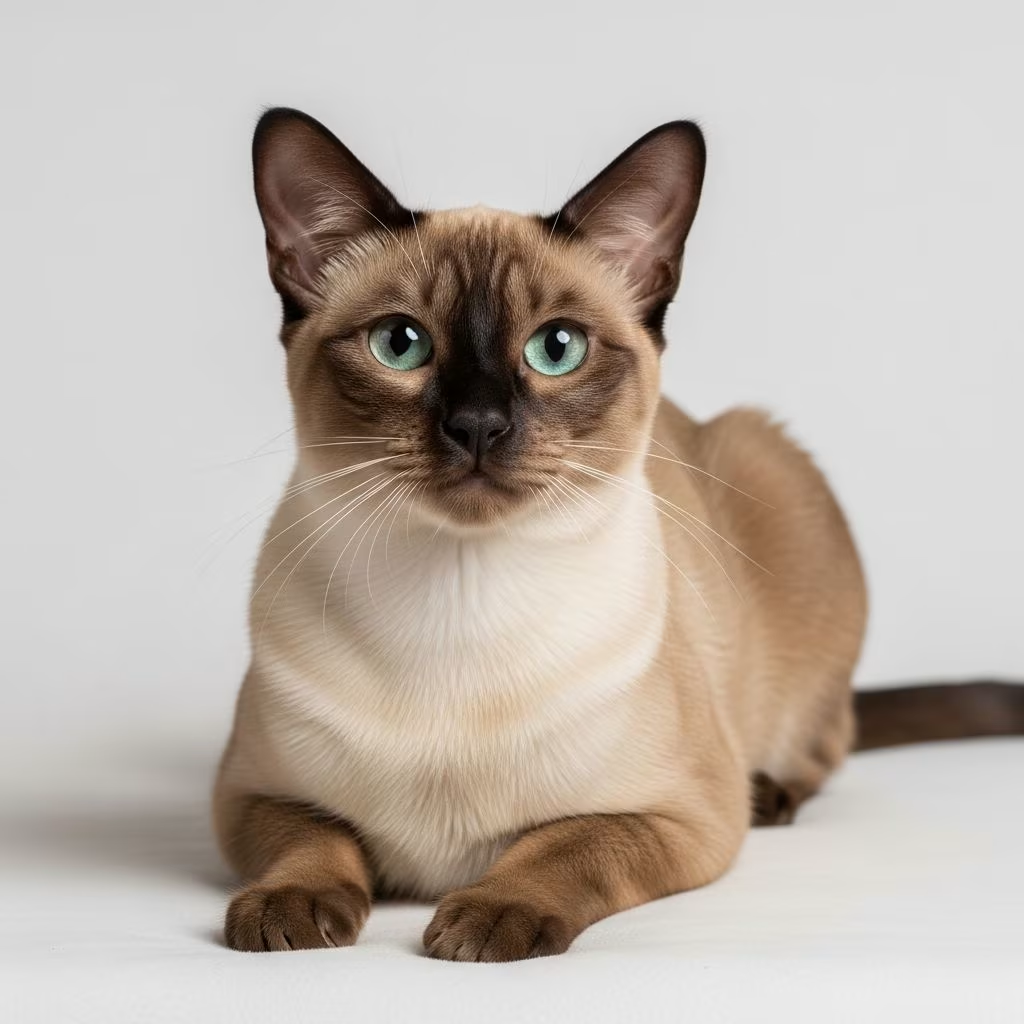
The Tonkinese cat stands out as a captivating domestic breed, born from the intentional crossing of Siamese and Burmese lines. Known for their striking aquamarine eyes and versatile coat patterns, these felines combine the vocal expressiveness of Siamese with the sturdy sociability of Burmese, creating an ideal companion for diverse households.
Origins and Evolution of the Tonkinese Breed
References to cats resembling modern Tonkinese appear in ancient Thai texts like the Cat Book Poems, hinting at their presence in Southeast Asia for centuries. These early felines, often confused with Siamese or Burmese, featured softer color contrasts and unique eye shades. In the West, they surfaced in the late 19th century as ‘chocolate Siamese,’ imported from regions like Malaysia. Descriptions from that era noted burnished chestnut coats and green-blue eyes, distinguishing them from the sharper-pointed Royal Siamese.
The breed’s modern development accelerated in the 20th century. A pivotal moment came in 1930 when Wong Mau, a cat brought to the U.S., was studied by Dr. Joseph Thompson. Initially dismissed as a subpar Siamese, genetic analysis revealed her as a hybrid carrying both Siamese point and Burmese solid color genes, laying the foundation for Burmese recognition and, indirectly, Tonkinese reconstruction.
Post-World War II breeders refined the type. In the 1950s and 1960s, figures like Margaret Conroy crossed seal point Siamese with Burmese, producing ‘Tonkanese’ kittens with tan bodies and turquoise eyes that bred true for generations. West Coast enthusiasts introduced blues and champagnes by the 1970s. Advocacy peaked in 1979 with CFA registration of mink varieties, and by 1984, full championship status was granted after extensive shows and over 800 registrations. Stud books closed then, mandating Tonkinese-to-Tonkinese matings.
Distinctive Physical Features
Tonkinese exhibit a balanced, athletic build: medium-sized with muscular bodies, elegant legs, and oval paws. Their heads are modified wedges—rounded yet sculpted—with full cheeks, strong chins, and large, almond-shaped eyes in vivid aquamarine, blue, or green hues depending on coat color.
Coats define the breed uniquely. Unlike single-gene patterns in parent breeds, Tonkinese display three: mink (intermediate shading), pointed (Siamese-like), and solid (Burmese-style). This results from combined genetics: one parent contributes point restriction, the other solid diffusion. Available in natural (brown), blue, champagne (lilac), and platinum, mink is the hallmark—darker points blending seamlessly into lighter bodies.
| Coat Pattern | Description | Example Colors |
|---|---|---|
| Mink | Even shading from darker points to lighter body | Natural, Blue, Champagne |
| Pointed | High contrast points on pale body | Seal Point, Blue Point |
| Solid | Uniform color with minimal contrast | Champagne, Platinum |
Shorthaired predominantly, a longhaired variant (Tonkinese Longhair or Tiffany) exists, recognized separately by some bodies, with semi-long, silky fur.
Temperament and Behavioral Traits
Tonkinese are extroverted dynamos: affectionate, intelligent, and people-oriented. They crave interaction, often shadowing owners like devoted sidekicks, and thrive in social settings without the aloofness of some Siamese. Vocal yet melodic, they ‘talk’ to communicate needs, blending Siamese chattiness with Burmese warmth.
- Playful Energy: High activity levels demand interactive toys; they excel at fetch and puzzle feeders.
- Social Butterflies: Bond deeply with families, children, and other pets; dog-like loyalty shines through.
- Curious Explorers: Climb, leap, and investigate, requiring secure environments.
- Gentle Demeanor: Patient with kids but energetic enough for active homes.
Early socialization curbs potential clinginess; they dislike solitude, potentially developing anxiety if isolated.
Grooming and Everyday Care
Low-maintenance shorthairs shed minimally; weekly brushing with a rubber curry maintains gloss and distributes oils. Longhairs need more frequent combing to prevent mats. Bathe rarely, as they self-groom adeptly. Dental care is crucial—weekly brushing and annual vet checks combat common breed plaque buildup.
Nail trims biweekly and ear cleaning monthly suffice. Their active nature keeps them trim, but portion-controlled high-protein diets prevent obesity.
Health Considerations and Lifespan
Robust Tonkinese often reach 15+ years with proper care. Inherited from parents: hypertrophic cardiomyopathy (HCM), progressive retinal atrophy (PRA), and pyruvate kinase deficiency (PKD). Reputable breeders screen via genetic tests and echocardiograms. Neutering reduces cancer risks; vaccinations and flea preventives are standard.
Monitor for dental issues and obesity. Annual vet visits, balanced nutrition, and exercise promote longevity.
Choosing and Welcoming a Tonkinese
Seek CFA/TICA-registered breeders providing health guarantees, pedigrees, and kitten socialization. Rescue groups offer adults. Prepare vertically: cat trees, window perches, scratching posts. Interactive feeders and toys match their smarts.
- Budget: $800–$2000 for kittens; factor vet, food, litter.
- Home Setup: Multi-level condos, puzzle toys, secure outdoors.
- Family Fit: Excellent for apartments if exercised; supervise with toddlers.
Training Tonkinese: Harnessing Their Intelligence
Highly trainable, they master litter use, leash walking, and tricks via clicker methods. Positive reinforcement—treats, praise—yields quick results. Harness training enables safe outdoor adventures; litter training sticks innately.
Tonkinese in Modern Homes: Lifestyle Compatibility
Versatile for apartments, families, or seniors needing gentle companions. Their adaptability suits travel if acclimated early. Multi-cat homes flourish with intros; they integrate well with calm dogs.
Common Myths and Facts
- Myth: All Tonkinese are hyper. Fact: Playful but mellow with outlets.
- Myth: They shed excessively. Fact: Minimal compared to longhairs.
- Myth: Too vocal. Fact: Expressive, not excessive.
Frequently Asked Questions (FAQs)
Are Tonkinese good with children?
Yes, their patient, playful nature makes them excellent family pets, though supervise young kids.
How much exercise do Tonkinese need?
Daily play sessions of 20–30 minutes suffice; they love laser pointers and wand toys.
Do Tonkinese get along with other pets?
Generally yes, with proper introductions; their sociable temperament aids harmony.
What is the difference between Tonkinese and Burmese?
Tonkinese have three patterns (mink, pointed, solid); Burmese are solid-only with rounder heads.
Are Tonkinese hypoallergenic?
No, but low-shedding coats produce less dander than average.
Why Choose a Tonkinese?
This breed offers endless entertainment, unwavering loyalty, and stunning aesthetics. Their hybrid vigor yields healthy, long-lived companions blending the best of two icons.
References
- History of the Tonkinese — Tonkinese Breed Association. Accessed 2026. https://www.tonkinesebreedassociation.org/HistoryoftheTonkinese.htm
- Tonkinese Breed Characteristics — Governing Council of the Cat Fancy. Accessed 2026. https://www.gccfcats.org/getting-a-cat/choosing/cat-breeds/tonkinese/
- Tonkinese Cat — Wikipedia (informed by primary sources). Accessed 2026. https://en.wikipedia.org/wiki/Tonkinese_cat
- What is a Tonkinese Cat? — Cat in the Box LLC (historical refs). Accessed 2026. https://thecatisinthebox.com/blogs/kitty-contemplations/what-is-a-tonkinese-cat
- About the Tonkinese Breed — Tonkinese Cat Club. Accessed 2026. https://www.tonkinesecatclub.co.uk/about-the-tonkinese-breed
- Tonkinese History — Tonkinese Cats and More. Accessed 2026. https://www.tonkinese.me/tonkinese-history.html
- Tonkinese Article — The Cat Fanciers’ Association. Accessed 2026. https://cfa.org/tonkinese-article/



