

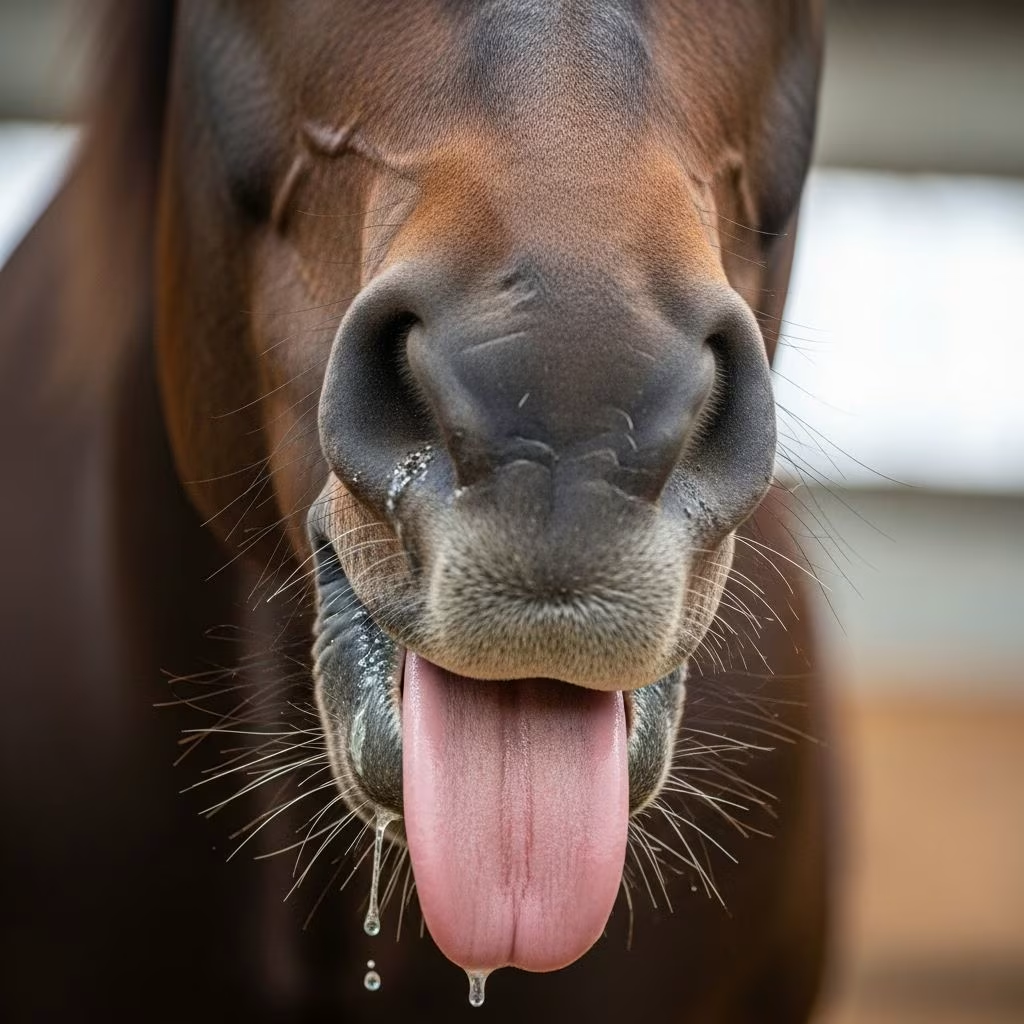
Tongue paralysis, medically termed **glossoplegia**, represents a serious condition in large animals such as horses, cattle, sheep, goats, and pigs, where the tongue loses its ability to move voluntarily. This impairment disrupts essential functions like food prehension, mastication, and swallowing, often leading to malnutrition, dehydration, and secondary infections if not addressed promptly. Understanding this disorder is crucial for veterinarians and livestock owners to ensure timely intervention and recovery.
Understanding the Anatomy and Function of the Tongue
The tongue in large animals is a muscular hydrostat composed of intrinsic and extrinsic muscles, innervated primarily by the hypoglossal nerve (cranial nerve XII) for motor function and the lingual nerve for sensation. In herbivores like horses and cattle, the tongue plays a pivotal role in grasping forage, manipulating food during chewing, and forming boluses for rumen or gut passage. Disruption in innervation or muscle integrity compromises these processes, resulting in drooling, weight loss, and oral lesions.
For instance, in cattle, the tongue’s length and mobility allow precise grass cropping, while in horses, it aids in grinding hay against molars. Any paralysis alters occlusion dynamics, exacerbating dental wear issues and gum ulceration.
Primary Causes of Tongue Paralysis
Glossoplegia arises from diverse etiologies, broadly categorized into traumatic, infectious, neurological, and iatrogenic origins.
- Traumatic Injuries: Birth-related trauma from obstetric snares in foals or calves can compress hypoglossal nerves, causing immediate flaccid paralysis. Adult animals may suffer from fractures of the hyoid apparatus or direct tongue lacerations during fights or accidents.
- Infectious and Inflammatory Conditions: Bacterial infections like strangles (Streptococcus equi), botulism, or upper respiratory diseases inflame neural pathways. Meningitis, encephalomyelitis, or brain abscesses indirectly affect tongue motility through central nervous system involvement.
- Neurological Disorders: Hypoglossal nerve damage from tumors, encephalitis, or demyelinating diseases leads to unilateral or bilateral paralysis. In rare cases, new growths in the tongue base obstruct movement.
- Iatrogenic Factors: Prolonged dental floating procedures under sedation can temporarily paralyze the tongue due to nerve compression or anesthetic effects.
These causes often overlap; for example, trauma may predispose to secondary infections, worsening prognosis.
Recognizing Clinical Signs
Early detection hinges on observing behavioral and physical changes. Affected animals exhibit:
- Excessive salivation or ptialism, with saliva drooling from the mouth due to impaired swallowing.
- Difficulty prehending food, leading to selective eating of soft materials and rejection of roughage.
- Hanging tongue, either unilaterally protruding or flaccidly dangling, often cyanotic or ulcerated from exposure.
- Weight loss, emaciation, and dehydration from poor intake and increased energy expenditure.
- Secondary issues like mastication inefficiency, causing gastrointestinal disturbances or aspiration pneumonia.
In newborns, failure to nurse colostrum is a red flag, necessitating immediate veterinary attention. Chronic cases show dental abnormalities, such as elongated incisors from lack of wear or sharp enamel points irritating the tongue further.
Diagnostic Approaches
Diagnosis involves a systematic evaluation:
- History and Physical Exam: Review birth history, recent procedures, or infections. Palpate the tongue for firmness, lesions, or fistula openings indicative of abscesses.
- Neurological Assessment: Test tongue strength by attempting retraction; unilateral weakness suggests peripheral nerve damage, while bilateral flaccidity points to central causes.
- Imaging: Radiographs of the skull and hyoid reveal fractures or tumors. Ultrasonography assesses tongue viability and vascularity.
- Laboratory Tests: Bloodwork for inflammatory markers, cultures from oral swabs for bacteria, and CSF analysis for neurological infections.
Differentiating glossoplegia from conditions like wooden tongue (actinobacillosis) or dental wave issues is essential, as they mimic symptoms but require distinct therapies.
Treatment Strategies
Management is cause-specific and supportive, aiming to restore function and prevent complications.
| Condition Type | Primary Interventions | Supportive Care |
|---|---|---|
| Neonatal Trauma | Feeding tubes for colostrum, IV fluids, anti-inflammatories | Monitor 10 days; uncertain recovery beyond |
| Infectious | Antibiotics, anti-inflammatories | Soft diet, hydration |
| Traumatic/Partial Necrosis | Partial glossectomy if devitalized | Tourniquet, ligation of vessels |
| Iatrogenic | Observation, nerve blocks | Manual tongue repositioning |
For partial glossectomy, anesthetize the animal in lateral recumbency, apply a tourniquet proximal to the cut, ligate lingual vessels, and transect up to 10 cm in non-cattle species without major feeding deficits. In cattle, preserve maximal length due to prehension reliance. Prognosis improves with early intervention; persistent cases beyond 10 days may warrant euthanasia in meat animals.
Preventive Measures and Long-Term Care
Prevention focuses on minimizing risks:
- Careful obstetrics to avoid nerve compression.
- Vaccinations against strangles and tetanus.
- Regular dental exams to address wear issues preempting tongue trauma.
- Post-procedure monitoring after dentistry.
Owners should provide softened feeds, electrolytes, and clean water. Nutritional supplements aid recovery, while fencing prevents traumatic injuries.
Prognosis and Outcomes
Recovery varies: neonatal cases often resolve with supportive care if addressed swiftly. Infectious etiologies respond well to targeted antimicrobials. Surgical cases in horses, sheep, and pigs tolerate partial amputations effectively, but cattle fare poorer due to feeding mechanics. Chronic bilateral paralysis leads to humane slaughter in production animals.
FAQs
What is the most common cause of tongue paralysis in foals?
Obstetric snares during delivery compressing the hypoglossal nerve.
Can horses recover from glossoplegia after dental work?
Yes, typically temporary; resolves with time and anti-inflammatories.
Is surgery always required for tongue paralysis?
No, only for devitalized tissue; conservative management suffices for many cases.
How do I know if my cow has tongue paralysis?
Look for drooling, food dropping, protruding tongue, and weight loss.
What supportive care helps during recovery?
Tube feeding, fluids, soft mashes, and wound irrigation.
Case Studies in Practice
In one documented equine case, a foal presented post-dystocia with flaccid tongue; tube-fed colostrum and flunixin meglumine led to full recovery by day 7. A cattle herd outbreak linked to botulism saw 70% improvement with antitoxin and penicillin. These highlight multidisciplinary approaches’ efficacy.
Integrating dental health prevents exacerbations, as irregular teeth compound paralysis effects. Ongoing research into neuroprotective agents promises better outcomes.
References
- Digestive System Affections — Veterinary Surgery Online. Accessed 2026. http://veterinarysurgery.itgo.com/rich_text_44.html
- Disorders of the Mouth in Horses — MSD Veterinary Manual. 2023-02-01. https://www.msdvetmanual.com/horse-owners/digestive-disorders-of-horses/disorders-of-the-mouth-in-horses
- Text Book of Veterinary Medicine, Vol. II — Project Gutenberg. 1905-01-01. https://www.gutenberg.org/files/71874/71874-h/71874-h.htm
- Regional Veterinary Surgery — Internet Archive. 1910-01-01. https://dn790003.ca.archive.org/0/items/cu31924000296644/cu31924000296644.pdf
- Dental Disorders of Horses — MSD Veterinary Manual. 2023-02-01. https://www.msdvetmanual.com/horse-owners/digestive-disorders-of-horses/dental-disorders-of-horses



