

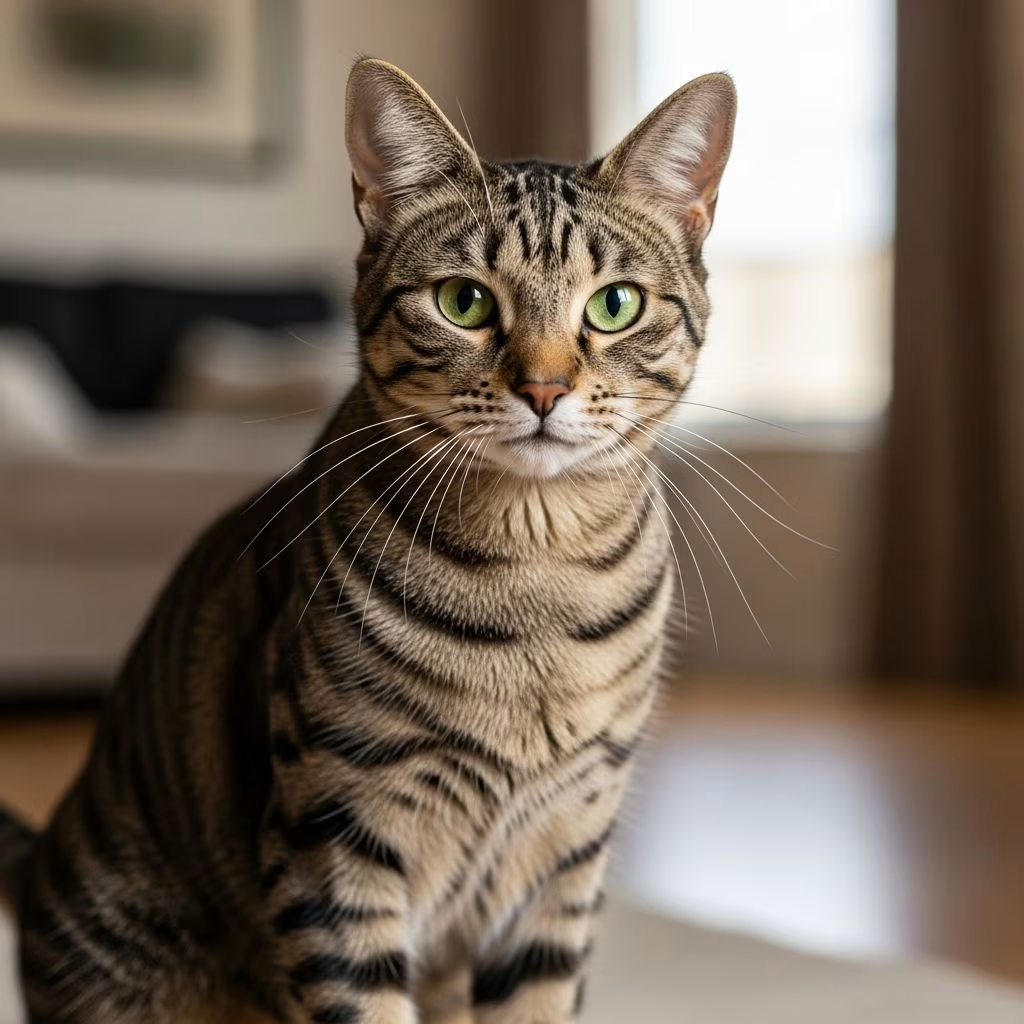
The legendary feline antagonist from the classic Tom & Jerry series is widely recognized as a **Domestic Shorthair** cat featuring a distinctive gray body with white accents in a tuxedo pattern. This mixed-breed classification fits his short-coated, non-purebred appearance seen across decades of animation.
Origins of the Timeless Tom & Jerry Rivalry
Created by William Hanna and Joseph Barbera, Tom & Jerry debuted in 1940 with the short Puss Gets the Boot, where the cat was initially named Jasper before becoming Tom. Produced by MGM, the series ran theatrical shorts until 1958, followed by revivals in TV, films, and more. Tom’s relentless pursuit of Jerry the mouse defined slapstick humor, earning seven Academy Awards for animated shorts.
The duo’s dynamic drew from real cat-mouse behaviors but amplified for comedy. Tom’s design emphasized expressiveness, allowing extreme cartoon physics like flattening or stretching, which prioritized fun over realism.
Decoding Tom’s Visual Design
Tom sports a blue-gray coat covering most of his body, contrasted by crisp white patches on his paws, chest, belly, muzzle, and sometimes tail tip. His eyes shift between yellow and green across episodes, with bushy eyebrows adding to his mischievous scowl. A subtle cheek fluff highlights whisker placement, but his fur remains sleek overall.
Early shorts showed slight variations in shading, from deeper blues to lighter grays, reflecting hand-drawn animation inconsistencies. Later versions standardized the tuxedo look, making him instantly recognizable.
- Body color: Blue-gray dominant shade
- White areas: Paws (like gloves), chest/belly, facial muzzle
- Eyes: Typically yellow or green for dramatic effect
- Build: Lean and athletic for chase scenes
- Extras: Bushy brows, occasional cap or props
The Tuxedo Pattern Explained
Tuxedo refers to a bicolor coat resembling formal wear: a solid color base (gray for Tom) with white ‘shirt front,’ ‘vest,’ and ‘socks.’ This pattern arises from piebald spotting genetics, where white patches stem from the KIT gene inhibiting pigment in certain areas.
While black-and-white is classic, gray tuxedos occur naturally, especially in mixed breeds. The pattern appears in many types, not tied to one lineage, and often includes facial ‘buttons’ or tail accents.
| Feature | Classic Tuxedo | Tom’s Version |
|---|---|---|
| Base Color | Black | Blue-gray |
| White Extent | Chest, belly, paws | Same, plus muzzle |
| Genetic Basis | Piebald (S gene) | Same, variable expression |
| Breed Commonality | Any mixed or pure | Domestic Shorthair |
Why Domestic Shorthair Fits Tom Perfectly
Domestic Shorthairs (DSH) are America’s most common cats—over 95% of the U.S. pet population—defined by short coats and mixed heritage, not pedigree standards. No breed club registers them uniformly, allowing vast diversity in color, size, and personality.
Tom’s short, smooth fur (no long-haired fluff except stylized cheeks), gray tuxedo coat, and generic features scream DSH. Unlike purebreds with predictable traits, DSH vary wildly, mirroring Tom’s adaptable, everyman antagonist role in a typical household.
Other names include ‘moggie’ (UK) or alley cat, emphasizing their street-smart, resilient vibe—much like Tom’s survival through explosive mishaps.
Debunking Popular Breed Myths
Fans often guess **Russian Blue** due to the slate-gray hue. This breed originated near Archangelsk, Russia, prized for dense, shimmering blue coats without white. Their solid color disqualifies them from tuxedo status; any white voids breed standards.
Another theory: British Shorthair, with rounded faces and dense fur. Tom’s slimmer build and white markings don’t align; British Shorthairs rarely show tuxedo patterns prominently.
YouTube claims and wikis speculate, but official analyses and animator intents point to generic DSH for broad appeal.
Tom vs. Common Guesses
| Breed | Coat Match | White Markings | Overall Fit |
|---|---|---|---|
| Domestic Shorthair | Excellent (variable) | Yes (tuxedo) | Perfect |
| Russian Blue | Color similar | No | Poor |
| British Shorthair | Short fur | Rare | Fair |
Real-Life Domestic Shorthairs: Traits and Care
DSH cats adapt well to homes, often clever and independent like Tom—though less destructive! Sizes range 8-15 lbs, lifespans 12-20 years with care. Health varies by ancestry; watch for obesity or dental issues common in mixed breeds.
Temperaments span playful to aloof. Gray tuxedos may inherit Siamese smarts (from point hints) or tabby energy. Grooming is minimal: weekly brushing suffices for short coats.
- Activity level: Moderate; loves play-chasing
- Grooming: Low-maintenance
- Health: Robust, but vet checkups key
- Personality: Quirky, resilient survivors
Tom’s Legacy in Animation and Pop Culture
Beyond breed debates, Tom’s design influenced countless cartoons. His tuxedo look evokes formal mischief, appearing in cameos, merch, and the 2021 live-action film where he’s voiced with realistic DSH traits.
In Tom & Jerry Kids, a juvenile Tom keeps the palette but adds a cap, showing design evolution. MultiVersus games dub him ‘Thomas Jasper Cat Sr.,’ nodding to origins.
Fun Facts About Tom and Tuxedo Cats
- Tom’s name derives from ‘tomcat,’ slang for unneutered males.
- Tuxedo cats are linked to luck in folklore; black-and-whites ward evil.
- Over 160 shorts feature Tom, outlasting many peers.
- DSH dominate shelters; adopting one channels Tom’s spirit.
- His eyes change color for mood—yellow for rage, green for slyness.
Frequently Asked Questions
What exact breed is Tom the cat?
Tom is a gray and white **Domestic Shorthair** with tuxedo patterning, the everyday mixed-breed house cat.
Is Tom a Russian Blue cat?
No—Russian Blues are solid gray sans white; Tom’s markings rule it out.
Why does Tom’s appearance vary slightly?
Animation styles evolved; early grays shifted shades, but core tuxedo persists.
Can real cats look just like Tom?
Yes, many DSH tuxedos match perfectly; seek shelters for grays with white paws.
What’s a tuxedo cat genetically?
Bicolor from white-spotting gene (S), creating sharp color contrasts.
Bringing Home Your Own Tom-Like Cat
Adopt a DSH tuxedo for low-cost companionship. Provide toys for ‘hunts,’ scratching posts for claws, and affection to curb ‘Jerry’ obsessions. They’re budget-friendly, healthy, and full of personality—ideal for families or solos.
In summary, Tom’s Domestic Shorthair identity celebrates the charm of ordinary cats in extraordinary tales. Next cat convo? Drop this knowledge!
References
- What Kind of Cat Breed Is Tom From Tom & Jerry? Cartoon Cat Facts — Catster. 2023-approx. https://www.catster.com/lifestyle/what-cat-breed-is-tom-from-tom-and-jerry/
- Tom Cat Breed: Unveiling the Iconic Feline’s Identity — PetsCare.com. 2024-approx. https://www.petscare.com/news/post/tom-cat-breed-domestic-shorthair
- The Science of Tom & Jerry: The Cat Breed Explained — YouTube (transcript). 2023-approx. https://www.youtube.com/watch?v=8G4JaQyIePk
- Tom Cat – Tom and Jerry Wiki — Fandom Wiki. 2024-approx. https://tomandjerry.fandom.com/wiki/Tom_Cat
- Domestic Shorthair Cat Breed Standards — Cat Fanciers’ Association (cfa.org). 2024-01-15. https://cfa.org/breeds/domestic-shorthair/



