

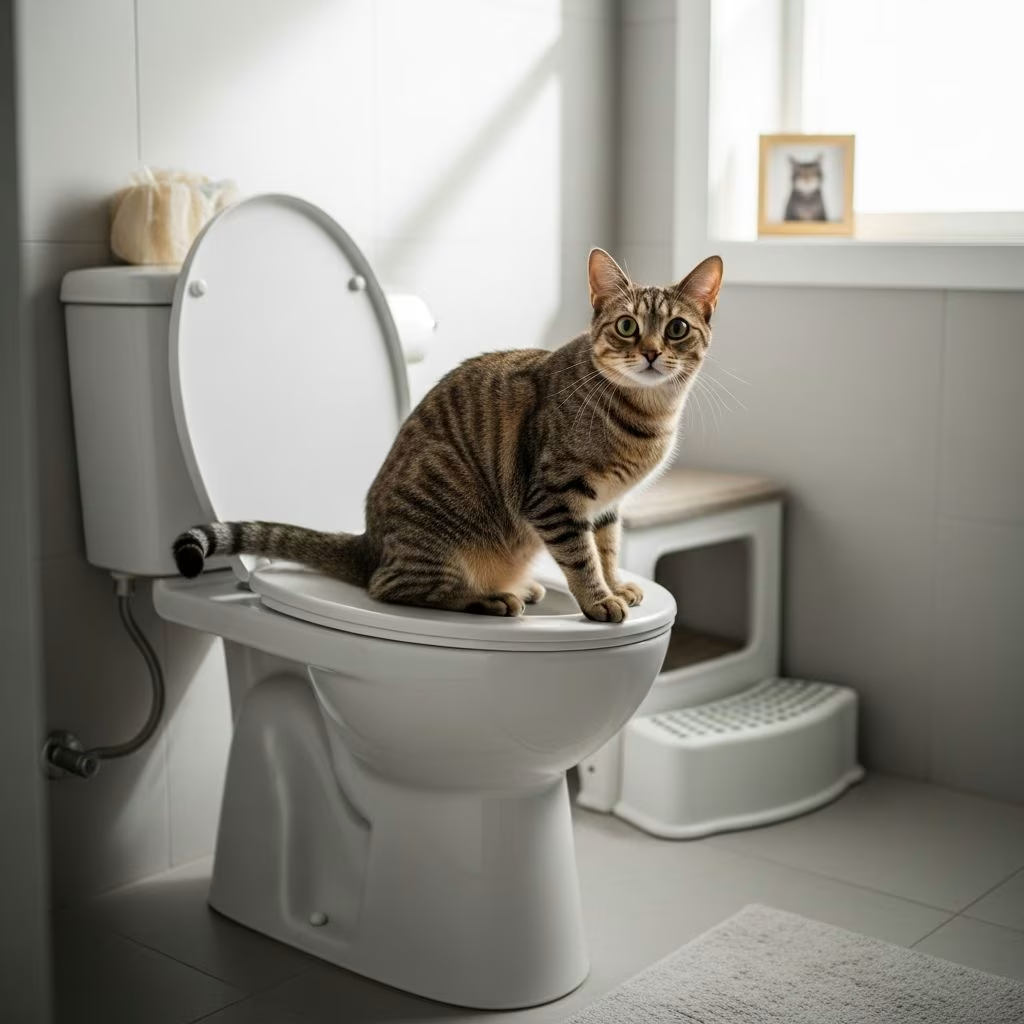
Teaching a cat to use a human toilet instead of a litter box appeals to many owners seeking convenience and cleanliness. This practice eliminates litter scooping and tracking but demands commitment, as it challenges feline instincts and may pose health concerns.
Why Consider Toilet Training Your Feline Companion?
Cat owners often face challenges with litter boxes, from constant maintenance to odors permeating the home. Toilet training promises a litter-free lifestyle, appealing especially in small apartments or multi-pet homes. However, success hinges on the cat’s age, temperament, and the owner’s dedication. Kittens adapt more readily than seniors, while confident cats respond better than anxious ones.
Key motivations include reduced costs on litter supplies and minimized allergens from dust. Owners report fresher homes without scattered granules under furniture. Yet, this shift requires evaluating if benefits outweigh disruptions to natural behaviors.
Advantages of Ditching the Litter Box
- Effortless Maintenance: No daily scooping or weekly deep cleans frees up time and reduces physical labor.
- Superior Cleanliness: Flushing eliminates persistent smells and bacteria buildup common in even well-kept boxes.
- Cost Savings: Eliminate recurring litter purchases, potentially saving hundreds annually depending on usage.
- Space Efficiency: Reclaim floor area once occupied by bulky boxes and storage.
- Allergy Reduction: Less dust circulation benefits sensitive households.
These perks shine in urban settings where space and hygiene matter most. Imagine entertaining guests without hiding a soiled box.
Potential Drawbacks and Health Considerations
Despite appeals, toilet training isn’t universally ideal. Cats instinctively dig and bury waste, a behavior rooted in wild ancestry for hygiene and predator avoidance. Forcing porcelain use suppresses this, potentially causing stress.
Trained cats might delay elimination, holding urine or feces longer to avoid the unfamiliar perch. This risks urinary tract infections (UTIs), constipation, or bladder stones, especially in females with shorter urethras. Owners must monitor output closely, as toilet flushing obscures volume and frequency changes signaling illness.
| Aspect | Litter Box | Toilet Training |
|---|---|---|
| Instinct Alignment | Supports digging/burying | Opposes natural behaviors |
| Health Monitoring | Easy to inspect waste | Harder to track changes |
| Training Time | Usually innate | Weeks to months |
| Stress Risk | Low | Medium to high |
Veterinarians note older or arthritic cats struggle balancing on seats, increasing fall risks or avoidance. Behavioral regressions, like inappropriate elimination elsewhere, occur if stress mounts.
Assessing If Your Cat Is a Good Candidate
Not every feline suits this transition. Ideal candidates are young (under 1 year), healthy, and adaptable. Observe current habits: consistent litter users with no aversions transition smoother. Skittish or multi-cat households face higher failure rates.
Consult a vet first to rule out urinary issues. Positive reinforcement enthusiasts succeed more, as punishment exacerbates fear. Test interest by placing a shallow pan near the toilet; eager explorers bode well.
Essential Tools and Supplies for Success
- Specialized toilet training seat with adjustable openings and litter pans.
- High-value treats or clicker for rewards.
- Enzyme cleaners for accidents.
- Non-slip mats for stability.
- Pheromone diffusers to ease anxiety.
Invest in quality kits mimicking litter pans, gradually shrinking holes to encourage precise aiming.
Proven Step-by-Step Training Process
Patience defines success; expect 2-8 weeks. Use positive reinforcement exclusively—rewards build associations without fear.
- Preparation (Days 1-3): Confine cat to bathroom with litter box atop training seat. Reward usage immediately.
- Introduce Seat (Week 1): Secure seat over toilet, fill pan with litter. Escort cat post-meals when elimination likely. Praise and treat successes.
- Reduce Litter (Weeks 2-3): Swap to biodegradable filler, thinning layers. Clicker mark correct positioning.
- Enlarge Opening (Weeks 4-5): Progressively widen hole. Support hesitant cats physically at first.
- Full Toilet (Week 6+): Remove pan entirely. Flush only after cat exits to avoid startling.
Supervise rigorously; confinement prevents errors. Track progress in a journal noting successes and setbacks. If regressions occur, revert a step.
Overcoming Common Training Hurdles
Cats may balk at height or noise. Lower toilet training incrementally or desensitize to flush sounds via gradual exposure with treats.
Accidents demand calm responses: clean thoroughly, never scold. Persistence pays; many owners report breakthroughs after temporary stalls.
For stubborn cases, incorporate carrier training techniques—positive sessions reduce overall stress, aiding adaptability.
Long-Term Maintenance and Troubleshooting
Once mastered, reinforce occasionally with treats. Watch for holding behaviors: increased thirst, straining, or infrequent use warrants vet checks.
Travel disrupts routines; portable litter pans serve as backups. Multi-bathroom homes need training per fixture or designated spots.
Comparing Toilet Training to Traditional Litter Methods
Litter boxes align with instincts, easing health monitoring via visible waste. They’re simpler for novices but demand upkeep. Hybrids like low-sided boxes or top-entry designs minimize tracking without full transition.
Training fosters enrichment, mirroring studies where clicker sessions boosted shelter cat welfare via engagement and immunity.
Frequently Asked Questions
Can all cats be toilet trained?
No, seniors, disabled, or highly stressed cats often struggle. Success rates vary 50-80% with proper methods.
How long does training take?
Typically 4-12 weeks, depending on consistency and cat personality.
Is it safe for kittens?
Kittens over 8 weeks can start, but full training post-weaning. Avoid until balance develops.
What if my cat regresses?
Revert to prior step, increase rewards, and check for stressors like diet changes.
Does it work for multiple cats?
Possible but challenging; train sequentially to avoid competition.
Expert Insights on Feline Behavior and Training
Behaviorists emphasize welfare: training should enrich, not distress. Positive methods yield calmer cats, per psychological studies on stress reduction. Avoid forcing against instincts unless litter issues persist medically.
Ultimately, prioritize your cat’s comfort. Many thrive litter-free; others flourish with boxes. Tailor to your duo’s dynamics.
References
- The Pros and Cons of Toilet Training Your Cat — PetPlace.com. N/A. https://www.petplace.com/article/cats/pet-care/toilet-training-your-cat
- How to train a cat — British Psychological Society. N/A. https://www.bps.org.uk/psychologist/how-train-cat
- Litter Box Training — Longmont Humane Society. N/A. https://www.longmonthumane.org/resources/cat-care-tips/litter-box-training/
- Cat training — Wikipedia. N/A. https://en.wikipedia.org/wiki/Cat_training



