

Understanding Trap-Neuter-Return (TNR) Programs for Feral Cats
Trap-Neuter-Return, commonly abbreviated as TNR, represents one of the most effective and humane approaches to managing feral and stray cat populations in communities across the United States and worldwide. Also known as trap-neuter-release, this community-based program has gained widespread recognition and support from animal welfare organizations, humane societies, and veterinary professionals. Unlike traditional catch-and-kill approaches that have proven ineffective for decades, TNR offers a sustainable, compassionate solution that improves the lives of feral cats while addressing community concerns about overpopulation.
The fundamental principle behind TNR is straightforward yet powerful: community cats—free-roaming felines that are typically not socialized to people—are humanely trapped, taken to a veterinarian for spaying or neutering and vaccination, and then returned to their original location to live out their natural lives. This approach recognizes that feral cats have adapted to outdoor living and are not suitable for shelter adoption, making TNR a practical alternative to euthanasia.
The Three Essential Steps of Trap-Neuter-Return
A successful TNR program follows a structured three-step process that ensures both the welfare of the cats and the effectiveness of population management:
Step 1: Trapping
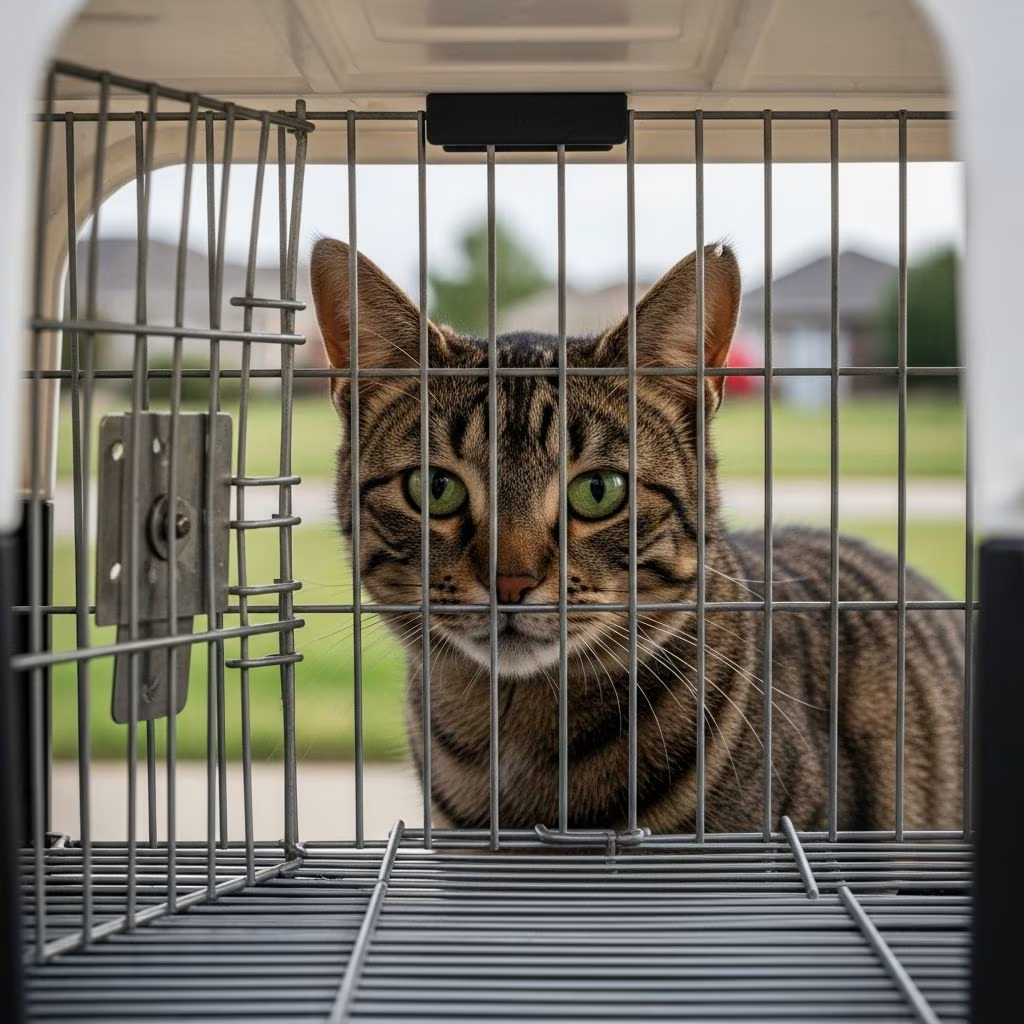
The first phase involves humanely trapping all cats within a identified colony—a group of cats living outdoors together in a specific geographic area. Professional-grade live traps are used to safely capture the cats without causing injury or unnecessary stress. This step requires patience, planning, and often the assistance of experienced TNR coordinators who understand feline behavior and trapping techniques.
Step 2: Neutering/Spaying and Vaccination
Once trapped, cats are transported to a veterinary clinic where they undergo surgical sterilization. Female cats are spayed and males are neutered. During this veterinary visit, cats also receive vaccinations, typically including rabies protection, and are often ear-tipped—having the tip of one ear surgically removed while under anesthesia—to permanently identify them as TNR participants.
Step 3: Return
After recovery from surgery and anesthesia, cats are returned to the exact location where they were trapped. This is crucial because cats have established territories and social structures. Returning them to their home territory ensures they can access familiar food sources, shelter, and social groups. Many communities also assign caregivers to provide ongoing food, water, and shelter for the colony.
How TNR Stabilizes Feral Cat Colonies
Scientific research has consistently demonstrated that TNR programs effectively stabilize and reduce feral cat colony populations over time. A groundbreaking 11-year study at the University of Florida found that TNR resulted in a 66% decline in the cat population on campus, with no new kittens born after the first four years of operation. Similarly, research in Rome, Italy, documented colony size decreases ranging from 16% to 32% over a 10-year period.
The mechanism behind this success is elegantly simple: once cats are spayed and neutered, they can no longer reproduce. Unlike catch-and-kill approaches that create a “vacuum effect”—where removal of cats triggers rapid breeding and migration of surrounding cats to fill the gap—TNR immediately halts the breeding cycle. This means that while the existing colony population gradually declines through natural attrition, no new kittens are born to replace the cats that pass away.
In practical terms, a TNR program at Texas A&M University neutered 123 cats in its first year and observed zero new litters of kittens as the program continued. This demonstrates that TNR creates a self-sustaining solution where population control becomes automatic rather than requiring ongoing removal efforts.
Benefits of TNR for Feral Cats
Beyond population stabilization, TNR programs provide significant health and quality-of-life improvements for the cats themselves:
Relief from Reproductive Stress
Female cats in unneutered colonies experience continuous cycles of estrus, pregnancy, and nursing. This constant reproductive state places tremendous physical and psychological stress on the animals. TNR eliminates this cycle, allowing female cats to live healthier, more peaceful lives. According to leaders of major humane organizations, cats demonstrate markedly improved health after TNR procedures.
Disease Prevention and Vaccination
Vaccination against rabies during TNR procedures protects cats from one of the most serious infectious diseases while also providing peace of mind to community members. Beyond rabies protection, the veterinary care associated with TNR ensures cats receive health assessments and vaccinations that protect them from other infectious diseases.
Behavioral Improvements
Once spayed and neutered, cats no longer engage in mating-related behaviors such as yowling, spraying, and fighting. These behavioral changes create a calmer, quieter colony that is less likely to conflict with human residents. Studies confirm that communities report significantly fewer complaints and calls to animal control after TNR implementation.
Community Benefits of TNR Programs
The advantages of TNR extend well beyond the cats themselves to include substantial benefits for the neighborhoods and communities where these programs operate:
Reduced Shelter Intake and Euthanasia
When TNR is implemented as part of comprehensive shelter reform policies, communities see dramatic declines in shelter intake. Research in Orange County, Florida, found that the number of cats killed by animal control decreased significantly in the six years following TNR implementation. This is particularly important because feral cats brought to traditional shelters are often euthanized, as they cannot tolerate captivity or handling.
Improved Community Relations
TNR establishes an important point of contact between cat advocates and community members. Rather than leaving concerns unaddressed, TNR programs create a structured mechanism for discussing and resolving issues related to community cats. This improved communication and sense of community involvement lead to better relationships between residents and local cat populations.
Cost Effectiveness
TNR programs operate at significantly lower cost than traditional animal control approaches. When compared to the expenses associated with trapping, sheltering, and euthanizing cats indefinitely, TNR represents a more economical solution that produces lasting results rather than temporary fixes.
TNR Versus Traditional Cat Management Approaches
For decades, animal control agencies pursued catch-and-kill strategies for managing feral cat populations. These approaches have consistently failed to produce meaningful results. When cats are removed from an area, surviving cats and new arrivals quickly breed to fill the void—a phenomenon known as the vacuum effect. This means that traditional removal methods result in even larger populations than existed before intervention.
TNR differs fundamentally from these failed approaches because it addresses the root cause of overpopulation: reproduction. By stopping breeding at its source, TNR creates a permanent solution rather than a temporary intervention. This is why humane organizations and shelter reform advocates have increasingly embraced TNR as the evidence-based alternative to catch-and-kill programs.
Identifying and Assessing Community Cats
An important component of TNR programs involves correctly identifying and assessing the socialization level of cats encountered. Not all free-roaming cats are feral. Assessment categories include:
- Feral: Unowned, unsocialized cats that cannot be handled or adopted
- Social but Timid/Scared: Cats that may adjust to human contact and could potentially be adopted with time and patience
- Social: Friendly, socialized cats suitable for adoption into homes
- Stray: Owned cats that have escaped or been abandoned and may be reunited with owners
This assessment is crucial because cats that show adoptability should be captured and placed in homes rather than returned to outdoor colonies. TNR programs specifically target truly feral cats that are not suitable for adoption.
Getting Involved in TNR Programs
If you’re interested in supporting or participating in TNR efforts in your community, several steps can help you get started:
Connect with Local Organizations
Many communities have established TNR programs through local animal welfare organizations, humane societies, or dedicated TNR nonprofits. These organizations provide guidance, resources, and often subsidized or free veterinary services for TNR procedures.
Become a Caregiver
Once cats are returned to their colony after TNR procedures, they benefit from ongoing care including food, fresh water, and shelter. Community members can volunteer as caregivers for established colonies, ensuring the cats’ welfare between veterinary visits.
Support Advocacy Efforts
Supporting policies and legislation that promote TNR and shelter reform helps expand these programs’ reach and effectiveness. Many communities are transitioning from catch-and-kill to TNR-based approaches through grassroots advocacy and education.
Frequently Asked Questions About TNR
Q: Will TNR eliminate all feral cats in my neighborhood?
A: TNR will not eliminate existing cats, but it will stabilize the population and prevent new kittens from being born. Over time, the population gradually declines as cats reach the end of their natural lifespan.
Q: Are feral cats dangerous to humans?
A: Feral cats typically avoid human contact and pose minimal risk. TNR vaccination programs further reduce any disease transmission concerns by ensuring cats receive rabies protection.
Q: Can feral kittens be socialized and adopted?
A: Yes, young kittens and friendly cats found during TNR trapping can often be socialized and adopted into homes. Only truly unsocialized adult feral cats are returned to their colonies.
Q: How long does it take to see results from TNR?
A: Results vary, but studies show significant population stabilization within the first few years of implementation, with continued decline over the long term as the program becomes established.
Q: What makes TNR different from just removing cats?
A: TNR addresses the root cause—reproduction—by preventing breeding, whereas removal creates a vacuum that new cats fill. This makes TNR a permanent solution rather than a temporary fix.
Q: How are cats identified as TNR participants?
A: Cats are ear-tipped during surgery—having the tip of one ear cleanly removed while under anesthesia—permanently marking them as sterilized TNR participants.
Q: Is TNR legal in my area?
A: TNR is legal in most United States communities and increasingly recognized by municipalities as the preferred approach to managing community cat populations. Check with your local animal control or humane society for specific regulations.
References
- Why Trap-Neuter-Return Feral Cats? The Case for TNR — Alley Cat Allies. 2024. https://www.alleycat.org/resources/why-trap-neuter-return-feral-cats-the-case-for-tnr/
- Help Community Cats: A Step-by-Step Guide to Trap-Neuter Return — Alley Cat Allies. 2024. https://www.alleycat.org/resources/how-to-help-community-cats-a-step-by-step-guide-to-trap-neuter-return/
- Trap-Neuter-Return TNR Program | Feral Cats Los Angeles – FixNation — FixNation. 2024. https://fixnation.org/about-tnr/trap-neuter-return/
- Trap–neuter–return — Wikipedia. 2025. https://en.wikipedia.org/wiki/Trap%E2%80%93neuter%E2%80%93return
- A Closer Look at Community Cats | Stray Cats | TNR — ASPCA. 2024. https://www.aspca.org/helping-shelters-people-pets/closer-look-community-cats
- The Real Impacts of Trap-Neuter-Return — Animal Humane Society. 2024. https://www.animalhumanesociety.org/resource/real-impacts-trap-neuter-return
- Trap-Neuter-Vaccinate-Return (TNVR) for Cats: FAQs — Best Friends Animal Society. 2024. https://bestfriends.org/pet-care-resources/trap-neuter-vaccinate-return-tnvr-cats-faqs



