

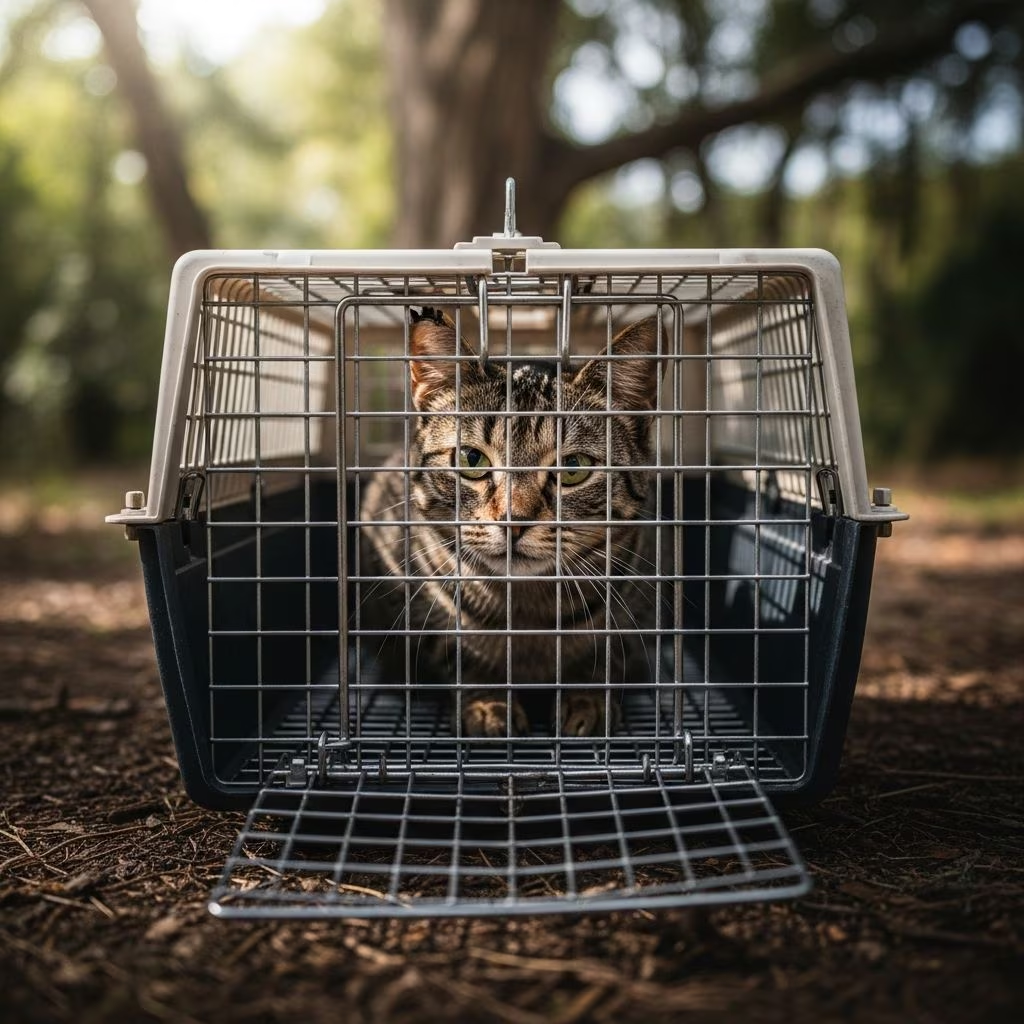
Communities worldwide grapple with managing feral cat populations, which roam freely and often face harsh living conditions. Trap-Neuter-Return (TNR) has emerged as a prominent strategy, involving capturing these cats, sterilizing them, vaccinating where possible, and releasing them back to their habitats. But does this approach hold up ethically and practically? This article delves into the evidence, balancing humane intentions with population dynamics, ecological concerns, and long-term viability.
Understanding the TNR Approach
TNR represents a non-lethal method to address feral cat overpopulation. Cats are humanely trapped using baited cages, transported to clinics for spaying or neutering, ear-tipped for identification, and returned to their original sites. Proponents argue it stabilizes colonies by preventing reproduction while allowing cats to live out their lives naturally.
Key steps in TNR include:
- Trapping: Using humane traps to avoid injury.
- Veterinary care: Sterilization, rabies vaccination, and treatment for fleas or minor ailments.
- Release: Returning cats to familiar territories to minimize stress.
- Monitoring: Ongoing observation by caregivers to track health and new arrivals.
This process aims to reduce suffering without euthanasia, appealing to animal welfare advocates. However, success hinges on high participation rates and community support.
Scientific Evidence on Population Control
Does TNR actually shrink feral cat numbers? Studies yield mixed results, often depending on implementation scale and complementary efforts like adoptions.
| Study Location | Key Findings | Time Frame | Population Change |
|---|---|---|---|
| University of Central Florida | High adoption rates (45-50%) combined with TNR led to sustained declines. | 28 years | 66% reduction initially, further 57% drop; 11/16 colonies eliminated |
| Rural North Carolina | Intensive TNR in sterilized colonies vs. controls. | 2-7 years | 36% average reduction; unsterilized grew 47% |
| Chicago neighborhoods | Neighborhood-wide TNR across 20 colonies. | Multiple years | 54% from initial, 82% from peak |
| San Diego & Alachua Counties | Analyzed growth rates and pregnancies. | Various | No reduction in growth or pregnancies |
| Rome, Italy | 103 colonies surveyed. | 1991-2000 | 16-32% decline, but immigration offset gains |
Effective reductions typically require sterilizing 70-80% of cats quickly, plus removing at least 50% via adoption or relocation. Immigration from abandoned pets often replenishes colonies, undermining gains without broader education. A model suggests 30% of unsterilized cats sterilized every six months could stabilize populations. Long-term data from UCF shows sustainability amid university growth, crediting adoptions.
Impacts on Shelters and Euthanasia
TNR proponents highlight shelter relief. A study of 72,970 cats across six U.S. cities found median 32% intake drop and 83% euthanasia decline post-TNR. Fairfax County, Virginia, reported 58% fewer feral kittens in foster care and 41% drop in bottle-fed kittens. These shifts ease overburdened facilities, prioritizing domestic pets.
However, critics note these metrics don’t confirm colony shrinkage; fewer intakes may reflect better field management rather than fewer cats overall. Still, reduced euthanasia aligns with humane goals, sparing healthy ferals from death.
Ethical Considerations in Feral Cat Care
Ethics pivot on welfare: Is release humane? Sterilized cats often live longer, healthier lives, avoiding litters that strain resources. TNR averts euthanasia, respecting ‘no-kill’ ideals. Yet, released cats face predation, disease, vehicles, and starvation—natural risks unaltered by TNR.
Opponents argue ongoing outdoor suffering questions humanity. High immigration means endless management, potentially normalizing abandonment. Balancing cat rights with community needs raises dilemmas: Do ferals deserve colony life, or relocation/adoption?
Ecological Consequences and Wildlife
Feral cats prey on birds, small mammals, and reptiles, impacting biodiversity. Even neutered, they hunt instinctively. Studies link cat colonies to local extinctions of species. TNR doesn’t eliminate predation; reduced kittens may not offset adults’ toll.
Mitigation includes bell collars or feeding stations to limit roaming, but evidence is sparse. In sensitive ecosystems like islands, TNR is discouraged for eradication programs. Urban settings complicate this—cats fill ecological niches but disrupt natives.
Practical Challenges of Implementing TNR
Success demands resources:
- Funding: Clinics, traps, and transport cost thousands per colony.
- Vet shortages: Overloaded surgeons slow progress.
- Legal hurdles: Some areas ban TNR; others mandate it.
- Community buy-in: Feeders must commit long-term.
Abandonment fuels cycles—addressing pet overpopulation via spay/neuter laws is crucial.
Alternatives to TNR Programs
| Method | Pros | Cons | Evidence |
|---|---|---|---|
| Lethal Control | Quick population drop | Cruel, public backlash, immigration rebound | Short-term only | Adoption-Focused Removal | Reduces numbers humanely | Labor-intensive, not scalable for ferals | Key to TNR success | Relocation | Moves cats from problem areas | High stress, poor survival, disease spread | Limited efficacy | High-Volume Sterilization + Removal | Combines TNR with 50%+ removal | Requires coordination | Proven reductions |
Hybrid models, blending TNR with adoptions and education, show promise.
Best Practices for Successful TNR
To maximize impact:
- Achieve 75%+ sterilization rapidly.
- Integrate adoptions for socializeable cats.
- Educate on responsible pet ownership.
- Partner with vets and governments.
- Monitor colonies quarterly.
Target high-density areas first for momentum.
Frequently Asked Questions (FAQs)
What is the success rate of TNR?
Variable: 30-80% reductions in well-managed programs with adoptions; often stalls without.
Is TNR cruel to cats?
No—sterilization improves health; release allows natural lives vs. shelter death.
Does TNR harm wildlife?
Yes, via predation; not fully mitigated.
How long until populations decline?
2-5 years with intensive effort; longer otherwise.
Can individuals start TNR?
Yes, with local laws checked and vet partners.
References
- How Effective and Humane Is Trap-Neuter-Return (TNR) for Feral Cats? — University of Florida IFAS Extension. 2023. https://edis.ifas.ufl.edu/publication/UW468
- Back to School: An Updated Evaluation of the Effectiveness of a Trap-Neuter-Return Program — PMC/NCBI. 2019-10-11. https://pmc.ncbi.nlm.nih.gov/articles/PMC6826864/
- Issue Brief: What to Do with Feral Cats? Examining TNR — Feline Research. 2023. https://www.felineresearch.org/post/issue-brief-what-to-do-with-feral-cats-examining-tnr
- Unraveling the Impact of Trap-Neuter-Return (TNR) Programs — Eastern Kentucky University. 2024. https://encompass.eku.edu/honors_theses/1006/
- TNR Statistics — Alley Cat Rescue. 2023. https://www.saveacat.org/tnr-statistics.html



