

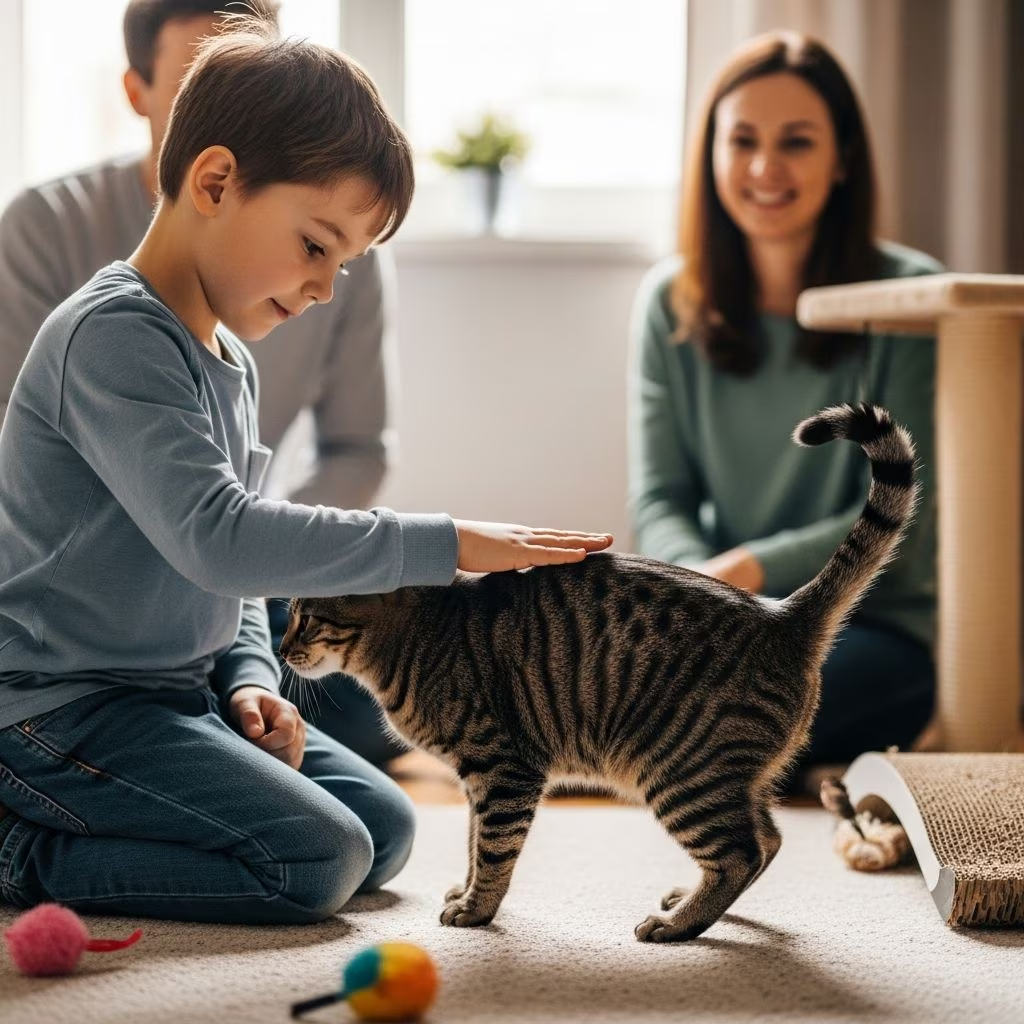
Introducing children to cats can be a wonderful experience that fosters empathy, responsibility, and joy. However, cats are independent creatures with specific needs and boundaries. Teaching kids how to properly handle a cat ensures safety for both the child and the pet, preventing scratches, bites, or stress. This guide draws from expert veterinary and humane society advice to provide step-by-step strategies.
Proper handling starts with understanding that cats aren’t toys—they have emotions, preferences, and body language that children must learn to respect. With consistent teaching and supervision, families can cultivate lifelong bonds between kids and cats. Young children, in particular, need guidance since their energy and unpredictability can overwhelm felines.
Why Teaching Proper Cat Handling Matters
Cats communicate primarily through body language, and mishandling can lead to defensive reactions like hissing, swatting, or fleeing. According to animal behavior experts, early education reduces injury risks and helps cats feel secure in shared spaces. For instance, the Wisconsin Humane Society emphasizes that young kids should adopt a ‘hands-off’ approach initially, allowing cats to initiate contact.
Benefits include developing children’s empathy, as they learn to read non-verbal cues similar to human emotions. It also promotes hygiene habits, like handwashing post-interaction, minimizing allergy or illness transmission. Ultimately, these lessons create a peaceful home where cats and kids coexist happily.
Understanding Cat Body Language: The First Lesson
Before any touching, teach kids to observe a cat’s signals. This is crucial for safe interactions.
- Relaxed cat: Ears forward, eyes half-closed, tail loose or slowly swishing, body loose. This invites gentle petting.
- Stressed or uncomfortable: Ears back or flattened, pupils dilated, tail twitching rapidly, arched back, or low crouch. Instruct kids to back away immediately.
- Playful: Ears perked, pupils slightly dilated, tail flicking gently, playful pouncing. Use toys, not hands.
- Aggressive warning: Hissing, growling, fur puffed, direct stare. Never approach—give space.
Practice with visuals or real-time observation: ‘Look at her ears—are they happy or scared?’ This builds intuition. For toddlers, use simple phrases like ‘Happy cat says yes; scared cat says no.’
Age-Appropriate Expectations for Children and Cats
Expectations vary by age to set realistic goals.
| Age Group | Recommended Interactions | Supervision Level |
|---|---|---|
| Under 5 (Toddlers) | Hands-off; share space quietly. Redirect grabbing. | Constant; use gates if needed. |
| 5-10 Years | Gentle petting if cat approaches; toy play supervised. | Close; intervene on discomfort cues. |
| 11+ (Tweens/Teens) | Petting, supervised lifting for comfortable cats. | Ongoing, but more independence. |
For toddlers, prioritize coexistence over cuddles. Older kids can progress to responsibility tasks like feeding.
Clear Rules: What Kids Should NEVER Do
Establish non-negotiable rules to protect the cat. Display them visibly, like a poster.
- Never pull a cat from hiding spots, dens, or high perches.
- No touching while eating, using litter box, or sleeping.
- Avoid picking up young children; teens only with supervision.
- No hugging, kissing, lying on, hitting, pulling tail, or yelling.
- Don’t pet during play or use hands as toys.
Enforce with positive redirection: ‘Instead of chasing, let’s toss a toy!’
Safe Petting Techniques
When a cat solicits attention, teach proper strokes.
- Start with cheeks, under chin, base of ears, back from head to tail.
- Use light, slow strokes; avoid belly, paws, tail tip, face.
- Pet for 3 seconds, pause, reassess body language.
- Let cat lean in; stop if it walks away.
Demonstrate first: ‘Gentle like a feather.’ Praise compliance.
Encouraging Safe Playtime
Play builds bonds but must be controlled.
- Use wand toys (feather wands, cat charmers) for distance.
- Toss small toys like balls/mice from afar; never hand-play.
- End sessions calmly; no petting right after—cats stay in ‘hunt mode’.
- Supervise to prevent overstimulation.
Rotate toys for interest. Teach: ‘Toy, not hands!’
Creating Safe Spaces and Supervision
Cats need retreats; kids must respect them.
- Provide shelves, cat trees, rooms inaccessible to kids.
- Use gates for floor play with babies.
- Never unsupervised with young kids—risk of injury to both.
- Trim claws regularly.
Spay/neuter reduces aggression. Cat-proof home: secure objects, hide cords.
Building Empathy and Responsibility
Discuss cat feelings: ‘She’s hiding because she needs quiet time’. Model gentle behavior; involve in care (feeding, grooming under supervision). Hygiene: Wash hands after.
Group lessons with siblings reinforce learning.
Common Mistakes and How to Avoid Them
- Mistake: Forcing interaction. Fix: Wait for cat approach.
- Mistake: Ignoring cues. Fix: Teach signals early.
- Mistake: Rough play. Fix: Toys only.
Frequently Asked Questions (FAQs)
What if my cat scratches my child?
Clean wound, monitor for infection. Supervise more; reinforce rules. Cats warn before escalating.
Can young kids ever pick up the cat?
No for under 10; teens maybe with training and calm cat.
How to introduce a new cat to kids?
Slowly: Scent swap, supervised short meets, hands-off start.
What toys are safest?
Wand toys, tossable mice/balls. Avoid strings/hand toys.
How much supervision is enough?
Always for young kids; fade as skills grow.
References
- Children and Cats — Wisconsin Humane Society. Accessed 2026. https://www.wihumane.org/behavior/ask-the-experts/cat-behavior/children-and-cats
- 10 Tips for Keeping Your Children Safe When You Have Cats — BluePearl Pet Hospital. Accessed 2026. https://www.bppah.com/10-tips-for-keeping-your-children-safe-when-you-have-cats/
- A Guide to Teaching Your Children How to Safely Handle a Cat — A1 Savannahs. 2023-05-31. https://www.a1savannahs.com/blog/2023/5/31/a-guide-to-teaching-your-children-how-to-safely-handle-a-cat
- Understanding Animal Behavior: Teaching Kids Pet Safety Cues — Lifeline Animal Project. Accessed 2026. https://lifelineanimal.org/understanding-animal-behavior-teaching-kids-pet-safety-cues/
- Safety Tips for Kids and Cats — The Drake Center for Veterinary Care. Accessed 2026. https://www.thedrakecenter.com/services/cats/blog/safety-tips-kids-and-cats



