
Tiger Barbs: Complete Care & Breeding Guide
Master tiger barb care with expert tips on tank setup, diet, compatibility, and successful breeding techniques.
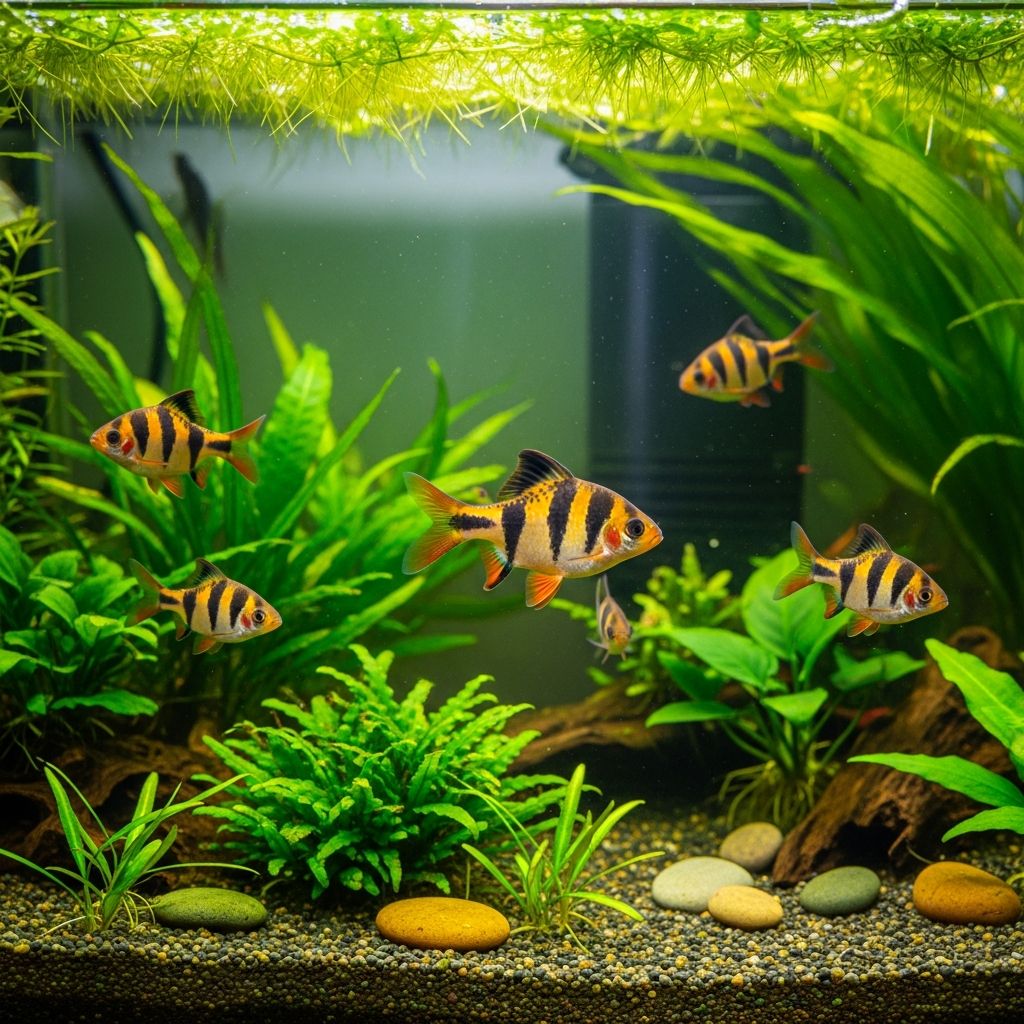
Tiger Barbs: Complete Care and Breeding Guide
Tiger barbs are among the most popular freshwater aquarium fish, cherished by both beginners and experienced aquarists for their vibrant colors, active personalities, and engaging schooling behavior. These petite yet spirited fish bring constant movement and visual appeal to any aquarium. However, their strong personalities and specific social requirements mean that successful tiger barb keeping requires attention to detail. This comprehensive guide covers everything you need to know about setting up the perfect environment, selecting compatible tank mates, providing proper nutrition, and successfully breeding these fascinating fish.
Understanding Tiger Barbs
Tiger barbs are small freshwater fish known for their striking appearance and dynamic behavior. Their name derives from their distinctive vertical stripes, which resemble a tiger’s markings. These fish are highly social creatures that thrive in groups, displaying complex hierarchies and interactive behaviors that make aquarium keeping more engaging. Understanding their natural temperament and requirements is essential for creating a thriving aquatic environment.
Tank Setup and Environment
Minimum Tank Size Requirements
Tiger barbs require adequate space to express their natural swimming behaviors. A minimum tank size of 29 gallons is recommended for a small group of these fish, though larger tanks provide better stability and more swimming space. The tank should accommodate at least seven or more tiger barbs, as they are schooling fish that experience stress and exhibit aggressive behavior when kept in smaller groups. Each additional fish requires approximately two to three gallons of water.
Water Parameters and Conditions
Tiger barbs are remarkably adaptable fish that can tolerate a wide range of water conditions, making them suitable for various aquarium setups. The ideal water parameters for tiger barbs include:
- Temperature: 72-82°F (approximately 74°F is optimal)
- pH level: 6.0-8.0 (slightly acidic pH of 6.5 is preferred)
- Water hardness: 4-10 dKH
Maintaining consistent water conditions is crucial for preventing stress-related illnesses. Extreme fluctuations in temperature, pH, or hardness can negatively impact fish health. Install a reliable aquarium heater to maintain stable temperatures, and use a quality filtration system to keep ammonia and nitrate levels low. Perform partial water changes of 10-25% every two to four weeks to maintain water quality and remove accumulated waste products.
Tank Decoration and Landscaping
Creating an engaging environment encourages natural behaviors and provides enrichment for your tiger barbs. Start by applying a layer of fine gravel substrate to the tank bottom, which can be supplemented with large rocks and cobblestones for aesthetic appeal and environmental complexity. While decorations are important, tiger barbs require plenty of open swimming space to thrive.
Add submerged aquatic plants such as Java fern, water wisteria, water sprite, and java moss. These plants provide shelter, produce algae for natural snacking, and help create sight lines that prevent aggression by allowing weaker fish to hide. Plant varieties should grow to the middle of the water column without overtaking the tank. Include driftwood and rock caves for additional enrichment, but avoid overcrowding the tank.
Install a secure, well-fitting lid on your aquarium, as tiger barbs are known escape artists that frequently jump out of tanks. Standard lighting works fine for tiger barbs, though ensure your filtration system is robust enough to handle the bioload produced by an active group of these fish.
Compatibility and Tank Mates
Fish to Avoid
Tiger barbs have a reputation for being semi-aggressive, particularly toward fish with certain characteristics. Avoid housing tiger barbs with:
- Small fish that can fit in their mouths, as they may be consumed
- Long-finned fish such as betta fish, angelfish, and fancy goldfish, which attract fin-nipping behavior
- Slow or timid fish that cannot compete for food at feeding time
Getting a large group of tiger barbs, even those with different color variations, can help keep them occupied with each other and reduce aggressive behavior toward other species.
Compatible Tank Mates
Successfully housing tiger barbs with other species requires selecting fish with similar activity levels and tank requirements. Ideal companions include:
- Fast-swimming species such as zebra danios and silver-tipped tetras that can hold their own
- Larger fish that won’t be intimidated, such as clown loaches and certain South American cichlids
- Active bottom dwellers like Botia loaches, which occupy different tank zones and reduce direct competition
Since tiger barbs tend to occupy the middle of the aquarium, pairing them with active bottom dwellers creates a harmonious community tank with minimal conflict.
Feeding and Nutrition
Dietary Requirements
Tiger barbs are omnivorous fish with voracious appetites and are not particularly picky eaters. They will readily consume almost any standard aquarium fish food. Due to their aggressive feeding behavior, provide foods that scatter quickly and encourage individual feeding rather than competition.
A well-rounded diet should include:
- High-quality flakes and small pellets as dietary foundation
- Freeze-dried foods and gel foods like Repashy
- Frozen foods such as bloodworms, brine shrimp, and daphnia
- Blanched vegetables including romaine lettuce, cucumbers, and zucchini
Feeding Guidelines and Precautions
Feed tiger barbs once or twice daily, providing only the amount they can consume within two to three minutes. Rotate their diet daily to ensure nutritional balance and enhance coloration. Be cautious with frozen bloodworms, as excessive consumption can cause females to bloat and develop a swollen appearance. To maintain digestive health, include vegetables and vegetable-based foods in their diet as roughage. This varied approach ensures your tiger barbs receive all essential nutrients necessary for a long and healthy life.
Breeding Tiger Barbs
Sexual Dimorphism and Breeding Readiness
Distinguishing males from females is relatively straightforward in tiger barbs. Males are generally more colorful with brighter red and black markings, while females have slightly larger, wider bodies. When conditioned with quality foods and maintained in clean water, tiger barbs frequently spawn, laying sticky eggs on plant leaves and various tank surfaces.
Breeding Tank Setup
Successful breeding requires specific preparation. Establish a dedicated breeding tank with similar water conditions to your main aquarium. Add fine-leaved plants such as water sprite, wisteria, and java moss, or use spawning mops made from yarn as egg-laying substrates. A spawning grid can separate eggs from parents, protecting them from being consumed. Ensure the breeding tank is well-established with beneficial bacteria to support the survival of eggs and fry.
Conditioning and Pairing
Begin by conditioning several males and females together with live foods such as bloodworms and brine shrimp. This conditioning process mimics the nutrient-rich environment they experience before spawning in the wild. Tiger barbs form temporary pairs rather than permanent bonds, so the relationship will dissolve after spawning.
Once a pair is ready to breed, the female will swell with eggs and the male may develop a more vivid red snout and enhanced coloration. At this point, transfer the bonded pair to the breeding tank. Tiger barbs typically spawn in early morning hours. If spawning doesn’t occur immediately, you can trigger it by performing partial water changes, slightly lowering the water level, or using a gentle sprinkling system that mimics rainfall—conditions they experience during their natural breeding season.
Egg Care and Fry Development
After spawning, tiger barb parents show no parental care and will readily consume eggs they encounter. To maximize fry survival, either remove the parents from the breeding tank after spawning or carefully extract the plants or spawning mops containing eggs and transfer them to a separate hatching container.
Tiger barb eggs typically hatch within 1-2 days. The newly hatched fry are extremely small and require equally small foods. Initially, feed fry infusoria, vinegar eels, and powdered fry food. As they grow and develop, gradually transition to larger foods such as crushed flakes, micro worms, and live baby brine shrimp. With proper care and feeding, fry will grow steadily and can be moved to a grow-out tank as they mature.
Common Behavioral Traits
Tiger barbs are highly active fish that spend considerable time exploring the middle levels of the aquarium. They are social creatures that thrive in groups, displaying complex interactions with their tank mates. However, individual fish within a group establish dominance hierarchies, with more aggressive individuals sometimes displaying fin-nipping behavior. Providing plenty of visual barriers through aquatic plants and decorations allows subordinate fish to escape harassment and reduces overall stress levels in the aquarium.
Health and Maintenance
Maintaining excellent water quality is fundamental to tiger barb health. Perform regular partial water changes, monitor water parameters consistently, and ensure your filtration system is appropriately sized for your tank volume and bioload. Watch for signs of stress, disease, or parasites, which can manifest as unusual swimming patterns, faded coloration, or visible lesions. Maintaining stable water conditions and providing proper nutrition significantly reduces the risk of health problems.
Frequently Asked Questions
Q: What is the minimum tank size for tiger barbs?
A: A minimum of 29 gallons is recommended for a small group of tiger barbs, with at least 7 or more fish. Larger tanks provide better water stability and more swimming space.
Q: Can tiger barbs live with other fish?
A: Yes, but carefully. Avoid small fish, long-finned fish like bettas, and slow swimmers. Good tank mates include zebra danios, silver-tipped tetras, clown loaches, and certain cichlids.
Q: What should I feed my tiger barbs?
A: Feed a varied diet including quality flakes, small pellets, freeze-dried foods, frozen foods like bloodworms and brine shrimp, and blanched vegetables. Feed once or twice daily, offering only what they can consume in 2-3 minutes.
Q: How do I know if my tiger barbs are ready to breed?
A: Females will swell with eggs, and males may develop more vivid coloration and a reddened snout. Condition them with live foods to trigger breeding behavior.
Q: How long do tiger barb eggs take to hatch?
A: Tiger barb eggs typically hatch within 1-2 days. The newly hatched fry require very small foods like infusoria and vinegar eels before graduating to larger foods.
Q: Why are my tiger barbs nipping fins?
A: Fin-nipping often occurs in groups that are too small or when tank mates have long fins. Increase group size, provide more visual barriers with plants, and avoid housing with long-finned fish.
Q: How often should I change the water?
A: Perform partial water changes of 10-25% every 2-4 weeks. Never drain and replace the entire tank volume, as this removes beneficial bacteria necessary for ecosystem health.
References
- Care Guide for Tiger Barbs – Colorful and Rowdy Schooling Fish — Aquarium Coop. 2024. https://www.aquariumcoop.com/blogs/aquarium/tiger-barb
- Tiger Barb 101: Care, Tank Mates, Size, Breeding & More — Aquarium Source. 2024. https://www.aquariumsource.com/tiger-barb/
- Barb Fish Care Sheet — PetMD. 2024. https://www.petmd.com/fish/barb-fish-care-sheet
- Barbs Care Guide — Aqueon. 2024. https://www.aqueon.com/resources/care-guides/barbs
Similar Articles








Read full bio of medha deb


