

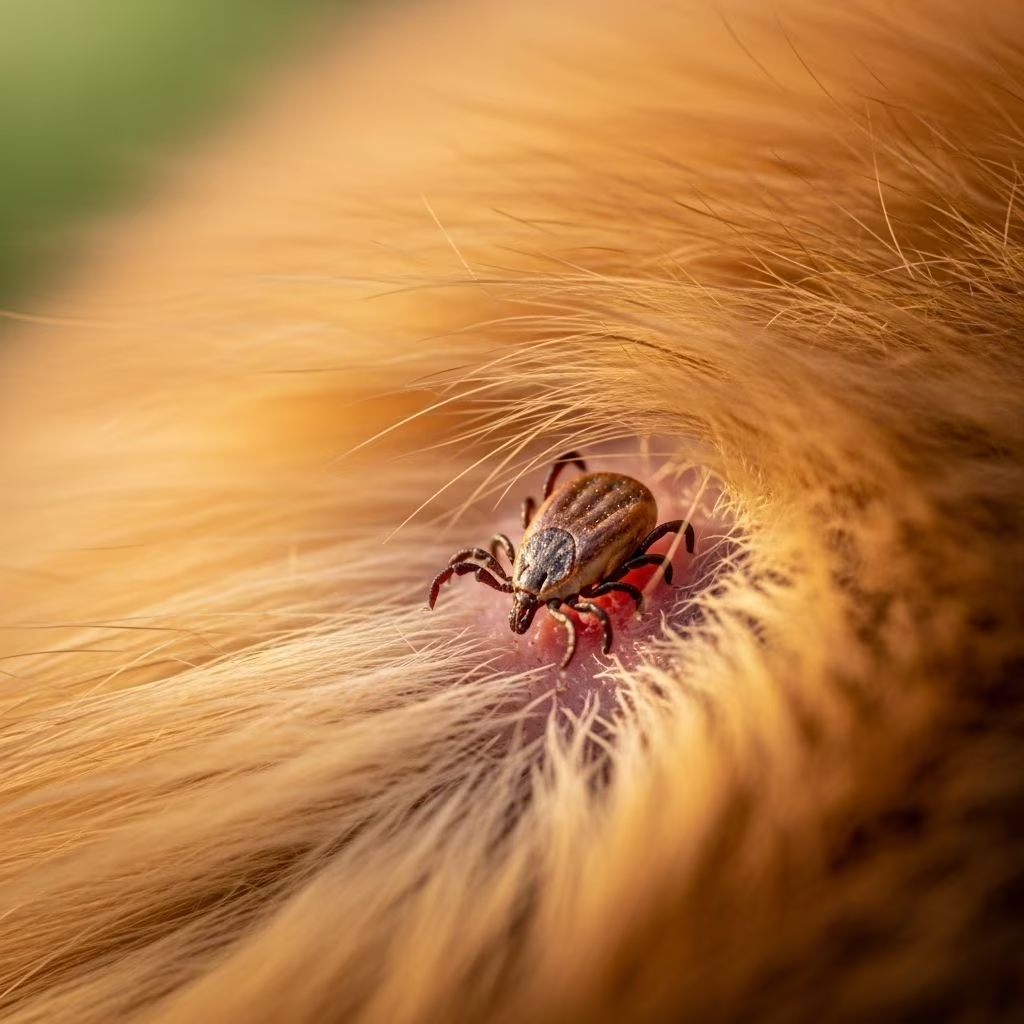
Ticks pose a significant threat to dogs, capable of transmitting serious diseases that can affect your pet’s health. While not every tick carries pathogens, the risks are high enough to warrant proactive prevention. Pet-owning households face up to 1.83 times higher risk of tick encounters compared to non-pet homes, emphasizing the need for vigilant care.
What Are Ticks?
Ticks are arachnids, not insects, belonging to the order Ixodida. They are external parasites that feed on the blood of mammals, birds, and reptiles. Unlike fleas, ticks have eight legs as nymphs and adults, while larvae have six. They are flat and oval-shaped, ranging from reddish-brown to dark brown, expanding when engorged with blood.
Ticks thrive in warm, humid environments like wooded areas, tall grasses, and leaf litter. They use a questing behavior, perching on vegetation with front legs extended to latch onto passing hosts. In the U.S., over 80 species exist, but only a dozen commonly affect dogs.
How Do Dogs Get Ticks?
Dogs encounter ticks during outdoor activities such as walks in parks, hikes, or play in grassy yards. Ticks can also hitch a ride indoors on clothing, other pets, or wildlife like deer and mice near homes. Indoor-outdoor dogs are particularly vulnerable, as pets can transport ticks inside, increasing household exposure risks by 1.49 times for attached ticks.
- High-risk areas: Wooded trails, tall grass, brushy fields.
- Seasonal peaks: Spring and fall, though year-round in warmer climates.
- Behavioral factors: Dogs sniffing low to the ground pick up ticks easily.
Common Types of Ticks on Dogs
Several tick species target dogs, each with distinct appearances and disease vectors. Identifying them aids in assessing risks.
| Tick Species | Appearance | Common Diseases | Regions |
|---|---|---|---|
| American Dog Tick | Reddish-brown, white markings on females | Rocky Mountain Spotted Fever (RMSF), Tularemia, Ehrlichiosis | Nationwide, esp. East/Midwest |
| Brown Dog Tick | Dark brown, uniform color | Ehrlichiosis, Babesiosis, Anaplasmosis, RMSF | Indoor infestations possible |
| Lone Star Tick | Females have white dot on back | Ehrlichiosis, Tularemia, Cytauxzoonosis | Southeast, expanding North |
| Blacklegged (Deer) Tick | Dark brown, small | Lyme Disease, Anaplasmosis, Ehrlichiosis | Northeast, Upper Midwest |
| Gulf Coast Tick | Long mouthparts on adults | Hepatozoonosis, Rickettsiosis | Southeastern U.S. |
These ticks can transmit pathogens within 18-24 hours of attachment, making quick detection critical.
Signs Your Dog Has Ticks
Ticks often go unnoticed until engorged. Common signs include:
- Visible bumps or lumps in fur, especially ears, neck, armpits, groin, between toes.
- Excessive scratching, licking, or chewing at spots.
- Redness, inflammation, or scabbing at attachment sites.
- Lethargy, fever, loss of appetite if disease develops.
- Dark specks (tick feces) on bedding or skin.
Perform daily checks after outdoor time: part fur systematically, feel for irregularities. Ticks feel like tiny scabs that don’t flake off.
Ticks on Dogs vs. Other Pests
Distinguish ticks from skin tags, warts, or fleas:
- Ticks: Hard, raised, eight legs visible when moving.
- Fleas: Jumpers, cause itching, leave “flea dirt.”
- Skin allergies: Symmetrical redness, no parasites.
Use a fine-tooth comb or magnifying glass for confirmation.
Health Risks and Diseases from Ticks on Dogs
Ticks transmit bacteria, viruses, and protozoa causing tick-borne diseases (TBDs). Dogs may be asymptomatic carriers, but severe cases lead to organ damage or death. Humans aren’t directly infected by dog ticks but share exposure risks.
- Lyme Disease: Caused by Borrelia burgdorferi. Symptoms: Lameness, fever, swollen joints, kidney failure. Most exposed dogs show no signs.
- Ehrlichiosis: Attacks white blood cells. Fever, bleeding, weakness. Transmitted by brown dog, American dog, lone star ticks.
- Anaplasmosis: Similar to Ehrlichiosis, affects blood cells.
- Rocky Mountain Spotted Fever (RMSF): Vascular damage, fever, rash. Often fatal untreated.
- Babesiosis: Destroys red blood cells, causing anemia.
- Tularemia: Fever, swollen nodes 3-5 days post-bite.
Diagnosis via blood tests, often requiring repeat sampling as early tests may be negative. Treatment involves antibiotics like doxycycline, but prevention is key.
How to Safely Remove a Tick from Your Dog
Remove ticks promptly to minimize disease transmission.
- Wear gloves; use tweezers or tick tool.
- Grasp tick close to skin, pull straight out steadily—no twisting.
- Avoid crushing; dispose in alcohol, sealed bag, or flush.
- Disinfect bite with antiseptic; monitor for 2-4 weeks.
- Save tick in alcohol for ID if symptoms appear.
Don’ts: No petroleum jelly, matches, or nail polish—these increase saliva regurgitation risks.
Treatment for Tick Bites and Diseases
Consult a vet immediately post-removal or if symptoms emerge. Vets may test for TBDs, prescribe antibiotics, and recommend supportive care like fluids or pain relief. Prognosis improves with early intervention.
Ticks on Dogs Prevention Tips
Year-round prevention is essential, as ticks are worsening due to climate changes.
- Vet-Recommended Preventives: Oral meds (e.g., isoxazolines), topicals (fipronil), collars (seresto). Kills/prevents attachment.
- Environmental Control: Mow lawn, clear leaf litter, use cedar mulch, create tick barriers.
- Daily Checks: Full-body inspections post-outdoors.
- Repel Habits: Avoid tick hotspots; stick to paths.
- Tick Baths: Dawn dish soap or vet shampoos.
Consult vets for region-specific products; combine methods for best protection.
Tick Prevention Products for Dogs
| Type | Examples | Pros | Cons |
|---|---|---|---|
| Oral | Nexgard, Bravecto | Monthly, waterproof | Prescription needed |
| Topical | Frontline, K9 Advantix | Over-counter options | Greasy, avoid water 48hrs |
| Collar | Seresto | 8-month protection | Not for puppies |
| Spray | Vet sprays | For yards/pets | Short-term |
When to See a Vet for Ticks on Dogs
- Multiple ticks or engorged ones.
- Dog unwell: fever, lameness, anorexia.
- Bite site infection.
- Known high-risk tick exposure.
Annual TBD screening recommended in endemic areas.
Frequently Asked Questions (FAQs)
Q: Can dogs get Lyme disease from ticks?
A: Yes, blacklegged ticks transmit Lyme disease to dogs, causing arthritis or kidney issues, though many show no symptoms.
Q: Can humans get Lyme from a dog’s tick?
A: No direct transmission; ticks must bite humans separately.
Q: Are ticks worse in certain seasons?
A: Peaks in spring/fall, but year-round prevention advised.
Q: Do all ticks carry disease?
A: No, but many do; removal within 24 hours reduces risk.
Q: Is year-round prevention necessary?
A: Yes, vets recommend it due to indoor ticks and warming climates.
Q: How often should I check my dog for ticks?
A: Daily, especially after outdoors; pet owners have higher encounter risks.
References
- Pet ownership increases human risk of encountering ticks — Little E, et al. PMC – NIH. 2020-02-18. https://pmc.ncbi.nlm.nih.gov/articles/PMC7053298/
- How to Tell If Your Dog Has Ticks — Kinship. Accessed 2026. https://www.kinship.com/dog-health/how-to-tell-if-your-dog-has-ticks
- Diseases Commonly Spread by American Dog Ticks and Lone Star Ticks — TickLab. 2020-08-06. https://www.ticklab.org/blog/2020/08/06/diseases-commonly-spread-by-american-dog-ticks-and-lone-star-ticks/
- 5 Myths About Ticks on Dogs — Kinship. Accessed 2026. https://www.kinship.com/dog-health/ick-its-tick-my-dog
- Ticks on Dogs: Keep Your Dog Safe — Kinship. Accessed 2026. https://www.kinship.com/dog-health/ticks-on-dogs



