
Tick Pyemia In Lambs: A Practical Guide To Signs And Prevention
Understanding the devastating effects of tick pyemia on young lambs, from causes and symptoms to proven prevention and treatment strategies.
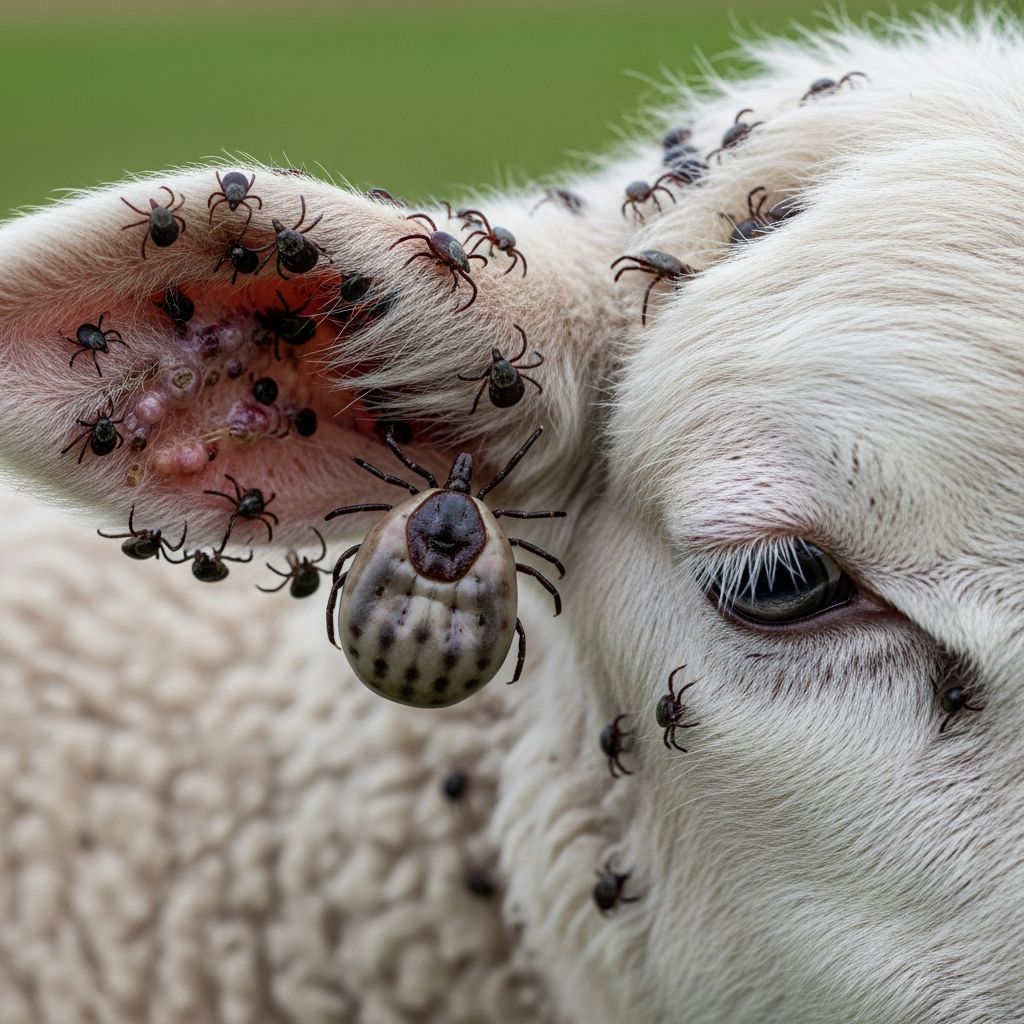
Tick pyemia represents one of the most challenging health issues facing young lambs in tick-infested regions. This condition arises when bacteria, introduced through tick bites, disseminate systemically, forming abscesses in critical areas like joints, muscles, and the spinal cord. Primarily affecting lambs aged 2 to 12 weeks, it leads to crippling lameness, chronic ill thrift, and often fatal outcomes if not addressed promptly. Farmers in pastoral areas, particularly those with hill farms or pastures supporting the sheep tick Ixodes ricinus, must prioritize awareness and proactive measures to mitigate its impact.
The Biology of the Culprit: Sheep Ticks and Pathogen Transmission
The sheep tick, Ixodes ricinus, serves as the primary vector for tick pyemia. Active mainly during spring and early summer when nymphal stages quest for hosts, these ticks attach to lambs grazing in humid, wooded, or rough pastures. A bite introduces skin bacteria such as Staphylococcus aureus, Trueperella pyogenes, Pasteurella spp., or Mannheimia spp. into the wound. Under normal conditions, the lamb’s immune system localizes the infection to superficial abscesses. However, complicating factors like concurrent tickborne fever (TBF)—caused by Anaplasma phagocytophilum—induce leukopenia, impairing immunity and allowing bacterial spread.
TBF, transmitted by the same tick, spikes fever and suppresses white blood cells, creating a perfect storm for pyemia progression. Lambs born to ewes in suboptimal condition, with poor colostrum intake, face compounded risks, as weak passive immunity exacerbates susceptibility to joint-ill and pyemia. Environmental factors, including damp grasslands and moderate temperatures (7–15°C), amplify tick populations, heightening outbreak potential.
Clinical Manifestations: Recognizing the Signs Early
Symptoms in affected lambs typically emerge 1–3 weeks post-infestation, starting subtly before escalating. Initial signs include mild fever, lethargy, and reluctance to move. As bacteria migrate via bloodstream to joints and vertebrae, lambs develop acute lameness—often in one or more limbs—progressing to ‘crippled lamb’ syndrome with hindquarter paralysis. Swollen joints filled with pus, muscle abscesses, and spinal lesions cause staggering gait, recumbency, and emaciation despite normal appetite.
- Early indicators: Intermittent lameness, joint heat/swelling, skin lesions at bite sites.
- Progressive features: Paralysis (especially hind limbs), ill thrift, anorexia in advanced cases.
- Severe outcomes: Brain abscesses leading to neurological deficits, sudden death from overwhelming sepsis.
Mortality rates can exceed 50% in untreated outbreaks, with survivors suffering lifelong productivity losses like poor wool growth and reduced weight gain. Co-infections with louping-ill virus or pasteurellosis further worsen prognosis. Differential diagnoses include white muscle disease, enzootic ataxia, and nutritional lameness, underscoring the need for veterinary input.
Diagnostic Approaches: Confirming Tick Pyemia
Diagnosis hinges on flock history—recent access to tick-heavy pastures—and clinical presentation. Postmortem examination reveals hallmark multifocal abscesses in synovial structures, vertebral bodies, and myocardium. Bacterial culture from joint fluid or pus confirms pathogens, though mixed infections complicate identification. Blood smears during acute phases may show TBF inclusions, linking the two conditions.
Laboratory support includes PCR for A. phagocytophilum and serology for antibodies. In live animals, ultrasound detects joint effusions, while synovial fluid cytology reveals neutrophils and bacteria. Early intervention relies on these tools, as delays permit irreversible damage.
| Diagnostic Method | Description | Advantages | Limitations |
|---|---|---|---|
| Clinical History & Exam | Ticks on animal, lameness pattern | Immediate, low-cost | Non-specific |
| Postmortem/Culture | Abscess sampling | Definitive pathogen ID | Post-death only |
| PCR/Serology | Blood tests for TBF/pyemia links | High sensitivity | Lab delay, cost |
| Ultrasound | Joint imaging | Live diagnosis | Equipment needed |
Treatment Protocols: Interventions That Work
While no cure reverses advanced lesions, timely antibiotics can salvage mild cases. Parenteral penicillin (20,000 IU/kg daily for 5–7 days) or tetracyclines (10–20 mg/kg) target staphylococci effectively if started before chronic abscessation. Short-acting oxytetracyclines excel against TBF predisposing factors, reducing fever and secondary invasions rapidly.
Supportive care—NSAIDs for pain, fluids for dehydration, and isolation—bolsters recovery. Severe paralysis or multiple joint involvement warrants humane euthanasia to prevent suffering. In dairy contexts (analogous for ewes), early oxytetracycline restores function, suggesting similar benefits for lambs. Tick removal alone aids paralysis cases but not pyemia.
- Primary antibiotics: Penicillin, tetracyclines (avoid resistance strains).
- Dosage example: Oxytetracycline 10 mg/kg IV q24h x3–4 days.
- Adjuncts: Anti-inflammatories, nursing in clean bedding.
Prophylactic long-acting tetracyclines (20–30 mg/kg IM) for at-risk lambs post-lambing protect for 3 weeks, curbing pyemia outbreaks.
Prevention Strategies: Keeping Ticks at Bay
Control centers on integrated tick management, balancing immunity buildup with risk minimization. Key tactics include:
- Grazing management: Delay lamb exposure to hill pastures until 6 weeks old; use tick-free lowlands initially.
- Acaricide use: Pour-ons or dips (e.g., fluazuron-based) pre-pasture move; repeat q2–3 weeks. Avoid newborn dips due to mismothering risks.
- Prophylaxis: Tetracycline injections for newborns in endemic zones.
- Ewe health: Ensure colostrum quality via vaccination, nutrition; expose replacements to ticks pre-breeding for immunity.
Flock health plans with vets optimize these, incorporating monitoring for TBF. Pasture hygiene—mowing, drainage—reduces tick habitats long-term.
Economic and Welfare Impacts: Why Act Now
Tick pyemia inflicts heavy losses: culls, treatment costs, and growth setbacks erode profits. In UK hill farms, it cripples lamb crops, with ‘cripples’ fetching low market value. Welfare suffers from pain and debility, breaching ethical standards. Proactive control yields healthier flocks, better weaning weights, and sustainable farming.
FAQs on Tick Pyemia in Lambs
Q: What age lambs are most at risk?
A: Primarily 2–12 weeks old, when ticks peak and immunity wanes.
Q: Can vaccines prevent tick pyemia?
A: No direct vaccine; TBF management indirectly helps via antibiotics/immunity.
Q: How do I differentiate from joint-ill?
A: Pyemia shows multi-joint abscesses, tick history; joint-ill is often umbilical.
Q: Are humans at risk?
A: No direct zoonosis, but ticks vector Lyme disease—check bites.
Q: What’s the best first-line treatment?
A: Oxytetracycline or penicillin, per vet prescription.
Future Directions in Tick Disease Control
Research gaps persist in acaricide resistance and TBF vaccines. Breed selection for tick tolerance and biological controls (e.g., entomopathogenic fungi) offer promise. Farmers should engage in surveillance schemes for early warnings.
References
- Tick-Borne Disease Treatment — Vet Times. 2023. https://www.vettimes.co.uk/app/uploads/wp-post-to-pdf-enhanced-cache/1/tick-borne-disease-treatment.pdf
- Can Sheep Get Sick From Tick Bites? — Diamond Hoof Care. 2024. https://diamondhoofcare.com/can-sheep-get-sick-from-tick-bites/
- Tickborne Fever in Ruminants — MSD Veterinary Manual. 2025. https://www.msdvetmanual.com/generalized-conditions/tickborne-fever/tickborne-fever-in-ruminants
- Ticks and Tickborne Diseases — Ruminant Health & Welfare. 2021-11-01. https://ruminanthw.org.uk/wp-content/uploads/2021/11/Mfns-6.17p.pdf
- Tickborne Fever Information — FarmLab. 2024-08. https://farmlab.ie/2024/08/information-on-tickborne-fever-for-farmers-and-vets/
- Sheep Ticks and Control — Elanco Farm Animal. 2025. https://farmanimal.elanco.com/en_gb/sheep/sheep-ticks
- Ticks — SCOPS. 2025. https://www.scops.org.uk/external-parasites/ticks/
Similar Articles








Read full bio of Sneha Tete


