

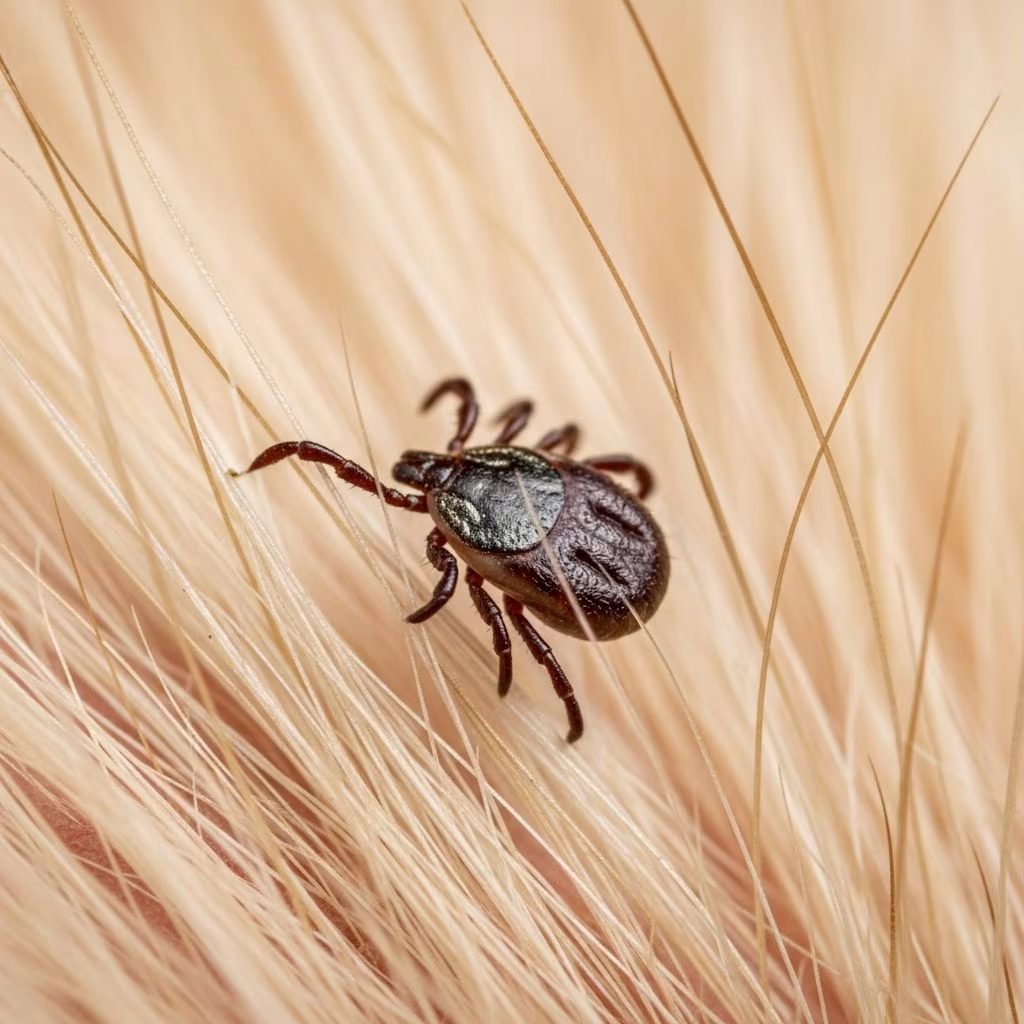
Ticks are common parasites in the UK that pose significant health risks to dogs. These blood-sucking arachnids can transmit serious diseases like Lyme disease and babesiosis. Pet-owning households face 1.83 times higher risk of finding ticks crawling on members and 1.49 times higher risk of attached ticks compared to non-pet homes. Understanding ticks, their life cycle, identification, safe removal, disease risks, and prevention is crucial for every UK dog owner, especially during peak seasons from spring to autumn when warmer weather activates them.
What is a tick?
Ticks are external parasites belonging to the arachnid family, related to spiders and mites. Unlike insects with six legs, ticks have eight legs as adults. They feed exclusively on the blood of mammals, birds, and reptiles, latching onto hosts with barbed mouthparts called hypostomes. In the UK, the most prevalent species affecting dogs is Ixodes ricinus, known as the sheep tick or castor bean tick. These ticks thrive in humid, wooded, grassy, and heathland areas, waiting on vegetation tips to quest for hosts using carbon dioxide, heat, and movement cues.
The tick life cycle consists of four stages: egg, larva (six legs), nymph (eight legs), and adult. Each stage except egg requires a blood meal to progress, with feeding lasting 3-7 days. Females can lay up to 5,000 eggs post-feeding before dying. This cycle enables rapid population growth in suitable habitats, making ticks a persistent threat year-round, though activity peaks between March and October.
Ticks on dogs: Pictures and identification
Identifying ticks early is vital as they swell significantly after feeding. Unfed larvae resemble tiny black pins (1mm), nymphs look like freckles (1-2mm), and engorged adults can reach grape size (up to 1cm). Common attachment sites on dogs include:
- Around the ears and ear flaps
- Neck and shoulders
- Armpits and groin
- Between toes
- Under the collar
- Tail base and belly
Dark brown or black when unfed, engorged ticks appear grey-blue and bloated. Use good lighting and part the fur systematically. Ticks feel like small lumps distinct from warts or skin tags. Regular checks post-walks in risky areas prevent unnoticed feeding and disease transmission.
Where are ticks found in the UK?
Ticks inhabit diverse UK landscapes where humidity exceeds 80% and temperatures stay above 5°C. High-risk zones include:
- Woodlands and forests
- Tall grasslands and meadows
- Heathlands and moors
- Bracken and scrub areas
- Urban parks and gardens near woods
Popular dog-walking spots like the New Forest, Lake District, Scottish Highlands, and Exmoor report high densities. Even short grass in tick hotspots harbors them. Ticks do not jump or fly; they crawl onto passing hosts from grass blades up to 1m high. Avoid peak questing times (dawn/dusk) and stick to paths during high season. Recent data shows ticks active earlier due to milder winters, extending risks into winter months.
Ticks on dogs symptoms
Ticks themselves cause minimal immediate symptoms beyond mild irritation at bite sites, often appearing as small red scabs post-removal. However, they transmit pathogens during feeding, leading to diseases manifesting days to months later. Watch for:
- Lethargy and fever
- Loss of appetite
- Joint pain or lameness (shifting leg lameny)
- Swollen lymph nodes
- Anemia signs (pale gums, weakness)
Not all tick bites cause disease; transmission requires 24-48 hours attachment for most pathogens. Daily checks reduce risks substantially.
Ticks on dogs treatment: safe tick removal
Never pull ticks with fingers or tweezers, as this squeezes infectious fluids back into the host and leaves mouthparts causing infections. Use fine-tipped tick removal tools like Tick Tornado or Twister, available at vets and pet stores.
Step-by-step safe removal:
- Wear gloves; restrain dog gently.
- Position tool around tick base flush with skin.
- Twist slowly (clockwise/counterclockwise per tool) while lifting steadily—no squeezing.
- Tick detaches intact; place in alcohol container for disposal or monitoring.
- Disinfect bite with pet-safe antiseptic (chlorhexidine); monitor 2-4 weeks for reactions.
- Wash hands thoroughly.
If mouthparts remain, they usually extrude naturally. Seek vet care if site swells, oozes, or dog shows distress. Avoid petroleum jelly, matches, or nail polish—these provoke regurgitation increasing disease risk.
Ticks on dogs diseases
UK ticks transmit several canine diseases, though rarer than in Europe. Key threats:
- Lyme Disease (Borreliosis): Caused by Borrelia burgdorferi. Symptoms: fever, lameness, anorexia. Heart/kidney damage if untreated. Dogs rarely show bullseye rash unlike humans.
- Babesiosis: Protozoan Babesia canis destroys red blood cells causing hemolytic anemia, dark urine, collapse. Emerging in UK southeast; four cases alarmed experts. Fatality high without prompt treatment.
- Anaplasmosis/Ehrlichiosis: Bacterial infections affecting blood cells; fever, thrombocytopenia.
Pet owners finding ticks on pets face heightened household risk, emphasizing vigilant checks. Diagnosis via blood tests; treatments include antibiotics (doxycycline for Lyme) and supportive care. Prevention trumps cure.
Ticks on dogs prevention
- Environmental: Avoid tall grass/woods; walk on paths; mow lawns short.
- Daily Checks: Full body post-outdoors, focusing hotspots. Bathe if heavily infested.
- Tick Preventives: Consult vet for spot-ons (fipronil, permethrin), collars (Seresto), oral meds (Bravecto, Nexgard), or injections (Simparica). Choose based on lifestyle, health, local prevalence. Rotate products to prevent resistance; year-round use advised.
No product guarantees 100% protection; combine with checks. Check own skin too—pets transport ticks indoors.
Best tick prevention for dogs UK
| Product Type | Examples | Duration | Pros | Cons |
|---|---|---|---|---|
| Spot-on | Frontline, Advantix | 1 month | Easy apply, waterproof | Monthly reapply |
| Collar | Seresto | 8 months | Long-lasting, repels | Not for puppies, water-resistant not proof |
| Oral Chew | Bravecto, Nexgard | 1-3 months | Kills fast, no residue | Prescription, liver-processed |
| Spray | Various | Days-weeks | Immediate, targeted | Frequent reapply, messy |
Select via vet discussion considering breed, age, activities. Environmental sprays for yards; natural options (essential oils) less effective.
Ticks season UK: When are ticks most active?
Ticks quest when ground temperature >7°C and humidity high. UK peaks:
- Spring (Mar-May): Nymphs dominant, tiny/hard to spot.
- Summer (Jun-Aug): Adults active in heat.
- Autumn (Sep-Nov): Peak due nymphs/adults.
Milder winters extend seasons; 2025 saw unusually high numbers. Year-round vigilance needed, especially rural/southern England.
Ticks on dogs human risk
Dogs transport ticks home, increasing family exposure. Studies show pet homes 83% more likely to find crawling ticks, 49% for attached. Check children, self daily. Ticks prefer low on body; dryer bites less infectious.
FAQs
What do ticks look like on dogs?
Small dark specks unfed; large grey-blue lumps when engorged. Check ears, neck, paws.
How do I remove a tick from my dog?
Use twisting tool: hook base, twist/lift slowly. Clean site after.
Can ticks kill dogs?
Yes, untreated babesiosis/Lyme can be fatal. Prompt vet care essential.
When is tick season UK?
Year-round, peaks spring-autumn; nymphs hardest in spring.
Best tick treatment for dogs?
Vet-recommended preventives like spot-ons/orals; combine with checks.
References
- Pet ownership increases human risk of encountering ticks — Little E et al. National Library of Medicine. 2020-02-21. https://pmc.ncbi.nlm.nih.gov/articles/PMC7053298/
- Protecting your pet from ticks: a guide for UK pet owners — British Veterinary Association (BVA). 2025-03-26. https://www.bva.co.uk/news-and-blog/blog-article/protecting-your-pet-from-ticks-a-guide-for-uk-pet-owners/
- Spotlight On… U.K. scientists launch study of emerging tick-borne disease in dogs — Fierce Pharma. N/A. https://www.fiercepharma.com/animal-health/spotlight-on-u-k-scientists-launch-study-of-emerging-tick-borne-disease-dogs-merck
- Lyme Disease in Dogs: Symptoms, Tests, Treatment and Prevention — Kinship. N/A. https://www.kinship.com/uk/dog-health/lyme-disease-dogs



