

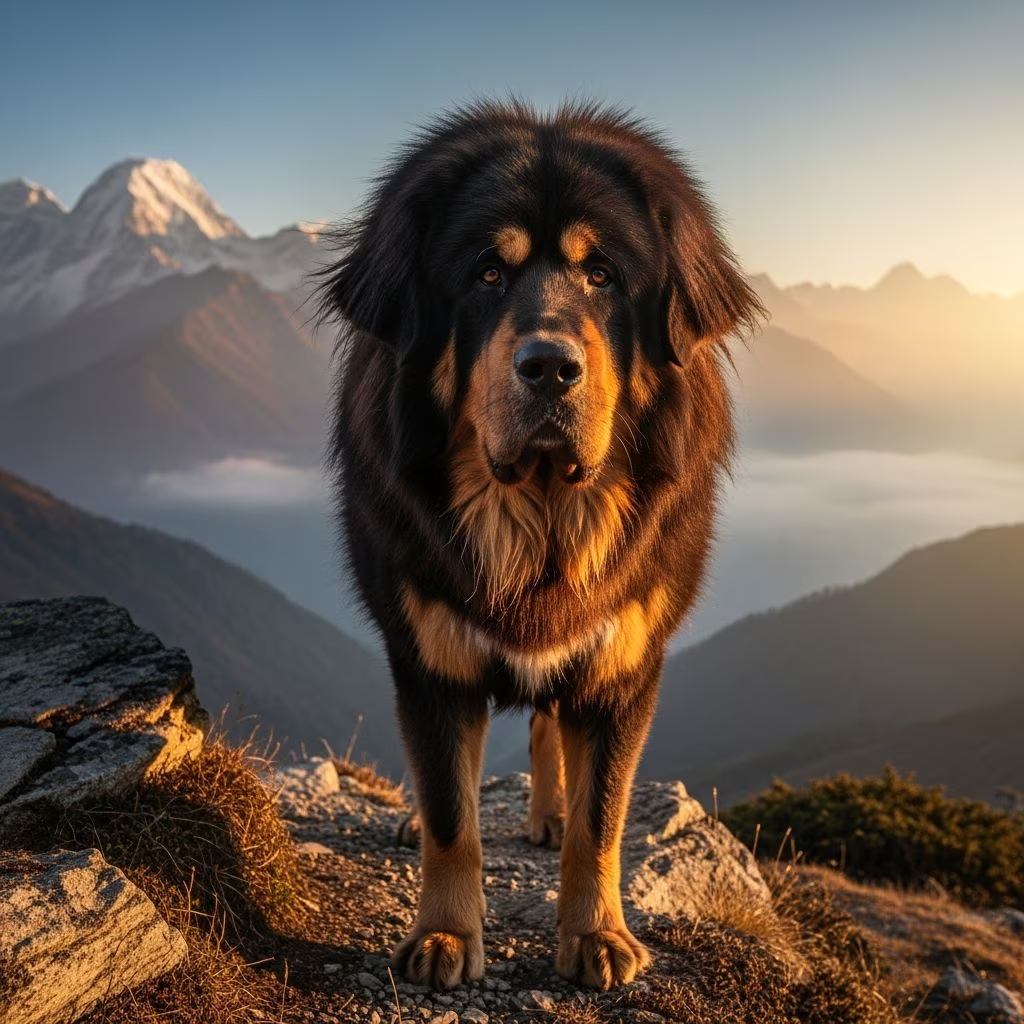
The Ancient Lineage of Tibet’s Noble Protector
The Tibetan Mastiff represents one of the most distinguished and historically significant dog breeds in existence, with roots extending back thousands of years into the remote mountainous regions of Central Asia. These magnificent dogs emerged from the harsh, unforgiving landscapes of the Himalayan Mountains and Tibetan Plateaus, where they were selectively bred by nomadic communities to fulfill a critical role in protecting livestock, homes, and sacred religious institutions.
Historical documentation provides compelling evidence of the breed’s antiquity. The earliest written accounts of large dogs resembling modern Tibetan Mastiffs date back to approximately 1100 B.C. in China. Archaeological findings have revealed skulls of large dogs from the stone and bronze ages, suggesting that ancestors of this breed existed for millennia. The breed’s development was heavily influenced by the geographic isolation of Tibet, particularly as the region’s borders remained largely closed to the outside world for centuries.
Buddhist monks and Tibetan nomads held the Tibetan Mastiff in such high regard that they developed deep spiritual connections with the breed. According to Tibetan Buddhist beliefs, these dogs were thought to possess the souls of monks and nuns who had not achieved enlightenment and entry into Shambhala, the heavenly paradise. This spiritual significance elevated the breed far beyond its practical function, transforming it into a symbol of both protection and spiritual importance within Tibetan culture.
Ancestral Connections and Modern Dog Breed Development
Experts and breed historians widely recognize the Tibetan Mastiff as foundational genetic stock from which most modern large working dog breeds developed. This influence extended to all mastiff and Molosser breeds, as well as mountain dog varieties found throughout the world today. While other mastiff breeds traveled alongside ancient Persian, Greek, and Roman armies—and even accompanied legendary figures such as Attila the Hun and Genghis Khan—the Tibetan Mastiff remained isolated in the Himalayan valleys.
This geographical isolation proved crucial to the breed’s development and distinctiveness. While other large dog breeds were influenced and mixed with various populations across Europe and Asia, the Tibetan Mastiff maintained its unique characteristics, refining its capabilities as a guardian over countless generations. The breed’s isolation resulted in a phenotypically distinct animal that retained primitive characteristics unusual among domesticated dogs.
Distinctive Physical Characteristics and Appearance
The Tibetan Mastiff commands attention through its imposing physical presence and striking appearance. These are genuinely large dogs, with a robust, muscular build that reflects their history as powerful guardians. Their double coat varies in length depending on climate and seasonal changes, typically ranging from medium to long, and presents itself in a remarkable variety of colors.
The breed’s facial structure reveals its noble heritage and working background. Tibetan Mastiffs possess a broad, well-proportioned head with a strong, powerful jaw that conveys strength and determination. Their eyes are typically dark brown, reflecting an intelligent and perpetually watchful expression that speaks to their guardian instincts. A particularly distinctive feature is their impressive, bushy tail that curves upward and curls over the back, contributing to their majestic and commanding appearance.
One of the most remarkable adaptations of the Tibetan Mastiff relates to its physiological development in high-altitude environments. The breed exhibits higher hemoglobin levels compared to dogs from low-altitude regions, enabling it to function effectively at the extreme elevations where it originated. This adaptation resulted from prehistoric interbreeding with wolf-like canids and represents a unique evolutionary advantage that allowed the breed to thrive where other mammals struggled to survive.
Behavioral Traits and Temperamental Foundation
Understanding the Tibetan Mastiff’s temperament requires recognizing that the qualities defining their behavior today are the direct result of their ancient role as fierce protectors. These are dogs bred for independent decision-making, not for blind obedience. They were required to evaluate threats, make protective judgments, and act decisively when necessary—all without constant human direction.
The protective instinct remains the defining characteristic of the breed’s temperament. Tibetan Mastiffs are naturally wary of strangers and maintain strong, sometimes fierce, protective behaviors toward their families and territories. However, this protectiveness is not indiscriminate aggression; rather, it represents controlled strength paired with careful judgment. As one breed authority explains, these dogs function to create protective boundaries: they display impressive deterrents through their barking and presence, but they do not typically chase or attack once the perceived threat has retreated.
Independence stands as another defining temperament trait. Unlike many modern dog breeds that have been selectively bred for increasing obedience and trainability, Tibetan Mastiffs retain their independent streak. This characteristic can present challenges for first-time dog owners or individuals accustomed to more biddable breeds, as Tibetan Mastiffs will sometimes choose not to comply with commands when they believe their judgment takes precedence. This independent nature, while sometimes stubborn, reflects the breed’s genetic heritage of making autonomous protection decisions.
Despite their reputation as serious guardians, Tibetan Mastiffs often display considerable loyalty and even gentleness toward their families. Generations of selective breeding emphasized their role as protectors of flocks rather than killers, resulting in a temperament characterized by patience, loyalty, and controlled gentleness. Within their family units, these dogs typically form deep bonds and demonstrate affection, though they maintain reserve with outsiders.
Socialization Requirements and Living Conditions
Early and consistent socialization represents a critical component of responsible Tibetan Mastiff ownership. These dogs must be exposed to various people, environments, and experiences during their formative months to help them distinguish between genuine threats and normal social situations. Without proper socialization, their protective instincts can become exaggerated, leading to problematic territorial behaviors.
The breed’s specific behavioral needs translate into particular environmental requirements. Tibetan Mastiffs possess an incredibly powerful, distinctive bark—often compared to the sound of a foghorn rather than a typical dog’s bark. This trait, while valuable for protective purposes, makes the breed better suited to rural environments where neighbors are distant. Their tendency to bark extensively, particularly if left outdoors overnight, can create significant issues in suburban or urban settings with close neighbors.
These dogs are not suited to hot, humid climates. Their heavy double coat evolved over millennia to provide insulation against extreme cold, high altitude, and snow. Tibetan Mastiffs are most comfortable in cooler environments and can struggle in warm weather conditions.
Health Characteristics and Reproductive Patterns
The Tibetan Mastiff retains several characteristics unusual among domesticated dogs, reflecting its status as a primitive breed. Most notably, these dogs experience only a single estrus cycle per year, unlike the majority of domestic dog breeds that typically cycle twice annually. This reproductive pattern persists even in Tibetan Mastiffs living at lower altitudes and in more temperate climates than their native environment, suggesting a deeply ingrained genetic trait. Because estrus typically occurs during late autumn, most Tibetan Mastiff puppies are naturally born between December and January.
The breed’s adaptation to harsh environmental conditions has resulted in a generally hardy dog breed, though they benefit from regular veterinary care and attention to their specific health needs.
Training Considerations for Owners
Successful training of a Tibetan Mastiff requires understanding and respecting the breed’s independent nature rather than attempting to override it. These dogs respond better to training approaches that appeal to their intelligence and sense of purpose rather than traditional obedience-based methods. Positive reinforcement techniques, consistency, and establishing clear boundaries work more effectively than harsh corrections with this breed.
It is essential to recognize that the breed was not developed to be a livestock guardian dog and is not suited to this role. Instead, Tibetan Mastiffs were historically used as property guards, tied to gates of monasteries or homes, or positioned at the center of nomadic encampments. Understanding this distinction helps owners set realistic expectations and appropriate training goals.
Historical Introduction to Western Countries
The breed remained virtually unknown outside the Himalayan region until the twentieth century. In 1931, Colonel and Mrs. Bailey imported four Tibetan Mastiffs while stationed in Nepal and Tibet. Mrs. Bailey subsequently founded the Tibetan Breeds Association in England and helped establish the first official breed standard, which was adopted by The Kennel Club and later recognized by the Fédération Cynologique Internationale.
American interest in the breed developed somewhat later. In 1966, Ann Rohrer, founder of the American Tibetan Mastiff Association, brought a Tibetan Mastiff named Jumla’s Kalu to America while working for the U.S. Government in Katmandu, Nepal. Beginning in 1970, additional Tibetan Mastiffs were imported from Nepal and India into the United States. These foundation dogs and their offspring were bred throughout the country by dedicated breed fanciers who worked to preserve breed type while improving overall health and structure.
The breed’s formal introduction to dog shows occurred relatively recently. The first National Specialty Match for Tibetan Mastiffs in the United States was held in October 1979, organized in connection with the California Rare Breeds Dog Association. This event marked an important milestone in establishing the breed’s presence in American dog show competitions.
Core Qualities and Suitability as Guardians
The close relationship between Tibetan Mastiffs and humans throughout the centuries has produced what many describe as an almost uncanny human-like understanding. These dogs seem to comprehend human emotions, intentions, and the nuances of protection in ways that go beyond basic animal instinct. This quality, combined with their loyalty and protective nature, makes them distinctive as guardian animals.
Potential owners should carefully evaluate whether their lifestyle and circumstances suit this breed. Tibetan Mastiffs are not appropriate for:
- Apartment living or densely populated urban areas
- Homes with minimal space or outdoor access
- First-time dog owners unprepared for independent-minded dogs
- Climates with sustained heat and humidity
- Situations where excessive barking would create neighbor conflicts
- Families unable to commit to consistent socialization and training
These dogs thrive in rural settings where they have adequate space, cooler climates, and owners who appreciate their independent nature and understand their protective heritage.
The Modern Tibetan Mastiff: Ancient Instincts in Contemporary Life
Today’s Tibetan Mastiff continues to embody the qualities that made the breed invaluable thousands of years ago. In Tibet, these dogs remain in use as guard dogs, tied to monastery gates or positioned within nomadic encampments exactly as their ancestors were centuries past. Whether in their native homeland or in homes throughout the world, Tibetan Mastiffs maintain the temperament, protective instincts, and independent decision-making capacity that defined the breed’s original purpose.
The Tibetan Mastiff represents a living connection to ancient history and the working relationships between humans and dogs that predate most other modern dog breeds. Their presence in contemporary homes serves as a reminder of the diversity possible within the dog species and the remarkable adaptations that selective breeding and environmental pressures can create. Understanding and respecting the breed’s unique characteristics ensures that these magnificent guardians can thrive while providing the protection and loyalty for which they were developed.
References
- Complete Guide to Tibetan Mastiffs: History, Traits & Care Tips — DCC Pets. Accessed January 2026. https://dccpets.in/pet-care-blog/a-complete-guide-to-tibetan-mastiff
- Tibetan Mastiff History: Guardian of Ancient Monasteries — American Kennel Club. https://www.akc.org/expert-advice/dog-breeds/tibetan-mastiff-history-ancient-guardian-monasteries/
- Tibetan Mastiff — Wikipedia. https://en.wikipedia.org/wiki/Tibetan_Mastiff
- Tibetan Mastiff (Do Khyi) Facts — Wisdom Panel Dog Breeds. https://www.wisdompanel.com/en-us/dog-breeds/tibetan-mastiff
- What to Know About Tibetan Mastiffs — WebMD Pets. https://www.webmd.com/pets/dogs/what-to-know-about-tibetan-mastiffs
- Brief History — American Tibetan Mastiff Association. https://www.tibetanmastiff.org/brief-history.html



