
Thyroid Gland In Veterinary Medicine: Comprehensive Guide
Comprehensive guide to the anatomy, physiology, and functions of the thyroid gland across various animal species.
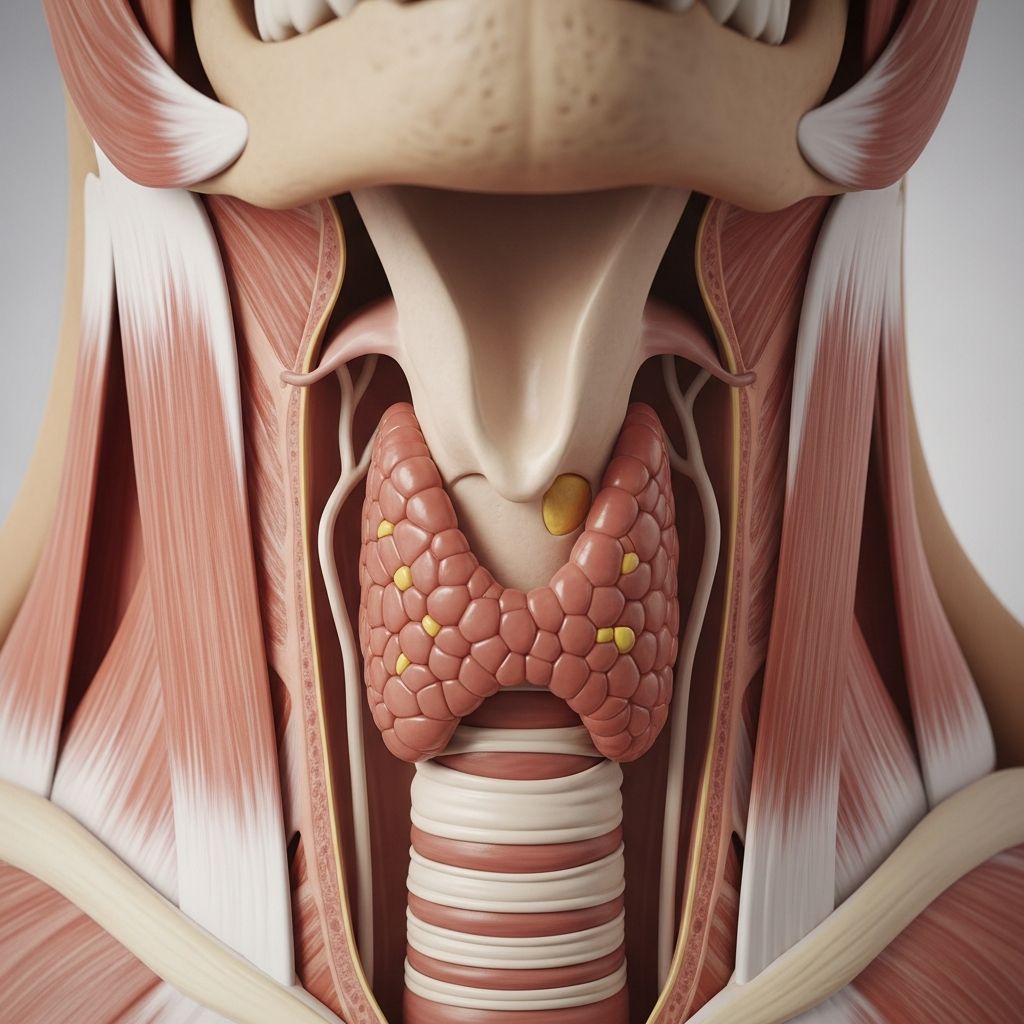
The thyroid gland stands as a cornerstone of endocrine function in animals, influencing metabolism, growth, and overall vitality. Positioned strategically in the neck region, this bilobed organ produces essential hormones that regulate numerous physiological processes. Veterinary professionals and animal caretakers must grasp its intricacies to diagnose and manage related health issues effectively.
Anatomical Placement and Variations Across Species
In most mammals, the thyroid gland consists of two distinct lobes situated caudal to the larynx and alongside the trachea. This positioning ensures proximity to major blood vessels, facilitating rapid hormone distribution. A fibrous isthmus may connect the lobes in species like ruminants and horses, while in dogs and cats, the connection is often minimal or absent.
The gland’s rich vascular supply underscores its metabolic demands. In birds, the lobes reside within the thoracic cavity near the syrinx and carotid artery, adapting to avian anatomy. Size-wise, the thyroid typically accounts for about 0.2% of body weight, though factors like iodine scarcity or glandular hyperactivity can alter this. For instance, in medium-sized dogs, each lobe measures roughly 5 cm long, 1.5 cm wide, and 0.5 cm thick, varying by breed and age. Cats exhibit smaller, flatter glands around 10 mm by 3-5 mm.
- Dogs and Cats: Lobes lateral to trachea, spanning initial tracheal rings; ectopic tissue common along trachea or in thorax.
- Horses and Ruminants: Prominent isthmus connecting lobes.
- Birds: Thoracic location near syrinx.
- Other Variations: Narrow glandular bridge (isthmus glandularis) in some dogs.
Parathyroid glands, embedded or adjacent, produce parathormone for calcium balance, distinguishable by vascular patterns during surgery. C-cells within the thyroid secrete calcitonin, aiding hypocalcemia management.
Microscopic Structure and Cellular Components
At the histological level, thyroid follicles form the gland’s core units—spherical structures lined by follicular cells enclosing colloid, a thyroglobulin-hormone reservoir. Dormant cells appear squamous, activating to tall columnar shapes during hormone demand.
Colloid serves as storage for iodinated precursors. Interspersed C-cells and occasional parathyroid tissue integrate multiple endocrine roles. Blood supply via cranial and caudal thyroid veins drains into jugular or brachiocephalic veins.
| Component | Description | Function |
|---|---|---|
| Follicular Cells | Tall columnar when active | Hormone synthesis and release |
| Colloid | Thyroglobulin matrix | Hormone storage |
| C-Cells | Parafollicular | Calcitonin production |
| Parathyroid | Embedded glands | Parathormone secretion |
Hormone Biosynthesis: From Iodide to Active Forms
Thyroid hormones—thyroxine (T4) and triiodothyronine (T3)—are unique iodinated compounds. T4 dominates secretion, converting peripherally to potent T3 (3-5 times stronger) or inactive reverse T3. Synthesis involves four stages: iodide trapping, oxidation, thyroglobulin coupling, and hormone liberation.
- Iodide Uptake: Follicular cells actively trap iodide via sodium-iodide symporter.
- Oxidation and Organification: Iodide converts to iodine, binding tyrosine residues in thyroglobulin.
- Coupling: Forms monoiodotyrosine (MIT), diiodotyrosine (DIT), then T3 (DIT+MIT) and T4 (DIT+DIT).
- Storage and Release: Thyroglobulin stored in colloid; endocytosis and proteolysis yield free hormones.
These processes demand ample iodine, sourced from diet, with deficiencies swelling the gland (goiter).
Regulatory Mechanisms of Thyroid Activity
The hypothalamic-pituitary-thyroid (HPT) axis governs secretion via negative feedback. Hypothalamic thyrotropin-releasing hormone (TRH) prompts pituitary thyroid-stimulating hormone (TSH) release, binding thyroid receptors to boost synthesis. Circulating T3/T4 inhibit TRH/TSH, maintaining homeostasis.
In animals, this axis ensures metabolic adaptation to stress, growth, or reproduction. Disruptions, like excess iodine or goitrogens, impair function.
Physiological Roles and Metabolic Impacts
Thyroid hormones drive basal metabolic rate, protein synthesis (with growth hormone/insulin), and tissue differentiation. They promote anabolic states, influencing cardiac output, thermogenesis, and neural development.
In neonates, surges support maturation; adults rely on steady levels for energy balance. T3 binds nuclear receptors, modulating gene expression for widespread effects.
Species-Specific Adaptations and Considerations
While conserved, thyroid function adapts: birds’ thoracic placement suits flight; ruminants handle dietary iodine fluctuations. Dogs/cats prone to ectopic tissue, complicating hyperthyroidism surgeries. Feline glands, being small, demand precise diagnostics.
Common Pathologies and Clinical Relevance
Hyperthyroidism (e.g., feline adenoma) elevates T4/T3, causing weight loss, tachycardia. Hypothyroidism, prevalent in dogs, manifests lethargy, obesity from TSH-driven atrophy. Goiters arise from iodine lack or toxins; tumors alter size. Calcitonin excesses rarely issue, but parathyroid interplay affects calcium.
Veterinary diagnostics include T4/T3 assays, TSH stimulation, imaging. Treatments span methimazole, radioiodine, surgery.
Diagnostic Approaches and Management Strategies
Blood panels measure total/free T4, T3, TSH. Ultrasonography reveals nodules; scintigraphy tracks uptake. For hypothyroidism, levothyroxine replaces hormones; hyper cases use ablation.
- Hyperthyroidism Signs: Polyphagia, aggression, heart murmurs.
- Hypothyroidism Signs: Alopecia, myxedema, infertility.
Nutritional and Environmental Influences
Iodine balance is critical; deficiencies provoke compensatory hypertrophy. Goitrogens in brassicas inhibit organification. Commercial feeds fortify iodine, mitigating risks.
FAQs on Animal Thyroid Health
What causes thyroid enlargement in pets?
Typically iodine deficiency, hyperplasia, or neoplasia.
How does thyroid affect growth in young animals?
Promotes skeletal maturation and organ development via anabolic synergy.
Can birds develop thyroid disorders?
Yes, though less common; location aids unique diagnostics.
Is ectopic thyroid tissue problematic?
Often asymptomatic but may cause persistent hyperfunction post-surgery.
What role does TSH play?
Stimulates all synthesis stages under HPT feedback.
References
- Thyroid Function in Animals — Bioguardlabs, Sushant Sadotra. Accessed 2026. https://www.bioguardlabs.com/thyroid-function-in-animals/
- Overview of the Thyroid Gland in Animals — MSD Veterinary Manual, Johanna Heseltine, DVM, MS, DACVIM. Accessed 2026. https://www.msdvetmanual.com/endocrine-system/the-thyroid-gland/overview-of-the-thyroid-gland-in-animals
- Thyroid and Parathyroid Glands — Veterian Key. Accessed 2026. https://veteriankey.com/thyroid-and-parathyroid-glands/
- Functional Anatomy of the Thyroid and Parathyroid Glands — Colorado State University, Vivo Pathphys. Accessed 2026. https://vivo.colostate.edu/hbooks/pathphys/endocrine/thyroid/anatomy.html
- Disorders of the Thyroid Gland in Dogs — Merck Veterinary Manual. Accessed 2026. https://www.merckvetmanual.com/dog-owners/hormonal-disorders-of-dogs/disorders-of-the-thyroid-gland-in-dogs
Similar Articles








Read full bio of medha deb


