

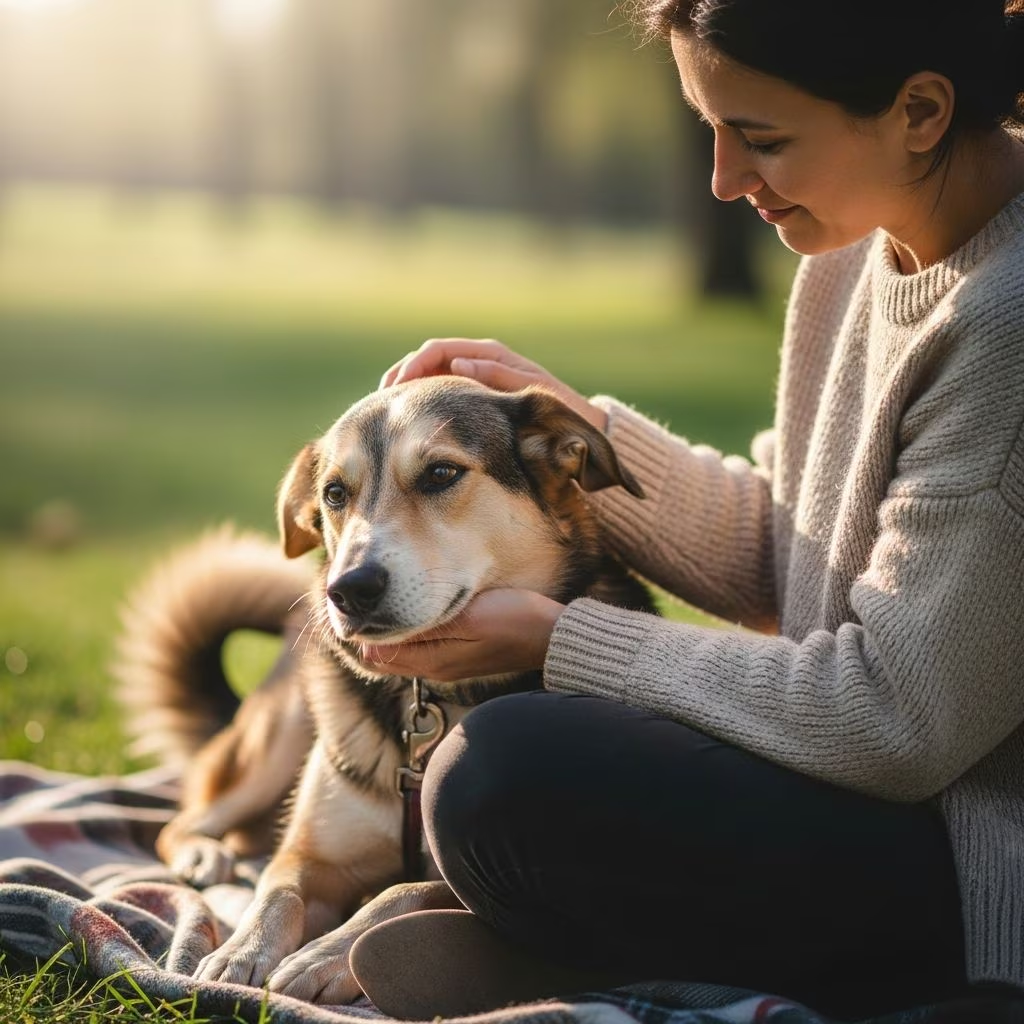
Highly sensitive dogs process their world more intensely, reacting strongly to sensory inputs and emotional cues, requiring tailored care to ensure their emotional and physical wellbeing.
Defining Canine Sensory Sensitivity
Canine sensory processing sensitivity (cSPS) represents a personality trait where dogs deeply process environmental stimuli, including sights, sounds, smells, and textures, often leading to heightened emotional responses. Unlike general fearfulness, cSPS is a distinct dimension that overlaps but does not equate to neuroticism or anxiety disorders, as validated through research questionnaires developed by veterinary behaviorists. These dogs exhibit hyperawareness, making them more attuned to subtle changes, which can manifest as empathy toward their owner’s mood or overstimulation in busy settings.
Understanding cSPS helps owners differentiate it from medical issues or learned behaviors. For instance, while all anxious dogs may show stress, those with high cSPS consistently react intensely across contexts, not just specific triggers. This trait appears across breeds, influenced by genetics and early experiences, emphasizing the need for observation over assumptions.
Common Indicators of Sensitivity
Sensitive dogs display observable signs that signal their heightened processing. Key behaviors include:
- Trembling or flinching at sudden noises or movements, indicating overload from auditory or visual stimuli.
- Excessive panting, drooling, or lip-licking without physical exertion, classic stress markers even in calm settings.
- Hiding, cowering, or tail tucking, showing avoidance of perceived threats like crowds or new smells.
- Clinginess or hypervigilance, where the dog mirrors owner emotions or scans environments constantly.
- Difficulty settling, such as pacing, pulling on leashes, or alerting to minor stimuli during walks.
These signs often intensify in novel environments, with urban dogs showing chronic tension like rushing or startling at everyday city sounds. Age can amplify sensitivity, with older dogs startling more easily or hesitating in busy areas. Touch sensitivity adds another layer, where growling or snapping occurs due to pain, trauma, or discomfort association.
| Sign | Possible Trigger | Response Strategy |
|---|---|---|
| Trembling | Loud noises | Quiet retreat space |
| Panting | Overstimulation | Calming routines |
| Growling on touch | Physical contact | Desensitization training |
| Hypervigilance | New environments | Gradual exposure |
Environmental Adjustments for Calm
Creating a low-stress home is foundational for sensitive dogs. Start with a designated safe zone, like a crate covered with a breathable blanket in a quiet corner, stocked with familiar bedding and toys. Minimize sensory overload by reducing household noise—use white noise machines to mask sudden sounds and keep routines predictable.
For urban dwellers, schedule walks during off-peak hours to avoid crowds, opting for quieter paths. Leash reactivity decreases with tools like front-clip harnesses that discourage pulling without discomfort. Indoor enrichment, such as puzzle feeders or scent games, channels their awareness positively without external pressures. Lighting matters too; dimmer, consistent illumination prevents startling shadows.
Owner demeanor profoundly impacts these dogs. A calm, slow voice and gentle movements build security, as sensitive pups pick up on tension. Avoid punishment-based methods, which exacerbate issues, especially with empathetic owners who may unintentionally heighten stress.
Gentle Training Techniques
Training sensitive dogs demands patience and positivity. Threshold training—exposing them just below their stress point—builds resilience gradually. For example, introduce new sounds at low volumes, pairing with high-value treats to create positive associations.
- Desensitization for touch: Start with petting non-sensitive areas, rewarding relaxation, progressing slowly to avoid flinching.
- Counter-conditioning: Shift emotional responses by associating triggers (e.g., doorbell) with rewards like meals.
- Mat training: Teach settling on a mat with food lures, fostering independence in chaotic settings.
Short, frequent sessions prevent fatigue. Positive reinforcement outperforms punishment, reducing behavior problems linked to high cSPS. Professional help from force-free trainers ensures tailored plans, particularly if fear escalates to reactivity.
Health Checks and Medical Considerations
Sensitivity can mask underlying issues. Veterinary exams rule out pain from arthritis or dental problems causing touch aversion. Bloodwork identifies thyroid imbalances or allergies amplifying sensory responses. Chronic stress elevates cortisol, weakening immunity, so monitor for lethargy or appetite loss.
Supplements like L-theanine or CBD (vet-approved) aid calming, but lifestyle changes yield lasting results. Regular exercise in low-stimulus forms, like long-line sniffing walks, balances energy without overwhelm.
Daily Routines for Emotional Balance
Structure days around their needs: morning quiet time, midday enrichment, evening wind-down. Predictability reduces anxiety—feed, walk, and play at fixed times. Socialization occurs via controlled puppy classes or one-on-one playdates, avoiding dog parks.
Build confidence through success. Celebrate small wins, like calm greetings, with praise. Over time, they adapt, showing reduced reactivity.
Common Challenges and Solutions
Sensitive dogs face hurdles like leash pulling in cities or noise phobias. Solution: Management first (muzzle training for safety), then behavior modification. Overstimulation mimics aggression; distinguish by context—touch-specific is sensitivity, environmental is overload.
Owner frustration arises from slow progress. Track behaviors in a journal to visualize improvements, seeking certified behaviorists if stalled.
FAQs
Can sensitive dogs become less reactive?
Yes, with consistent gentle training and environmental tweaks, many show marked improvement, though their core trait persists.
Is sensitivity breed-related?
No, it spans all breeds; personality drives it more than genetics alone.
How do I handle thunderstorms?
Provide a fortified safe space, use anxiety wraps, and play soothing music to drown out thunder.
Does age worsen sensitivity?
Sometimes, due to sensory decline, but management keeps it in check.
Should I medicate my sensitive dog?
Only under vet guidance, after ruling out medical causes and trying behavior strategies.
Long-Term Outlook
Living with a sensitive dog enriches life through their profound attunement. Invest in understanding, and they reward with deep loyalty. Patience transforms challenges into strengths, fostering mutual trust.
References
- Gentle Training For High-Sensitivity Dogs: Build Trust — Sterling Dog Trainers. 2023. https://sterlingdogtrainers.com/training-high-sensitivity-dogs/
- Is Your Dog Highly Sensitive? — Dr. Kelly Ballantyne, Insightful Animals. 2023. https://insightfulanimals.substack.com/p/is-your-dog-highly-sensitive
- Highly sensitive personality and behavior problems in dogs — Science Matters LLC (citing Bräm Dubé et al. 2020). 2020. https://sciencemattersllc.com/highly-sensitive-personality-and-behavior-problems-in-dogs
- Navigating the City With a Sensitive Dog — Aggressive Dog. 2024-02-08. https://aggressivedog.com/2024/02/08/navigating-the-city-with-a-sensitive-dog/
- Why Is My Dog Growling at Me When I Touch Him? — Honest Paws. 2023. https://www.honestpaws.com/blogs/health/dog-touch-sensitive
- A Heartfelt Guide for Living With Highly Sensitive Dogs — Psychology Today. 2025-11. https://www.psychologytoday.com/us/blog/animal-emotions/202511/a-heartfelt-guide-for-living-with-highly-sensitive-dogs



