

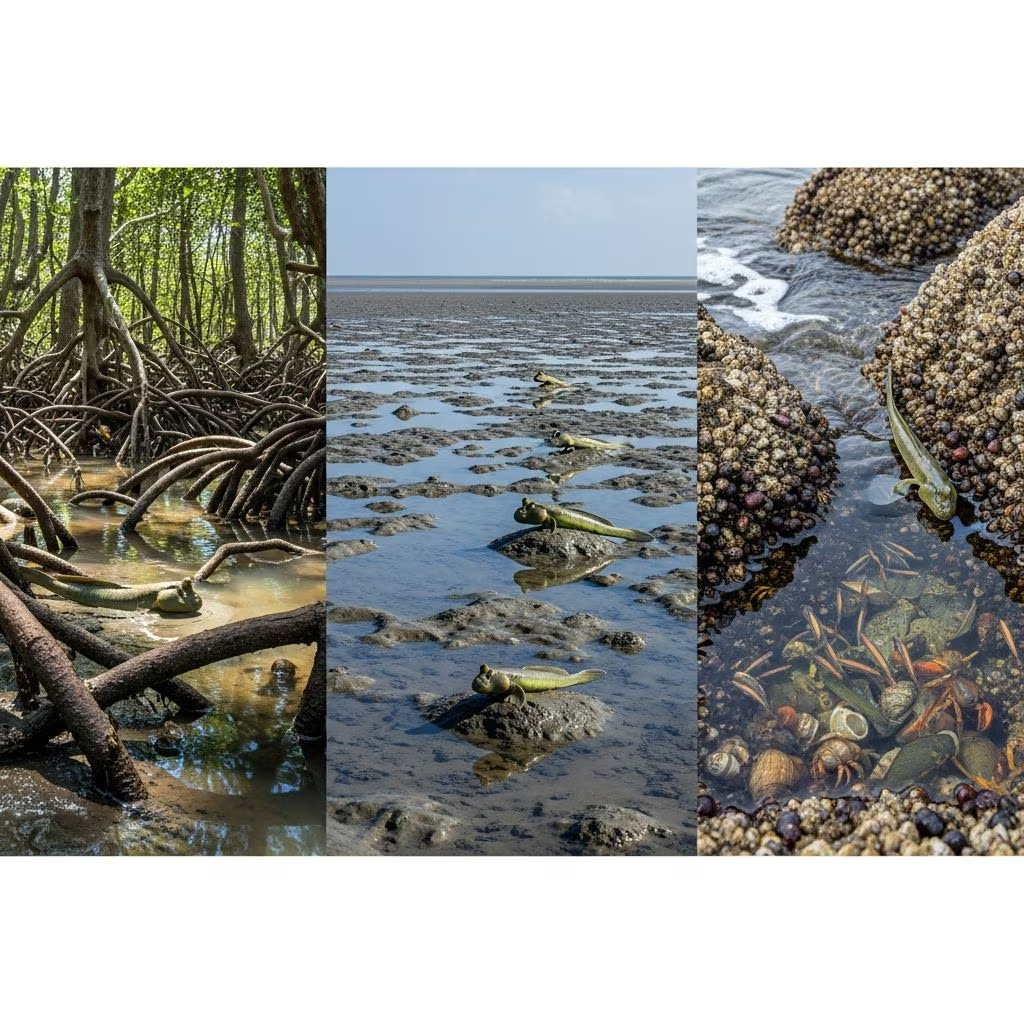
Understanding Mudskippers and Their Natural Habitat
Mudskippers are truly remarkable Old World fishes that originate from tropical intertidal mudflats and brackish mangrove estuaries, spanning from the Atlantic Coast of Africa eastward through the Indian Ocean to the western Pacific. These amphibious wonders have earned their distinctive name from their extraordinary ability to skip and hop across land using their tail and muscular body, a behavior that sets them apart from virtually all other fish species.
The mudskipper’s fantastic amphibious capabilities are the direct result of millions of years of physiological and behavioral adaptations. These exceptional fish possess strong pectoral fins that enable mobility on land, the remarkable ability to absorb oxygen through their skin and throat lining, and specialized water pockets under their dermal cups that periodically remoisten their eyes, allowing them to survive extended periods outside water. Understanding these unique characteristics is absolutely essential for anyone seeking to provide proper stewardship and create an environment where these wonders of nature can thrive in captivity.
Brackish Water: The Foundation of Mudskipper Care
One of the most critical aspects of mudskipper husbandry is understanding what brackish water actually is and why it matters for your fish. Brackish water occurs naturally in estuaries, which are dynamic and complex environments where freshwater from rivers and streams meets saltwater from the ocean. The specific gravity, or salt content, of brackish water is constantly affected by tidal movements, evaporation rates, rainfall, and drainage patterns. This creates an environment of constant change, which mudskippers have evolved to handle with remarkable efficiency.
Most mudskippers available in the pet trade originate from waters with a specific gravity ranging from 1.003 to 1.015. The good news for aquarists is that mudskippers are remarkably adaptable to ever-changing environmental conditions, making them highly tolerant of various degrees of salinity in their aquarium water. This adaptability means that maintaining precise salinity levels, while beneficial, is not as critical as it might be for other brackish water species.
General Guidelines for All Mudskipper Habitats
Regardless of which type of mudskipper habitat you choose to establish, several fundamental principles and guidelines apply across all setups to ensure the health and wellbeing of your fish:
- Use an all-glass or acrylic aquarium that will not corrode from salt exposure over time, ensuring the tank maintains its structural integrity and clarity
- Maintain water and air temperatures consistently between 75 and 85 degrees Fahrenheit, using submersible heaters with protective guards to prevent burns and thermal damage
- Use a reliable thermometer to monitor water temperature continuously and adjust heating as needed
- Provide sufficient land area for the fish to spend the majority of its life, since mudskippers spend relatively little time actually in the water
- Ensure adequate humidity levels in the air space above the water to prevent the fish’s skin from drying out
- Include proper filtration to maintain water quality, though the flow should not be too strong since mudskippers prefer calm conditions
- Create multiple hiding spaces and elevated basking areas where mudskippers can rest and thermoregulate
Habitat Type 1: The Floating Dock Aquarium
The floating dock aquarium represents the simplest and most accessible option for hobbyists who are new to mudskipper care or who want to start with minimal complexity. This setup is ideal for beginners and requires significantly less maintenance than more elaborate systems while still providing adequate space and conditions for your mudskipper to thrive.
Design and Setup
The floating dock aquarium uses a standard aquarium structure with a floating platform or dock that extends above the water surface. This dock serves as the primary terrestrial space where your mudskipper will spend most of its time. The dock can be constructed from cork bark, driftwood, or specially designed commercial floating platforms that are safe for use in saltwater environments.
Advantages and Benefits
The floating dock system offers several compelling advantages. It is relatively simple to construct and maintain, making it perfect for beginners. The design requires minimal equipment and setup time, and it allows for easy observation of your mudskipper. The water component provides a natural transition area and allows for water quality management without excessive complexity. This setup also takes up minimal space, making it suitable for smaller living environments.
Disadvantages and Limitations
However, the floating dock system does have some limitations. The terrestrial area is somewhat limited, which may not satisfy the territorial needs of multiple mudskippers. Humidity control can be more challenging in this open setup, and maintaining consistent warm temperatures throughout both the water and air space requires careful attention. The aesthetic appeal is also more utilitarian than naturalistic compared to other habitat types.
Habitat Type 2: The Sand Beach Aquarium
The sand beach aquarium represents a middle ground between simplicity and complexity, offering more naturalistic conditions while remaining manageable for intermediate aquarists. This setup creates an environment more closely resembling the natural mudflat habitats where mudskippers are found in the wild.
Setup Specifications
The sand beach setup utilizes a 20-gallon high aquarium, which measures approximately 16 inches in height. This additional height is crucial for providing adequate air space above the water while maintaining appropriate water volume. The terrestrial area is created using play sand or swimming pool sand, which mimics the natural substrate found in mudskipper habitats. Rocks or logs are added to provide climbing surfaces, basking areas, and aesthetic interest. These elevated surfaces encourage natural behaviors like territory establishment and social interactions.
Construction and Features
The sand beach can be sloped gently from a deeper water area to shallow shores, creating a gradual transition that allows mudskippers to move easily between aquatic and terrestrial environments. A piece of clear Plexiglas can be incorporated into the design to create viewing areas or to help contain moisture within the system. The sand substrate should be deep enough for mudskippers to construct and maintain their characteristic burrows, typically at least 4 to 6 inches of depth.
Advantages of the Sand Beach Design
The sand beach aquarium provides a more naturalistic appearance that closely resembles mudskipper habitats in nature. It offers adequate space for the fish to exhibit natural behaviors including burrowing, territory marking, and social interactions. The sandy substrate facilitates natural behaviors and provides psychological benefits for the captive fish. Humidity levels are generally easier to maintain in this design due to the increased surface area and the moisture-retaining properties of sand.
Care Considerations
While offering significant advantages, the sand beach setup requires more maintenance than the floating dock. Regular water quality monitoring is essential, and the sand must be occasionally stirred to prevent anaerobic pockets from forming. Algae growth on the sand surface may require periodic cleaning. The system also occupies more physical space than simpler setups.
Habitat Type 3: The Paludarium
For the most dedicated mudskipper enthusiast, the paludarium represents the pinnacle of naturalistic captive environments. While paludariums traditionally evoke mini rain forests with lush vegetation, when designed for mudskippers, they can recreate a bayou estuary complete with Spanish moss, appropriate vegetation, and complex environmental layers.
Specifications and Requirements
A mudskipper paludarium requires an aquarium that is 22 to 24 inches in height. Tanks measuring 20 to 38 gallons at this height are typically classified as “show” or “extra tall” aquariums. This substantial height allows for the creation of multiple environmental zones, including deep water areas, shallow shorelines, elevated land areas, and even vertical climbing surfaces that mimic mangrove root systems.
Design Elements and Aesthetics
The paludarium can incorporate living plants that tolerate brackish conditions, such as certain species of mangrove seedlings or salt-tolerant marsh plants. Driftwood, branches, and roots create climbing surfaces that encourage natural behaviors. The water component typically occupies a portion of the lower tank, while the upper region provides humid air space with ample terrain for exploration. Proper lighting is essential, including both day-cycle illumination and UVB lighting if living plants are included.
Environmental Control in Paludariums
Maintaining proper conditions in a paludarium requires more sophisticated equipment. Heating systems must warm both water and air effectively. Humidity maintenance is critical and often requires regular misting or automated humidity systems. Proper drainage is essential to prevent waterlogging of land areas while maintaining appropriate moisture levels. Substrate in the terrestrial zone should be a mix of sand, peat, and other materials that retain moisture while allowing for burrowing.
Advantages of the Paludarium
The paludarium provides the most naturalistic and stimulating environment for captive mudskippers. It allows for the exhibition of a complete range of natural behaviors. The aesthetic appeal is exceptional, creating a beautiful focal point in any room. Multiple mudskippers may be housed together in carefully designed paludariums, though proper spacing and territory delineation remain important.
Disadvantages and Challenges
Paludariums are significantly more complex and expensive to establish than simpler habitat types. They require substantial initial setup time and ongoing maintenance. Water and humidity management can be challenging, and the system may be susceptible to issues like fungal growth or excessive algae if not properly balanced. The learning curve is steeper, making this option less suitable for complete beginners.
Choosing the Right Habitat for Your Needs
The decision of which habitat type to establish for your mudskipper depends on several factors. Consider your available space, your budget, your experience level with aquarium keeping, and the time commitment you can dedicate to maintenance. First-time mudskipper keepers should strongly consider starting with either a floating dock or sand beach setup, gaining experience before attempting a more complex paludarium.
Your long-term goals also matter. If you plan to keep mudskippers for many years and want the most enriched environment possible, investing in a paludarium may be worthwhile. If you prefer a simple, low-maintenance setup that still provides good care, the floating dock or sand beach options are excellent choices.
Frequently Asked Questions About Mudskipper Habitats
Q: Can mudskippers survive in freshwater instead of brackish water?
A: While mudskippers can tolerate some variation in salinity, brackish water is essential for their health. Prolonged exposure to purely freshwater can stress them and lead to health problems. Their natural habitats are always brackish or have regular saltwater influence from tidal action.
Q: How often should I change the water in a mudskipper habitat?
A: Regular water changes of 25 to 50 percent weekly are recommended to maintain water quality. The specific frequency depends on your filtration system, tank size, and bioload. Test water parameters regularly to ensure they remain within appropriate ranges.
Q: Can I keep multiple mudskippers in the same habitat?
A: While it is possible to house multiple mudskippers together, they are highly territorial fish. Only larger paludarium setups with clearly defined territories should house more than one individual. Most smaller setups are best suited to a single mudskipper.
Q: What temperature range is ideal for mudskippers?
A: Maintain temperatures consistently between 75 and 85 degrees Fahrenheit for both water and air. Mudskippers are tropical fish and cannot tolerate cold conditions. Use reliable submersible heaters and thermometers to maintain this range.
Q: How much time should a mudskipper spend on land versus in water?
A: Mudskippers naturally spend most of their time on land, typically only entering water for feeding or escape. Your habitat design should reflect this, providing ample terrestrial space for the fish to remain comfortable and engaged in natural behaviors.
Q: What type of filtration is best for a mudskipper tank?
A: Use gentle filtration to maintain water quality without creating strong currents, which mudskippers find stressful. Both internal and external filters work well, but ensure the outflow doesn’t create excessive turbulence in the water column.
Q: How can I maintain proper humidity in my mudskipper habitat?
A: Regular misting helps maintain humidity, particularly in floating dock setups. Sand beach and paludarium systems retain moisture more naturally. Monitor humidity levels and adjust based on your specific setup and climate conditions.
References
- Atlantic Mudskipper Species Profile — Aquarium of the Pacific. 2025. https://www.aquariumofpacific.org/onlinelearningcenter/species/atlantic_mudskipper
- Mudskipper Habitat and Biology — San Francisco Zoo & Gardens. 2025. https://www.sfzoo.org/mudskipper-2/
- The Mudskipper: An Out-of-the-Ordinary Fish Out of Water — Mekong Fish Network. 2025. https://www.mekongfishnetwork.org/mudskipper-ordinary-fish-water/
- The fish that skips and crawls on land — Mongabay-India. March 2024. https://india.mongabay.com/2024/03/the-fish-that-skips-and-crawls-on-land/
- Walking with Mudskippers: A Fish That’s Happy Out of Water — Round Glass Sustain. 2025. https://roundglasssustain.com/species/mudskipper



