

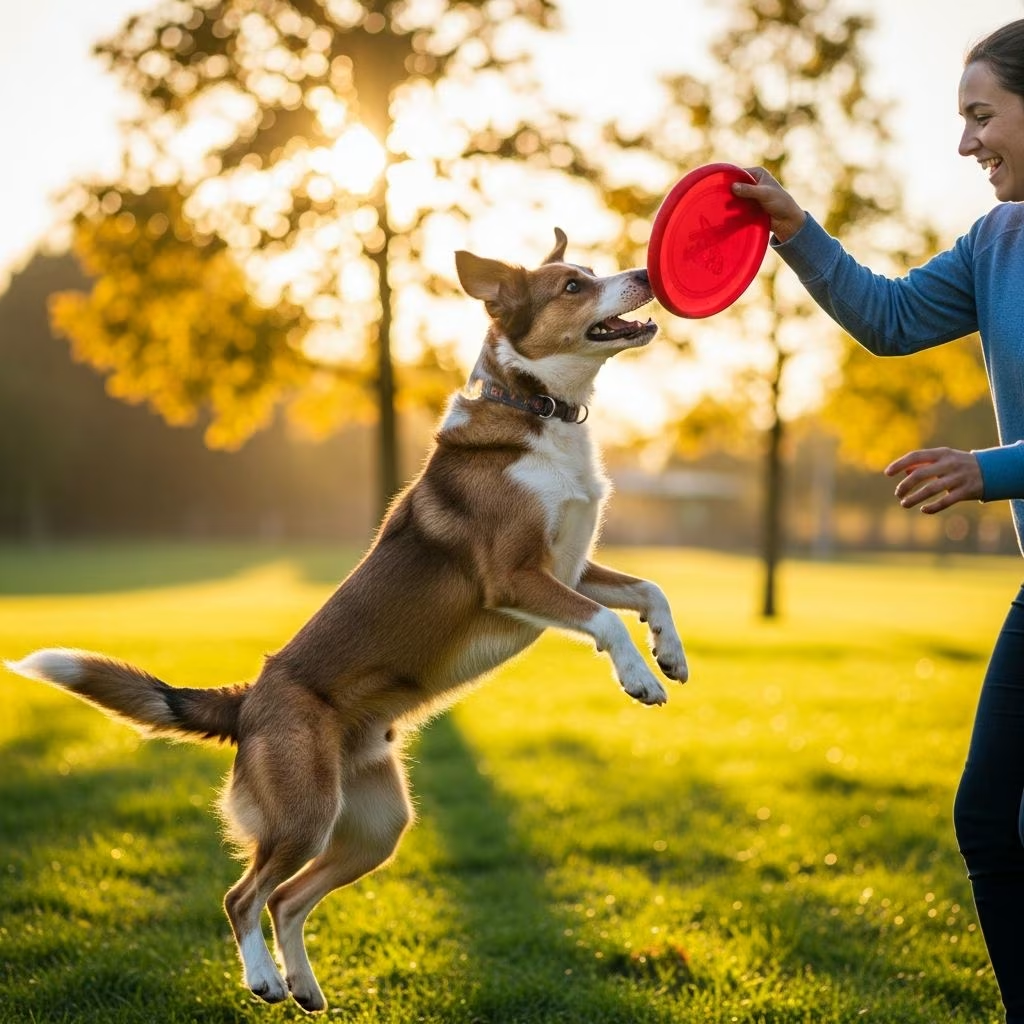
Play is not just a bonus in your dog’s life; it is one of the main ways dogs learn, communicate, stay fit, and bond with their humans. Research in canine science shows that play can reduce stress, strengthen social bonds, and help dogs practice skills such as communication and self-control. Yet many guardians still feel uncertain about how to play, when to play, and what kinds of games are truly safe or helpful.
This article explores three persistent myths about playing with your dog, then moves into practical do’s and don’ts so you can turn playtime into one of the best parts of your dog’s day.
Myth #1: Don’t Mix Dog Training and Play
Some people worry that combining training and play will confuse their dog, or that games will make a dog too excited to listen. In reality, thoughtfully blending training and play is one of the most effective ways to teach and maintain good behavior.
The Truth: Play Supercharges Training
Modern reward-based training uses things the dog finds enjoyable—food, toys, social interaction—as reinforcers. For many dogs, playing tug, fetch, or chase is even more motivating than treats, especially in exciting environments. When you integrate games into your training, you are not weakening obedience; you are making behavior more resilient.
Benefits of combining play and training include:
- Higher motivation: A dog who loves toys or chase games may work harder and stay engaged longer when play is part of the session.
- Better focus under distraction: If your dog can respond to cues in the middle of a fun game, those behaviors are more likely to hold up in real life.
- Stronger bond: Shared, enjoyable activities build trust and emotional connection between dogs and humans.
- Stress relief: Play can help dogs decompress, which may make them less reactive or anxious in other contexts.
How to Blend Training and Play Effectively
You can use play as a reward, as a structured exercise to practice specific skills, or as a way to reset between short training bursts.
- Use games as rewards: Ask for a cue (for example, “sit,” “down,” “come”), then immediately start a brief game of tug or toss a ball as the reward.
- Insert mini-training breaks: In the middle of fetch, ask for a “sit,” “watch,” or “hand target” before you throw the ball again.
- Practice impulse control in play: Build cues like “wait,” “take it,” and “drop it” right into your games (more on this in the tug section).
- Keep sessions short: Alternate one to three quick cues with 20–30 seconds of play to keep your dog sharp but not overwhelmed.
Table: Examples of Training Cues You Can Practice During Play
| Game | Cues to Practice | What Your Dog Learns |
|---|---|---|
| Fetch | “Sit,” “Stay,” “Come,” “Drop it” | Impulse control, recall, toy release |
| Tug | “Take it,” “Easy,” “Drop it,” “All done” | Mouth control, self-control, listening when excited |
| Hide-and-seek | “Wait,” “Come,” “Find it” | Recall, scent work, problem-solving |
| Chase games | “Stop,” “Here,” “Touch” | Responding to cues while aroused, redirection |
Myth #2: Only Young Dogs Need to Play
Another common misconception is that play is just for puppies and adolescents. Once a dog matures, some guardians assume that slowing down or losing interest in toys is normal and that structured play is no longer important.
The Truth: Dogs of All Ages Benefit From Play
Ethologists and veterinary behaviorists note that play is seen across a dog’s lifespan, not only in puppies. Many adult and senior dogs remain playful when given opportunities and activities suited to their age and body. When older dogs appear to “grow out of play,” it often reflects:
- Fewer play partners: They may no longer live with playful dogs or their humans may play less frequently.
- Pain or medical issues: Arthritis or other conditions can make high-impact games uncomfortable, so the dog stops initiating.
- Boredom with the same games: Some dogs simply need new toys or different styles of play to stay engaged.
Ignoring play in adulthood can mean missed opportunities for cognitive stimulation, physical exercise, and emotional wellbeing. Studies in both humans and animals link mentally engaging activities and moderate physical activity with healthier aging and better quality of life.
Adapting Play for Adult and Senior Dogs
Instead of stopping play when your dog gets older, adjust the intensity and style of the games.
- Lower-impact activities: Choose gentle fetch on soft surfaces, controlled tug, or sniff-based games rather than high-speed chasing or repeated jumping.
- Shorter sessions: Multiple brief play periods throughout the day can be easier on aging joints than one long, intense session.
- More brain work: Use puzzle toys, scent games, or simple trick training to keep your dog mentally engaged.
- Regular vet checks: If your dog seems less playful, ask your veterinarian to screen for arthritis, oral pain, or other medical causes.
Ideas for Gentle Games for Older Dogs
- Snuffle mats or “find it” games: Scatter food or treats in grass or around the house and encourage your dog to sniff them out.
- Soft toy tug: Light, controlled tug with soft toys, focusing more on engagement than on strength.
- Slow, structured fetch: Toss short distances and avoid slippery or uneven surfaces.
- Trick training: Teach paw, nose targets, spins, or bow variations in a way that respects your dog’s mobility.
Myth #3: Don’t Play Tug With Your Dog
Tug may be the most misunderstood dog game. For years, people were warned that playing tug would make their dog aggressive, teach them to challenge humans, or somehow create a dominance problem. Later, some guidelines softened but still claimed the dog must never “win” and keep the toy.
The Truth: Tug Is a Great Game for Most Dogs
When played with clear rules and when the dog is a good candidate for it, tug can be safe, enjoyable, and highly educational. Studies on dog–human play have found that tug games do not inherently damage the dog–human relationship or increase aggression when played appropriately.
Well-managed tug can teach your dog:
- Impulse control: Waiting for a cue such as “take it” before grabbing the toy.
- Mouth control: Keeping teeth on the toy, not on human skin or clothing.
- Cooperation: Responding to “drop it” and restarting the game when they listen.
- Confidence: Timid dogs can feel more self-assured when they learn it is safe to pull and “fight” the toy.
Does Letting Your Dog “Win” Cause Problems?
Research that examined tug games and dog behavior reported that dogs allowed to “win” the toy did not become more dominant or aggressive toward their owners. However, highly playful, toy-driven dogs may show increased attention-seeking or pestering when winning frequently makes them expect more play on demand.
Practical takeaways:
- Winning is fine for most dogs: Letting your dog keep the toy sometimes can make tug more fun and rewarding.
- Watch for pushy behavior: If your dog becomes relentless—shoving the toy into you nonstop or barking at you to restart—build in clear “all done” cues and structured endings.
- Mix outcomes: Sometimes you win, sometimes your dog wins, and sometimes the toy is traded for food or another toy.
When Tug Is Not a Good Idea
Tug is not appropriate for every dog. It can increase arousal and may aggravate certain behavior problems.
- Dogs with aggression tied to high arousal: If your dog tends to redirect biting or snap when overly excited, tug may not be safe without professional guidance.
- Poor bite inhibition: Dogs who frequently grab hands, clothes, or move their mouth up the toy toward your fingers can make tug risky.
- Resource guarding: Dogs who stiffen, growl, or snap when someone approaches their toys or tries to take them away may have their guarding behavior worsened by tug games.
- Physical limitations: Neck, jaw, or spinal issues may make tug physically unsafe; consult your veterinarian if you are unsure.
Rules for Safe, Fun Tug Games
- Use a designated tug toy: Choose a long, sturdy toy that keeps your hands away from the dog’s mouth.
- Add a clear start cue: Ask for a calm behavior (for example, sit) and say “take it” before allowing your dog to grab the toy.
- Stop if teeth touch skin: Calmly end the game if your dog’s teeth touch you, then resume later when calm.
- Teach a reliable “drop it”: Trade the toy for a treat, then return the toy so your dog learns that releasing does not always mean the fun is over.
- Move the toy, not the dog: Avoid yanking your dog off the ground or shaking their neck; let them brace and pull steadily.
- Introduce an “all done” cue: Use a consistent phrase, remove the toy, and shift to a calm activity such as sniffing or gentle petting.
Dog Play Don’ts
Knowing what not to do is just as important as learning what games are helpful. Certain types of play may be more likely to cause confusion, over-arousal, or accidental injury.
1. Wrestling and Teasing
Rough-and-tumble wrestling between humans and dogs can be risky. The more excited a dog becomes, the harder it is for them to keep their teeth and claws under control. Over-arousal is a common trigger for bites that started as “play” but ended with someone hurt.
Teasing—such as holding a toy just out of reach, repeatedly snatching it away, or poking and looming over the dog—can be confusing and frustrating. Over time, this can damage trust and may provoke defensive responses.
- Avoid pinning or restraining: Never pin a dog on their back or hold them down as part of play.
- Skip body slamming: Do not encourage your dog to jump on or slam into you or children.
- End if tension rises: If growling becomes intense, eyes widen, or your dog starts to mouth harder, pause the game and switch to something calmer.
2. Encouraging Rough Play With Hands
Using bare hands as toys—wiggling fingers near the dog’s face, slapping at their muzzle, or letting puppies bite hands in play—teaches dogs that human skin is fair game. This often becomes a problem as the dog grows stronger.
- Always use toys: Direct your dog’s teeth to tug ropes, stuffed toys, or balls, not fingers or clothing.
- Redirect quickly: If your dog grabs your hand, calmly freeze, then redirect to a toy once they let go.
3. Ignoring Your Dog’s Body Language
Safe play requires that both partners are willing participants. Dogs communicate readiness, discomfort, and fatigue through subtle signals such as posture, facial expression, and movement.
- Pause if your dog looks tense: Stiff body, tucked tail, lip licking, or turning the head away can signal that the play is too intense.
- Watch for avoidance: If your dog moves away, hides, or refuses to re-engage, respect that and give them a break.
- Monitor dog–dog play: Step in if one dog is consistently chasing, pinning, or overwhelming the other without role reversals or breaks.
Dog Play Do’s
Once you avoid the major pitfalls, you can focus on what makes play truly enriching and safe for your dog.
1. Match the Game to Your Dog
Just as people prefer different sports or hobbies, dogs have individual play styles. Some love chasing, others prefer wrestling, and many enjoy toy-based games. Observe what your dog naturally chooses and build on that.
- Chasers: Enjoy fetch, flirt pole games, or controlled human–dog chase with clear start/stop cues.
- Wrestlers: Often like tug, body bumping with other dogs (if both are comfortable), and close-contact games.
- Problem-solvers: Thrive on puzzle toys, scent games, and training-based play.
2. Keep Sessions Manageable and Positive
Short, upbeat sessions are more effective than long, exhausting marathons. End the game while your dog is still having fun so they look forward to the next round.
- Use soft surfaces: Grass, carpet, or rubber flooring can protect joints compared with hard or slippery floors.
- Offer water and rest: Give your dog breaks to drink and cool down, especially in warm weather.
- Monitor children closely: Young children should not be left to play with dogs unsupervised; adults must guide both parties.
3. Make Play Part of Daily Life
Integrating a few minutes of play into your routine can improve behavior, mood, and the human–dog bond.
- Morning: A quick game of tug or “find it” before work.
- Afternoon: A brief training-play combo session, practicing cues with toy rewards.
- Evening: Gentle sniffing games or puzzle feeding to wind down.
Frequently Asked Questions (FAQs)
Q: How often should I play with my dog?
A: Most healthy dogs benefit from several short play sessions each day, adjusted for age, breed, and health. Even 5–10 minutes of focused, interactive play a few times a day can make a big difference.
Q: Can too much play make my dog hyper?
A: Overstimulation from nonstop, high-intensity play can contribute to over-arousal. Balance active games with calm activities (sniffing, chewing, gentle training) and teach start/stop cues so your dog can shift between excitement and relaxation.
Q: Is rough play between dogs always bad?
A: Not necessarily. Some dogs enjoy robust, physical play. It becomes a concern when one dog looks overwhelmed, there is no role-switching (chaser and chasee never swap), or growling and body tension escalate rather than ebb and flow. Step in and separate briefly if play loses its balanced, bouncy quality.
Q: How do I know if my dog likes tug?
A: Offer a tug toy and gently move it along the ground or away from your dog. If they grab, pull, and re-engage when you pause, they probably enjoy tug. If they seem uncertain, keep it light, avoid looming over them, and pair the game with praise and treats.
Q: What if my senior dog doesn’t want to play anymore?
A: First, talk with your veterinarian to rule out pain or illness. Then, experiment with low-impact, scent-based, or food-based games. Many older dogs rediscover play once they feel comfortable and are offered activities that match their abilities.
References
- Rooney, N. J., & Bradshaw, J. W. S. — Play in dogs — Applied Animal Behaviour Science (various works summarised in review articles). 2002–2010. https://doi.org/10.1016/S0168-1591(01)00177-9
- Horváth, Z., Dóka, A., & Miklósi, Á. — Affiliative and disciplinary behavior of human handlers during play with their dog affects cortisol concentrations in opposite directions — Journal of Veterinary Behavior. 2008-01-01. https://doi.org/10.1016/j.jveb.2007.08.004
- American Veterinary Medical Association — Senior pet care (dogs) — AVMA. 2020-06-15. https://www.avma.org/resources/pet-owners/petcare/senior-dog-care
- Rooney, N. J., & Bradshaw, J. W. S. — Dog–human relationships and dog behaviour — Applied Animal Behaviour Science. 2002-05-01. https://doi.org/10.1016/S0168-1591(02)00008-5
- Overall, K. L. — Manual of Clinical Behavioral Medicine for Dogs and Cats — Elsevier. 2013-05-20. https://doi.org/10.1016/C2009-0-29977-5



