

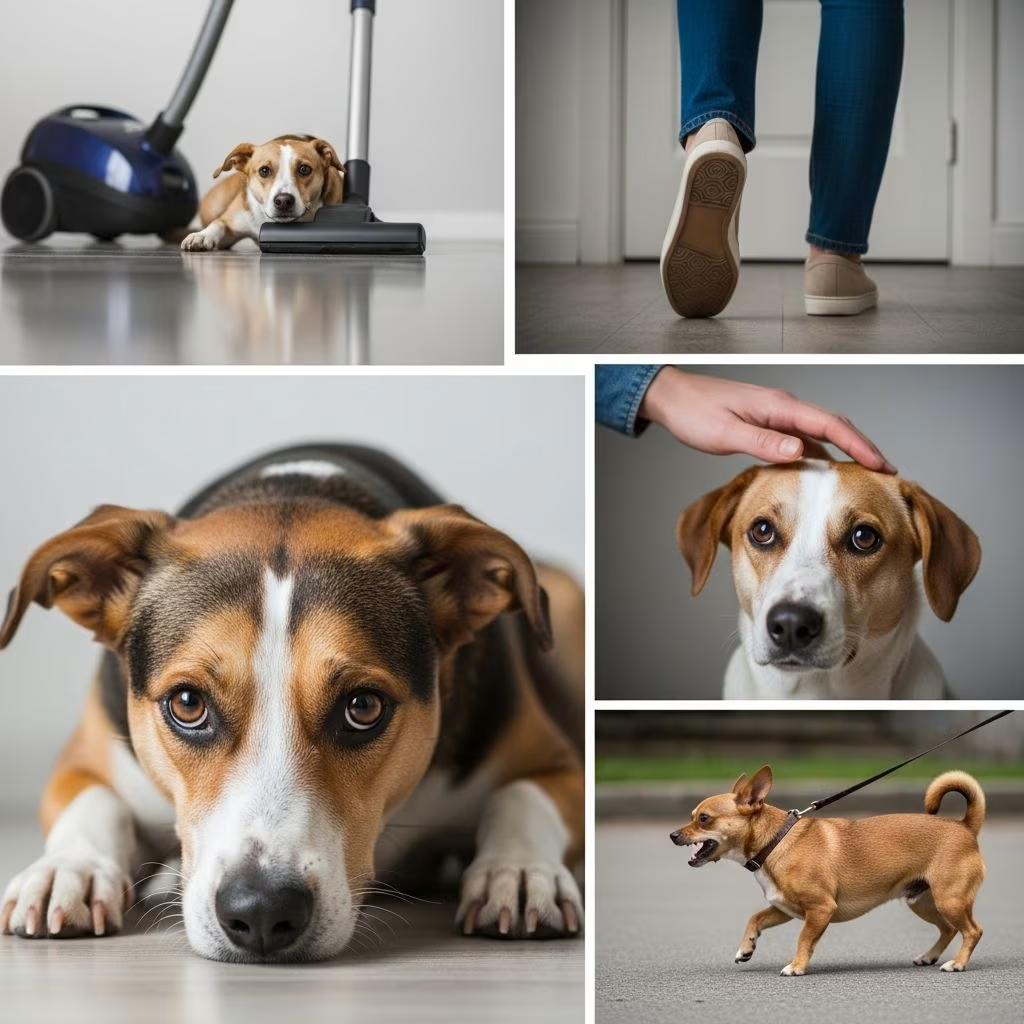
Dogs feel stress just like humans do, and everyday situations in your home can quietly build up anxiety for your pup. When stress piles up, it can affect their behavior, their relationships, and even their overall health. Understanding what stresses your dog out—and what to do about it—can help you become the calm, reliable partner they need.
This guide explores four common ways people unintentionally stress their dogs, how to recognize the signs of canine stress, and practical steps you can take to make life easier and safer for your dog.
Common Stress Triggers for Dogs
When dogs experience repeated or intense stress, it can change how they act in daily life. Veterinary behaviorists describe a phenomenon called trigger stacking: multiple stressful or scary events that happen close together can “stack” on top of each other, leaving a dog overwhelmed and more likely to react with fear, over-arousal, or aggression.
Even small stressors—like a strange visitor, loud noises, or confusing training—can accumulate. Over time, this may lead to behaviors such as:
- Snapping or growling when approached
- Guarding space, toys, or food
- Seeming “on edge” or restless at home
- Overreacting to noises, movements, or other animals
Research in veterinary behavioral medicine shows that chronic stress can influence both emotional and physical health in dogs, including gastrointestinal problems, skin issues, and sleep disturbances. That is why learning to recognize stress early is critical.
1. New People or Pets in the Home
Dogs do not automatically love everyone you love. They have their own emotional lives and build unique relationships with each individual person and animal. A new roommate, partner, family member, baby, or adopted pet may be exciting for you—but confusing or stressful for your dog.
Why New People and Pets Can Be Stressful
For many dogs, change is hard. New individuals bring new smells, sounds, routines, and expectations. This can feel threatening or unpredictable, especially for dogs that are shy, undersocialized, or have had negative experiences in the past.
Common situations that can raise stress levels include:
- Visitors who rush to interact with the dog instead of letting the dog approach on their own terms
- New romantic partners or roommates staying overnight or moving in suddenly
- Babies becoming toddlers, when they start crawling, grabbing, or chasing the dog
- Introducing a new dog or cat without slow, structured introductions
Studies show that children—especially toddlers—are frequently involved in dog bites, often because the signals that the dog is uncomfortable are missed by adults. This underlines how important it is to manage interactions thoughtfully.
How to Help Your Dog Adjust to New People or Pets
You can reduce stress around new individuals by making changes gradual and predictable.
- Go slow with introductions: Allow your dog to observe from a distance and approach at their own pace. Avoid forcing physical contact.
- Pair new people with good things: Have visitors calmly toss high-value treats or place them on the floor near the dog, so the dog learns that new people predict positive experiences.
- Manage child interactions: Closely supervise kids around dogs at all times. Teach children to be gentle, to avoid hugging or climbing on the dog, and to give the dog space when resting or eating.
- Introduce new pets carefully: Use neutral territory, short sessions, and barriers (like baby gates) to let animals see and smell each other while still feeling safe.
- Keep routines as consistent as possible: Regular mealtimes, walks, and quiet time help your dog feel secure even when the household is changing.
2. Mixed-Signal Training and Confusing Communication
Dogs are remarkably sensitive to human body language, tone of voice, and facial expression. However, the cues that feel “obvious” to you may not make sense to your dog, especially if your words and body language do not match.
What Are Mixed Signals?
Mixed signals happen when your body language, tone, and actions send conflicting messages. For example:
- Calling your dog in a harsh or angry voice but expecting them to come happily
- Leaning over your dog with a stiff posture while asking them to “relax”
- Sometimes rewarding a behavior (like jumping) and other times scolding for the same behavior
Research on dog cognition shows that dogs pay close attention to human body cues and facial expressions when interpreting communication, not just the spoken word. When those cues are inconsistent, it can be stressful and confusing.
Why Punishment-Based Methods Increase Stress
Correction-heavy or punishment-based training often relies on scolding, leash jerks, or other unpleasant experiences when a dog makes a mistake. Studies in applied animal behavior have found that dogs trained primarily with aversive methods show more signs of stress, such as lip licking, yawning, and crouching, and are more likely to display fear or aggression.
Punishment does not teach the dog what to do instead; it simply makes certain situations feel unsafe. That uncertainty can raise their baseline stress level.
How to Communicate Clearly and Reduce Training Stress
Switching to reward-based, predictable communication helps your dog feel safer and more confident.
- Use consistent cues: Pick one word for each behavior (like “sit” or “down”) and make sure everyone in the home uses the same terms and hand signals.
- Match your body language to your cue: Use relaxed posture, soft facial expressions, and a neutral or cheerful tone when calling or cueing your dog.
- Reward what you like: Catch your dog doing the right thing and reward with treats, praise, or play. This makes the behavior more likely to happen again.
- Avoid harsh corrections: Instead of scolding, interrupt unwanted behavior calmly and redirect your dog to something appropriate (like a chew toy, mat, or alternate behavior).
- Keep training sessions short: A few minutes at a time, several times a day, is often more effective and less stressful than long, frustrating sessions.
Recognizing Signs of Stress in Your Dog
Dogs rarely “act out” without a reason. More often, they are communicating discomfort or overwhelm through subtle body language long before they resort to growling or biting.
Key stress signals can be divided into more subtle early signs and more intense, urgent signs.
| Subtle Stress Signals | More Intense Stress Signals |
|---|---|
| Excessive yawning | Cowering or shrinking away |
| Panting when it is not hot or after mild activity | Trembling or shaking |
| Repeated lip licking or tongue flicks | Whale eye (showing the whites of the eye) |
| Looking away or turning the head | Backing away or trying to escape |
| Pacing or restlessness | Growling, snapping, or biting |
Veterinary behavior guidelines emphasize that these signs are not “naughty” or “spiteful” behavior—they are emotional signals that the dog is near their limit and needs help.
Trigger Stacking: When Stress Adds Up
Trigger stacking occurs when multiple stressors happen within a short time frame. For example, a dog might:
- Hear construction noise outside in the morning
- Have a stranger enter the home at lunchtime
- Be grabbed by the collar when they bark
- Then be approached by a toddler in the afternoon
Any one of these events might be manageable alone, but stacked together, the dog may suddenly snap or bite during the last interaction. Understanding this pattern helps you see these reactions not as random, but as the result of cumulative stress.
What to Do if You See Stress Signals
- Pause the situation: If possible, gently remove your dog from the stressful context or increase distance from the trigger.
- Give them a break: Allow your dog quiet time in a safe space with minimal demands.
- Adjust expectations: Avoid asking for complex training or exposure when your dog is already stressed or tired.
- Seek professional help: A veterinarian or veterinary behaviorist can assess whether anxiety or pain is contributing to your dog’s behavior and recommend treatment if needed.
3. Lack of a Safe, Comfortable Space
Even social, confident dogs need a place where they can rest undisturbed. Without a secure retreat, dogs may feel constantly “on duty”—especially in busy households with visitors, children, or other pets. This can quietly keep stress levels high.
What Makes a Space Feel Safe for a Dog?
A true safe space is more than just a dog bed in a noisy corner. It should be:
- Physically comfortable: A supportive, soft bed that cushions joints and keeps your dog off cold or hard floors.
- Predictably quiet: Away from loud TVs, doorways, or high-traffic areas.
- Protected from interruptions: Family members, especially children, should be taught to leave the dog alone when they are in their resting spot.
- Well-equipped: Access to water, appropriate chew toys, and a familiar blanket or item that smells like home.
Dogs with anxiety or those uncomfortable with visitors may particularly benefit from having a bedroom, crate, or gated-off area where they can retreat when people come over.
The “Princess and the Pea” Bed Test
One quick way to judge your dog’s bed: pinch it between your fingers. If you can easily feel your fingers touching through the bed, it is probably too thin to provide adequate support. A comfortable bed can be especially important for older dogs or those with joint issues, as pain can significantly increase stress and irritability.
How to Set Up and Use a Safe Space
- Choose a quiet location: A bedroom or low-traffic room often works well.
- Make it positive: Feed some meals there, offer special chews or stuffed toys in this area, and avoid using it only for punishment or time-outs.
- Set clear house rules: Teach everyone that when the dog is in their safe space, they are off-limits for petting, play, or roughhousing.
- Use during stressful events: When you have guests, loud repairs, or parties, allow your dog to choose this space and stay there if they prefer.
4. Your Own Stress and Emotions
Dogs are highly attuned to human emotional states. Studies have shown that when people’s heart rates increase due to stress, their dogs’ heart rates tend to rise as well, suggesting a form of emotional contagion between dog and caregiver. Other research has found that dogs can even detect human stress from scent alone and behave more cautiously or pessimistically when exposed to odors from stressed humans.
How Your Stress Affects Your Dog
Chronic stress or anxiety in pet parents has been linked to more anxious or behaviorally challenged dogs. Possible pathways include:
- Less predictable routines when you are overwhelmed or distracted
- Harsher tone of voice or body language during training or daily interactions
- Reduced patience for normal dog behaviors like barking, chewing, or energy bursts
- Inconsistent boundaries, which can confuse your dog
When you are calm and consistent, your dog is more likely to feel secure and to cope better with new or challenging situations.
Supporting Yourself to Support Your Dog
You do not need to be perfectly relaxed all the time, but small steps to manage your own stress can benefit both of you.
- Practice calm breathing: Taking a few slow breaths before working with your dog can soften your voice and body language.
- Build predictable routines: Regular feeding, walks, and rest times help everyone feel more grounded.
- Take breaks: If you feel frustrated, pause training and return when you feel more settled.
- Ask for help: If your stress or your dog’s anxiety feels unmanageable, talk with a healthcare provider for yourself and a veterinarian or behavior professional for your dog.
Be the Partner Your Dog Can Rely On
When a dog “misbehaves,” it is often a sign that they are struggling, not plotting or being difficult. Viewing behavior through the lens of stress and emotional need changes how you respond. Instead of asking, “What is my dog doing to me?” you can ask, “What is my dog experiencing, and how can I help?”
Being a reliable partner for your dog means:
- Noticing stress signals early and taking them seriously
- Managing the environment to make life more predictable and safe
- Using kind, reward-based communication instead of fear or punishment
- Creating a truly comfortable, protected resting space
- Taking care of your own well-being so you can show up calmly for your dog
Over time, these choices build trust. Your dog learns that you hear their signals, respect their boundaries, and help them navigate the world. From your dog’s perspective, it really can be you and them against the world—with you as the calm, dependable partner they can count on.
Frequently Asked Questions (FAQs)
Q: How can I tell if my dog is stressed or just excited?
A: Excited dogs often have loose, wiggly bodies, open mouths, and move toward things they enjoy. Stressed dogs show more tense muscles, closed or tight mouths, excessive panting, lip licking, yawning, or attempts to move away. If your dog is repeatedly trying to create distance or avoid interaction, treat it as stress, not play.
Q: When should I call a veterinarian or behaviorist about my dog’s stress?
A: Contact a veterinarian if stress signs are frequent, intense, sudden, or accompanied by changes in appetite, sleep, or elimination. Aggression, self-injury, or destructive behavior are also reasons to seek help. A veterinary behaviorist or qualified behavior professional can design a behavior plan and discuss whether medical support is needed.
Q: Is it OK to comfort my dog when they are scared, or will that reinforce fear?
A: You cannot reinforce an emotion like fear by offering comfort. Providing calm reassurance, distance from the trigger, and a safe space can help your dog feel more secure. The key is to stay relaxed yourself and avoid frantic or overly intense reactions.
Q: Can more exercise fix my dog’s stress and anxiety?
A: Appropriate physical activity can help many dogs cope better, but exercise alone rarely resolves significant anxiety. Combine regular walks and play with mental enrichment, predictable routines, kind training, and professional guidance when needed.
Q: Are certain breeds more prone to stress and anxiety?
A: Genetics, early experiences, health, and environment all influence stress. Some individual dogs and some breed lines may be more sensitive or reactive, but any dog can develop anxiety. Focusing on meeting the specific dog’s needs is more useful than relying on breed generalizations.
References
- Dogs Stress Levels Mirror Humans’, New Study Finds — Kinship / S. Hornbuckle, summarizing research from Queen’s University Belfast. 2024-10. https://www.kinship.com/dog-behavior/dogs-mirror-human-stress-levels-study
- AVSAB Position Statement on the Use of Punishment for Behavior Modification in Animals — American Veterinary Society of Animal Behavior (AVSAB). 2021-07-28. https://avsab.org/wp-content/uploads/2021/07/Punishment_Position_Statement-download.pdf
- Dog Bites in Children: Epidemiology, Prevention, and Treatment — A. Peters et al., Current Opinion in Pediatrics. 2020-06. https://journals.lww.com/co-pediatrics/Abstract/2020/06000/Dog_bites_in_children__epidemiology,_prevention,.10.aspx
- Domestic Dogs (Canis familiaris) Are Sensitive to Human Social Cues — Á. Miklósi et al., Current Biology. 1999-04-01. https://doi.org/10.1016/S0960-9822(99)80149-9
- The Effects of Aversive-Based Training Methods in Dogs: A Review — A. Ziv, Journal of Veterinary Behavior. 2017-03. https://doi.org/10.1016/j.jveb.2016.10.006
- Dogs Can Sense Human Stress, According to These Studies — Kinship, summarizing research led by University of Bristol. 2022-09. https://www.kinship.com/dog-behavior/can-dogs-smell-stress



