

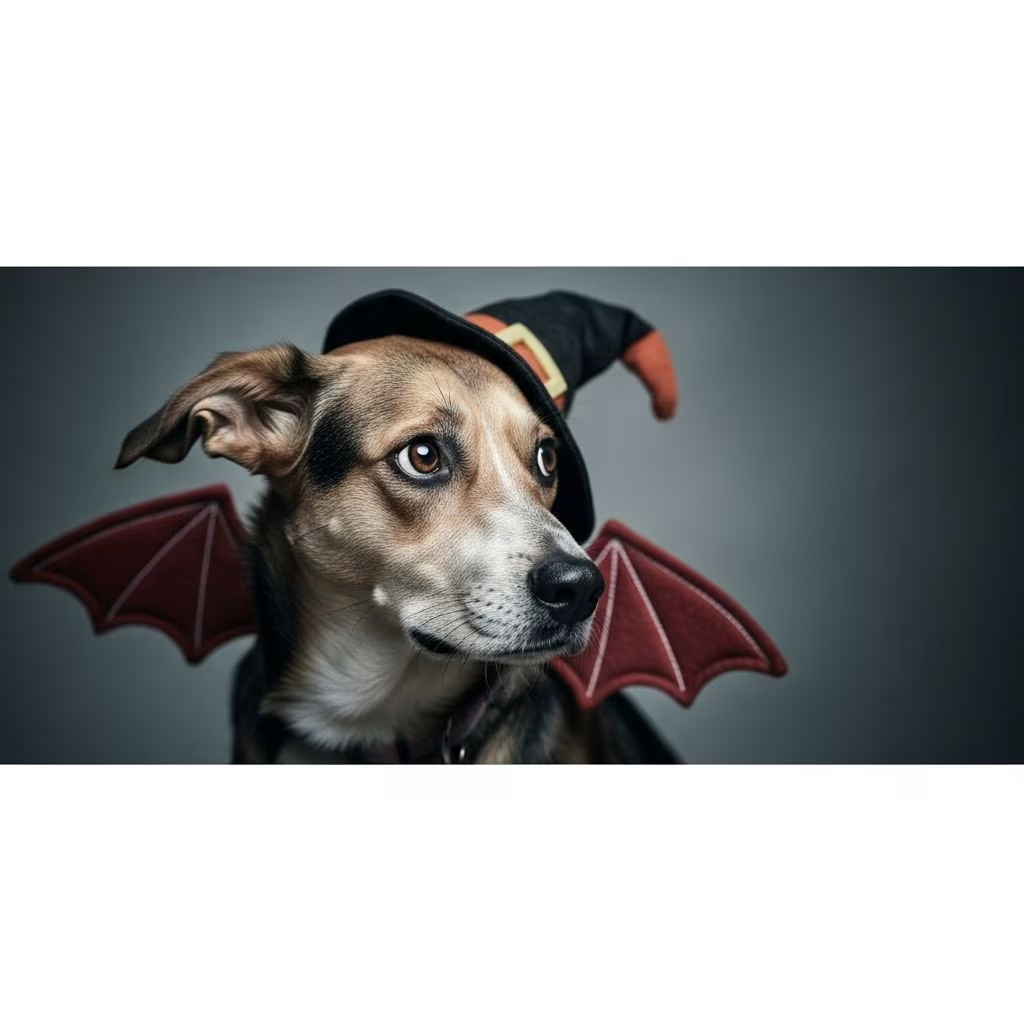
Halloween is full of fun for humans: costumes, candy, loud decorations, and a constant stream of visitors at the door. For many dogs, though, this night is confusing, noisy, and scary. Understanding what dogs tend to hate about Halloween is the first step to protecting their wellbeing and preventing problem behaviors like barking, hiding, or even biting.
This guide walks through the most common Halloween triggers for dogs, explains why they are stressful from a canine point of view, and offers practical, humane strategies so your dog can stay as relaxed, safe, and comfortable as possible.
Why Halloween Is So Hard For Dogs
From a dog’s perspective, Halloween breaks almost every rule of predictable, safe home life. Routine disappears, strangers appear at the door in strange outfits, and sounds and smells change dramatically.
- Predictability disappears: Dogs thrive on routines and familiar patterns. Sudden changes in activity, noise, and people can raise stress hormones and trigger anxiety.
- Many fear triggers happen at once: Unfamiliar people, sudden noises, flashing lights, and odd smells can be overwhelming, especially for dogs already prone to fear or noise sensitivity.
- Humans focus on fun, not signals: While people enjoy the excitement, they may miss subtle signs that a dog is uncomfortable, like lip licking or turning away, which can escalate into growling or snapping if ignored.
The good news is that with planning and awareness, you can greatly reduce how stressful this holiday feels for your dog.
The Constant Doorbell And Knock-Noise Chaos
One of the biggest Halloween stressors for dogs is the repeated ringing of the doorbell or knocking at the door. For many dogs, the doorbell already predicts arousal—either visitors (exciting!) or potential threats (worrying!). Multiply this by dozens of trick-or-treaters and you have a recipe for overload.
Why Door Activity Stresses Dogs
- Alerting instinct: Many dogs are naturally inclined to bark to alert their family to newcomers or changes in the environment.
- Startle responses: Sudden noises like bells or knocks can startle dogs, especially those with existing noise sensitivities.
- Frustration and barrier aggression: When dogs see or hear people they cannot reach because of a door, baby gate, or leash, they can become frustrated, which may increase barking and lunging.
How To Make The Door Less Scary
You do not need to train a perfect door-greeting routine overnight. Focus on simple management and low-pressure training:
- Create a safe room: Set your dog up in a quiet room away from the front door with a comfy bed, white noise or calming music, and a long-lasting chew or food puzzle.
- Use barriers: Baby gates or exercise pens help keep dogs away from the door and reduce the chance of escapes or accidental contact with costumed visitors.
- Pre-teach a \”go to mat\” cue: In the weeks before Halloween, practice sending your dog to a bed or mat and rewarding them there, gradually adding mild door sounds so they learn that hearing the door means \”go relax on your mat.\”
- Consider skipping door duty: Use a candy bowl at the end of the driveway or a sign asking trick-or-treaters to take candy themselves, so your doorbell can stay silent.
Scary Costumes And Masks
Dogs read body language and familiar facial features to recognize people. Costumes can dramatically change silhouettes, gaits, and scents, which may make even beloved family members look and move like strangers.
How Dogs Perceive Costumes
| Human Halloween Fun | Dog’s Likely Experience |
|---|---|
| Face masks, makeup, wigs | Faces look unfamiliar; eyes and mouth are hidden or exaggerated, which can feel threatening. |
| Bulkier or flowing costumes | Silhouettes change and movement appears odd or jerky, triggering alarm and barking. |
| Props (swords, brooms, sticks) | Long objects in hands can appear like weapons or threaten a dog’s personal space. |
| Fake blood or strong makeup smells | New, intense odors may signal something is \”wrong\” and increase anxiety. |
Helping Your Dog Cope With Costumes
- Let your dog watch from a distance: Before Halloween, calmly put on parts of your costume where your dog can see you, speak in your normal voice, and toss treats so they can connect \”weird look\” with \”same safe person.\”
- Do not force greetings: Never push your dog to interact with a costumed person if they are backing away or refusing to approach.
- Teach kids costume rules: Ask children not to run, shout, loom over dogs, or poke at them with props, especially if the dog looks unsure.
- Give your dog a retreat: Keep a crate, bed, or room where your dog can go if costumes feel like too much.
Being Dressed Up: Dog Costumes And Clothing
Even though pictures of dogs in costumes are everywhere, most dogs do not actually enjoy being dressed up. Clothing can feel restrictive, confusing, and even frightening.
Why Many Dogs Hate Costumes
- Restricted movement: Outfits that wrap around the body, legs, or head can interfere with normal movement and posture, which dogs rely on for balance and communication.
- Loss of control: Tight or awkward costumes may feel similar to being restrained, which can cause stress.
- Blocked signals: Costumes that cover a dog’s tail, ears, or face can interfere with their ability to send and read social signals with other dogs.
If You Choose To Dress Your Dog
If your dog seems confident and tolerant, you can sometimes use small, comfortable accessories, but always prioritize the dog’s welfare over photos.
- Keep it minimal: Choose lightweight items that do not cover the head or restrict legs—like a simple bandana or collar accessory.
- Introduce slowly: Let your dog sniff and examine the costume, then gently put it on for just a few seconds, removing it while giving treats and praise. Gradually build up time only if your dog remains relaxed.
- Watch closely for stress: Signs like pawing at the costume, freezing, tucking the tail, or avoiding eye contact mean your dog is not comfortable. Remove the outfit immediately.
- Never force it: If your dog clearly dislikes wearing clothing, skip the costume. They can still participate with special treats or a themed collar.
Spooky Decorations And Strange Sounds
Decorations may be fun for humans, but motion-activated props, eerie music, and flashing lights can be terrifying to dogs. Many Halloween decorations are designed to startle—exactly what most sensitive dogs struggle with.
Common Decoration Triggers
- Inflatable figures: Constant hissing from air pumps and large, moving shapes can be perceived as threatening.
- Motion-activated props: Sudden jumps, cackles, or screams can startle a dog and lead to lingering fear in that location.
- Light effects: Strobe lights, projections, or flickering decorations can confuse dogs and make it difficult to navigate calmly.
Reducing Decoration-Related Fear
- Desensitize gradually: Before Halloween, let your dog see decorations from a distance while you calmly feed treats and keep sessions short. Over time, you can move closer if your dog remains relaxed.
- Turn off motion triggers indoors: At least in areas your dog must pass through, disable motion sensors so nothing jumps or screams unexpectedly.
- Skip the scariest effects near dog areas: Keep loud or jump-scare decorations away from doors, crates, and favorite resting spots.
Overstimulation, Noise, And Crowds
Even without decorations or costumes, the overall energy of Halloween night can overwhelm dogs. Streets are busier; people move in irregular ways; children may run, scream, or clump together in groups.
What Overstimulation Looks Like
- Constant pacing or inability to settle.
- Excessive barking, whining, or howling.
- Jumping, mouthing, or grabbing at clothing.
- Sudden zoomies followed by crashing exhaustion.
Limiting Exposure To Chaos
- Skip trick-or-treat walks for nervous dogs: Staying home in a quiet environment is kinder than dragging an anxious dog through crowds.
- Use sound masking: Play TV, music, or white noise to dampen the sound of outside activity.
- Offer calming activities: Food puzzles, lick mats, and safe chews can give your dog something soothing to focus on.
Strangers Reaching, Petting, And Crowding
Dogs do not automatically enjoy being touched by strangers, and Halloween encourages many people—especially children—to approach quickly and reach out without asking. This can be frightening or overwhelming, even for normally social dogs.
Respecting Your Dog’s Space
- Advocate for your dog: Politely tell children and adults not to pet your dog tonight, or only to do so if your dog calmly approaches and you give permission.
- Use visual signals: A leash sleeve or bandana with wording like “Give me space” can help manage expectations.
- Keep interactions brief: If your dog seems comfortable, allow short, gentle petting on the chest or shoulders, then move away before they become overwhelmed.
Food Hazards: Candy, Wrappers, And Toxic Treats
Candy bowls and dropped treats are dangerous temptations for dogs. Some Halloween foods, like chocolate and sugar-free candy containing xylitol, are toxic even in small amounts.
Why Halloween Food Is Dangerous
- Chocolate: Contains theobromine and caffeine, which can cause vomiting, seizures, and in severe cases, death in dogs.
- Xylitol: A common sugar substitute that can cause rapid insulin release, leading to life-threatening low blood sugar and liver failure.
- Wrappers and sticks: Foil, plastic, and lollipop sticks can cause choking or intestinal blockages if swallowed.
Simple Food Safety Steps
- Keep all candy well out of reach—on high shelves or in closed containers.
- Teach children that candy is never for the dog, no matter how cute they look.
- Use covered trash bins so your dog cannot fish out wrappers.
- Have emergency numbers for your veterinarian and local animal poison control easily accessible.
Recognizing Stress: Dog Body Language On Halloween
On a high-energy night like Halloween, it is essential to watch your dog’s body language closely. Research and behavior guidelines emphasize that early, subtle signs of stress often appear long before growling or biting.
Subtle Signs Your Dog Is Not Having Fun
- Lip licking, yawning (without being tired), or frequent nose-licking.
- Turning the head or body away from people or costumes.
- Wide eyes (whale eye), showing the whites of the eyes.
- Ears pinned back or held very low.
- Body stiffening, freezing, or leaning away.
More Obvious Signs Of Distress
- Growling, snarling, or snapping.
- Attempting to flee, hide, or pull away strongly.
- Excessive panting or drooling unrelated to heat.
If you see any of these signals, gently remove your dog from the situation, take them to a quieter space, and avoid further exposure to the trigger.
Helping Different Types Of Dogs On Halloween
Not all dogs feel the same way about Halloween. Tailoring your approach to your dog’s age and temperament can make the night much easier.
Puppies And Young Dogs
- Use Halloween as a chance for gentle, positive socialization: brief exposure to distant costumes and mild decorations paired with treats.
- Avoid overwhelming them with close-up scares or noisy crowds; keep sessions short and upbeat.
Shy Or Fearful Dogs
- Plan for a quiet night in—no costume, no door duty, minimal visitors.
- Use management (safe rooms, white noise, and chews) rather than trying to \”fix\” fear during the event.
Confident, Social Dogs
- Even if your dog is friendly, limit contact with crowds and excited children.
- Watch for signs of fatigue or irritation and give your dog breaks in a calm, familiar space.
Frequently Asked Questions (FAQs)
Q: Should I let my dog greet trick-or-treaters at the door?
A: Most dogs are more comfortable staying away from the door during Halloween. Repeated knocks, doorbells, and costumed strangers can be overwhelming and may increase the risk of fear-based barking or biting. It is usually safer to keep your dog in a quiet room with something to chew.
Q: Is it cruel to dress my dog in a Halloween costume?
A: It depends on the individual dog. Many dogs dislike costumes, especially those that restrict movement or cover the head. If your dog shows any signs of stress or discomfort, skip the outfit. Opt for a simple bandana or themed collar instead, and never force a dog to wear clothing for photos.
Q: How can I tell if my dog is too stressed on Halloween?
A: Watch for signs like lip licking, yawning, turning away, pinned ears, tucked tail, trembling, or attempts to hide. More obvious signs include growling, barking intensely, or trying to escape. If you notice any of these signals, remove your dog from the situation and provide a quiet, safe space.
Q: Can my dog come trick-or-treating with the family?
A: Only confident, well-socialized, and calm dogs should accompany families—and even then, crowds, costumes, and noise can still be too much. Keep walks short, avoid dense groups, watch body language carefully, and head home at the first sign of stress. Nervous or reactive dogs are usually better off staying at home.
Q: What should I do if my dog eats Halloween candy?
A: Contact your veterinarian or an animal poison control service immediately, especially if the candy contained chocolate or xylitol. Do not wait for symptoms to appear, as some toxins cause life-threatening effects quickly.
References
- Help! My Dog Is Scared of Noises — American Veterinary Medical Association. 2021-10-01. https://www.avma.org/resources/pet-owners/petcare/help-my-dog-scared-noises
- Fear and Anxiety in Dogs — American College of Veterinary Behaviorists / Zoetis Petcare. 2020-06-15. https://www.zoetispetcare.com/dog-care/behavior/fear-anxiety-dogs
- Canine Body Language: A Guide — RSPCA. 2019-09-05. https://www.rspca.org.uk/adviceandwelfare/pets/dogs/behaviour/bodylanguage
- Chocolate, Xylitol and Other Toxins — ASPCA Animal Poison Control Center. 2022-10-15. https://www.aspca.org/pet-care/animal-poison-control
- Noise Phobias in Dogs — The Ohio State University Veterinary Medical Center. 2018-03-10. https://vet.osu.edu/vmc/companion/our-services/honoring-bond/client-education-resources/noise-phobias-dogs



