
Thermal Disinfection in Veterinary Practice
Explore how heat-based methods provide reliable pathogen elimination in animal care settings, from autoclaves to household appliances.
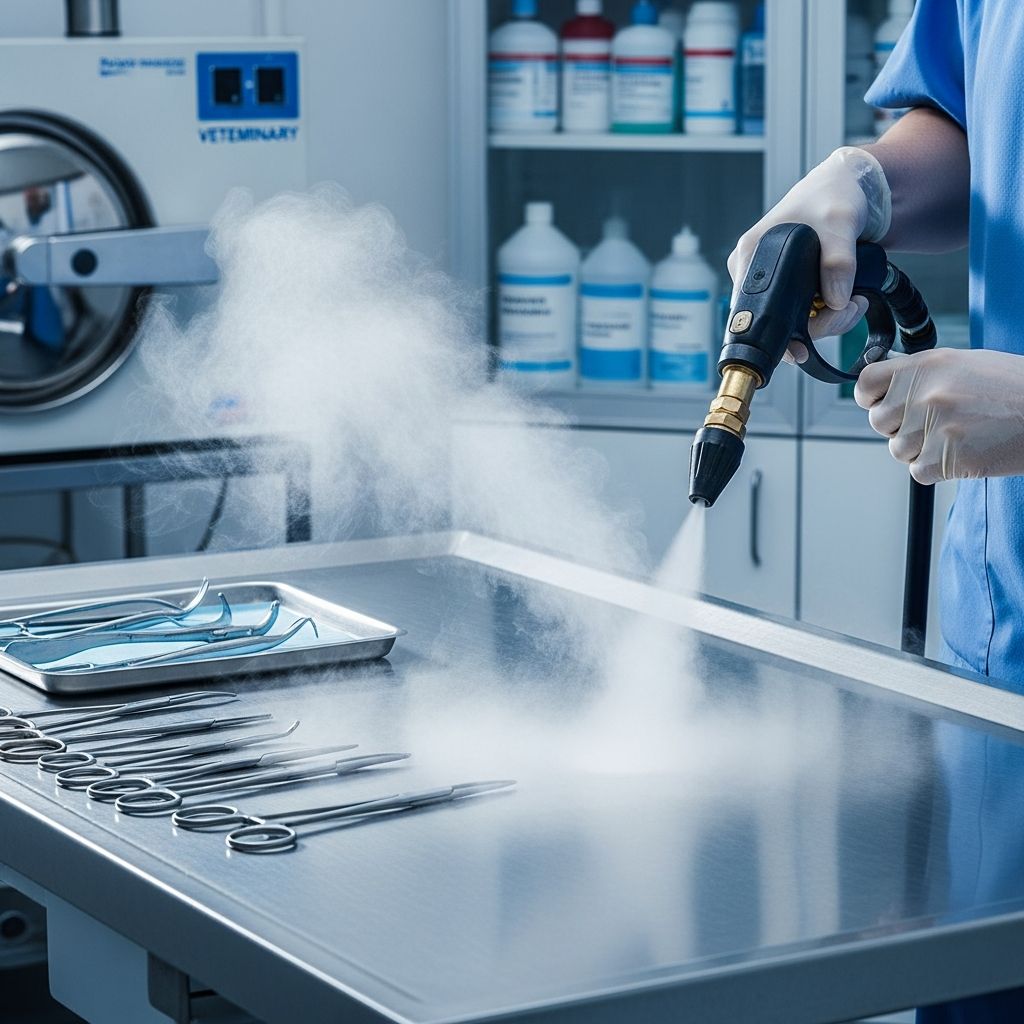
Heat stands out as one of the most reliable and versatile approaches to eliminating pathogens in veterinary settings. Unlike chemical agents that may leave residues or pose toxicity risks, thermal methods use controlled temperatures to denature proteins and destroy microbial structures without harmful byproducts. This makes heat particularly valuable for treating equipment, environments, and materials exposed to animals.
Why Heat Excels in Pathogen Control
Thermal disinfection targets a broad spectrum of microorganisms, including those resistant to many chemicals. Viruses like parvovirus, protozoal oocysts such as those from Cryptosporidium, bacterial spores, mycobacteria, and even prions succumb to sufficient heat exposure. Moist heat, which involves water vapor or steam, penetrates materials more effectively than dry heat by facilitating faster protein coagulation.
In practice, this efficacy allows veterinarians to maintain sterile conditions in clinics, shelters, and farms. For instance, steam under pressure achieves complete sterilization rapidly, making it ideal for surgical tools and linens. Dry heat, while slower, suits anhydrous items like powders or oils that cannot tolerate moisture.
Moist Heat Techniques: The Gold Standard
Moist heat leverages steam’s superior heat transfer properties. The most potent form is pressurized steam, known as autoclaving, which reaches temperatures above boiling point due to pressure.
- Autoclave Protocols: Standard cycles include 121°C at 15 psi for 15 minutes or 126°C at 20 psi for 10 minutes. These conditions ensure a sterility assurance level (SAL) of 10-6, meaning the probability of a surviving microorganism is less than one in a million.
- Prion Inactivation: More extreme settings, like 130°C for 30-60 minutes, are required for prions, which resist standard cycles.
- Household Alternatives: Boiling water at 100°C provides partial sterilization for scrubbed instruments when autoclaves are unavailable. Steam cleaners effectively treat floors, carpets, and upholstery in veterinary facilities or homes.
Dishwashers and washing machines also serve as accessible tools. They must operate at minimum 60°C to tackle spores and viruses like feline calicivirus. For parvovirus, which endures 80°C for an hour, combining heat with bleach enhances results. Fungal elements and Giardia cysts die at 56-60°C, often without additional agents.
| Method | Temperature | Time | Pressure | Best For |
|---|---|---|---|---|
| Autoclaving | 121°C | 15 min | 15 psi | Surgical tools, linens |
| Boiling | 100°C | 20-30 min | Atmospheric | Basic instruments |
| Washing Machine | ≥60°C | Full cycle | N/A | Textiles, bedding |
| Steam Cleaner | 100-150°C | Surface contact | Low | Floors, soft furnishings |
Dry Heat Applications and Limitations
Dry heat oxidizes cellular components through prolonged high temperatures, typically 160-180°C for 2 hours or more. It avoids moisture-related damage, making it suitable for glassware, metals, oils, and powders.
- Cycles: Common parameters are 170°C for 60 minutes, 160°C for 120 minutes, or 150°C for 150 minutes. Total process time, including heating and cooling, can exceed 10 hours without forced air.
- Veterinary Uses: Dry bead sterilizers offer quick re-sterilization for rodent surgery tips between procedures, though full autoclaving is needed between sessions.
- Drawbacks: Slower penetration risks incomplete kills in dense loads, and extreme heat can cause material fatigue or corrosion over time.
While less efficient than moist heat, dry methods complement scenarios where steam is impractical, such as field operations or moisture-sensitive items.
Practical Implementation in Animal Care Settings
Veterinary hospitals prioritize autoclaves for heat-stable items like scalpels, drapes, and glassware. Steam’s rapid cycles minimize downtime, crucial in busy clinics. For heat-sensitive devices like endoscopes or fiber-optics, low-temperature alternatives exist, but heat remains foundational.
In shelters and farms, everyday appliances bridge gaps. Washing machines with steam cycles or 60°C settings disinfect bedding contaminated with ringworm spores or parvovirus. Dishwashers handle bowls and toys, preventing cross-contamination if run on high-heat, long cycles. Incineration provides ultimate destruction for non-reusable waste like infected carcasses.
Key to success: Ensure full load penetration by avoiding overloads, verify temperatures with probes, and use biological indicators like spore strips for validation. Combining heat with detergents or bleach boosts efficacy against tough pathogens.
Addressing Resistant Pathogens
Certain agents demand tailored approaches:
- Parvovirus: Survives 80°C for 60 minutes; requires 60°C+ with bleach.
- Prions: Need 130°C autoclaving.
- Protozoa (e.g., Cryptosporidium, Giardia): 56-60°C suffices for cysts.
- Fungi (e.g., Microsporum): 60°C laundering eliminates spores regardless of detergent.
These examples underscore heat’s superiority over chemicals alone, which often fail against spores or enveloped viruses.
Safety Considerations and Best Practices
While non-toxic, heat processes require precautions. Autoclaves demand proper loading to prevent explosions, and operators must use PPE against burns. Validate cycles with chemical and biological monitors. In laundries, separate contaminated loads to avoid spreading Cryptosporidium or dermatophytes.
Monitor appliance efficacy: Standard washers may not hit 60°C; opt for industrial models or steam additives. Regular maintenance prevents contamination reservoirs.
Comparative Advantages Over Other Methods
Heat outperforms chemicals in spectrum and residue-free results but contrasts with gas (e.g., ethylene oxide) or plasma systems for delicate items. Steam is fastest for compatible materials, while dry heat suits specific niches.
| Method | Speed | Material Compatibility | Residue Risk | Cost |
|---|---|---|---|---|
| Moist Heat | Fast (15-30 min) | High (most items) | None | Low-Med |
| Dry Heat | Slow (2+ hrs) | Medium (dry goods) | None | Low |
| EtO Gas | Medium (hrs + aeration) | High (sensitive) | Low | High |
FAQs on Veterinary Thermal Disinfection
What is the minimum temperature for killing most animal pathogens?
60°C for 30 minutes in moist conditions eliminates many viruses, fungi, and protozoa, but higher for spores.
Can home appliances replace professional sterilizers?
Yes, for non-critical items: Use 60°C+ washers/dishwashers with bleach for parvovirus-contaminated textiles.
How does moist heat outperform dry heat?
Steam transfers heat 3-4 times faster, enabling shorter cycles and deeper penetration.
Is boiling sufficient for surgical tools?
It reduces bioburden but does not achieve full sterility; autoclave for guaranteed results.
What monitors autoclave effectiveness?
Biological indicators (spore strips), chemical tapes, and temperature logs.
Future Directions in Thermal Technologies
Advancements include faster autoclaves with vacuum cycles and hybrid systems combining heat with UV or plasma. For veterinary use, portable steam units could enhance biosecurity on farms. Emphasis on energy-efficient designs addresses sustainability without compromising safety.
In summary, integrating thermal disinfection ensures robust infection control. By selecting appropriate methods and validating processes, animal health professionals safeguard herds, packs, and individual pets effectively.
References
- Heat as a Disinfectant for Use With Animals — Merck Veterinary Manual. 2023-10-01. https://www.merckvetmanual.com/pharmacology/antiseptics-and-disinfectants/heat-as-a-disinfectant-for-use-with-animals
- Sterilization Techniques — Veterinary Surgery Online. 2022-05-15. https://www.vetsurgeryonline.com/sterilization-techniques/
- Key Methods of Terminal Sterilization — Sterility.com. 2024-11-20. https://www.sterility.com/key-methods-of-terminal-sterilization-what-you-need-to-know/
- Sterilization – Accepted Methods & Monitoring — University of Iowa Animal Research. 2023-08-10. https://animal.research.uiowa.edu/oar-informational-sheet-accepted-sterilization-methods
- Sterilization by Heat — Tuttnauer. 2024-03-12. https://tuttnauer.com/blog/sterilization-heat
- Other Sterilization Methods — Centers for Disease Control and Prevention (CDC). 2025-01-15. https://www.cdc.gov/infection-control/hcp/disinfection-sterilization/other-sterilization-methods.html
Similar Articles








Read full bio of medha deb


