

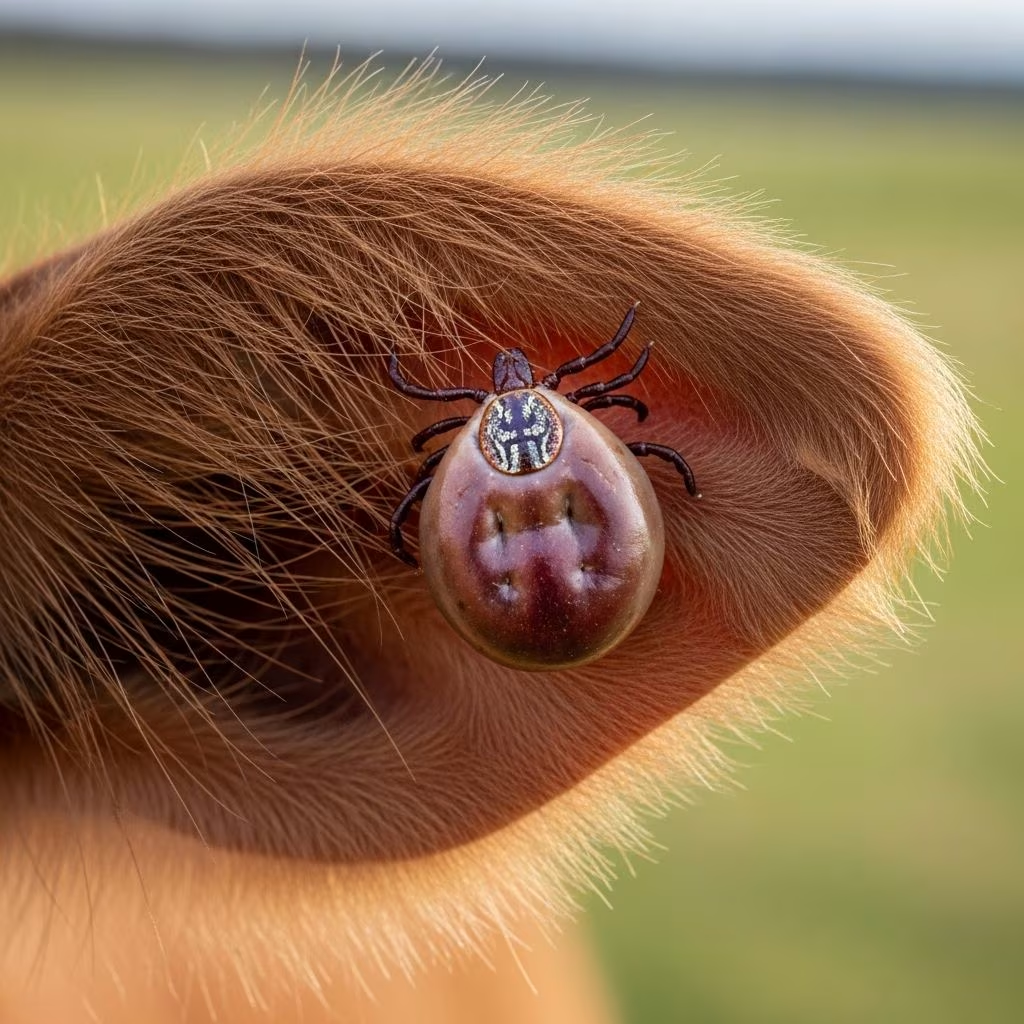
Theileriosis represents a significant challenge in veterinary medicine, primarily affecting cattle and other ruminants through protozoan parasites transmitted by ticks. These infections lead to severe economic losses due to high mortality, reduced productivity, and treatment costs in endemic areas.
Biology and Life Cycle of Theileria Parasites
Theileria species are obligate intracellular protozoans belonging to the phylum Apicomplexa. They infect a wide range of hosts, including domestic and wild Bovidae, with complex life cycles involving both vertebrate and invertebrate stages. The cycle begins when infected ixodid ticks feed on a host, injecting sporozoites directly into the bloodstream. These sporozoites target white blood cells, particularly lymphocytes, transforming into schizonts that multiply asexually, causing host cell proliferation and lymphoproliferation in pathogenic strains.
Schizonts develop into merozoites, which invade erythrocytes, forming piroplasms—the stage infectious to ticks. When ticks feed on infected animals, piroplasms are taken up, undergo gametogony in the tick gut, and develop into sporozoites in salivary glands over weeks, ready for transmission. This dual tropism for leukocytes and red blood cells distinguishes Theileria from related Babesia parasites.
- Key life cycle phases: Sporozoite invasion of leukocytes → Schizogony → Merozoite release → Piroplasm formation in RBCs → Tick uptake and sporogony.
- Pathogenic species like T. parva emphasize lymphocyte transformation, leading to cancer-like lymphoproliferation.
- Less virulent types, such as T. orientalis, primarily damage erythrocytes, causing hemolytic anemia.
Major Pathogenic Species and Their Global Distribution
Several Theileria species cause disease, but T. parva and T. annulata are the most devastating. T. parva, responsible for East Coast fever (ECF) and corridor disease, prevails in sub-Saharan Africa, transmitted by Rhipicephalus appendiculatus. Buffalo-derived strains infect cattle without completing the cycle in ticks, complicating epidemiology.
T. annulata drives tropical theileriosis across North Africa, the Mediterranean, Middle East, India, and Asia, vectored by Hyalomma ticks. Other notable pathogens include T. orientalis (emerging in the Americas, like Missouri), T. luwenshuni, and T. uilenbergi in China, with mortality up to 75% in naive sheep and goats.
| Species | Primary Hosts | Key Regions | Vector Ticks | Mortality Risk |
|---|---|---|---|---|
| T. parva | Cattle, buffalo | East/Southern Africa | Rhipicephalus spp. | High (up to 90%) |
| T. annulata | Cattle, buffalo | Mediterranean, Asia | Hyalomma spp. | Up to 90% |
| T. orientalis | Cattle | Australia, USA, NZ | Haemaphysalis, Asian longhorned tick | Low (1-5%) |
| T. equi | Horses | Global | Ixodid ticks | Variable |
Non-pathogenic species like T. ovis in sheep cause mild or subclinical infections worldwide.
Pathophysiology: How Theileria Causes Disease
Theileria’s virulence stems from its ability to manipulate host cells. In highly pathogenic forms, schizonts induce uncontrolled lymphocyte division, mimicking lymphoma and leading to lymphoid depletion via lymphocytolysis. This immunosuppression allows secondary infections. Piroplasms destroy erythrocytes, exacerbating anemia in species like T. annulata.
Fever arises from cytokine release during schizogony. In ECF, infected cells disseminate systemically, causing multi-organ failure. Terminal stages involve pulmonary edema from capillary damage and inflammation. Anemia varies: minimal in ECF but prominent in benign theileriosis, where RBC destruction predominates.
Recognizing Clinical Signs Across Species
Symptoms emerge 5-14 days post-infection, varying by species, strain, host immunity, and parasite load. Common early signs include high fever (>41°C), lymphadenopathy, depression, and anorexia.
- East Coast Fever (T. parva): Progressive lymph node swelling, lacrimation, nasal discharge, dyspnea, frothy pulmonary exudate, death in 18-30 days. Postmortem: Emphysematous lungs, lymphoid necrosis.
- Tropical Theileriosis (T. annulata): Similar to ECF plus jaundice, hemoglobinuria, severe anemia. Rapid emaciation in peracute cases.
- Bovine Anaemia (T. orientalis): Pale/jaundiced mucosae, lethargy, abortions, reduced milk/weight gain. Mortality <5%, but herd productivity drops.
- Equine Theileriosis (T. equi): Fever, icterus, edema, colic; chronic cases show poor performance.
Young or stressed animals (e.g., calving cows) are most vulnerable.
Accurate Diagnosis of Theileria Infections
Diagnosis combines clinical suspicion, microscopy, and molecular tools. Giemsa-stained blood/lymph node smears reveal schizonts (intra-leukocyte) or piroplasms (RBCs, often polymorphic). PCR targets 18S rRNA for species identification, crucial in mixed infections.
Serology (ELISA) detects antibodies for surveillance. Necropsy confirms via organ lesions. Differential diagnoses include babesiosis, anaplasmosis, and trypanosomiasis.
Treatment Options and Management Protocols
Parvaquone or buparvaquone (single/double doses) are first-line for ECF and tropical theileriosis, targeting schizonts effectively if given early. Supportive care includes anti-inflammatories, fluids, and antibacterials for secondaries. No specific treatments exist for benign forms; manage anemia symptomatically.
Treatment success drops in advanced cases; mortality remains high without intervention.
Prevention and Control Strategies
Control integrates tick management, vaccination, and biosecurity. Acaricides (pour-ons, dips) target vectors; pasture spelling disrupts tick life cycles. Live vaccines (e.g., Muguga cocktail for ECF, attenuated T. annulata schizonts) induce immunity but require cold chain and aren’t 100% protective.
Endemic stability—exposing calves to infection under immunity—reduces outbreaks. Quarantine, movement controls, and buffalo-cattle separation limit spread. Emerging U.S. threats like T. orientalis via Asian longhorned ticks demand surveillance.
Economic Impact and Emerging Challenges
Theileriosis costs billions annually in Africa/Asia via deaths (millions of cattle) and lost productivity. Climate change expands tick ranges, introducing risks to new areas like North America.
Research focuses on subunit vaccines, tick-resistant breeds, and gene drives for vectors.
Frequently Asked Questions (FAQs)
What animals are affected by theileriosis?
Primarily cattle, buffalo, sheep, goats, and horses; wild ruminants act as reservoirs.
How do ticks transmit Theileria?
Sporozoites injected during feeding; transstadial transmission in ticks.
Is there a vaccine for East Coast fever?
Yes, the trivalent Muguga cocktail provides partial protection.
Can theileriosis be treated successfully?
Early buparvaquone therapy yields >80% survival in treatable cases.
Is theileriosis emerging in the USA?
Yes, T. orientalis reported in cattle via invasive ticks.
References
- Theileria orientalis: An Emerging Cattle Disease in Missouri — University of Missouri Extension. 2023. https://extension.missouri.edu/publications/g2113
- Theileriosis in Animals – Circulatory System — Merck Veterinary Manual. 2023-10-17. https://www.merckvetmanual.com/circulatory-system/blood-parasites/theileriosis-in-animals
- Theileriosis — World Organisation for Animal Health (WOAH). 2024. https://www.woah.org/en/disease/theileriosis/
- Theileria — DairyNZ. 2024. https://www.dairynz.co.nz/animal/animal-health/theileria/
- Babesiosis and Theileriosis in North America — PMC (NCBI). 2022-02-15. https://pmc.ncbi.nlm.nih.gov/articles/PMC8874406/
- Bovine Theileriosis Information Sheet — USDA APHIS. 2023. https://www.aphis.usda.gov/sites/default/files/bovine-theileriosis-infosheet.pdf



