

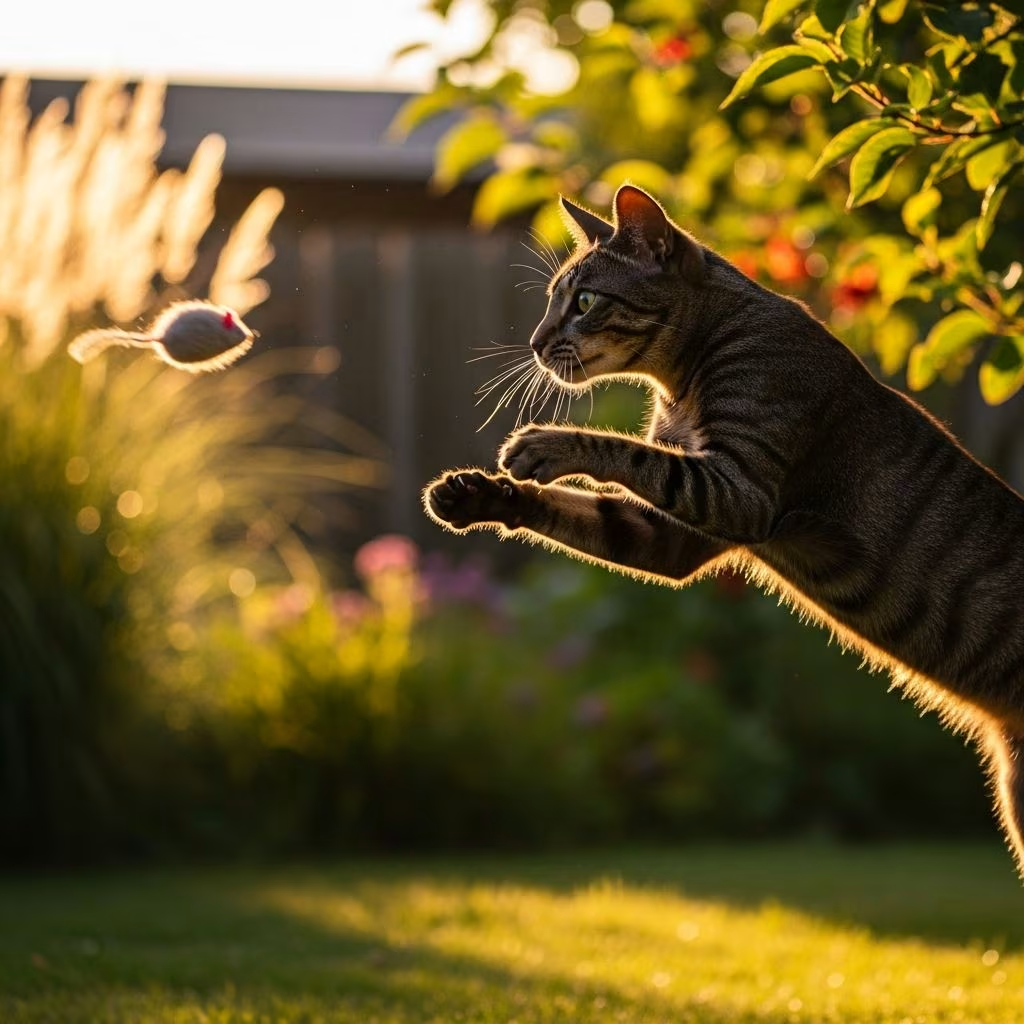
Domestic cats retain powerful hunting instincts inherited from their wild ancestors, making the thrill of the hunt essential for their mental and physical well-being, even indoors. This drive persists regardless of neutering or ample food, as it’s a core behavioral pattern wired into felines.
Why Cats Hunt: It’s in Their DNA
Cats are obligate carnivores and solitary predators, descending from skilled hunters selected for rodent control, with minimal selective breeding altering their instincts. In the wild, they make 10-20 small kills daily to meet energy needs, following a sequence: searching, stalking, chasing, pouncing, killing, and consuming.
Domestication began to protect food stores from rodents, but hunting remains a permanent urge alongside reproduction and territory defense. Pet cats opportunistically hunt regardless of hunger, as delaying for meals risks starvation; success rates are under 50% per attempt. Well-fed cats may catch but not kill prey, bringing ‘gifts’ home instead.
This instinct manifests in play: cats ‘toy’ with prey or toys due to conflict between killing drive and injury fear, intensifying with hunger or prey-like toys. Indoor cats still crave this sequence, needing outlets to avoid behavioral issues.
The Hunting Sequence: Step by Step
Cats follow a predictable hunting pattern, visible in play or real pursuits.
- Searching: Scanning environments for movement or sounds, often from perches.
- Stalking: Crouched approach with head low, slow then accelerating to sprint.
- Pouncing: Tense pause, then explosive leap using front paws.
- Killing: Neck bite if hungry; otherwise, manipulation or ‘playing’.
- Consuming: Eating small amounts frequently, mimicking multiple daily hunts.
Breeds like Abyssinian, Bengal, and Savannah amplify this with high energy and precision tracking. Siamese show intelligence in timed pursuits, while Turkish Angora observes from heights.
Do Indoor Cats Still Need to Hunt?
Absolutely—even without prey, indoor cats retain the urge, displaying it through toy chases or sudden zooms. Suppressing it compromises welfare; channeling via play prevents problems like anxiety or redirected aggression.
Feral and wild cats lack ‘toying’ behaviors common in pets, suggesting domestication pent-up energy release. Mothers teach kittens by bringing live prey, reinforcing instincts. Pet owners see this in intense play with feather wands or laser pointers, simulating hunts.
Signs Your Cat’s Hunting Instincts Are Active
Watch for these daily cues proving instincts thrive:
- Intense staring at birds outside windows or moving shadows.
- Sudden crouching and wiggling rear before pouncing on toys.
- Tail swishing, ear twitching toward faint sounds.
- Retrieving lightweight items or ‘presenting’ killed toys.
- Water play, like pawing faucets, mimicking fish hunts.
Hunting breeds like Bengal fixate rapidly, jumping high with strong follow-through.
How to Satisfy Your Cat’s Hunting Drive Safely
Enrich environments to mimic hunts without real prey. Key strategies:
- Interactive Toys: Wand toys with feathers for stalking/pouncing; use 10-15 minute sessions 2-3 times daily.
- Puzzle Feeders: Disperse kibble in balls or hide food, simulating multiple small meals.
- Vertical Space: Cat trees, shelves for perching and observing.
- Hideouts: Boxes or tunnels for ambushing toys.
- Rotation: Swap toys weekly to maintain novelty, triggering fresh hunts.
Avoid free-feeding; small, frequent meals boost motivation. For high-drive breeds, add scent trails with catnip or laser chases.
Top Cat Breeds with Strong Hunting Instincts
Certain breeds excel due to genetics.
| Breed | Key Hunting Traits | Play Style |
|---|---|---|
| Abyssinian | Precision stalking, quick pounces | Strategic chases, retrieves toys |
| Bengal | High energy, wild-like agility | Full pursuits, water play |
| Siamese | Alert tracking, problem-solving | Persistent focus on motion |
| Savannah | Long legs for reach, rapid fixation | High jumps, strong chases |
| Turkish Angora | Observant from heights, sound-following | Self-directed fixation |
These cats stay engaged, blending hunts with affection.
Common Myths About Cat Hunting
- Myth: Neutering Stops Hunting. False—it’s not hormone-driven.
- Myth: Well-Fed Cats Don’t Hunt. Incorrect; opportunity triggers it over hunger.
- Myth: Indoor Cats Lose Instincts. No, they redirect to toys/humans.
- Myth: ‘Gifts’ Are Gifts. Often training or excess prey sharing.
Health Benefits of Fulfilling Hunting Needs
Satisfying instincts reduces obesity via activity, curbs stress/anxiety, and prevents boredom-induced issues like scratching. Mental stimulation from hunts sharpens cognition, especially in seniors. Natural feeding patterns aid digestion.
Frequently Asked Questions (FAQs)
Do all cats have strong hunting instincts?
Yes, as solitary predators, all domestic cats inherit this drive, though intensity varies by breed and individual.
Why does my cat bring me dead animals?
Well-fed cats share excess prey or mimic teaching kittens; it’s instinct, not spite.
Can I train my cat out of hunting behaviors?
No—suppressing harms welfare; redirect to toys instead.
How often should I play hunt games with my cat?
2-3 sessions daily, 10-15 minutes each, matching natural kill frequency.
Are puzzle feeders enough for hunting satisfaction?
They’re great for foraging but combine with chasing toys for full sequence.
What if my cat hunts too aggressively?
Increase enrichment, ensure exercise; consult vets for underlying issues.
Embracing cats’ hunting needs transforms homes into stimulating havens, honoring their predatory heritage while curbing issues.
References
- 7 Cat Breeds With Natural Hunting Instincts — World Animal Foundation. 2023. https://worldanimalfoundation.org/cats/cat-breeds-with-natural-hunting-instincts/
- Cats and Their Hunting Behaviour — FOUR PAWS International. 2023-05-15. https://www.four-paws.org/our-stories/publications-guides/cats-and-their-hunting-behaviour
- Understanding the Hunting Behaviour of Cats — International Cat Care. 2024-02-20. https://icatcare.org/articles/understanding-the-hunting-behaviour-of-cats
- Cat Hunting Behaviours: The Truth Behind the ‘Gifts’ — Purina UK. 2023. https://www.purina.co.uk/articles/cats/kitten/behaviour/cat-hunting-behaviour
- The Hunting Instinct — State of Nature Raw. 2023. https://stateofnatureraw.com/the-hunting-instinct/
- 7 Tips to Help Your Cat Express Their Natural Behaviors — VetMedIRC. 2024. https://vetmedirc.com/7-tips-to-help-your-cat-express-their-natural-behaviors/
- 10 Tips to Help Your Cat Fulfill Their Natural Instincts — Vets Marquette. 2023-11-10. https://vetsmarquette.com/10-tips-to-help-your-cat-fulfill-their-natural-instincts/



