

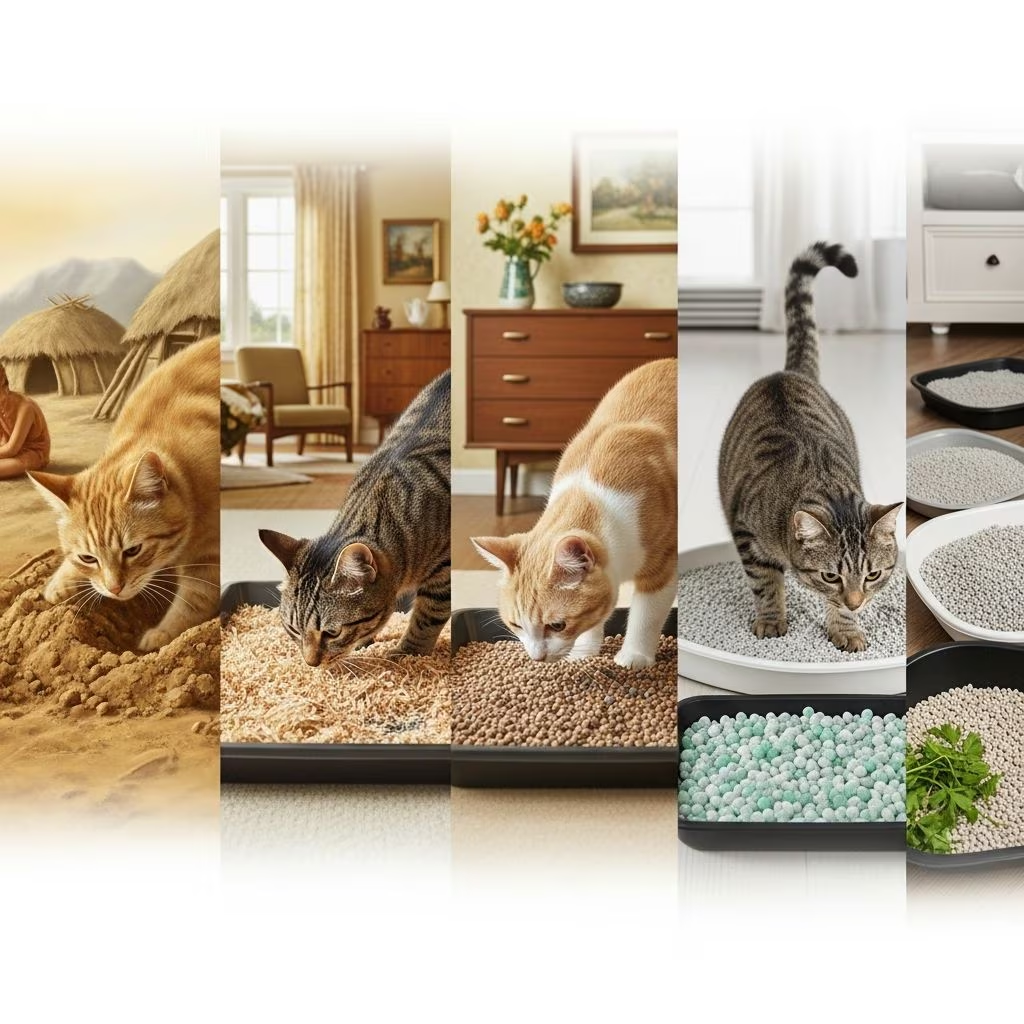
Cat litter has become an essential product for millions of pet owners, enabling indoor living for cats with minimal mess and odor. Its development spans millennia, beginning with natural materials in ancient times and progressing through key inventions in the 20th century to today’s advanced, sustainable options.
Feline Instincts and Early Waste Management
Cats possess a natural instinct to bury their waste, a behavior rooted in survival. This drive to mask scents helped wild ancestors evade predators in regions like the Fertile Crescent, North Africa, and beyond. Soft soils or sands were preferred for digging, setting the stage for human-managed solutions as cats entered homes.
In ancient Egypt, revered felines used sand or ash for elimination. These materials absorbed moisture and controlled smells effectively, forming the earliest known litter systems. Similar practices appeared in other cultures, relying on dirt, sawdust, or cinders before modern products emerged.
Challenges of Indoor Cats Before Commercial Litter
By the early 20th century, more cats lived indoors due to safety concerns. Owners improvised with ashes, newspaper, soil, or sand, but these created tracking issues, poor odor control, and unclean paws. Metal pans like the 1940s E-Z Klean Kitty Toilet, sometimes with screens, held these materials, yet smells often forced cats outdoors.
Cat owners sought better alternatives as indoor pet popularity grew. Winter shortages of sand highlighted the need for reliable absorbents, paving the way for innovation.
The Accidental Birth of Clay-Based Litter
The modern cat litter era began in 1947 through serendipity. Michigan entrepreneur Edward Lowe sold absorbent clays for industrial use. When neighbor Kay Draper requested sand for her cat—frustrated by ash-tracking—Lowe provided Fuller’s Earth clay instead, as sand was frozen.
Draper loved the results: superior absorption and odor neutralization. She spread the word, prompting Lowe to package and market it as “Kitty Litter,” initially in bags stenciled by hand. Despite initial skepticism—owners favored sand—it gained traction, transforming indoor cat care.
Clay’s lightweight nature and high absorbency made it ideal, replacing messy alternatives and enabling cats as full-time house pets.
Clumping Technology: A Major Leap Forward
Clay litter dominated for decades, but the 1980s introduced clumping varieties using bentonite clay. This sodium or calcium bentonite expands and hardens upon liquid contact, forming scoopable clumps.
Developed in the UK during the 1950s and popularized later, clumping litter improved hygiene by isolating waste, reducing odors, and simplifying cleaning. By 1989, it captured about 30% of the market, becoming a staple for convenience. Cats often prefer its texture, mimicking natural digging.
| Litter Type | Key Advantage | Drawback |
|---|---|---|
| Non-Clumping Clay | Good absorption | Messy scooping, frequent changes |
| Clumping Clay | Easy waste removal | Dust, heavier weight |
Diversification: Alternatives to Traditional Clay
Environmental and health concerns spurred alternatives. Clay mining impacts land, and dust poses respiratory risks for cats and humans.
Silica crystal litters, made from gelled silica, emerged in the late 20th century. They excel in moisture lock-in (up to 40% of weight) and odor trapping, with low dust and transparency for health monitoring via urine color.
Other options include pine, wheat, corn, or recycled paper pellets. These biodegradable choices reduce landfill waste and appeal to eco-conscious owners. Pine offers natural deodorizing; plant-based litters clump well and flush partially.
- Pine Litter: Deodorizes with pine oils, lightweight.
- Wheat/Corn: Biodegradable, low tracking.
- Walnut Shell: Hard shells for durability, natural scent control.
Engineering Smarter Litter Boxes
Litter evolution extended to boxes. Early pans evolved into designs with hoods and liners. Clumping litter enabled the 1991 self-cleaning patent, using rakes or sifting.
The Litter-Robot, prototyped in the 1990s, uses gravity-sifting: a rotating globe separates clean litter from waste into a drawer, minimizing scooping. Modern versions connect to apps for monitoring usage, weight, and health alerts.
These reduce bacteria exposure and litter use by 50%, enhancing convenience.
Environmental and Health Considerations Today
Sustainability drives innovation. Traditional clay litters contribute to mining waste; alternatives like tofu or grass-based options compost or flush safely. Low-dust formulas protect sensitive respiratory systems.
Health-wise, litters now include probiotics for odor-eating bacteria or color-changing indicators for pH issues signaling urinary problems. Multi-cat households benefit from heavy-duty clumping with enzymes.
Choosing litter involves cat preference—texture, scent—and owner needs like low tracking or hypoallergenicity.
Future Directions in Feline Sanitation
Tomorrow’s litters may integrate AI for predictive health analytics or fully biodegradable smart materials. Ongoing research focuses on zero-waste, antimicrobial coatings, and personalized formulas via DNA testing.
From Egyptian sands to app-controlled boxes, cat litter reflects human ingenuity in harmonizing pet and home life.
Frequently Asked Questions
What was used for cat litter before commercial products?
Sand, ash, dirt, sawdust, or newspaper were common, but they tracked messily and poorly controlled odors.
Who invented Kitty Litter and when?
Edward Lowe in 1947, accidentally suggesting clay to a neighbor.
What is clumping litter made of?
Bentonite clay (sodium/calcium montmorillonite) that hardens with moisture.
Are there eco-friendly litter options?
Yes, pine, wheat, corn, and paper litters biodegrade and reduce environmental impact.
How do self-cleaning litter boxes work?
They sift or rake waste automatically, often using clumping litter and timers or sensors.
References
- The Evolution of Cat Litter Throughout History — Potty Cats. 2023. https://pottycats.com/blogs/cat-care/the-evolution-of-cat-litter-throughout-history
- Digging into the Past: The Evolution of Litter Boxes — Pet Parlor Pro. 2023-08-19. https://petparlorpro.com/2023/08/19/digging-into-the-past-the-evolution-of-litter-boxes/
- Cat Litter Box History: Sandbox to Self-Cleaning — Litter-Robot. N/A. https://www.litter-robot.com/blog/cat-litter-box-history-self-cleaning-litter-box/
- History of Cat Litter – Taking a Look at Its Past — Catster. N/A. https://www.catster.com/lifestyle/history-of-cat-litter/
- Then and Meow: A History of Cat Litter — Dr. Elsey’s. N/A. https://drelseys.com/then-and-meow-a-history-of-cat-litter/



