

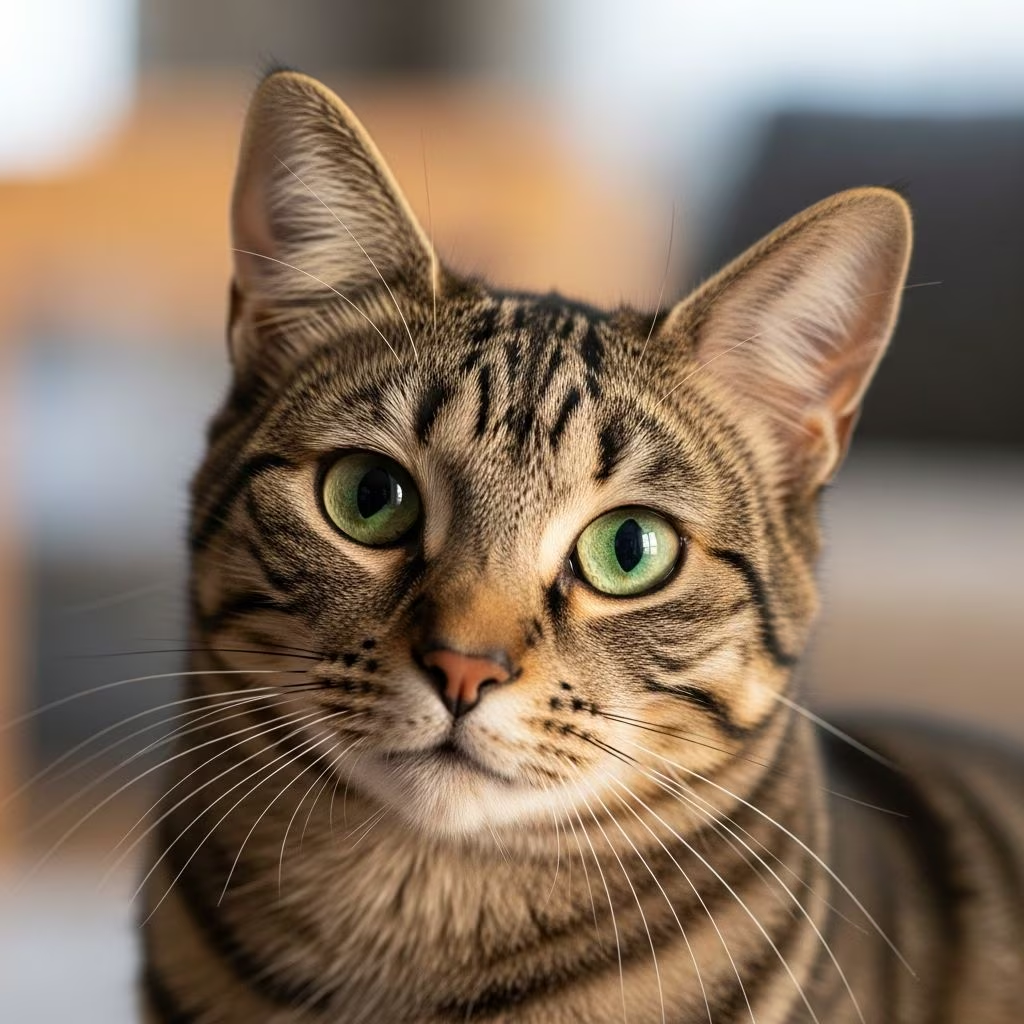
Cats have a unique ability to melt hearts across cultures and generations. Their wide eyes, fluffy coats, and playful antics trigger an almost universal response of affection. This phenomenon stems from a blend of evolutionary biology, neurological wiring, and thousands of years of companionship with humans.
Biological Traits That Spark Adoration
At the core of a cat’s appeal lie specific physical features that mimic those of helpless infants, a concept known as the “baby schema” or Kindchenschema. Large, round heads disproportionate to their bodies, oversized eyes positioned forward, and soft, rounded contours signal vulnerability. These traits prompt protective instincts in observers.
- Prominent Eyes: Forward-facing eyes create an illusion of constant engagement, drawing viewers in emotionally.
- Fluffy Texture: Soft fur invites touch, reinforcing bonds through tactile pleasure.
- Small Size and Proportions: Compact bodies with stubby limbs evoke fragility, much like newborns.
Even adult cats retain many juvenile characteristics, unlike dogs or other domesticated animals that undergo more pronounced neoteny. Kittens amplify this effect, with their unsteady gaits and high-pitched vocalizations resembling baby cries, which evolutionarily compel caregiving.
Neurological Responses to Cat Features
When encountering a cat’s endearing traits, the human brain activates rapidly. Neuroimaging studies show responses in under 200 milliseconds—faster than conscious thought formation. The orbitofrontal cortex, involved in reward processing, lights up alongside the nucleus accumbens, the brain’s pleasure hub.
This dual activation releases dopamine, creating feelings of joy and motivation to nurture. For instance, viewing a kitten’s face triggers simultaneous signals: protect and enjoy. The fusiform face area processes these visuals almost instantly, categorizing them as “cute” before higher cognition kicks in.
| Brain Region | Function | Response to Cats |
|---|---|---|
| Orbitofrontal Cortex | Decision-making & emotion | Initiates protective urges |
| Nucleus Accumbens | Reward & pleasure | Releases dopamine for satisfaction |
| Fusiform Face Area | Facial recognition | Detects cuteness in 130ms |
Sounds play a role too. Cats’ meows and purrs mimic infant distress calls, with spectrograms showing structural similarities to human baby cries. Purring frequencies (25-150 Hz) align with therapeutic vibrations that promote healing and calm.
Evolutionary Path to Domestic Cuteness
Cats self-domesticated around 9,000 years ago near early human grain stores, drawn by rodents. Unlike wolves bred into dogs, cats selectively bred with humans for traits enhancing survival in homes. Over generations, those with softer features and less aggressive demeanors thrived, as humans provided food and shelter.
This co-evolution amplified neotenous traits. Wild cats like the African wildcat have sharper features and expressive faces, but domestic breeds show rounded heads and larger eyes. Theorists suggest cats exaggerated baby-like qualities to exploit human nurturing drives, ensuring dependency and care.
Breeds vary: Persians embody plush softness, while Siamese retain sleek elegance. Yet all share core appealing elements, refined through human preference for viral, shareable cuteness in media.
Cultural and Psychological Influences
Cuteness perception isn’t purely biological; culture shapes it. In pet-loving societies, cats symbolize independence wrapped in vulnerability, fueling projection of emotions onto their subtle expressions. Anthrozoologist John Bradshaw notes cats’ enigmatic faces invite anthropomorphism—we imagine thoughts and feelings, heightening attachment.
Social media amplifies this: billions of cat videos leverage algorithms favoring adorable content, conditioning global audiences. Personal experiences matter too; owners bond deeply, overriding flaws like scratching or selective affection.
Behavioral Quirks Enhancing Appeal
Beyond looks, behaviors cement charm. The “slow blink”—a half-closed eye gesture—signals trust and affection. Research from the University of Portsmouth shows humans mimicking this build rapport; cats reciprocate, fostering mutual bonds.
- Slow blinks mimic relaxed smiles, increasing positive interactions.
- Playful pouncing and kneading evoke nurturing memories.
- Head-butts (bunting) mark humans as family with scent glands.
These actions release oxytocin in both species, mirroring parent-infant bonding hormones.
Variations Across Breeds and Individuals
Not all cats fit the fluffy archetype. Sphynx cats lack fur yet charm through wrinkled skin and bat-like ears. Abyssinian sleekness appeals to those favoring athletic grace. Subjectivity rules: some adore smushed faces (exotic shorthairs), others sharp profiles (Orientals).
Age influences too—kittens peak in cuteness, but seniors gain from wise expressions and gentle demeanor. Health impacts perception; vibrant, active cats outshine lethargic ones.
Health and Welfare Considerations
While cuteness drives adoption, extreme breeding for neoteny causes issues like brachycephalic (flat-faced) breathing problems in Persians. Ethical breeding prioritizes health, preserving natural vitality.
Owners enhance appeal through grooming, play, and nutrition, ensuring cats remain engaging companions.
FAQs
Why do cats seem cuter than dogs?
Cats retain more juvenile traits into adulthood, triggering stronger baby schema responses. Their independence adds mystique.
Can any animal be made cute?
Certain features universally activate nurture circuits, but familiarity and culture influence perceptions.
Do cats know they’re cute?
No direct evidence, but they exploit human responses effectively through learned behaviors.
How to strengthen bond with a cat?
Use slow blinks, offer playtime, and respect their space for trust-building.
Is cat cuteness evolutionary?
Yes, self-domestication selected for appealing traits aiding survival with humans.
Practical Tips for Cat Lovers
- Observe slow blinks to communicate affection.
- Provide toys mimicking prey for natural play.
- Groom regularly to enhance soft fur appeal.
- Use pheromone diffusers for calmer, cuddlier cats.
- Capture moments ethically, avoiding stress.
References
- Why Are Cats So Cute? — Rover.com. 2023. https://www.rover.com/blog/why-are-cats-so-cute/
- Why are people obsessed with how cute cats are? — Oxford Sparks, University of Oxford. 2024-03-13. https://www.oxfordsparks.ox.ac.uk/podcasts/obsessed-with-how-cute-cats-are/
- Photographer Uses Science to Explain Why Humans Think Cats Are Cute — PetaPixel. 2025-11-13. https://petapixel.com/2025/11/13/photographer-uses-science-to-explain-why-humans-think-cats-are-cute/
- The Strange Science Behind Cat Cuteness — New Scientist (YouTube). 2025-10-29. https://www.youtube.com/watch?v=9HPKxLbx7m8
- 8 (very very cute) facts about cats, according to science — BBC Science Focus. 2023. https://www.sciencefocus.com/nature/cat-facts-science



