Dodo Bird Extinction: 8 Essential Conservation Lessons
Uncover the true story behind the dodo bird's rapid extinction and its lasting lessons for conservation today.
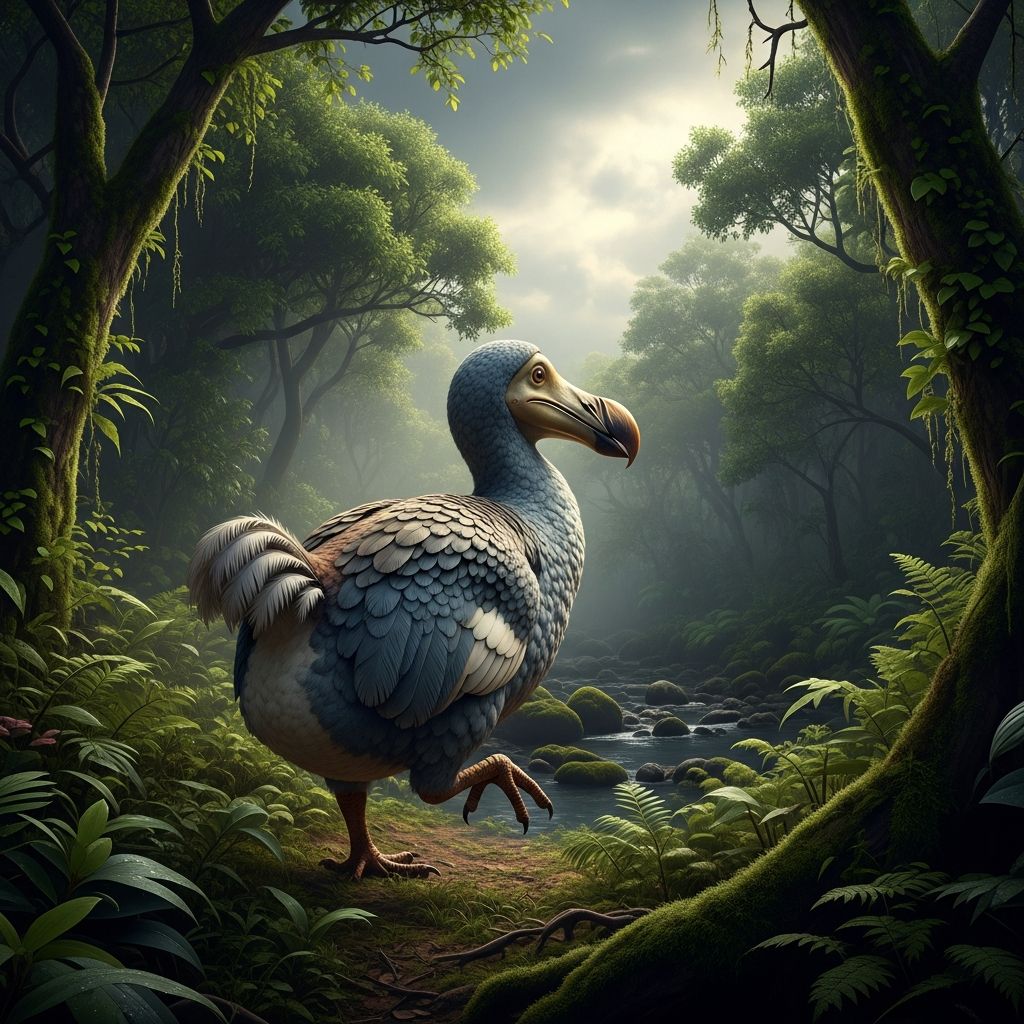
The Dodo’s Demise: A Cautionary Tale of Human Impact
The dodo bird, once a thriving species on the isolated island of Mauritius, vanished within decades of human contact. This flightless bird’s story highlights how quickly fragile ecosystems can collapse under pressure from newcomers.
Origins and Unique Adaptations of the Dodo
The dodo evolved in isolation on Mauritius, an island in the Indian Ocean formed by volcanic activity around 8 million years ago. Related to pigeons, these birds likely arrived via natural dispersal and adapted to a predator-free environment. Over time, they grew large, lost the ability to fly, and developed ground-nesting habits suited to their lush forest home.
Physical traits included a massive beak for cracking seeds, stout legs for waddling through underbrush, and a plump body that made them poor fliers but excellent foragers. Without threats, dodos became trusting and slow-moving, traits that later proved fatal.
- Key adaptations: Large size for defense against minor threats like crabs; specialized beak for hard seeds.
- Ground nests vulnerable only to local pests, not mammalian predators.
- Resilience shown through surviving droughts and volcanic events over millennia.
Human Arrival Disrupts Island Paradise
Portuguese sailors first sighted Mauritius around 1507, but Dutch explorers established a presence in 1598, naming the dodo after the Dutch word for “fat ass.” These visitors found the birds tame and abundant, making them easy prey for ship provisions.
Hunting began immediately. Sailors clubbed dodos en masse, as the birds showed no fear. Settlement amplified the problem: forests were cleared for agriculture and housing, destroying nesting grounds.
| Human Activity | Impact on Dodos |
|---|---|
| Direct hunting | Quick population decline due to ease of capture |
| Habitat clearance | Loss of forest cover and food sources |
| Settlement | Increased pressure from sustained harvesting |
Invasive Species: The Silent Killers
More devastating than hunting were animals humans introduced. Pigs rooted up nests and ate eggs, rats devoured chicks, and monkeys like macaques raided food supplies. Goats overgrazed vegetation, altering the forest understory where dodos foraged.
These invasives targeted dodo vulnerabilities perfectly. Unlike native crabs, mammals were relentless. Pigs and goats transformed habitats, while rats multiplied unchecked.
- Pigs: Ate eggs and competed for roots.
- Rats: Preyed on hatchlings.
- Monkeys: Consumed fruits and fledglings.
- Goats: Defoliated low vegetation.
Ecological studies confirm introduced species had a greater toll than overhunting alone.
Timeline of the Dodo’s Decline
From discovery to extinction spanned less than a century. Key milestones:
- 1507: Portuguese spot Mauritius.
- 1598: Dutch arrive, hunt dodos heavily.
- 1600s: Settlements introduce invasives; forests shrink.
- 1662: Last confirmed sighting (IUCN date).
- 1681-1700: Extinction, with estimates varying to 1693.
Debate persists on exact dates due to sparse records, but by 1710, when Dutch left, dodos were gone.
Ecological Role and Ripple Effects
Dodos weren’t just victims; they shaped Mauritius. Their beaks dispersed seeds from tall trees, aiding regeneration. With their loss, species like the tambalacoque tree declined, though other animals like tortoises may have helped.
Extinction cascaded: giant tortoises, fruit bats, and parrots followed, as invasives and habitat loss hit broadly.
Myths and Misconceptions Debunked
Popular lore paints dodos as dumb, overweight slobs. In reality, 17th-century depictions showed fattened captives, not wild birds. They were muscular, agile runners, not defenseless.
The “stupid” label ignores their success in a balanced ecosystem. Extinction stemmed from human disruption, not inferiority.
- Myth: Dodos were slow and stupid.
- Fact: Adapted perfectly until humans arrived.
- Myth: Hunting alone caused extinction.
- Fact: Invasives and habitat loss were primary.
Rediscovery and Scientific Revival
Extinction went unrecognized until the 19th century, doubted as myth. Georges Cuvier proved it with bones. Today, museums like AMNH display skeletons, piecing together life from subfossils.
Recent studies use CT scans and genetics, linking dodos to Nicobar pigeons. De-extinction talks emerge, but ethical hurdles loom.
Lessons for Modern Conservation
The dodo symbolizes human-induced extinction, first highlighted in 1833. It warns of island vulnerabilities worldwide—think Hawaii’s birds or Galapagos threats.
Today, invasives ravage ecosystems globally. Eradication efforts, like rat removal on islands, echo dodo prevention. Protected areas and biosecurity are key.
Climate change adds urgency, mimicking past droughts dodos endured.
FAQs
What caused the dodo bird to go extinct?
A mix of hunting, habitat destruction, and invasive species like pigs, rats, and monkeys.
Where did dodos live?
Exclusively on Mauritius in the Indian Ocean.
Were dodos really stupid?
No, they thrived for millennia; human arrival overwhelmed them.
When did the last dodo die?
Last sighting around 1662; extinct by 1700.
Can we bring back the dodo?
Genetic tech advances, but ecological and ethical issues persist.
References
- What happened to the dodo bird? — Britannica. 2026-01-06. https://www.britannica.com/video/Dodo-extinct-bird-island-Indian-Ocean-human-induced-extinction/-245100
- The Dodo Bird — American Museum of Natural History. N/A. https://www.amnh.org/exhibitions/permanent/biodiversity/dodo-bird
- The real reason dodo birds went extinct – Leon Claessens — YouTube (TED-Ed). N/A. https://www.youtube.com/watch?v=0EBFpj60LRY
- Dodo — Wikipedia (citing primary studies). N/A. https://en.wikipedia.org/wiki/Dodo
- The History of the Dodo Bird and the Cause of Its Extinction — ASA3 (PDF). 2005. https://www.asa3.org/ASA/PSCF/2005/PSCF9-05Bergman.pdf
- The dodo bird: The real facts about this icon of extinction — Natural History Museum. N/A. https://www.nhm.ac.uk/discover/the-dodo-bird-the-real-facts-about-this-icon-of-extinction.html
Similar Articles








Read full bio of medha deb