

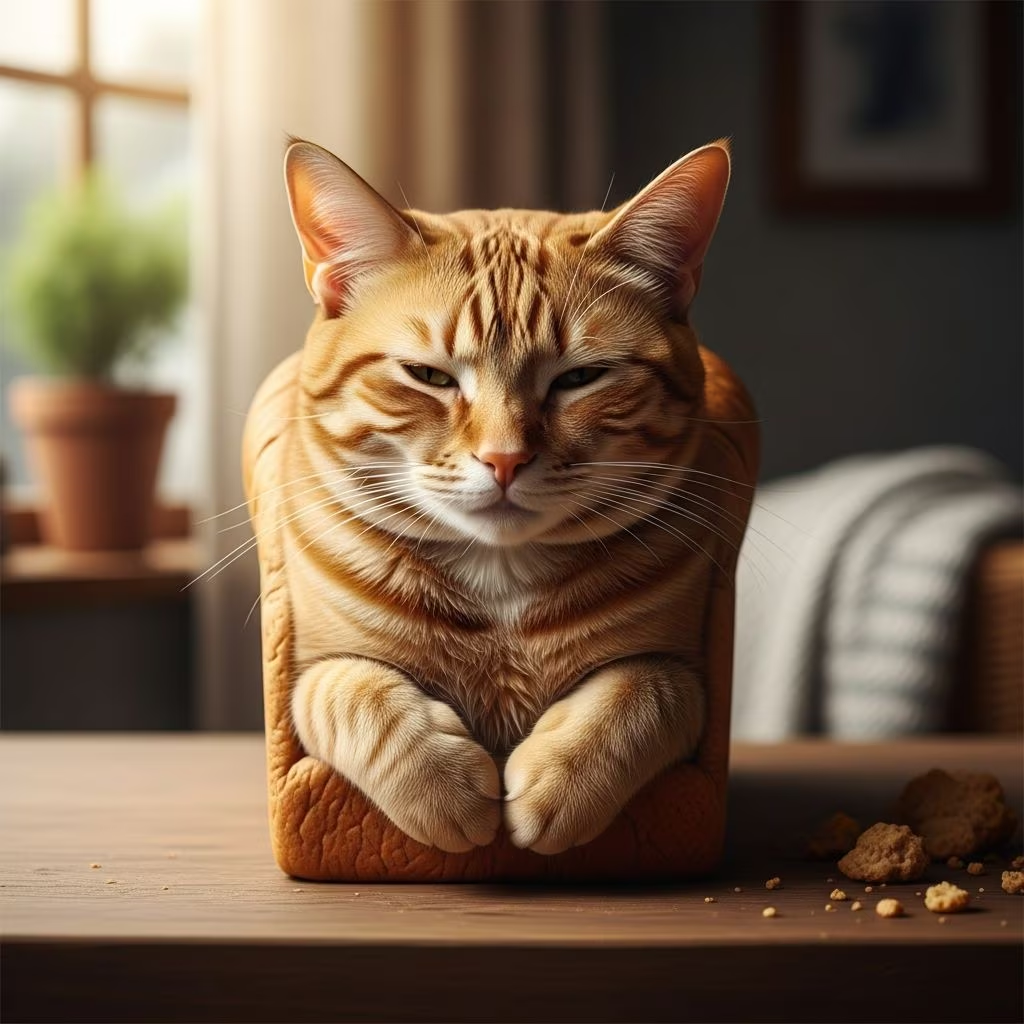
The cat loaf is one of the most endearing and recognizable postures in feline behavior, where a cat tucks its front paws under its chest, often with the hind legs folded beneath, resembling a compact loaf of bread. This position signals a blend of comfort, vigilance, and instinctual needs, offering cat owners valuable insights into their pet’s well-being.
Recognizing the Classic Cat Loaf
To spot a cat loaf, observe your pet lying on its stomach with paws neatly hidden underneath the body. The tail may curl around the side, and the head remains upright, creating a rectangular silhouette. Variations exist, such as the ‘meatloaf’ with extended hind legs or a slouchier version for deeper rest. This posture appears across all ages, breeds, and environments, from kittens to seniors, Persians to Siamese.
Unlike sprawling out, which indicates extreme relaxation or heat relief, the loaf balances rest with readiness. Cats in this pose can quickly unfold and spring into action, showcasing their evolutionary agility. Homeowners often capture these moments on sunny windowsills or soft cushions, where the loaf becomes a staple of daily cat life.
Primary Motivations Behind the Loaf
Cats adopt the loaf for several interconnected reasons rooted in biology and emotion. Understanding these helps interpret subtle mood shifts.
- Seeking Comfort and Relaxation: The loaf cradles joints and muscles, easing pressure points for prolonged rest. Veterinary behaviorists note it mirrors human lounging in a favorite chair, denoting contentment.
- Preserving Body Heat: By minimizing exposed surface area, cats trap warmth in cooler settings. Paws, with minimal insulation, stay protected under the torso.
- Defensive Readiness: Tucking limbs shields the vulnerable belly while allowing swift movement. It’s a low-energy vigilance pose.
- Environmental Security: Loafing in your presence signals trust, as paws aren’t poised for flight.
Loafing as a Sign of Trust and Contentment
When a cat loaves near you, especially with slow blinks or purring, it communicates profound trust. This vulnerability—exposing no limbs for defense—means the cat views its surroundings as safe. In multi-cat homes, loafing side-by-side fosters social bonds without full submission.
Experts from veterinary schools emphasize that loafers aren’t stressed or anxious. A relaxed facial expression, half-closed eyes, and even breathing confirm this positive state. Encourage it with cozy spots like heated mats or elevated perches, enhancing your bond.
Instinctual Protection in the Loaf Position
Despite its relaxed vibe, the loaf originates from wild ancestors’ survival tactics. Feral cats loafed in hidden nooks, belly down for camouflage and quick escapes. Domestic cats retain this: the upright head scans for threats, while the compact form deters attacks on soft underbellies.
At vet visits or with new pets, increased loafing protects vital organs amid uncertainty. It’s not fear but prudent caution, allowing rest without full exposure. This dual nature—restful yet alert—highlights cats’ finely tuned survival instincts even in pampered lives.
When Loafing Signals Health Concerns
Mostly benign, excessive or altered loafing warrants attention. If paired with lethargy, appetite loss, or hunching, it may indicate pain, like arthritis or organ issues. A ‘sick loaf’ features a lowered head or extended paws, linked to conditions such as kidney disease.
| Normal Loaf Traits | Potential Concern Signs |
|---|---|
| Upright head, alert eyes | Head down, ears back |
| Responsive to touch/petting | Avoids interaction, hides |
| Normal eating, playing | Reduced activity, vomiting |
Monitor changes; consult a vet if loafing dominates daily behavior or accompanies other symptoms. Early detection ensures your cat’s comfort.
Variations of the Cat Loaf Across Contexts
Cats tailor loafing to situations:
- Sunny Loaf: Near heat sources for thermoregulation.
- Social Loaf: Beside owners or familiars, showing affection.
- Vigilant Loaf: In novel environments, eyes wide open.
- Kitten Loaf: Playful tucks during naps.
These adaptations reveal nuanced communication, enriching observation.
Enhancing Your Cat’s Loafing Experience
Promote healthy loafing with:
- Soft, supportive bedding.
- Warm spots via sun or pads.
- Safe spaces for security.
- Regular health checks.
Observe preferences; some favor heights, others floors. This attentiveness boosts welfare and joy.
Fun Facts About Feline Loafing
- Loafing transcends breeds; even Maine Coons compact impressively.
- Internet fame stems from its photogenic squareness.
- Seniors loaf more for joint relief.
- No gender bias—all loaf equally.
Frequently Asked Questions
Is cat loafing always a good sign?
Typically yes, indicating relaxation. Watch for accompanying distress signals.
Why does my cat loaf on hard floors?
Cool surfaces aid temperature control; provide varied textures.
Can kittens loaf?
Absolutely, practicing from early weeks.
Does loafing mean my cat is bored?
No, it’s restful; enrich with toys if inactive otherwise.
How to photograph the perfect loaf?
Use natural light, patience; avoid disturbance.
References
- Why Do Cats Sit Like a Loaf? (Position & Meaning) — Cats.com. 2023. https://cats.com/why-do-cats-loaf
- Why Do Cats Sit Like a Loaf of Bread? Is This Normal? — Chewy.com. 2023. https://www.chewy.com/education/cat/training-and-behavior/why-do-cats-loaf
- Why Do Cats Loaf? — PetMD. 2023. https://www.petmd.com/cat/behavior/why-do-cats-loaf
- What Is a Cat Loaf and Why Do Cats Do It? — Under the Weather Pet. 2023. https://www.undertheweatherpet.com/blogs/under-the-weather/what-is-a-cat-loaf-and-why-do-cats-do-it
- Why do cats loaf? — The Cat is in the Box. 2023. https://thecatisinthebox.com/blogs/kitty-contemplations/why-do-cats-loaf



