

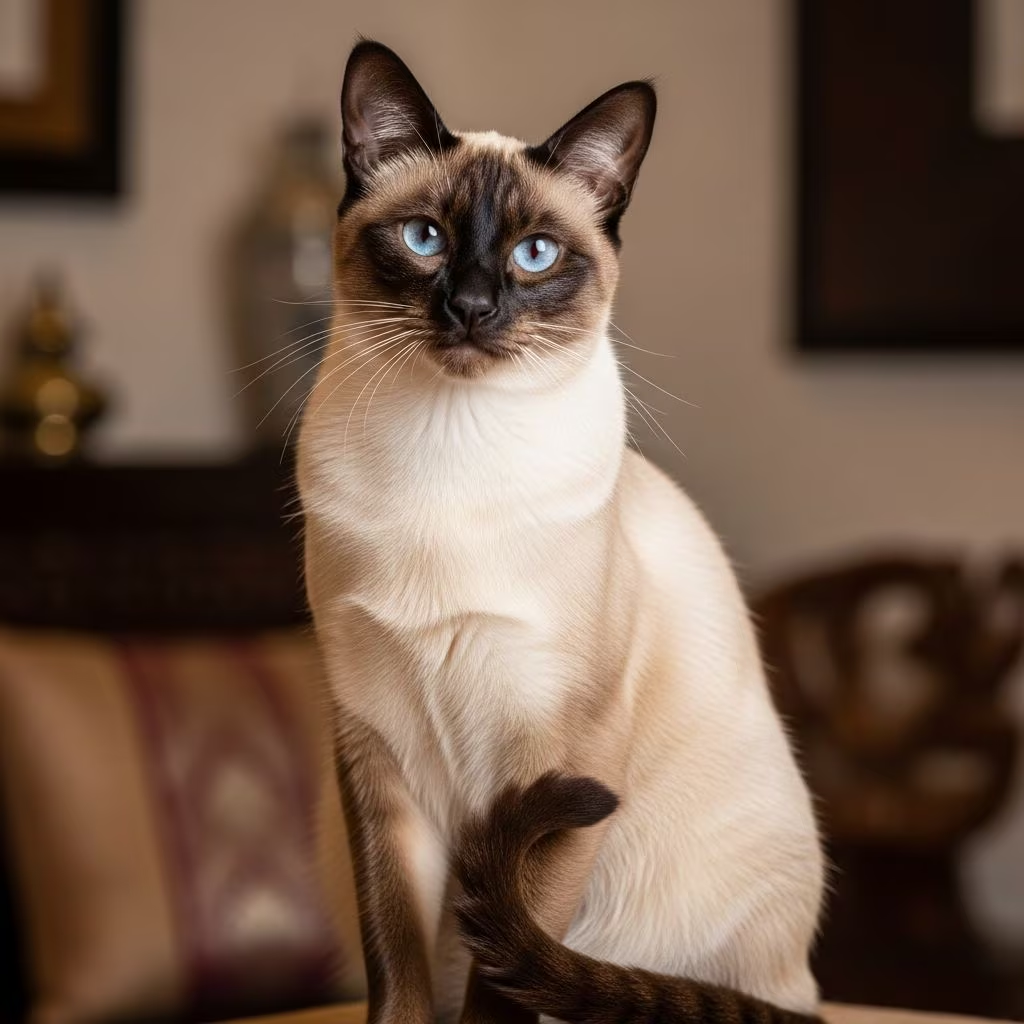
The Thai cat stands out as a living link to feline history, embodying the original pointed cats revered in Thailand for centuries. Known locally as Wichienmaat or “moon diamond,” this breed preserves the moderate conformation of early Siamese imports, distinguishing it from the sleeker modern versions.
Origins and Cultural Significance in Thailand
Deeply embedded in Thai heritage, the Thai cat traces its roots to ancient kingdoms like Ayutthaya and Siam. Documented in the Tamra Maew, a collection of cat poems from over 700 years ago, these felines were celebrated for their striking appearance and auspicious qualities. The Wichienmaat, with its pale body and dark points, symbolized purity and fortune, often kept in royal households.
In the late 19th century, British breeders imported these cats from Siam (modern Thailand), dubbing them Siamese. Early specimens featured rounded heads and sturdy builds, contrasting with today’s elongated show Siamese. Post-World War II breeding diverged: while Western lines pursued extremes, enthusiasts revived the traditional type, naming it Thai to honor its origins.
Thailand’s recent recognition of five native breeds, including the Wichienmaat, as national symbols in 2025 underscores their cultural pride and conservation efforts. This move highlights the breed’s enduring role in national identity, blending luck, beauty, and tradition.
Physical Characteristics and Breed Standards
Thai cats exhibit a balanced, foreign-type body: elongated yet not as tubular as modern Siamese. They weigh 7-12 pounds, with males larger, displaying graceful athleticism. Key traits include:
- Head: Modified wedge with a heart-shaped face, long flat forehead, and slight nose curve at eye level.
- Eyes: Large, almond-shaped blue eyes conveying alertness and intelligence.
- Body: Medium-sized, muscular yet elegant, with fine boning and a rounded chest.
- Coat: Short, single-layered, glossy fur in pointed patterns (seal, chocolate, blue, lilac). Kittens born white develop points as they grow; cooler areas darken the extremities due to temperature-sensitive pigmentation.
registries like TICA define the Thai as preserving Thailand’s native pointed cats and early Western Siamese, emphasizing genetic diversity from imports since 2001. The World Cat Federation granted championship status in 1990, solidifying its distinction.
| Feature | Thai Cat | Modern Siamese |
|---|---|---|
| Body Type | Moderate, sturdy | Slender, elongated |
| Head Shape | Rounder wedge | Triangular |
| Size | 7-12 lbs | 8-15 lbs, finer |
| Conformation Goal | Historical preservation | Show extremes |
Temperament and Behavior Traits
Renowned for their vocal, social nature, Thai cats form deep bonds with owners, often following them room-to-room. Highly intelligent and curious, they thrive on interaction, excelling in puzzle toys and training. Their agility shines in play, leaping with precision, yet they adapt well to apartments if mentally stimulated.
These felines are affectionate without clinginess, greeting family warmly while wary of strangers initially. Their people-loving personality, inherited from early Siamese, makes them poor isolation candidates—loneliness leads to vocal protests. With children and pets, they are sociable if socialized early, displaying dog-like loyalty.
Health and Wellness Considerations
Thai cats boast a robust lifespan of 12-16 years, benefiting from diverse genetics via Thai imports. Common concerns mirror Siamese lineage:
- Dental Issues: Monitor for gingivitis; daily brushing advised.
- Respiratory Sensitivity: Mild in moderates, but watch for allergies.
- Amyloidosis: Rare; regular vet checks essential.
- Obesity Risk: Active but portion control key.
Annual exams, vaccinations, and dental cleanings promote longevity. No breed-specific testing mandated beyond general pedigreed cat protocols.
Grooming and Daily Care Routines
Low-maintenance coats require weekly brushing to distribute oils and reduce shedding. Bathing is infrequent; focus on nail trims biweekly and ear cleaning monthly. Provide scratching posts to maintain claw health and furniture peace.
Diet should be high-protein, supporting lean muscle. Fresh water and elevated bowls suit their preference. Litter training is instinctive; covered boxes appeal to their privacy needs.
Training and Enrichment Strategies
Leverage their smarts for litter, leash, and trick training using positive reinforcement. Clicker methods yield quick results in fetching or high-fives. Interactive toys, vertical spaces, and window perches combat boredom-induced mischief.
Socialization from kittenhood ensures confidence. They excel in catios or harness walks, channeling energy outdoors safely.
Adoption, Breeding, and Ethical Sourcing
Seek TICA-registered breeders prioritizing health testing and outcrosses for vitality. Rescues often feature Thai mixes; adoption fees support spay/neuter. Avoid mills favoring aesthetics over welfare.
Kittens develop points by 1-2 years; expect $800-$1500 from ethical sources. Pedigrees trace to 19th-century lines, ensuring authenticity.
Comparing Thai Cats to Similar Breeds
- Vs. Siamese: Thai retains applehead charm; Siamese is sleeker.
- Vs. Balinese: Thai shorthair; Balinese longhair cousin.
- Vs. Tonkinese: Thai pure pointed; Tonkinese mink patterns.
Living with a Thai Cat: Real Owner Insights
Owners praise their conversational meows and devotion, likening them to family members. Challenges include vocal demands for attention, mitigated by routines. Ideal for active households seeking engaging companions.
Frequently Asked Questions (FAQs)
Are Thai cats hypoallergenic?
No, but short coats shed minimally with grooming.
Do Thai cats get along with dogs?
Yes, with proper introductions; their social nature aids harmony.
How vocal are Thai cats?
Quite; they “talk” to communicate needs and moods.
What’s the difference between Thai and Old-Style Siamese?
Synonymous in many contexts; Thai emphasizes Thai origins.
Can Thai cats live indoors only?
Absolutely; enrich environments prevent cabin fever.
References
- Thai cat – Wikipedia — Wikipedia. 2023-10-15. https://en.wikipedia.org/wiki/Thai_cat
- Thai – TICA Breed Introduction — The International Cat Association (TICA). 2018-08. https://tica.org/wp-content/uploads/2018/08/TICA-Thai-Breed-Introduction.pdf
- All about Thai cat breed — Animalia.bio. Accessed 2026. https://animalia.bio/pets/thai-cat
- Thai Cat Breed Information & Characteristics — CatTime. Accessed 2026. https://cattime.com/cat-breeds/thai
- Five Thai cats shape national identity — The Nation Thailand. 2025-11. https://www.nationthailand.com/life/art-culture/40061555
- The Real Housecats of Siam: Wichien Maat — Royal Thai Embassy Tehran. Accessed 2026. https://tehran.thaiembassy.org/en/content/the-real-housecats-of-siam-wichien-maat?cate=5d84630615e39c3cbc002bcf



