

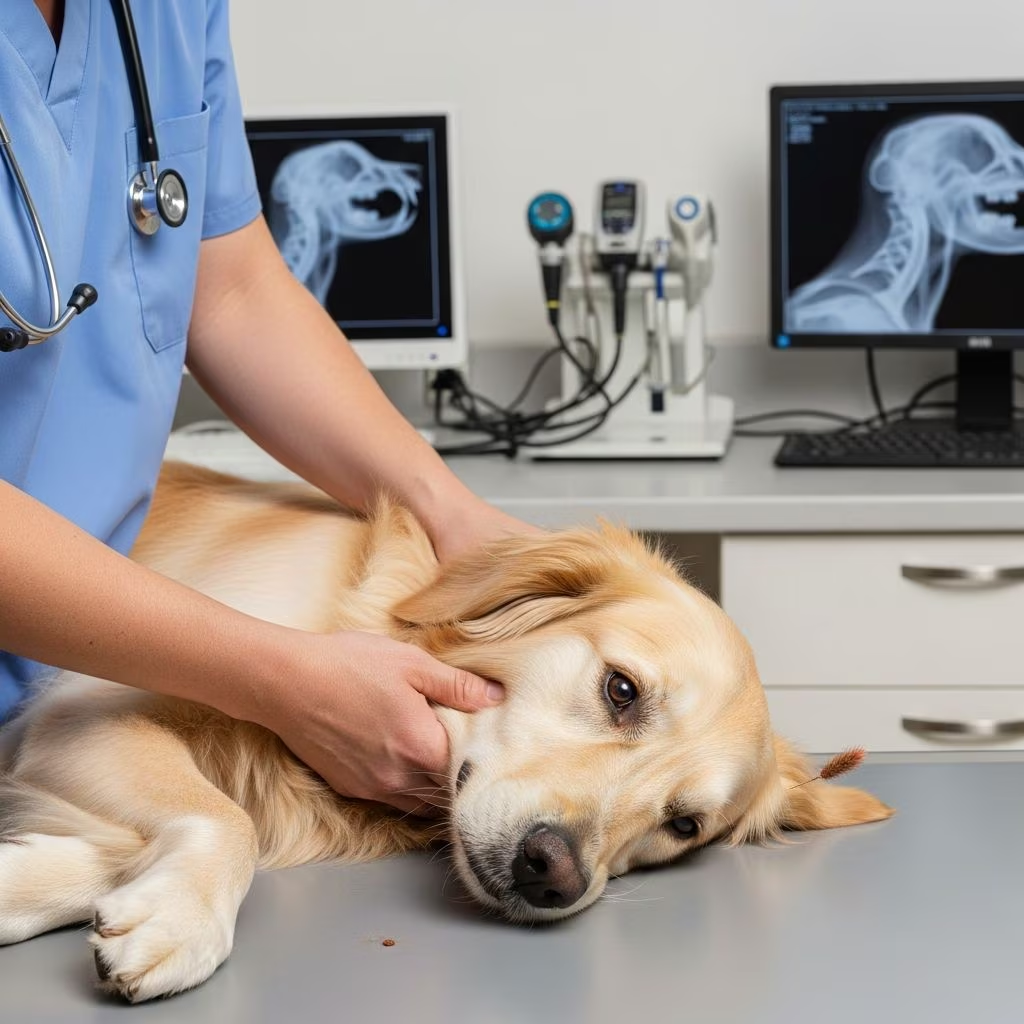
Tetanus in Dogs: Beyond Bites and Rusty Nails
Tetanus is a serious bacterial infection that affects dogs far more commonly than many pet owners realize. While popular culture often associates tetanus with rusty nails and deep puncture wounds, the reality is more complex. Dogs can contract tetanus through various pathways, and understanding this condition is essential for responsible pet ownership. This comprehensive guide explores the true nature of canine tetanus, how it develops, what symptoms to watch for, and how veterinarians treat this potentially life-threatening disease.
Understanding Tetanus: The Bacterial Culprit
Tetanus is caused by the bacterium Clostridium tetani, a gram-positive, anaerobic, spore-forming organism found ubiquitously throughout the environment. Unlike many bacteria, C. tetani spores are shed in animal feces and can survive for years in dirt and dust, making exposure a genuine risk for any dog that spends time outdoors.
The mechanism of tetanus is fascinating and frightening. When C. tetani spores enter a low-oxygen environment—such as inside a puncture wound—they rapidly vegetate and produce a potent neurotoxin called tetanospasmin. This toxin is what causes the characteristic symptoms of tetanus, making it far more dangerous than the bacteria itself. The toxin enters peripheral nerves at the infection site and migrates to the spinal cord and brainstem, where it irreversibly binds to interneurons. These interneurons normally inhibit motor neuron firing and prevent simultaneous contraction of opposing muscle groups. When the toxin blocks the release of inhibitory neurotransmitters—specifically glycine and GABA—it results in the uncontrolled, sustained muscle spasms characteristic of tetanus.
How Dogs Contract Tetanus
Contrary to popular belief, tetanus isn’t primarily a concern about stepping on rusty nails. Dogs contract tetanus through several specific pathways:
- External wounds: Any puncture wound, laceration, or abrasion that becomes contaminated can serve as an entry point for C. tetani spores
- Surgical wounds: Recent ovariohysterectomy (spaying) is the most frequently reported surgical procedure associated with tetanus development in dogs
- Oral sources: Tooth root abscesses and loss of deciduous teeth in young animals create anaerobic conditions that favor C. tetani proliferation
- Contaminated wounds: Any wound that becomes infected in an anaerobic environment can develop tetanus
The key requirement for tetanus development is an anaerobic (low-oxygen) environment. This is why deep puncture wounds are particularly dangerous—they create oxygen-poor spaces where spores can germinate and produce toxin. Superficial scratches or well-cleaned wounds are far less likely to result in tetanus.
Recognizing Tetanus Symptoms in Dogs
Early recognition of tetanus symptoms can be lifesaving. The progression of tetanus typically follows a predictable pattern:
Initial signs often appear around the head and face:
- Abnormal facial expression
- Erect or stiff ears
- Trismus (inability to open the mouth fully)
- Difficulty swallowing
Progressive symptoms develop as the toxin spreads:
- Localized muscle spasms and stiffness near the wound site
- Generalized muscle rigidity affecting all limbs
- Extensor rigidity (legs held in extended position)
- Characteristic “saw-horse stance” posture
- Elevated body temperature, often due to sustained muscle contractions
- Hypersensitivity to external stimuli like noise, light, and touch
Affected dogs are in considerable pain due to the sustained muscle contractions, yet they’re often physically unable to stop the spasming. This combination makes tetanus exceptionally distressing for the animal.
Diagnosis: Challenges and Approaches
Diagnosing tetanus in dogs presents unique challenges. There is no definitive diagnostic test readily available for tetanus, and diagnosis is typically made based on characteristic clinical signs combined with knowledge of recent wounds or procedures. While tests for tetanus toxin and C. tetani exist, they are not always reliable.
Veterinarians typically diagnose tetanus through:
- Physical examination revealing characteristic clinical signs
- History of recent wounds, surgical procedures, or oral infections
- Exclusion of other conditions that cause similar symptoms
- Identification of the wound responsible for infection (though this can often be difficult to locate)
Early diagnosis is crucial because the sooner tetanus is treated, the better the prognosis. Some cases progress rapidly, while others develop more gradually, but all confirmed or suspected cases require immediate veterinary intervention.
Comprehensive Treatment Strategies
Treatment of canine tetanus requires a multifaceted approach addressing the toxin, the bacteria, clinical signs, and supportive care needs:
Antitoxin Administration
Tetanus antitoxin is most effective when administered early in the disease’s progression. The antitoxin works by binding to circulating tetanus toxin and preventing it from attaching to nerve cells. However, once the toxin has already bound to nerves, antitoxin will not have any benefit. In the retrospective study of 18 dogs with tetanus, tetanus antitoxin was used in 72.2% of dogs without reported adverse events, though veterinarians may consider administering diphenhydramine or dexamethasone prior to antitoxin administration to reduce anaphylaxis risk.
Antibiotic Therapy
Metronidazole is the antibiotic of choice for treating tetanus in both dogs and humans. Dogs receiving metronidazole have shown improved response to treatment with significantly lower mortality rates and shorter hospital stays compared to those receiving penicillin. The typical regimen involves intravenous metronidazole (10mg/kg twice daily) for a minimum of 10 days, often transitioning to oral administration for the remainder of a two-week course. Metronidazole is particularly effective because it is more active against anaerobes and achieves high concentrations in anaerobic tissues.
Muscle Relaxants and Sedation
Managing the severe muscle spasms and pain is central to tetanus treatment. Several medication options are employed:
- Benzodiazepines: Diazepam (0.2-0.5mg/kg IV every 4-6 hours) and midazolam (0.2mg/kg IV every 4-6 hours) are frequently used as first-line drugs, providing muscle relaxation and anxiolytic effects
- Acepromazine: A phenothiazine sedative commonly used at 0.005-0.05mg/kg IV every 6-8 hours
- Advanced options: In severe cases refractory to standard combinations, constant rate infusions of medetomidine, pentobarbital, or propofol may be considered
- Magnesium therapy: Supraphysiological magnesium therapy can help reduce muscle spasms in dogs with severe tetanus
Pain Management
The sustained muscle contractions of tetanus are intensely painful. Appropriate analgesia is essential and may include opiates such as buprenorphine or methadone, as well as NSAIDs, though care must be taken given the possible increased risk of gastrointestinal ulceration in tetanus patients.
Nutritional Support
Dogs with tetanus often cannot swallow normally due to trismus and muscle rigidity. In the retrospective study, a percutaneous endoscopic gastropexy tube was placed in 83.3% of dogs (15 of 18) for nutritional support. Tube feeding is necessary to support patients with trismus, allowing frequent small meals while bypassing the inability to swallow. Intravenous fluid therapy with balanced crystalloid solutions maintains hydration and corrects electrolyte abnormalities.
Wound Management
Identification and cleaning of any wounds is a critical first step. In cases where the source wound is identified and still active, surgical wound revision may be necessary. Nine dogs in the retrospective study required surgical wound revision, highlighting the importance of this intervention.
Supportive Care
Severely affected patients require intensive, long-term supportive care. This includes:
- Management of patients confined to recumbency (lying down)
- Placement of central venous lines in severely affected cases for medication and fluid administration
- Bladder catheterization if urinary retention occurs
- Enemas if fecal retention develops
- Avoidance of stimuli that could exacerbate spasms—pain, noise, manipulation, and excessive light should all be minimized
Recovery Timeline and Prognosis
Recovery from tetanus typically requires four to six weeks of supportive care. The duration and intensity of care depend on disease severity. With appropriate treatment, many dogs make full recoveries, though the period of intensive nursing can be substantial. The retrospective study of 18 dogs demonstrated that with comprehensive treatment including antitoxin, antibiotics, muscle relaxants, and nutritional support, dogs can achieve full recovery.
Prevention: The Best Medicine
While tetanus treatment has improved significantly, prevention remains the best approach:
- Promptly clean and treat any wounds, particularly puncture wounds
- Have veterinary wounds evaluated and treated to prevent infection
- Maintain oral health to prevent tooth root abscesses
- Discuss preventive strategies with your veterinarian, particularly for dogs in high-risk environments
- Monitor dogs after surgical procedures for signs of infection
Frequently Asked Questions
Q: Can my dog get tetanus from stepping on a rusty nail?
A: While tetanus is often associated with rusty nails, any puncture wound in a low-oxygen environment can cause tetanus. The rust itself isn’t the problem—it’s the anaerobic conditions created by the wound.
Q: Is tetanus contagious between dogs?
A: No, tetanus is not contagious between animals. It requires specific conditions—a contaminated wound in an anaerobic environment—to develop.
Q: How long does tetanus treatment take?
A: Recovery typically requires four to six weeks of intensive supportive care, with antibiotic treatment lasting at least 10 days to two weeks.
Q: What is the survival rate for dogs with tetanus?
A: With appropriate modern treatment including antitoxin, antibiotics, muscle relaxants, and supportive care, many dogs survive tetanus. Studies show that dogs receiving metronidazole have significantly lower mortality rates than those treated with other antibiotics.
Q: Can tetanus be prevented with vaccination?
A: While tetanus vaccines exist for humans, they are not routinely recommended for dogs. Prevention focuses on prompt wound care, infection prevention, and maintaining oral health.
Q: What should I do if my dog has a puncture wound?
A: Seek immediate veterinary care. Prompt cleaning and treatment of puncture wounds significantly reduces the risk of tetanus development. Inform your veterinarian about the type of wound and any contamination.
References
- Retrospective study of tetanus in 18 dogs—Causes, management and outcome — Frontiers in Veterinary Science. 2023-11-15. https://www.frontiersin.org/journals/veterinary-science/articles/10.3389/fvets.2023.1249833/full
- Diagnosis and treatment of tetanus in cats and dogs — Veterinary Practice. 2024. https://www.veterinary-practice.com/article/diagnosis-treatment-tetanus
- Tetanus in Dogs: Recognizing Symptoms and When to Seek Help — Vets Now. 2024. https://www.vets-now.com/pet-care-advice/tetanus-in-dogs/
- Tetanus in dogs: clinical signs and management — Vet Times. 2023-09-14. https://www.vettimes.com/news/vets/small-animal-vets/tetanus-in-dogs-clinical-signs-and-management
- Tetanus in Dogs: Understanding and Managing the Threat — Animal Emergency Service. 2024. https://animalemergencyservice.com.au/blog/tetanus-in-dogs-understanding-and-managing-the-threat/
- Tetanus in Dogs: Signs and Management — Veteris. 2024. https://veteris.co.uk/petcare-advice/tetanus-in-dogs-signs-and-management
- Tetanus in Dogs — VCA Animal Hospitals. 2024. https://vcahospitals.com/know-your-pet/tetanus-in-dogs



