

Testing for Abdominal Enlargement in Cats
Abdominal enlargement in cats can indicate various underlying health conditions ranging from benign to serious, requiring careful diagnostic evaluation. When pet owners notice their cat’s belly appears swollen or distended, seeking veterinary attention is essential to determine the cause and appropriate treatment. This guide explores the comprehensive testing procedures that veterinarians use to diagnose and identify the reasons behind abdominal enlargement in feline patients.
Understanding Abdominal Enlargement in Cats
Abdominal enlargement, also called abdominal distension, describes the swelling or enlargement of a cat’s abdomen. This condition can result from numerous causes, including organ disease, infection, tumors, fluid accumulation, or injury. The severity of abdominal enlargement varies depending on the underlying condition, and some cases require emergency intervention while others may be managed through medical treatment. Recognizing that abdominal enlargement is a symptom rather than a diagnosis itself is crucial for proper veterinary care.
Common presentations of abdominal enlargement include visible swelling, a distended appearance, or noticeable discomfort when the area is touched. Cats with enlarged abdomens may also exhibit behavioral changes such as reluctance to move, decreased appetite, or lethargy. Some cats may have difficulty jumping or adopting their normal posture due to abdominal discomfort.
Initial Physical Examination
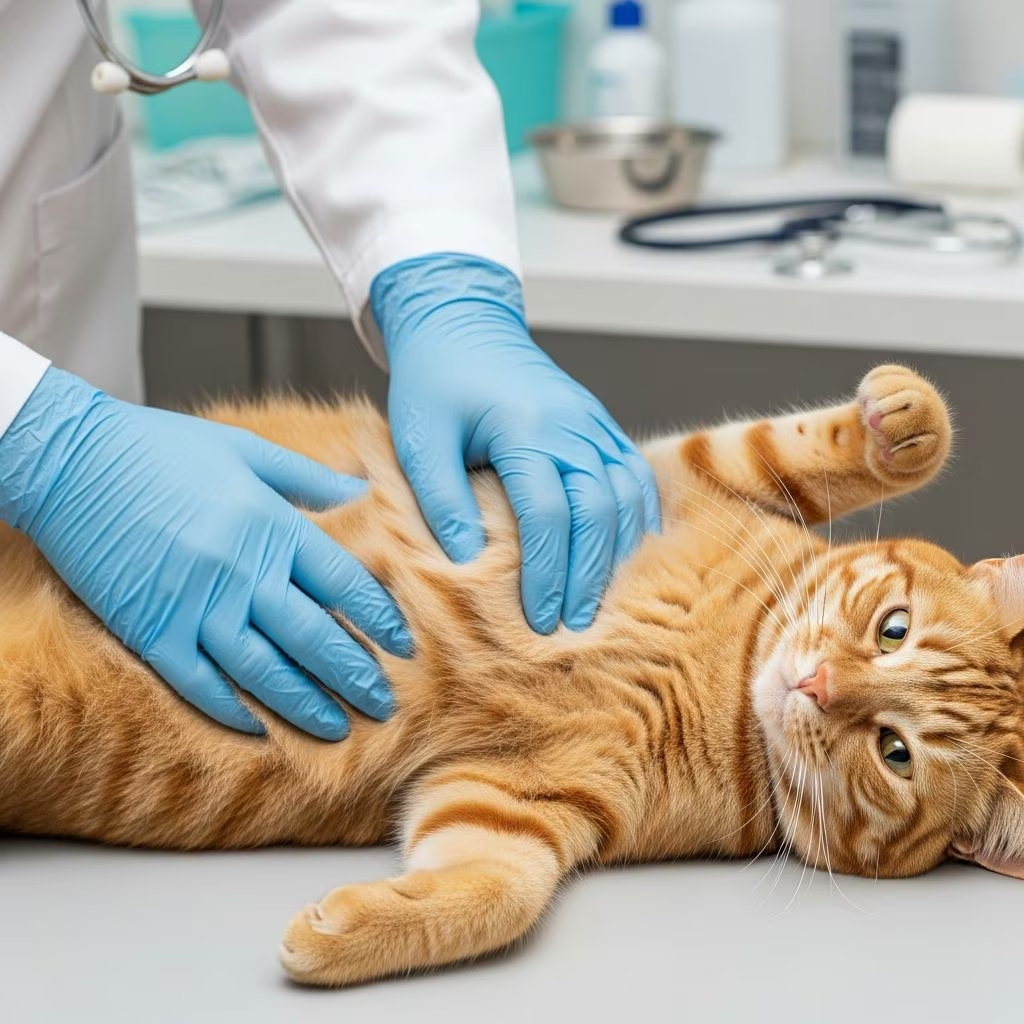
The diagnostic process for abdominal enlargement begins with a thorough physical examination performed by a veterinarian. During this initial assessment, the veterinarian will carefully palpate (feel) the abdomen to assess the degree of swelling and check for signs of pain or discomfort. This hands-on evaluation helps the veterinarian determine which abdominal organs may be involved and whether the enlargement is uniform or localized to specific areas.
The physical examination also includes:
- Assessment of the cat’s overall body condition and hydration status
- Evaluation of mucous membrane color and capillary refill time
- Temperature measurement to detect fever or hypothermia
- Abdominal palpation to identify painful areas or abnormal organ enlargement
- Listening with a stethoscope to detect abnormal bowel sounds
During abdominal palpation, the veterinarian feels the areas where the bladder, kidneys, liver, intestines, spleen, and stomach are located to assess whether these organs appear normal or abnormal. This tactile examination can reveal subtle evidence of discomfort and help guide further diagnostic testing.
Diagnostic Imaging Techniques
Diagnostic imaging plays a crucial role in identifying the cause of abdominal enlargement. Veterinarians employ several imaging modalities to visualize the contents and structures within the abdominal cavity.
Radiographs (X-rays)
Radiographs are often the first imaging study performed when evaluating abdominal enlargement. X-rays of the abdomen provide valuable information about the size and appearance of internal organs. Radiographs can assess the size of the colon and detect abdominal masses that may be contributing to the enlargement. This imaging technique is particularly useful for identifying foreign bodies, blockages, or abnormal gas patterns within the intestinal tract.
For cats with suspected megacolon or severe constipation, radiographs can clearly demonstrate an enlarged colon filled with hard fecal material. The radiation exposure from abdominal radiographs is minimal, making this a safe initial diagnostic tool.
Ultrasound Imaging
Ultrasound provides superior soft tissue detail and is particularly valuable for evaluating internal organs. Ultrasound can measure the thickness of the stomach and intestinal linings and also evaluate the size of the lymph nodes around the intestines. This imaging technique is non-invasive and does not involve radiation exposure, making it an excellent choice for cats requiring multiple imaging studies.
Ultrasound is especially useful for identifying fluid accumulation within the abdomen, assessing organ enlargement, detecting masses, and evaluating blood flow within abdominal vessels. Many cats tolerate ultrasound examination well, and it can often be performed without general anesthesia.
Advanced Imaging
In some cases, veterinarians may recommend CT (computed tomography) scanning or MRI (magnetic resonance imaging) for more detailed visualization of abdominal structures. These advanced imaging techniques provide three-dimensional views and can detect abnormalities that may not be visible on radiographs or ultrasound. However, both CT and MRI typically require general anesthesia in cats.
Laboratory Testing
Laboratory tests provide important information about the cat’s overall health and can help identify systemic diseases contributing to abdominal enlargement.
Blood Work
Blood tests are commonly performed to evaluate organ function and detect infections or other systemic conditions. These tests can reveal liver issues, kidney disease, infections, inflammation, or electrolyte imbalances. A complete blood count (CBC) helps identify anemia or signs of infection, while a biochemistry panel assesses liver, kidney, and pancreatic function.
Urinalysis
Urine analysis can provide insights into urinary tract health and kidney function. Abnormal findings in the urine may indicate urinary tract disease or systemic conditions affecting multiple organ systems.
Fecal Analysis
A fresh fecal sample is typically collected and microscopically evaluated to detect parasites or parasitic eggs that may contribute to abdominal problems. In some cats, intestinal parasites can cause abdominal distension and other gastrointestinal symptoms.
Abdominal Fluid Analysis
When abdominal distension appears to be caused by fluid accumulation, the veterinarian may recommend sampling the abdominal fluid through a procedure called abdominocentesis. This involves carefully inserting a needle through the abdominal wall to collect fluid for analysis. The fluid sample is then examined for the presence of cells, bacteria, protein levels, and other characteristics that help identify the underlying cause of fluid accumulation.
Analysis of abdominal fluid can help diagnose conditions such as peritonitis, hemorrhage into the abdomen, or other serious abdominal diseases. In cases of feline infectious peritonitis (FIP), abdominal fluid analysis may provide diagnostic clues to this potentially fatal viral disease.
Endoscopic Examination
When gastrointestinal disease is suspected, endoscopy may be recommended to visualize the inside of the stomach or colon. An endoscope is a flexible tube with a viewing port or video camera attachment that is inserted into the stomach through the mouth or into the colon via the rectum. This procedure permits direct inspection of the inside of these hollow structures and allows the veterinarian to identify abnormalities such as inflammation, abnormal swelling, masses, and areas of scarring or stricture.
If a foreign body is present, it can usually be seen and retrieved using endoscopic equipment. The endoscope has a tiny channel through which a biopsy instrument can be passed, allowing the veterinarian to obtain precise tissue samples from any abnormal areas detected during the examination.
Endoscopic examination requires general anesthesia in cats. Preparation for colonoscopy involves oral medication begun 12 to 18 hours before the procedure to remove fecal material, along with fasting and enemas to ensure the colon is empty and clearly visible.
Tissue Biopsy and Pathological Examination
In many cases of abdominal enlargement, obtaining tissue samples is necessary to reach a definitive diagnosis. Biopsies can be obtained either through endoscopic procedures or through surgical exploration. Tissue samples consist of small pieces cut from the organ lining or full thickness of the organ wall, depending on what is suspected.
The tissue samples are submitted to a veterinary pathologist for microscopic evaluation, which can reveal inflammatory changes, infectious agents, cancerous cells, or other abnormalities. Even when organs appear visually normal during endoscopy or surgery, biopsies are often taken because many diseases cause changes that can only be detected through microscopic examination.
The final diagnosis usually depends on the pathologist’s study of the biopsies, which may take several weeks depending on circumstances.
Surgical Exploration
When the cause of abdominal enlargement cannot be identified through non-invasive means, exploratory surgery (exploratory laparotomy) may be necessary. This procedure involves surgically opening the abdomen to directly visualize and assess the abdominal organs. Exploratory surgery allows the veterinarian to obtain full-thickness biopsies and directly evaluate organs that are inaccessible to endoscopic examination, such as the small intestine.
The benefit of exploratory surgery is that full-thickness biopsies often provide better diagnostic samples compared to surface biopsies obtained through endoscopy. Additionally, surgical exploration may reveal unexpected findings or allow the veterinarian to address the underlying problem during the same procedure.
Diagnostic Approach Summary
The diagnostic approach to abdominal enlargement in cats typically follows this general progression:
- Comprehensive history and initial physical examination
- Abdominal radiographs to assess organ size and detect masses
- Blood work and urinalysis to evaluate organ function
- Abdominal ultrasound for detailed soft tissue evaluation
- Abdominal fluid analysis if fluid accumulation is present
- Endoscopy or exploratory surgery with tissue biopsy if indicated
- Advanced imaging (CT or MRI) in complex cases
The specific tests recommended will depend on the clinical presentation, physical examination findings, and initial diagnostic results. Your veterinarian will tailor the diagnostic plan to your individual cat’s situation.
Frequently Asked Questions
Q: Why does my cat need so many tests for abdominal enlargement?
A: Abdominal enlargement can result from many different conditions, and multiple diagnostic tests help identify the specific underlying cause. Different tests provide different types of information, and together they help reach an accurate diagnosis.
Q: Is anesthesia required for diagnostic testing of abdominal enlargement?
A: Not for all tests. Radiographs, ultrasound, and blood work can typically be performed without anesthesia. However, endoscopy and exploratory surgery do require general anesthesia because cats cannot cooperate with these procedures while conscious.
Q: How long does it take to get a diagnosis for abdominal enlargement?
A: The timeline depends on which tests are performed. Physical examination and radiographs provide immediate information. Blood work and urinalysis results typically return within 24 to 48 hours. Biopsy results may take several weeks, depending on the laboratory workload.
Q: What is the difference between ultrasound and radiographs?
A: Radiographs use X-rays to create images and are good for viewing bone and detecting gas patterns. Ultrasound uses sound waves to create images and provides better detail of soft tissues like organs. Both are valuable and often used together.
Q: Can abdominal enlargement in cats be treated without surgery?
A: Many causes of abdominal enlargement can be managed medically with medications such as anti-inflammatories, pain relief, steroids, or antibiotics, depending on the underlying condition. However, some conditions require surgical intervention.
References
- Megacolon in Cats — VCA Animal Hospitals. Accessed 2025. https://vcahospitals.com/know-your-pet/megacolon-in-cats
- Gastrointestinal Endoscopy in Cats — VCA Animal Hospitals. Accessed 2025. https://vcahospitals.com/know-your-pet/endoscopy-gastrointestinal-in-cats
- Inflammatory Bowel Disease in Cats — VCA Animal Hospitals. Accessed 2025. https://vcahospitals.com/know-your-pet/inflammatory-bowel-disease-in-cats
- Bloating (Abdominal Distension) in Cats – Causes, Treatment and Prevention — Vetster. Accessed 2025. https://vetster.com/en/symptoms/cat/bloating-abdominal-distension
- Cat Bloat: Causes, Symptoms and Treatment — Pets Best Insurance. Accessed 2025. https://www.petsbest.com/blog/bloated-cat
- Wellness Examination in Cats — VCA Animal Hospitals. Accessed 2025. https://vcahospitals.com/know-your-pet/wellness-examination-in-cats
- 7 Pet Emergencies Requiring an Immediate Vet Visit — MetLife Pet Insurance. Accessed 2025. https://www.metlifepetinsurance.com/blog/pet-health/7-pet-emergencies-vet-visit/



