

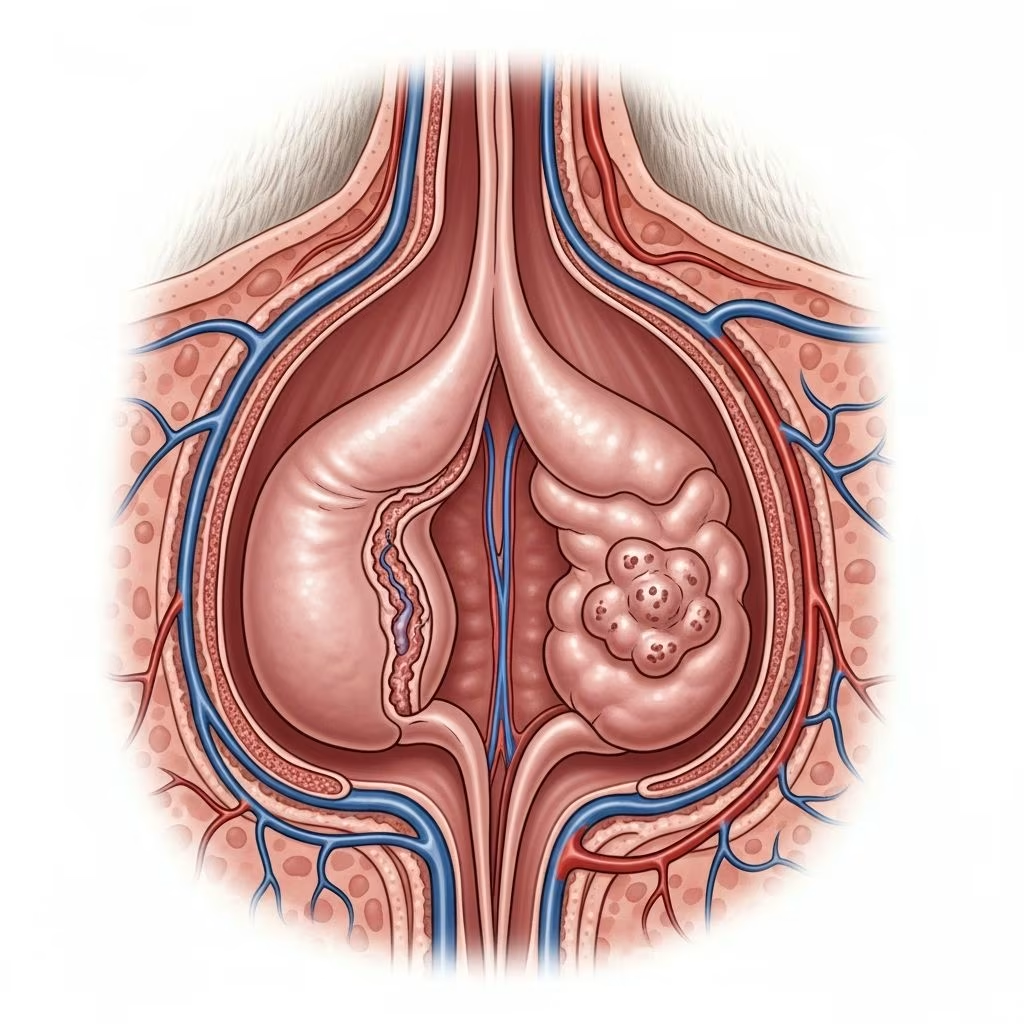
Testicular tumors represent one of the most prevalent forms of cancer in unneutered male dogs, often affecting older intact males. These growths originate in the testicles and can vary from benign to malignant, but early identification significantly enhances treatment success rates. This article delves into the nature of these tumors, their detection, management strategies, and long-term care considerations.
Prevalence and Demographics of Canine Testicular Neoplasia
In the veterinary field, testicular tumors account for a substantial portion of neoplasms in intact male dogs, with studies indicating they comprise up to 27% of all tumors reported in this population. Breeds such as Boxers, German Shepherds, and Bulldogs appear predisposed, alongside smaller breeds like Poodles and Shetland Sheepdogs. Age plays a critical role, with the average onset around 10 years, though cases occur in dogs as young as 2 years.
Three primary histological types dominate: seminomas, which arise from germ cells and are typically benign; Sertoli cell tumors, originating in supporting cells and capable of hormone production; and Leydig cell tumors, interstitial growths that are usually non-aggressive. Mixed presentations, where multiple tumor types coexist in a single testicle, occur in approximately 20-40% of cases, complicating diagnosis but not necessarily prognosis.
Recognizing Early Warning Signs
Pet owners should remain vigilant for subtle changes in their dog’s genital area. Common indicators include:
- Visible or palpable enlargement of one or both testicles, often firm and non-painful.
- Scrotal swelling or asymmetry, sometimes accompanied by reddish discoloration.
- Symmetrical hair loss (feminization syndrome) on the flanks, abdomen, or tail base due to estrogen secretion from Sertoli cell tumors.
- Behavioral shifts such as increased aggression, lethargy, or decreased libido.
- Perianal gland enlargement or attraction of other males, linked to hormonal imbalances.
Advanced manifestations might involve hind leg weakness from tumor pressure on nerves, urinary issues if the mass compresses the bladder, or systemic signs like weight loss and anorexia in metastatic cases. Unlike human testicular cancer, canine versions rarely cause acute pain unless secondary infection develops.
Risk Factors and Genetic Influences
Neutering before puberty eliminates risk entirely, underscoring its preventive value. Cryptorchidism, where one testicle fails to descend, elevates malignancy odds by 10-13 times, particularly for seminomas. Hormonal influences, breed genetics, and environmental toxins may contribute, though research remains ongoing. Owners of high-risk breeds should prioritize annual testicular exams starting at age 7.
| Risk Factor | Impact Level | Prevalence in Affected Dogs |
|---|---|---|
| Intact status | High | 100% |
| Cryptorchid testicle | Very High | 10-27% |
| Age >10 years | Moderate | ~50% |
| Specific breeds (e.g., Boxer) | Moderate | Variable by breed |
Diagnostic Approaches in Veterinary Practice
Veterinarians employ a multi-step protocol for accurate assessment. Initial physical palpation detects masses, followed by fine-needle aspiration for cytology, though this risks tumor seeding. Ultrasonography provides detailed imaging, distinguishing solid tumors from fluid-filled cysts or abscesses, with hypoechoic patterns typical for neoplasia.
Bloodwork evaluates hormone levels—elevated estrogen signals Sertoli cell involvement—while complete blood counts and chemistries screen for metastasis. Definitive diagnosis requires orchiectomy with histopathological analysis, classifying tumor type and stage. Chest radiographs and abdominal ultrasound check for spread to lungs or lymph nodes, present in under 15% of cases at diagnosis.
Treatment Modalities: From Surgery to Advanced Therapies
Castration via prescrotal orchiectomy remains the cornerstone, curative for most localized tumors. Both testicles are removed even if only one is affected, preventing contralateral development. For cryptorchid cases, laparoscopic removal targets abdominal testicles safely.
Metastatic disease, rare but serious, may necessitate chemotherapy agents like cisplatin or carboplatin, often post-surgery. Radiation is seldom used due to testicular sensitivity. Hormone therapy addresses feminization symptoms, resolving post-castration in weeks.
- Stage I (Localized): Orchiectomy alone; 95%+ success.
- Stage II (Lymph node involvement): Surgery + chemo; good prognosis.
- Stage III (Distant metastasis): Multimodal; guarded outlook.
Prognosis and Long-Term Outcomes
Benign tumors boast near-100% survival post-surgery, while malignant ones exceed 80% one-year survival with prompt intervention. Recurrence is minimal after complete excision, with regular follow-ups including physical exams, imaging, and tumor marker checks every 3-6 months initially.
Post-castration, monitor for complications like urinary incontinence or perianal issues, manageable with medications. Quality of life typically improves, with resolution of hormonal effects enhancing mobility and behavior.
Preventive Strategies and Routine Care
Neutering at 6-12 months prevents 100% of cases, offering dual benefits of cancer avoidance and population control. For breeding dogs, annual palpation and semen analysis detect early changes. Maintain ideal weight, avoid carcinogen exposure, and schedule bi-annual vet visits for at-risk seniors.
Living with a Dog Post-Diagnosis: Owner Support Guide
Emotional support is vital; join online forums or pet cancer groups. Adjust diet to high-protein, antioxidant-rich formulas supporting immunity. Gentle exercise prevents obesity, a post-neuter concern. Track symptoms via a journal for vet discussions.
Frequently Asked Questions (FAQs)
Are testicular tumors painful in dogs?
Typically not, unless infected or advanced; dogs may show discomfort through limping or reluctance to sit.
Can neutered dogs develop these tumors?
No, as testicles are absent; rare prostate or perineal growths mimic symptoms.
How quickly do they spread?
Seminomas grow slowly with low metastasis (<10%); Sertoli/Leydig more variable.
Is chemotherapy safe for older dogs?
Yes, with tailored protocols minimizing side effects like nausea.
What breeds are most susceptible?
Boxers, Retrievers, Poodles, and Sheepdogs top the list.
Empowering owners with knowledge fosters proactive care, turning potential crises into manageable conditions. Consult your veterinarian promptly for any scrotal changes.
References
- Testicular Cancer: Symptoms, Signs, Causes & Treatment — Cleveland Clinic. 2023-10-15. https://my.clevelandclinic.org/health/diseases/12183-testicular-cancer
- Testicular Cancer Treatment – NCI — National Cancer Institute. 2024-05-20. https://www.cancer.gov/types/testicular/patient/testicular-treatment-pdq
- Testicular Cancer: Diagnosis and Treatment — American Academy of Family Physicians. 2018-02-15. https://www.aafp.org/pubs/afp/issues/2018/0215/p261.html
- Testicular Cancer – Symptoms and causes — Mayo Clinic. 2024-08-10. https://www.mayoclinic.org/diseases-conditions/testicular-cancer-care/symptoms-causes/syc-20352986
- Testicular Cancer — University of Washington Urology. 2023-11-05. https://urology.uw.edu/patient-care/conditions-and-treatments/testicular-cancer



