

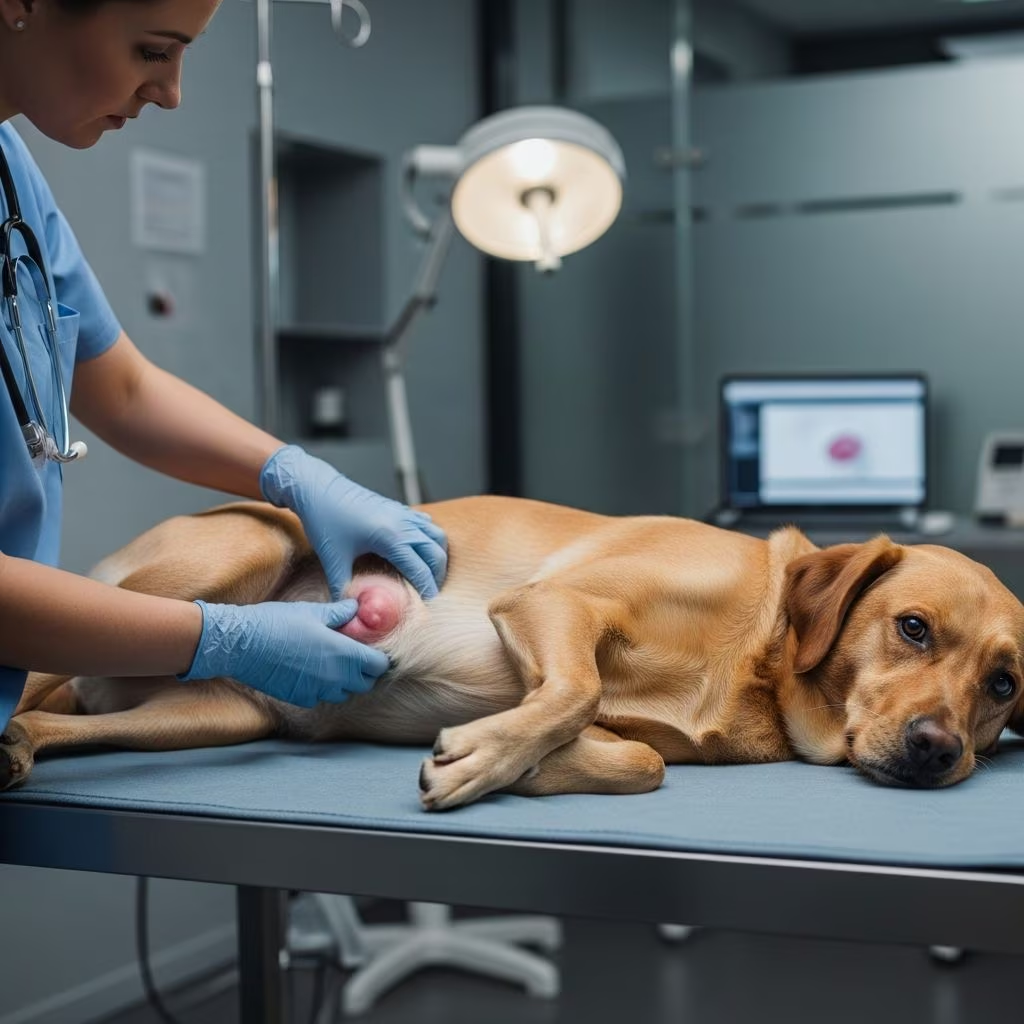
Testicular Tumors in Dogs: A Comprehensive Guide
Testicular tumors are among the most common reproductive tract tumors in male dogs and account for approximately 4-7% of all tumors diagnosed in canine patients. These tumors occur primarily in older, unneutered male dogs and represent a significant concern for pet owners. While testicular tumors can be concerning, the prognosis is generally good when diagnosed early and treated appropriately. Understanding the nature of these tumors, their symptoms, and available treatment options can help dog owners make informed decisions about their pets’ health.
What Are Testicular Tumors?
Testicular tumors develop when cells in the testicles grow abnormally and divide uncontrollably, forming an abnormal mass of tissue. In intact male dogs, the testicles produce sperm for reproduction and also produce male hormones such as testosterone. When abnormal cell growth occurs, these masses can enlarge over time if left untreated. It is important to note that testicular tumors are not particularly common in the general dog population, primarily because many dogs are neutered at a young age, which effectively prevents testicular tumor development.
In one retrospective study of over 300 male dogs, researchers found that approximately 27% of intact male dogs develop testicular tumors, making them relatively prevalent in the unneutered population. Most tumors remain localized to the testicles themselves, though metastasis (spreading to other parts of the body) occurs in approximately 10-20% of cases.
Types of Testicular Tumors in Dogs
Three main types of testicular tumors are commonly found in male dogs, each originating from different cellular components of the testicle:
Seminomas
Seminomas develop from germ cells, which are the cells responsible for sperm production. These tumors account for approximately 23.9% of testicular tumors in dogs and are particularly common in certain breeds such as Labrador Retrievers and Golden Retrievers. Seminomas have the potential to metastasize and spread to other tissues in the body.
Interstitial Cell Tumors
Also known as Leydig cell tumors, interstitial cell tumors develop from the cells responsible for testosterone production. These are the most common type of testicular tumor in dogs, accounting for approximately 50.8% of all cases. Interstitial cell tumors are typically small and benign, meaning they are unlikely to spread to other parts of the body. They occur most frequently in mixed-breed dogs, Labrador Retrievers, and Yorkshire Terriers.
Sertoli Cell Tumors
Sertoli cell tumors develop from cells that nourish and support developing sperm. These tumors account for approximately 17.9% of testicular tumors in dogs. Sertoli cell tumors are unique because they can produce estrogen, leading to a condition called hyperestrogenism. These tumors occur with particular frequency in Yorkshire Terriers and are especially common in cryptorchid testicles (undescended testicles).
Mixed and Other Tumor Types
Mixed testicular tumors, which contain more than one tumor type within a single testicle, account for approximately 7.4% of cases. Other rare testicular tumors in dogs include lipomas, fibromas, hemangiomas, embryonal carcinomas, and teratomas, but these occur infrequently in the canine population.
Risk Factors and Causes
While the exact cause of testicular tumors in dogs remains unclear, several risk factors have been identified through veterinary research:
Age
Age is the most significant risk factor for testicular tumor development. Testicular tumors occur most commonly in dogs over 10 years of age, with a mean age of affected dogs being 10.4 years. However, unneutered dogs of any age can develop these tumors. Dogs with Sertoli cell tumors tend to be slightly younger, with a mean age of 9.4 years, compared to those with interstitial cell tumors at 10.7 years.
Breed Predisposition
Certain breeds show higher rates of testicular tumor development. German Shepherds, Afghan Hounds, Boxers, Weimaraners, and Collies are particularly susceptible. Breed-specific patterns have been identified: Labrador Retrievers and Golden Retrievers show higher rates of seminomas, Labrador Retrievers and Yorkshire Terriers are prone to interstitial cell tumors, and Yorkshire Terriers and Pekingese dogs frequently develop Sertoli cell tumors.
Cryptorchidism (Undescended Testicles)
Dogs with cryptorchid testicles—testicles that remain undescended in the abdomen or in the inguinal canal—have a significantly higher tendency to develop testicular tumors, particularly Sertoli cell tumors and seminomas. Interestingly, interstitial cell tumors are not found in cryptorchid testicles. Dogs over 6 years of age with cryptorchid testicles face a much higher risk of developing testicular cancer.
Genetic and Environmental Factors
While specific environmental triggers have not been definitively identified, genetic predisposition and breed-specific factors appear to play a role in tumor development. The higher prevalence of specific tumor types in particular breeds suggests an inherited genetic component to testicular tumor susceptibility.
Clinical Signs and Symptoms
Interestingly, most dogs with testicular tumors do not display obvious clinical signs in their early stages. However, when symptoms do appear, they may include:
Physical Changes
– Swelling or enlargement of the testicular or scrotal area- Asymmetry of the testicles (one testicle appearing noticeably larger than the other)- A firm or hard mass palpable within the scrotum- Visible lumps or abnormal appearance of the genital region
Hormonal Signs Associated with Sertoli Cell Tumors
When Sertoli cell tumors produce excessive estrogen, affected dogs may develop hyperestrogenism syndrome, which includes:
– Hair loss (alopecia), particularly in symmetric patterns- Mammary gland enlargement- Testicular atrophy (shrinkage of one or both testicles)- Changes in behavior or temperament- Gynecomastia (development of breast tissue in males)
Behavioral and Systemic Signs
– Lethargy or decreased activity- Reluctance to walk or exercise- Pain or discomfort in the genital region- Licking or trauma to the scrotal area- General signs of illness
If your dog exhibits any of these signs, prompt veterinary evaluation is essential for early detection and treatment.
Diagnosis of Testicular Tumors
Accurate diagnosis of testicular tumors involves a comprehensive approach combining physical examination, imaging, and histopathological analysis.
Physical Examination
The veterinarian will perform a thorough physical examination, including palpation of the testicles and scrotum. Any asymmetry, unusual firmness, or palpable masses will be noted. The veterinarian will also assess for signs of systemic illness or hormonal changes.
Imaging Studies
If a testicular tumor is suspected, several imaging modalities may be recommended:
– Abdominal and scrotal ultrasound: This is often the primary imaging tool, providing detailed visualization of the testicles and surrounding structures- Chest X-rays: Used to screen for metastasis to the lungs, the most common site of spread- Abdominal X-rays: Helps identify any abdominal lymph node enlargement or other signs of metastatic disease
Laboratory Tests
Additional diagnostic tests may include:
– Bloodwork (serum chemistry and complete blood count): Evaluates overall health and organ function- Urinalysis: Screens for urinary abnormalities- Rectal examination: May be performed to assess for lymph node enlargement or other abnormalities
Definitive Diagnosis—Histopathology
The tumor type is definitively diagnosed after surgical removal of the affected testicle(s), when a tissue sample is sent to a veterinary pathologist for microscopic examination. This histopathological analysis determines the specific tumor type, whether the tumor is benign or malignant, and provides important prognostic information. Classification criteria include growth patterns, characteristic cellular features, fibrovascular stroma, lymphocytic infiltration, and cell morphology.
Treatment Options
The primary treatment for testicular tumors is surgical intervention, with additional therapies available for advanced cases.
Surgical Castration (Orchiectomy)
Surgical removal of the affected testicles is the treatment of choice for dogs with testicular tumors. During this procedure, called castration or orchiectomy, both testicles are typically removed along with the spermatic cord. For cryptorchid testicles, a large portion of the spermatic cord is resected to ensure complete removal of tumor tissue. Surgical removal is curative in most cases where the tumor is contained within the testicle.
Chemotherapy
For dogs with metastatic testicular cancer or tumors that have spread beyond the testicles, chemotherapy may be recommended. Platinum-based chemotherapy protocols are standard recommendations for dogs with metastatic seminomas, similar to protocols used in human medicine. Other chemotherapy agents have been used with variable success, including bleomycin, which showed effectiveness in treating cutaneous metastases in one reported case.
Radiation Therapy
External beam radiation therapy, particularly using cesium-137, has been employed in cases of metastatic seminoma with reported complete response rates in approximately 75% of treated dogs. Radiation therapy may be used alone or in combination with chemotherapy for advanced cases.
Factors Affecting Treatment Candidacy
Certain complicating health factors may make a dog unsuitable for anesthesia and surgery, including significant underlying disease, heart murmurs, respiratory issues, or obesity. In such cases, your veterinarian will discuss alternative management strategies or the risks and benefits of proceeding with surgical treatment.
Prognosis and Outcomes
The prognosis for dogs with testicular tumors is generally very good, particularly when tumors are caught early and surgically removed. Most tumors remain localized to the testicles, and benign tumors like interstitial cell tumors rarely spread. Even when metastasis occurs, it happens in only 10-20% of cases.
Dogs that undergo successful surgical removal of localized testicular tumors typically have excellent long-term outcomes. The specific prognosis depends on the tumor type, extent of disease at diagnosis, and response to treatment. Dogs with benign tumors generally have better outcomes than those with malignant tumors that have metastasized.
Prevention of Testicular Tumors
The most effective way to prevent testicular tumors in male dogs is to have them neutered at an early age. Neutering eliminates the risk of testicular tumors entirely by removing the tissue from which these tumors develop.
Neutering Age Recommendations
– Small breed dogs: Can typically be neutered as early as 2 months of age- Large breed dogs: May benefit from delayed neutering until they stop growing, approximately 9-15 months of age, to help prevent the development of certain cancers and joint issues later in life
The optimal neutering age should be discussed with your veterinarian based on your dog’s specific breed, size, and health status.
Frequently Asked Questions (FAQs)
Q: How common are testicular tumors in dogs?
A: Testicular tumors are relatively common in intact (unneutered) male dogs, with studies showing that approximately 27% of unneutered male dogs develop these tumors. They account for 4-7% of all tumors diagnosed in male dogs and are among the most common reproductive tract tumors.
Q: What age are dogs most likely to develop testicular tumors?
A: Testicular tumors occur most commonly in dogs over 10 years of age. However, while the average age of affected dogs is approximately 10.4 years, unneutered dogs of any age can develop these tumors.
Q: Can testicular tumors spread to other parts of the body?
A: Yes, testicular tumors can metastasize in approximately 10-20% of cases. The lungs are the most common site of metastasis. However, most testicular tumors remain localized to the testicles, and benign tumors like interstitial cell tumors rarely spread.
Q: What is the best treatment for testicular tumors?
A: Surgical removal of the affected testicles (castration or orchiectomy) is the primary treatment of choice and is often curative when the tumor is contained within the testicle. For metastatic disease, chemotherapy or radiation therapy may be recommended in addition to or instead of surgery.
Q: What is hyperestrogenism, and which tumor type causes it?
A: Hyperestrogenism is a condition caused by excessive estrogen production, typically from Sertoli cell tumors. This can lead to feminization of male dogs, including hair loss, mammary gland enlargement, and behavioral changes.
Q: Are cryptorchid dogs at higher risk for testicular tumors?
A: Yes, dogs with undescended testicles (cryptorchidism) have a significantly higher risk of developing testicular tumors, particularly Sertoli cell tumors and seminomas. Dogs over 6 years of age with cryptorchid testicles face an especially high risk.
Q: Can testicular tumors be prevented?
A: Yes, neutering your male dog at an early age is the most effective way to prevent testicular tumors. Neutering eliminates the risk entirely by removing the tissue from which these tumors develop.
Q: What should I do if I notice a lump or swelling in my dog’s scrotum?
A: Contact your veterinarian promptly for evaluation. While not all scrotal masses are tumors, early detection and diagnosis are important for the best possible outcomes. Your veterinarian can perform appropriate diagnostic tests to determine the nature of the mass.
References
- Canine testicular tumors: An 11-year retrospective study of 358 cases — National Center for Biotechnology Information (NCBI). 2023-03-15. https://pmc.ncbi.nlm.nih.gov/articles/PMC8980386/
- Testicular Tumors in Dogs — PetMD. Last updated 2024. https://www.petmd.com/dog/conditions/reproductive/testicular-tumors-dogs
- Cancer of the Testicles in Dogs — Animal Surgical Center of Michigan. 2024. https://www.animalsurgicalcenter.com/cancer-of-the-testicles-in-dogs
- Testicular Tumors — Veterinary Society of Surgical Oncology (VSSO). 2024. https://vsso.org/testicular-tumors
- Hyperestrogenism syndrome in a dog with a sertoli cell tumor — Texas A&M Veterinary Diagnostic Laboratory (TVMDL). 2024. https://tvmdl.tamu.edu/case-studies/hyperestrogenism-syndrome-in-a-dog-with-a-sertoli-cell-tumor/



