

Understanding Testicular Tumors in Dogs
Testicular tumors represent uncontrolled cell growth within the testicles and are among the most common tumors observed in older, unneutered male dogs. These tumors account for approximately 4% to 7% of all tumors in male dogs, making them a significant health concern for pet owners with intact male companions. Unlike some other cancers, testicular tumors are rare in cats, primarily affecting the canine population. The good news is that most dogs with testicular tumors display no obvious clinical signs in their early stages, which means regular veterinary examinations become crucial for early detection and intervention.
The development of testicular tumors occurs when cells within the testicles begin to multiply abnormally and uncontrollably, forming abnormal masses of tissue. If left untreated, these masses can grow and enlarge, potentially spreading beyond the testicles in approximately 10% to 20% of cases. Understanding this condition is essential for dog owners, as the prognosis is generally favorable when addressed promptly with appropriate veterinary care.
Types of Testicular Tumors
Veterinary pathologists have identified three primary types of testicular tumors in male dogs, each with distinct characteristics and behavioral patterns:
Seminomas
Seminomas develop from germ cells, which are the cells responsible for producing sperm. Among all testicular tumors, seminomas represent approximately 23.9% to 42% of cases, making them a significant concern in veterinary oncology. These tumors are more commonly found in certain breeds, including Labrador Retrievers and Golden Retrievers. Seminomas can behave as either benign or malignant tumors, and in some instances, they may metastasize to other tissues in the body.
Interstitial Cell Tumors
Interstitial cell tumors, also known as Leydig cell tumors, develop from the cells responsible for testosterone production. These tumors are the most common type of testicular tumor in dogs, accounting for approximately 50.8% of all cases in scrotal testicles. Importantly, interstitial cell tumors are typically benign in nature, meaning they rarely spread to other parts of the body. They are generally characterized as small masses and typically have a favorable prognosis. These tumors are particularly common in Labrador Retrievers and Yorkshire Terriers.
Sertoli Cell Tumors
Sertoli cell tumors develop from the Sertoli cells, which normally provide nourishment and support to developing sperm. Representing approximately 17.9% to 23.9% of testicular tumors, these tumors are unique because they can cause feminization syndrome in affected male dogs. This means that affected dogs may develop atypical female characteristics as a result of abnormal hormone production. Sertoli cell tumors are notably more common in cryptorchid testicles (undescended testicles), accounting for the majority of tumors found in these retained testicles, whereas interstitial cell tumors are not found in cryptorchid conditions.
Mixed and Other Tumor Types
Approximately 7.4% of testicular tumors consist of mixed types, meaning more than one tumor type is present within the same testicle or across both testicles. Rarely, other tumor types such as lipomas, fibromas, hemangiomas, embryonal carcinomas, and teratomas can develop, though these occur infrequently in dogs.
Risk Factors and Predispositions
Several factors influence a dog’s likelihood of developing testicular tumors, with age and neuter status being primary considerations.
Age and Neutering Status
Age represents one of the most significant risk factors for testicular tumor development. While testicular tumors can occur in unneutered dogs of any age, they are most common in dogs over 10 years old. The mean age of dogs with testicular tumors is approximately 10.4 years, though this varies by tumor type, with Sertoli cell tumors appearing slightly earlier at 9.4 years on average. Dogs that remain unneutered throughout their lives have a substantially higher risk, as neutering eliminates the tissue from which these tumors develop.
Breed Predisposition
Certain breeds show higher rates of testicular tumor development compared to the general dog population. Breeds with overrepresentation include mixed-breed dogs (18.4%), Yorkshire Terriers (8.8%), Labrador Retrievers (7.9%), Golden Retrievers (5.0%), and Fox Terriers (3.4%). Additionally, breeds such as German Shepherds, Afghan Hounds, Boxers, Weimeraners, and Collies also demonstrate increased susceptibility. Specific tumor types show breed preferences: Sertoli cell tumors are particularly common in Yorkshire Terriers and Pekingese, while seminomas are more frequent in Labrador Retrievers and Golden Retrievers.
Cryptorchidism
Dogs with cryptorchid testicles (undescended testicles retained within the abdomen or inguinal canal) have a significantly higher tendency to develop testicular tumors, particularly Sertoli cell tumors and seminomas. Older cryptorchid dogs greater than 6 years of age face much higher risks of developing testicular cancer compared to their counterparts with normally descended testicles. In fact, research indicates that Sertoli cell tumors are the most common type in cryptorchid testicles, whereas interstitial cell tumors are not found in this condition.
Environmental and Genetic Factors
While the exact etiology remains unclear, environmental, genetic, and breed-specific predispositions likely contribute to tumor development. The combination of advanced age and the presence of intact testicles appears to create conditions favorable for malignant transformation of testicular tissue.
Clinical Signs and Symptoms
Dogs affected with testicular tumors may present with various clinical manifestations, though many remain asymptomatic in early stages.
Physical Changes
The most obvious sign of testicular tumors is swelling of the testicular or scrotal area. Owners may notice one testicle appearing noticeably larger than the other, or both testicles may become enlarged. Some dogs develop testicular asymmetry, with one testicle appearing firm and enlarged while the other appears soft and small. Changes in skin texture or discoloration around the scrotum may also occur.
Hormonal Effects
Dogs with Sertoli cell tumors may exhibit feminization syndrome, a unique manifestation resulting from abnormal estrogen production. Clinical signs of feminization include:
- Alopecia (hair loss), particularly affecting the caudal abdomen, perineum, and inner thighs
- Mammary gland enlargement
- Gynecomastia (development of mammary tissue in males)
- Behavioral changes associated with altered hormone levels
Systemic Signs
Many dogs with testicular tumors show no obvious clinical signs, which is why regular physical examinations are crucial. When systemic signs do occur, they may include lethargy, decreased appetite, or signs associated with metastatic disease such as coughing or abdominal distension if the cancer has spread beyond the testicles.
Diagnosis and Diagnostic Procedures
Accurate diagnosis of testicular tumors involves multiple diagnostic approaches and ultimately requires histopathological examination.
Physical Examination
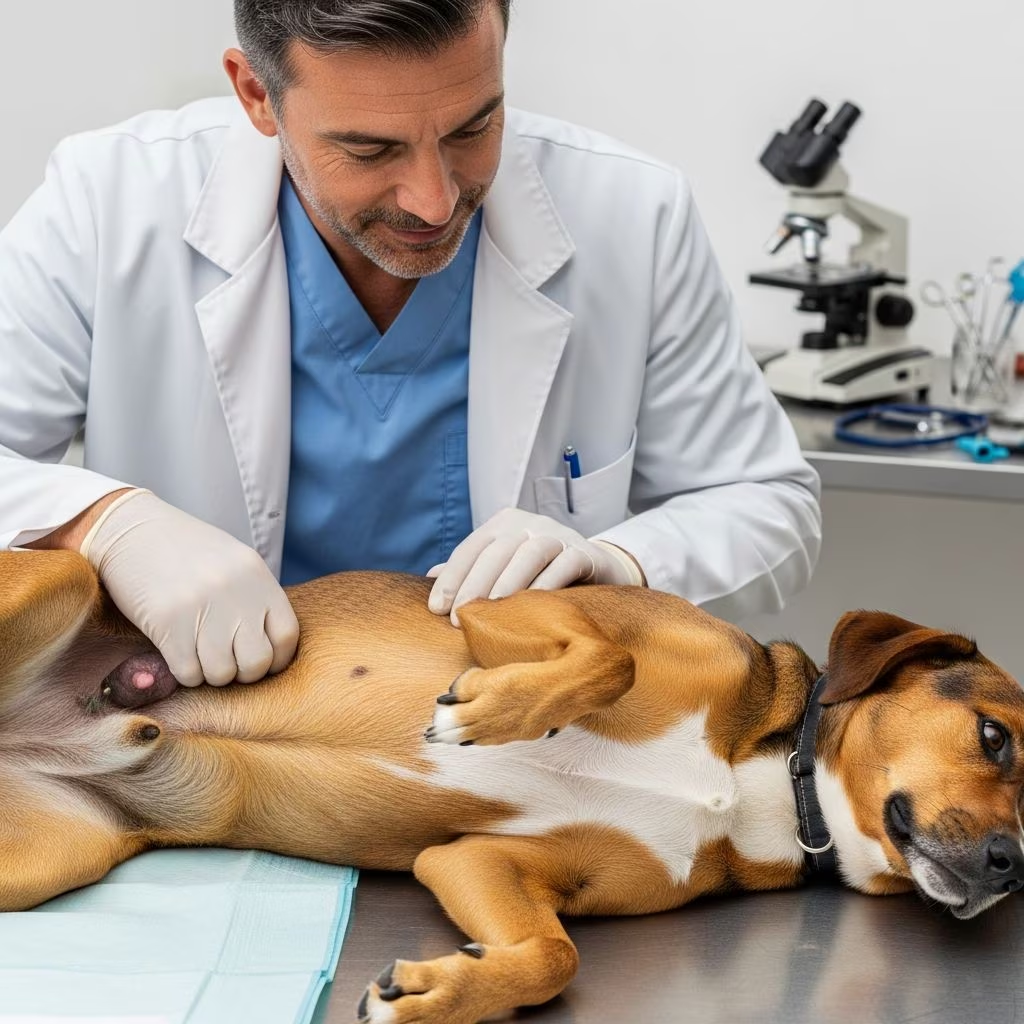
Veterinarians begin by performing a thorough physical examination, palpating both testicles and the scrotum to identify abnormalities in size, shape, or consistency. They will also assess for signs of feminization, lymph node enlargement, or other abnormalities that might suggest metastatic disease.
Imaging Studies
If a testicular tumor is suspected, veterinarians may recommend:
- Chest X-rays to evaluate for pulmonary metastasis
- Abdominal X-rays to assess for internal spread
- Abdominal and scrotal ultrasound to visualize the testicles and surrounding tissues more clearly
Laboratory Evaluation
Additional diagnostic tools include bloodwork and urinalysis to assess overall health status and identify any abnormalities in organ function. A rectal examination may also be performed to evaluate regional lymph nodes and rule out other abdominal pathology.
Definitive Diagnosis
The tumor type is definitively diagnosed after surgery, when a sample of the abnormal tissue is sent to a veterinary pathologist for histological examination under a microscope. This histopathological evaluation is critical for determining the specific tumor type, whether the tumor is benign or malignant, and establishing an appropriate prognosis and treatment plan.
Treatment Options
Treatment approaches for testicular tumors vary depending on the tumor type, whether metastasis has occurred, and the overall health status of the affected dog.
Surgical Treatment
Castration with resection of the testicles is the treatment of choice for dogs with testicular tumors. During this procedure, both testicles and a large portion of the spermatic cord are removed. This surgical approach is effective for removing the primary tumor site and is beneficial for most dogs with testicular tumors. Surgery provides both diagnostic and therapeutic benefits, as the removed tissue can be submitted for histopathological examination to confirm the diagnosis and determine the tumor type.
Advanced Treatment Modalities
For dogs with metastatic testicular cancer or those that are poor surgical candidates, additional therapeutic options may be employed:
- Radiation Therapy: External beam radiation therapy, specifically cesium-137 radiation, has been used in dogs with metastatic seminoma, achieving complete response in approximately 75% of treated cases with no evidence of recurrence.
- Chemotherapy: Platinum-based chemotherapy protocols are recommended for dogs with metastatic seminoma, following protocols similar to those used in human oncology. Bleomycin has been used successfully in individual cases with cutaneous metastasis, resulting in no recurrence at 12-month follow-up.
Treatment Limitations
Complicating factors such as significant underlying disease, cardiac murmurs, respiratory compromise, or obesity may make a dog unsuitable for anesthesia and surgery. In these cases, veterinarians must balance the risks and benefits of intervention with palliative care approaches.
Prognosis and Outcomes
The prognosis for dogs with testicular tumors is generally very favorable. Most tumors are contained to the testicles, and metastasis occurs in only approximately 10% to 20% of cases. Interstitial cell tumors, being benign and typically small, have an excellent prognosis following surgical removal. Seminomas and Sertoli cell tumors may have variable prognosis depending on whether metastasis has occurred and the stage of disease at diagnosis. Dogs diagnosed with localized testicular tumors that undergo surgical removal typically have good to excellent long-term outcomes.
Prevention Strategies
The most effective prevention strategy for testicular tumors is neutering male dogs at an appropriate age. Depending on veterinary recommendations and breed considerations, male dogs can be neutered as early as two months of age. However, larger breed dogs may benefit from delayed neutering until they stop growing, typically between 9 to 15 months of age, to help prevent the development of certain cancers and orthopedic issues later in life.
Neutering eliminates the testicular tissue from which these tumors develop, essentially eliminating the risk of testicular tumor formation. For owners with intact male dogs, regular veterinary examinations become crucial for early detection and intervention.
Frequently Asked Questions
Q: Are testicular tumors common in dogs?
A: Yes, testicular tumors are common in older, unneutered male dogs, accounting for 4% to 7% of all tumors in male dogs. Approximately 27% of male dogs may develop testicular tumors during their lifetime.
Q: At what age do testicular tumors typically develop?
A: Testicular tumors most commonly develop in dogs over 10 years old, with a mean age of approximately 10.4 years. However, they can occur in unneutered dogs of any age.
Q: Can testicular tumors be prevented?
A: Yes, the best prevention is neutering male dogs at an early age as recommended by your veterinarian. This eliminates the testicular tissue from which tumors develop.
Q: What is feminization syndrome in dogs with Sertoli cell tumors?
A: Sertoli cell tumors can produce excessive estrogen, causing feminization syndrome characterized by hair loss, mammary gland enlargement, and behavioral changes in affected male dogs.
Q: Is surgery always necessary for testicular tumors?
A: Surgical removal (castration) is the treatment of choice for most dogs with testicular tumors. However, dogs with significant underlying health conditions may be unsuitable for anesthesia and surgery, and alternative approaches may be considered.
Q: Can testicular tumors spread to other parts of the body?
A: While most testicular tumors remain localized, metastasis occurs in approximately 10% to 20% of cases. Seminomas are more likely to metastasize than interstitial cell tumors.
Q: What is the prognosis after surgical removal of testicular tumors?
A: The prognosis is generally very good for localized testicular tumors that are surgically removed. Interstitial cell tumors, being benign, have excellent prognosis outcomes.
References
- Canine testicular tumors: An 11-year retrospective study of 358 dogs — National Institutes of Health (NIH/NLM). 2023. https://pmc.ncbi.nlm.nih.gov/articles/PMC8980386/
- Testicular Tumors in Dogs — PetMD. 2024. https://www.petmd.com/dog/conditions/reproductive/testicular-tumors-dogs
- Cancer of the Testicles in Dogs — Animal Surgical Center of Michigan. 2024. https://www.animalsurgicalcenter.com/cancer-of-the-testicles-in-dogs
- Testicular Tumors — Veterinary Society of Surgical Oncology (VSSO). 2024. https://vsso.org/testicular-tumors
- Testicular Tumors — VCA Canada Animal Hospitals. 2024. https://vcahospitals.com/know-your-pet/testicular-tumors
- Hyperestrogenism syndrome in a dog with a Sertoli cell tumor — Texas A&M Veterinary Medical Diagnostic Laboratory. 2023. https://tvmdl.tamu.edu/case-studies/hyperestrogenism-syndrome-in-a-dog-with-a-sertoli-cell-tumor/



